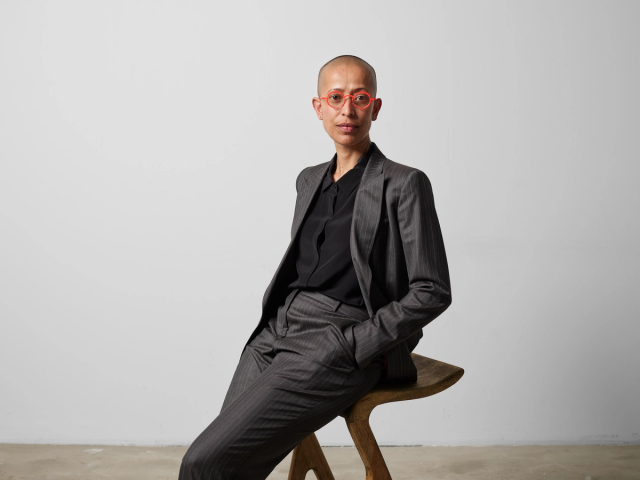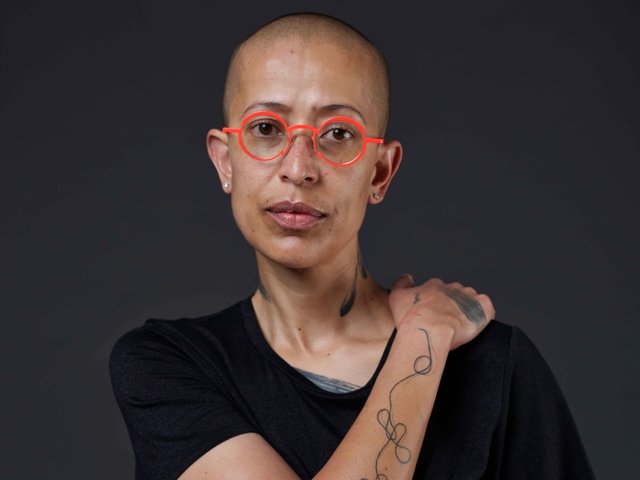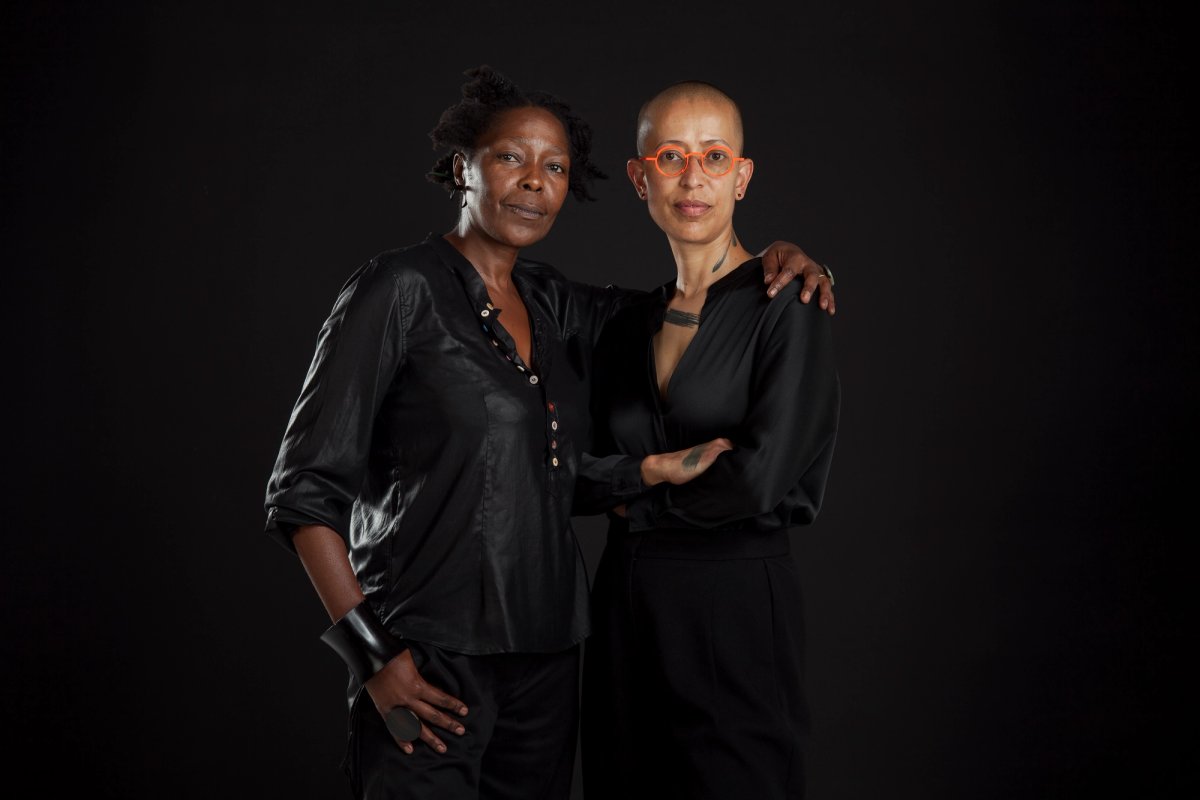
The artist and curator selected to represent South Africa at this year’s Venice Biennale have appealed to the country’s president to intervene after their pavilion was cancelled by a government minister. Gabrielle Goliath, the artist, and Ingrid Masondo have also reached out to South Africa’s foreign office, in the hopes of seeing their work reinstated.
Gayton McKenzie, the right-wing sport, arts and culture minister, informed the pavilion’s organising committee of his decision to censor the three-part, video-based project, Elegy, just eight days before the 10 January deadline for countries to submit their Biennale plans.
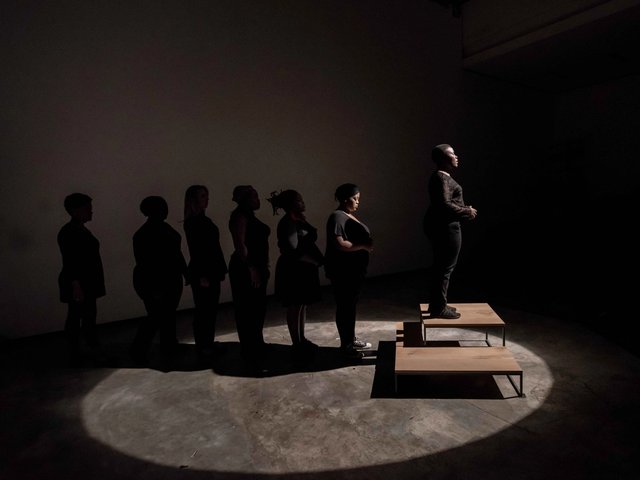
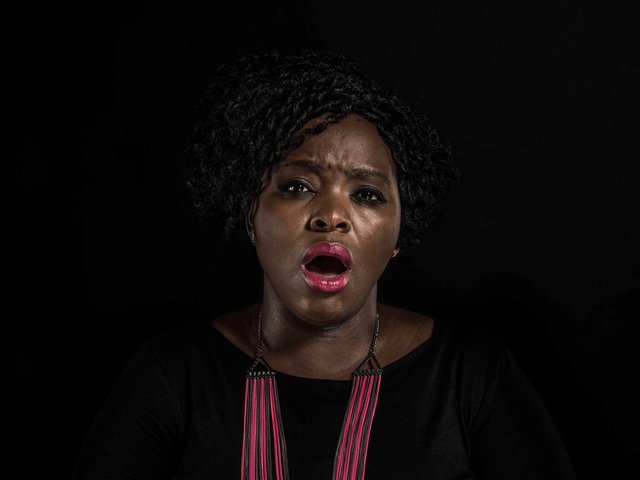
Elegy, part of a series the artist began in 2015, is a ritual lament. In each version that is performed, seven operatically trained woman singers sustain a B note for an hour. They line up behind a dais, begin the note and, as their breath runs out, they pass the note on to the next person. Goliath tells The Art Newspaper that performances are a tribute to and commemoration of “women, femme and non-gender-conforming individuals from South Africa, who have been subject to fatal acts of sexualised and gendered violence”.
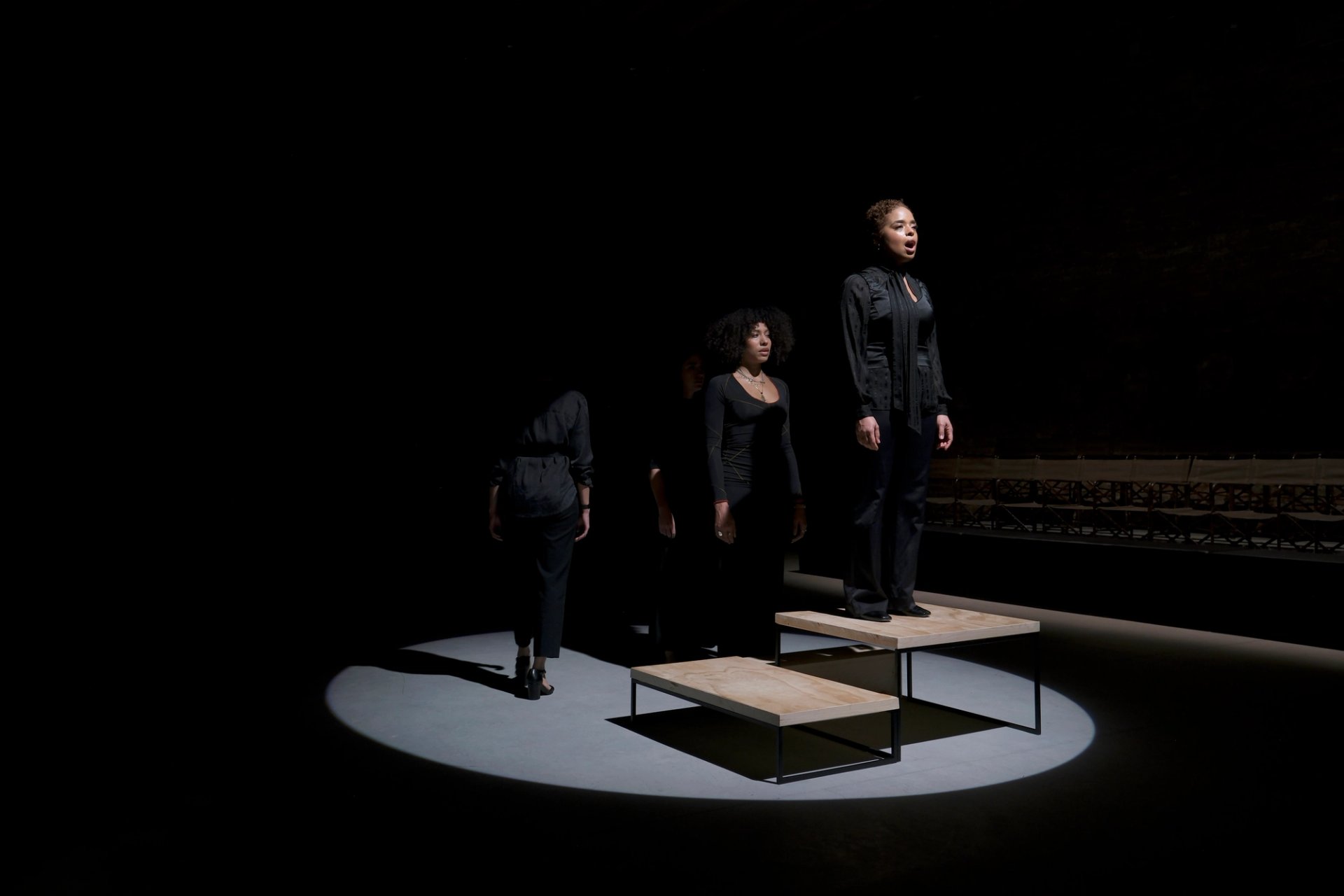
Gabrielle Goliath’s Elegy - for two ancestors performance (2024)
Photo: J Macdonald
When it was selected for the Biennale by a five-person independent panel consisting of respected members of the arts community, they described the work as addressing the “national disaster of femicide in South Africa”.
The version planned for the Biennale also addressed violence against women in Namibia and Gaza, and it was the new Gaza-related section that caused the controversy. For this third suite, the artist had commissioned an experimental ghazal (an ancient Arabic poetic form of a minimum of five rhyming stanzas) to be written by the South African poet Maneo Mohale. It invokes Hiba Abu Nada, whose poem “I grant you refuge” was written just 10 days before she was killed in an Israeli airstrike in southern Gaza on 10 October 2023.
McKenzie had reportedly called for this section to be changed. On 22 December, he sent a letter to the organising committee describing it as “highly divisive in nature and relates to an ongoing international conflict that is widely polarising”.
Goliath, Masondo and Goliath’s studio manager James Macdonald replied in a letter to McKenzie on 4 January. But it was too late: two days earlier, the sports, arts and culture ministry had terminated its contract with the organising committee and cancelled the pavilion.
“It's cruel and unjust,” Goliath says. “We do not believe it is the right or duty of a minister to prescribe or constrain what artists, sports communities and the public can or cannot reflect upon or respond to. But we have welcomed dialogue and we have appealed to DIRCO [the Department of International Relations and Cooperation, which is South Africa’s foreign affairs ministry] and the presidency.”
In a statement to The Art Newspaper, a spokesperson for the president, Cyril Ramaphosa, said that as McKenzie was yet to brief the president on the matter, they were unable to comment. “I must emphasise though that South Africa's position on Gaza remains unchanged as it has been pronounced by the president and in line with the case the South African government has instituted at the International Court of Justice (ICJ) against the state of Israel,” they said. “South Africa maintains that the state of Israel is committing genocide in Gaza and has submitted a very strong case to the court that is backed by evidence in this regard.”
Meanwhile, South Africa’s official opposition party, the Democratic Alliance (DA), says it will report McKenzie to the country’s public protector “for acting beyond his lawful authority and undermining due process” with his decision to cancel Goliath’s pavilion. The public protector is an oversight body that has the power to investigate and remedy improper conduct in all state affairs. The DA also called on the minister to reverse his decision.
DIRCO and South Africa’s sport, arts and culture ministry did not reply to a request for comment by the time of publication. DIRCO’s spokesperson, confirmed to the Daily Maverick that the matter was being discussed at a ministerial level.
Goliath has remained hopeful that Elegy was going to Venice. There has been widespread support from across the globe and her team is working on a petition, hoping that with the pressure sanity will prevail. “I sought out some advice to see how fixed these deadlines are,” she says. “And there is potential for the commissioner to appeal to the Biennale for an extension.”
The cancellation was not Goliath’s only blow, however. She says her South African gallery, Goodman Gallery, unexpectedly parted ways with her on 19 December, just days before McKenzie’s first letter. “Our representation of Gabrielle Goliath ended last year as part of a wider structural business review,” Liza Essers, Goodman’s owner and director, says. “The decision was taken in the last quarter, following subdued market conditions at international fairs, to reduce the roster from 50 to 40 artists, participate in fewer art fairs and reduce the number of exhibitions across the galleries in response to wider international art market contraction.” The gallery adds that it was not directly involved with the South African pavilion at the Venice Biennale at any point.
Goliath is continuing to work with Galleria Raffaella Cortese in Milan.