Antonio Paucar has won the 11th edition of the UK art prize Artes Mundi, receiving £40,000 for his performances, sculptures and video works that draw on Andean culture and his Peruvian heritage.
Paucar told The Art Newspaper at the awards ceremony held at Amgueddfa Cymru-National Museum in Cardiff (15 January) that he plans to use the money to convert his family home in the central highlands of Peru into a museum and art school.
“Over the last few years, I began restoring the abandoned adobe house of my grandparents. It is important to me to safeguard the house and workshop of my ancestors. It seems equally appropriate to me that this space be transformed into a small, independent art school, given that the nearest and largest city, Huancayo, does not have an art school nor a museum of art,” he said.
Six international artists were shortlisted for the prize which is held at venues across Wales. A group show at the Amgueddfa Cymru-National Museum Cardiff (until 1 March) showing works from each artist complements in-depth solo presentations at four partner venues: Mostyn, a public art gallery in Llandudno; Aberystwyth Arts Centre; Glynn Vivian Art Gallery, Swansea; and Chapter Arts Centre, Cardiff.
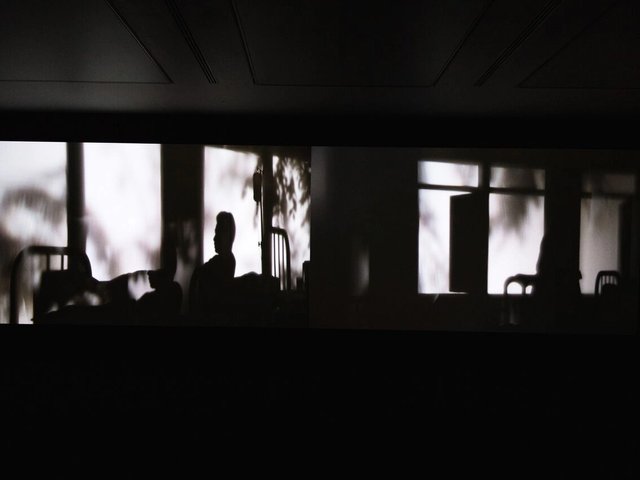
Paucar, who worked for many years as a beekeeper in Peru, studied at the Universität der Künste Berlin. Works on show by the artist in the Artes Mundi exhibition in Cardiff include the film El Corazon de la Montaña(2018-19) which highlights ecological damage in the Huaytapallana mountain range.
“Nature and the ecosystem [there] is being destroyed because of mining,” he said. Asked if he considers himself an activist, he says: “I’m more of an artist—[and considered] an activist because I belong to a certain [Indigenous] group.” Using his own blood, Paucar wrote a sentence in his native language, Wanka Limay (also known as Quechua Wanka), which is shown alongside the film. The translated text reads: “The heart of the sacred mountains is weeping blood.”
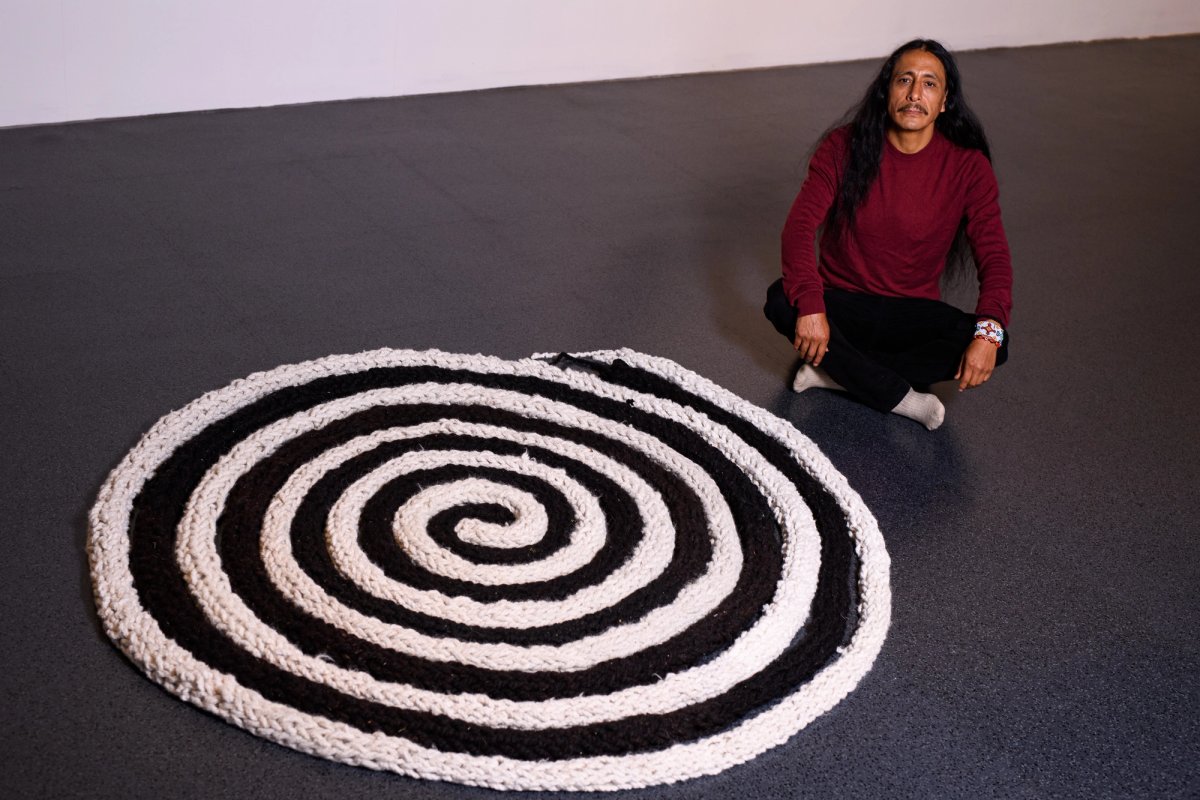
Another work Energía espiral del Ayni (2025) comprises a sculpture of alternating black and white woven alpaca wool and an accompanying video showing how the woollen piece is made. The piece invites visitors to connect with an ancient Andean concept contained in the word “Ayni” which is based on ideas around reciprocity and mutual exchange.
At Mostyn gallery, the video entitled Pirueta en la tierra de Llandudno (2025) records his barefoot walk through the landscape of Llandudno. “We found a Celtic stone by chance [during the walk]. I left traces on the gallery wall with the soil collected during my walk.”
“Paucar’s practice, alongside all other presentations, aligns with Artes Mundi’s support of practices that exist outside the pressures and prototypes of the art market while remaining committed to artistic freedom and experimentation,” said a statement from the jury of Artes Mundi 11 which includes the Senegalese curator Marie Helene Pereira.
Another short-listed artist, the Brisbane-based artist Sancintya Mohini Simpson, who is showing sculptural installations and a video at Chapter Arts Centre, was named the Derek Williams Trust Artes Mundi Purchase Prize winner; some of her featured works will subsequently be acquired by Amgueddfa Cymru-Museum Wales.
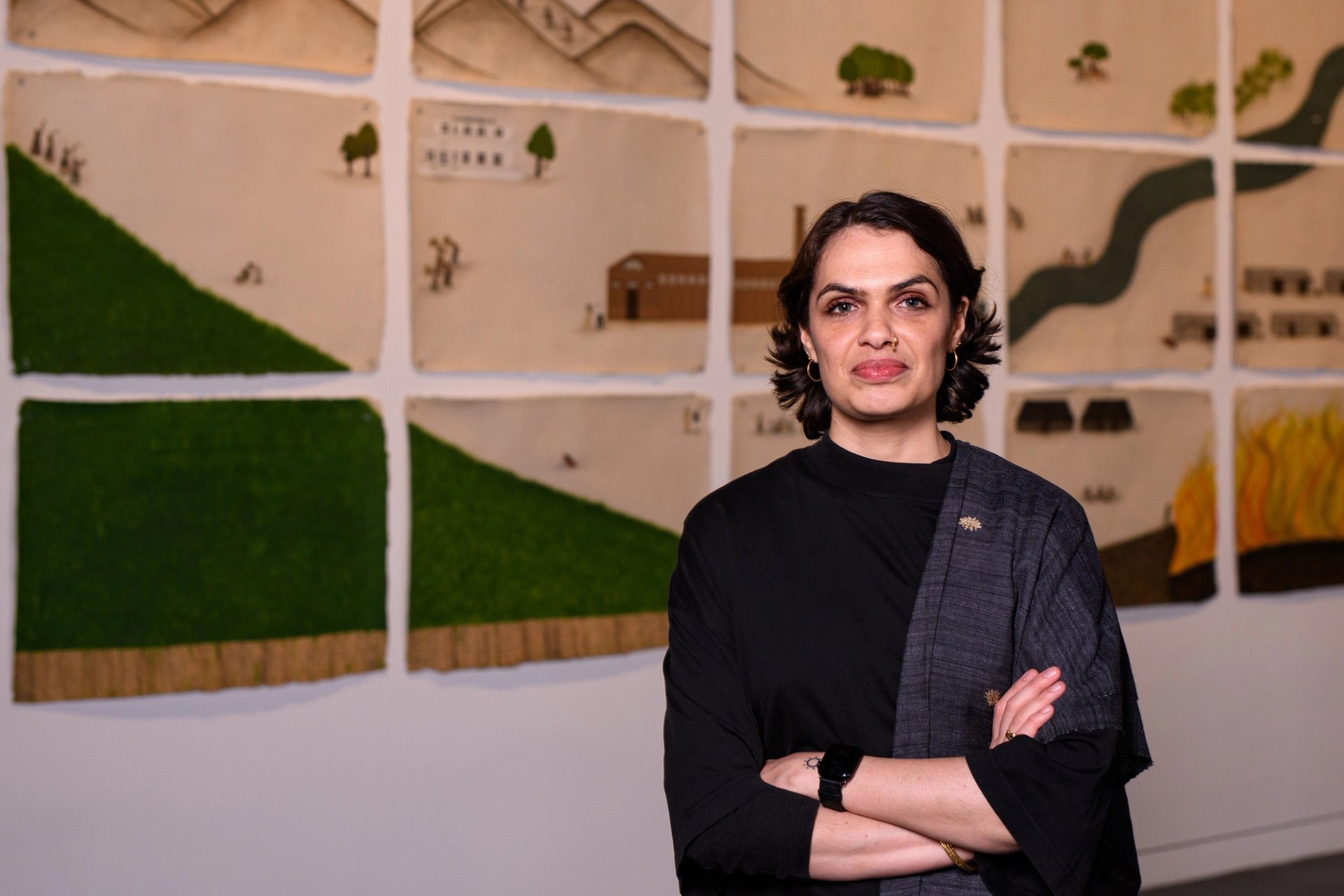
Sancintya Mohini Simpson at National Museum Cardiff, 15 January 2026.
Polly Thomas
Simpson is a descendant of indentured labourers sent from India to work on colonial sugar plantations in South Africa. She now uses sugar cane as a pigment, unpicking the complexities of migration, memory, and trauma in her works.
Asked about the future of Artes Mundi, Nigel Prince, the director, said: “The staff and trustees will shortly look at the pros and cons of the pan-Wales exhibition model. There are lots of positive indicators this time round; within the first month we attracted a new audience share of 35% across the venues outside Cardiff. This level of audience engagement is great to see. Artes Mundi used to be an outlier in terms of its programming but that is not the case now.”
Prince adds that the prize is also considering adding an international advisory board, which could “open up opportunities for support and presentations further afield”.