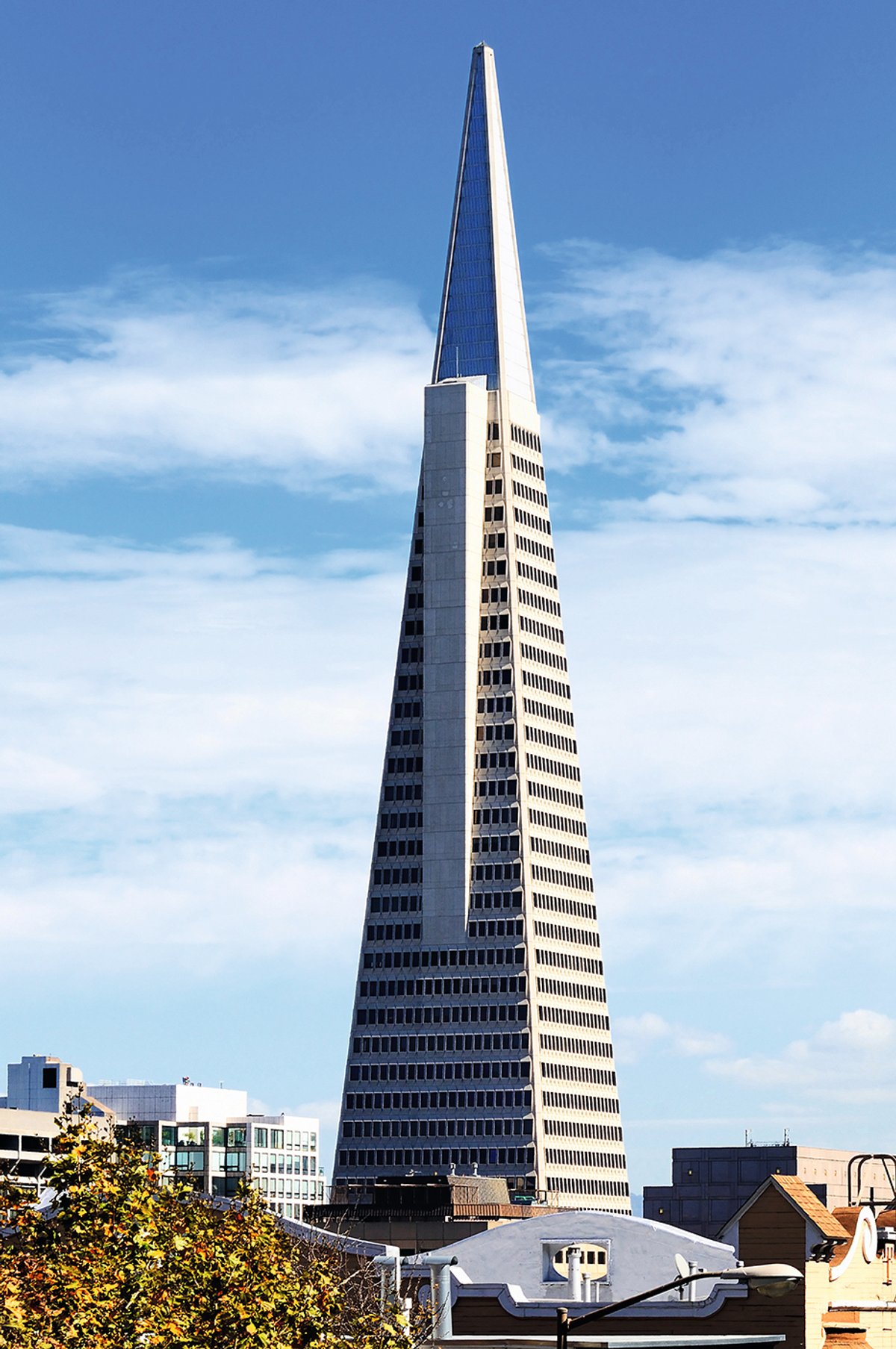
At San Francisco’s Transamerica Pyramid Center—a 1970s landmark and the second-tallest building in the city—a new kind of museum is emerging. Aligned with broader efforts to position culture at the heart of the city’s revitalisation, two artist installations will unfold in a unique partnership between the skyscraper’s owner and the newly nomadic-by-design Institute of Contemporary Art San Francisco (ICA SF). Launching during San Francisco Art Week (17-25 January), the unusual office building flanked by a mature redwood grove will serve as the backdrop for works by the artists Lily Kwong and Tara Donovan (both until 31 July).
Kwong’s project, EARTHSEED DOME, is a collaboration with the curatorial platform Art At A Time Like This, which is known for supporting political art projects. Kwong will begin by 3-D printing a sculptural shell, formed from soil embedded with native seeds, in a storefront facing Redwood Park—a half-acre space adjacent to the Transamerica skyscraper hosting more than 50 redwood trees hundreds of feet tall. After several weeks of fabrication in public view, Kwong’s dome will be moved into the grove, where it will slowly bloom and function as a seed-dispersal hub. Over the following six months, the structure will shift with the seasons as the seeds germinate.
Meanwhile, inside Transamerica’s glass-walled Annex Gallery, Donovan will install existing and newly created columns from her Stratagem series, built from hundreds of thousands of recycled CDs. The skyscraper’s floor-to-ceiling windows will turn the sculptures into prisms that catch and scatter daylight, changing subtly with the time of day and the changing seasons.
A nomadic museum
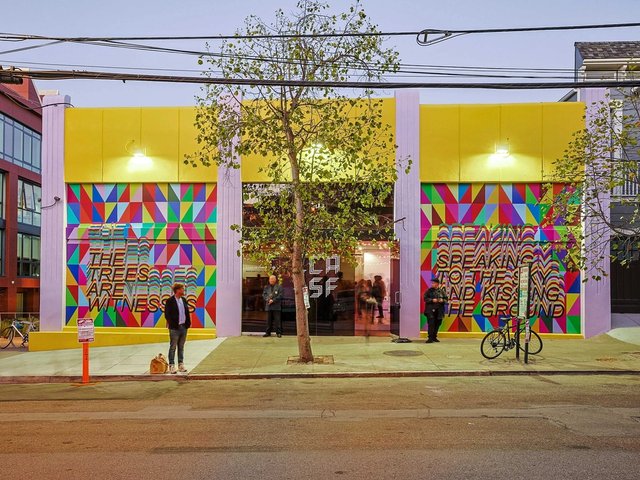
ICA SF was not always a roving museum. In fact, when it was founded in 2020, it was modelled on the non-collecting European kunsthalle. The museum made its first home in San Francisco’s Dogpatch neighbourhood, relocating to a former bank building downtown in 2024. ICA SF has since evolved its model to focus on “ambitious, site-responsive projects” in urban settings, according to its new vision statement.
The museum’s founding director and chief curator, Alison Gass, sees the Transamerica collaboration as an ideal expression of this new approach. “Sometimes, we start with an artist’s dream project and then go find the space,” she says. “Other times, we encounter a site that’s begging to be activated and then find the artist. With Transamerica, it was the latter. The redwood grove, the plaza, the glass gallery—they’re an incredible set of spaces for artists to respond to.”
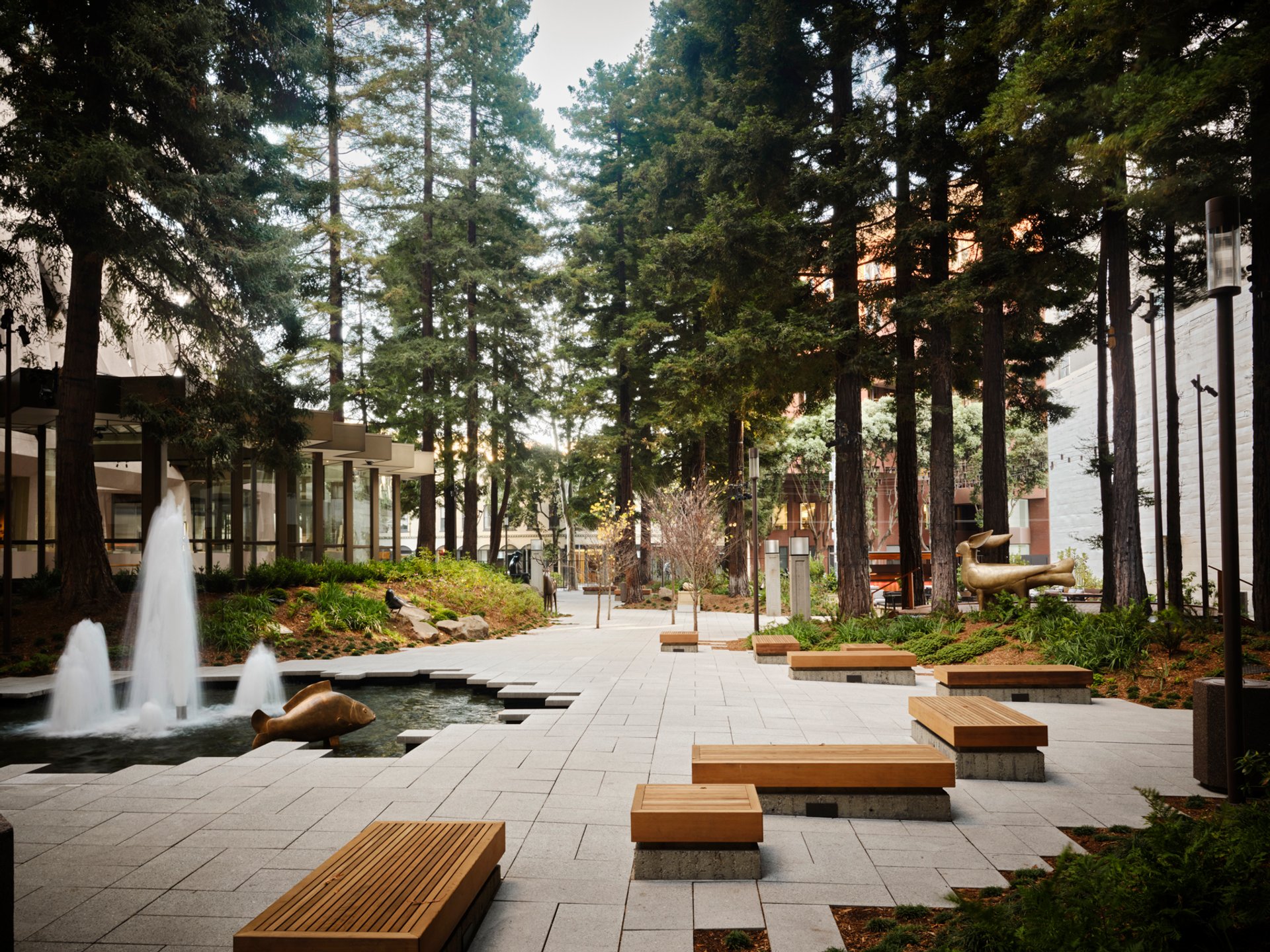
Transamerica Redwood Park Photo: © Douglas Friedman
EARTHSEED DOME is both a homecoming and a culmination for Kwong, a landscape artist and designer who grew up in the neighbouring city of Mill Valley with the world-famous Muir Woods as her de facto backyard. She says that this proximity made for an early and almost devotional relationship to redwoods and the ecosystems they support.
“I felt like those redwoods were beings,” Kwong says. “As a kid, going into the forest was almost a religious experience. I’ve spent my career trying to capture even a drop of the resonance of a redwood in my work.”
Kwong approached ICA SF with her project after receiving a revitalisation grant from the family foundation of Mikkel Svane, the founder of the software company Zendesk. The combination of the redwood grove and Transamerica’s striking silhouette helped the concept cohere. “The pyramid is this powerful, urban object reaching for the sky,” Kwong says. “I immediately saw a grounded earth dome in conversation with it; it created a tension between those two forms and the values they represent.”
She designed the dome so that its interior can hold seed packets visitors will be able to take with them and plant in their own neighbourhoods. Now based in Los Angeles, Kwong is collaborating with the Altadena Seed Library, known for helping communities regenerate with native plants after wildfires. “Native plants are much more resilient and have coevolved with fire,” Kwong says. “Many of our California species actually only germinate with fire.”
Kwong hopes that commuters, office workers and tourists become “human pollinators”, helping reintroduce native species across the San Francisco Bay Area. Accompanying programming will include talks with horticulturalists, family workshops, seed-saving sessions, artist walks and seasonal performances timed to the solstices. Kwong sees the emphasis on care as central to her practice. “I started out wanting to reconnect people to nature,” she says. “Now I think of it as reconnecting people to ecology—to the web of relationships between plants, wildlife, humans and cities.”
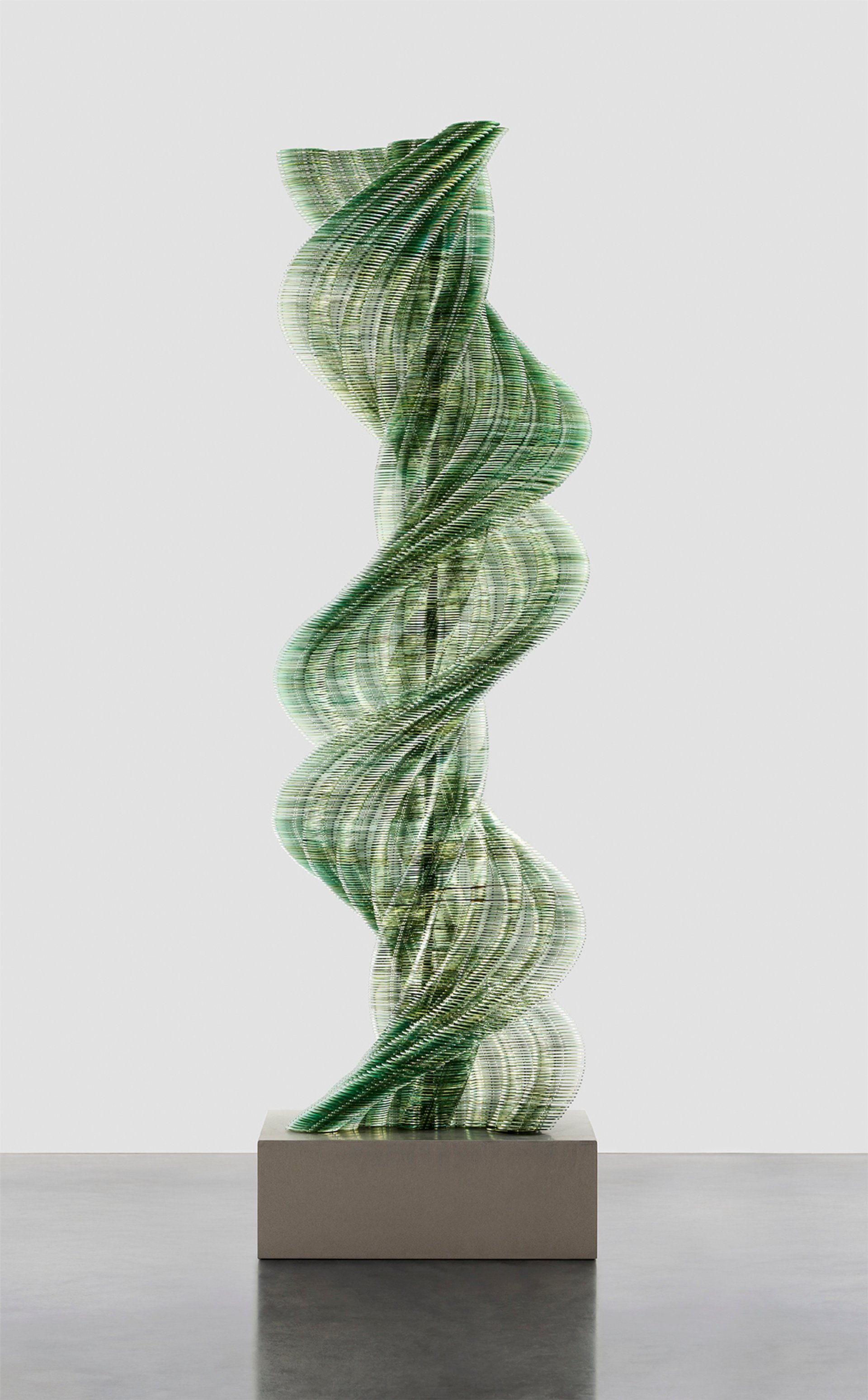
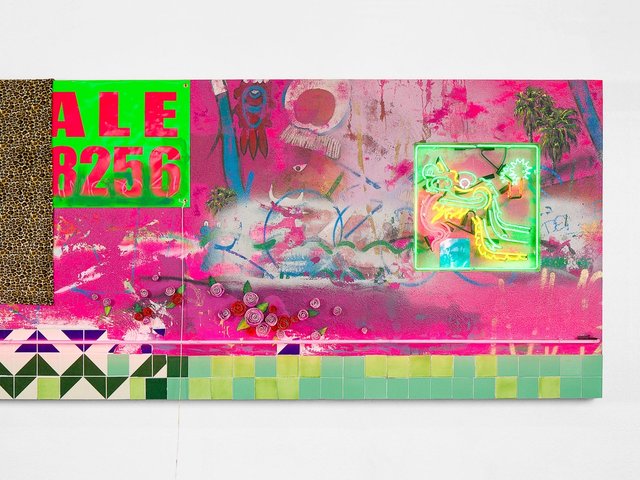
Stratagem XIX (2025), from a series of works by Tara Donovan going on show at the Transamerica Pyramid Center Photo: Melissa Goodwin; © Tara Donovan, Courtesy Pace Gallery
Burn me a CD
Donovan’s columnar sculptures, especially fitting for display inside a skyscraper, are made using old CDs sourced from eBay—everything from home-burned music mixes to family-photo archives and outdated software. The first versions of her Stratagem columns were exhibited in 2024 at New York’s Pace Gallery, where daylight from a wall of windows caused them to dissolve and reassemble visually as viewers moved around them.
“I’m always looking for traits in a material that I can push to a point of transcendence, where it no longer quite looks like itself,” Donovan says. “Light is the most important aspect of my work, and these pieces are completely governed by it.”
The Brooklyn-based Donovan is known for transforming mass-produced materials—straws, cups, pencils—into installations that challenge perception. CDs, she says, carry a particular poignancy. “In my lifetime, CDs went from being sold to us as the future to becoming obsolete,” she says. “They’re not recyclable. They’re this strange, enduring artefact of how we used to store data.”
Installing CDs in a city known for its tech industry adds another layer. They are “one of the last physical traces of quantifiable data”, Donovan says. Now displaced by cloud storage and streaming, their presence at Transamerica underscores the speed at which tools once considered permanent become relics. “I’m not primarily interested in making a moral statement about recycling,” she says, “but that layer is impossible to ignore. All these discs contain somebody’s information. Now they’re part of an artwork about light and time.”
At this moment, San Francisco is so much about thinking about how arts and culture can be deeply impactful to the revitalisation of the cityAlison Gass, chief curator, ICA SF
The setting of Kwong’s and Donovan’s installations is both practically useful and metaphorically rich, reflecting the possibilities of renewal unfolding in San Francisco’s downtown, much like the way nature heals itself over time. In a city where startups evolve as quickly as the technologies they create, Gass says tech-aligned funders seem comfortable supporting a model that invests in ambitious commissions across multiple sites. “At this moment, San Francisco is so much about thinking about how arts and culture can be deeply impactful to the revitalisation of the city,” she says.
Using a partnership-based approach, ICA SF will work across multiple sites this year. In May, the museum will take over the historic Pier 24 building with a site-specific joint installation by the artists Dominique Fung and Heidi Lau exploring phases of spiritual and material transformation through time. The museum will also partner with the San Francisco Downtown Development Corporation on three large-scale public works across the city.
Back at Transamerica, Kwong says she hopes that her seed-dispersal art project “gives people a reason to come out, to be present with nature and light in the middle of the city. If they leave with a packet of seeds and a slightly different sense of their relationship to this place, that’s the real work.”