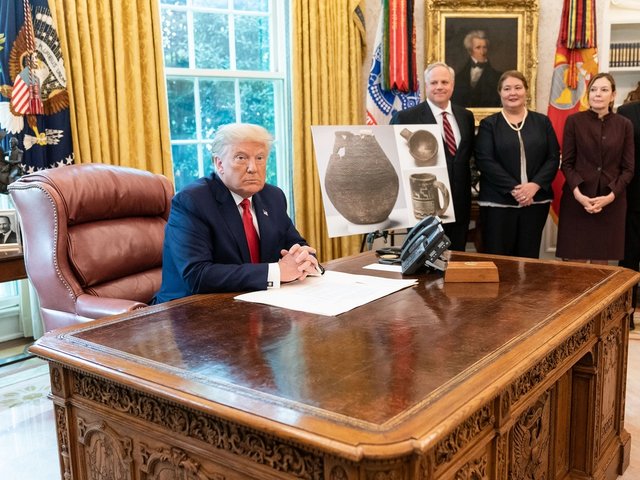
The National Endowment of the Humanities (NEH) has announced a new round of grants—$75.1m to 84 projects, many of them celebrating the US’s semiquincentennial. These are the first grants since the administration of president Donald Trump fired all but four members of the National Council on the Humanities, which advises the NEH on funding priorities, in October.
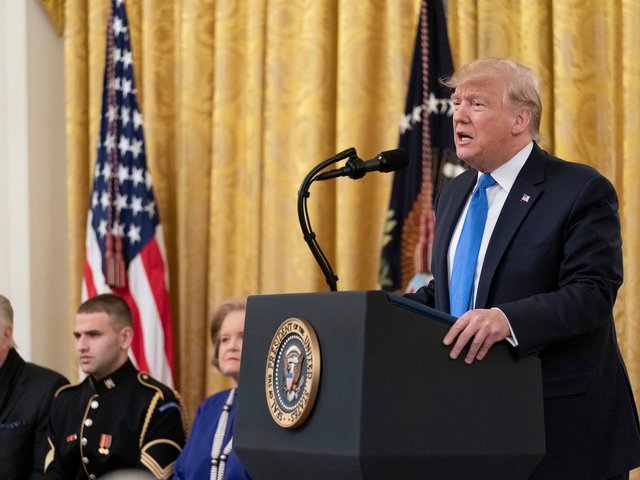
The funded projects vary widely in scope and subject matter, from a reading programme for military families to a scholarly study of the role of Asian Americans in conservative politics. Grants of more than $1m were mostly awarded to universities for programming related to “civics” and publishing the papers of presidents John Adams, James Monroe, Andrew Jackson and Martin Van Buren. The University of Texas (UT) at Austin and the Foundation for Excellence in Higher Education (FEHE) will receive the largest grants of $10m each.
UT Austin, which has largely cooperated with the Trump administration’s demands on universities, will use its money to hire 16 faculty members to launch “academic majors in Strategy and Statecraft and Great Books”. (The university will also receive $60,000 for an unrelated fellowship to study ancient Greek philosophy.) Programming related to “Great Books”, a reference to the most important tomes in the history of Western civilisation, also appears in descriptions for grants to the University of North Carolina at Chapel Hill ($100,000 with the possibility of an additional $10m matching grant) and University of South Carolina ($1.7m).
Meanwhile, FEHE—itself a grant-making organisation headquartered at a conservative think tank in Princeton, New Jersey—will receive $10m for the “development of humanities programmes serving research universities and professional development for faculty and students”. The NEH will also give more than $2m to the conservative-leaning Abigail Adams Institute, located near the campus of Harvard University, for seminars and fellowships centred on “themes of history, literature, philosophy and civics”.
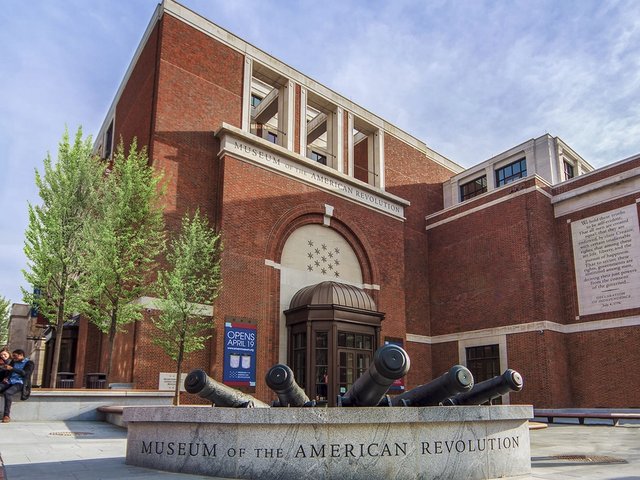
The largest grant to a museum is $2.2m for Philadelphia’s Museum of the American Revolution, which came under fire in 2023 for hosting an event for the far-right group Moms For Liberty. Grants to other museums—all of them focused on US history and with programming marking the semiquincentennial—are roughly $100,000 each.
Perhaps the most surprising of the larger grants is $2m for Grand Central Atelier (GCA), a small art school in Queens, New York. There, students learn via methods “rooted in traditions pre-dating the 19th century and the advent of photography”, according to GCA’s website, which boasts that its full-time, four-year programme “has consistently produced the world’s most skilled contemporary realist painters, draftsmen and sculptors. Our existence forges the newest link in an unbroken 600-year-old tradition of artists contributing works of art untouched by modernism, inspired by the direct observation of nature.”
GCA’s founder, the realist painter Jacob Collins, is decidedly not a fan of Modernism or the avant garde, as he explained in his lecture at the National Conservatism Conference in Washington, DC, in September. On his website, Collins describes himself as a “leading figure in the contemporary revival of classical painting”.
The grant awarded to GCA, which is roughly equal to the non-profit’s yearly revenue, is earmarked for its Bruce Cole Humanities Initiative, “a two-year public humanities project focused on the vital role of the humanities in American public life”. Cole, who died in 2018, was an art historian and the chairman of the NEH under George W. Bush.
A number of grants (of about $350,000 each) were also announced for conservation, mostly concentrated on supporting and educating students in the field. Awardees include New York University, the University of Delaware, Beloit College in Wisconsin, Minneapolis’s Midwest Art Conservation Center, Philadelphia’s Conservation Center for Art and Historic Artifacts, the Northeast Document Conservation Center in Massachusetts, Maryland’s American Institute of Physics and the Foundation for Advancement in Conservation in Washington, DC.
In addition, the University of Illinois will receive a $271,411 grant for an intensive summer training programme on the Native American Graves Protection and Repatriation Act (Nagpra).
Among the fellowship grants, a scholar in Missouri was awarded $60,000 to study and translate the letters of the German art historian Johann Joachim Winckelmann (1717-68), whose writing on ancient Greek and Roman art is often credited with jump-starting the Neoclassical movement.