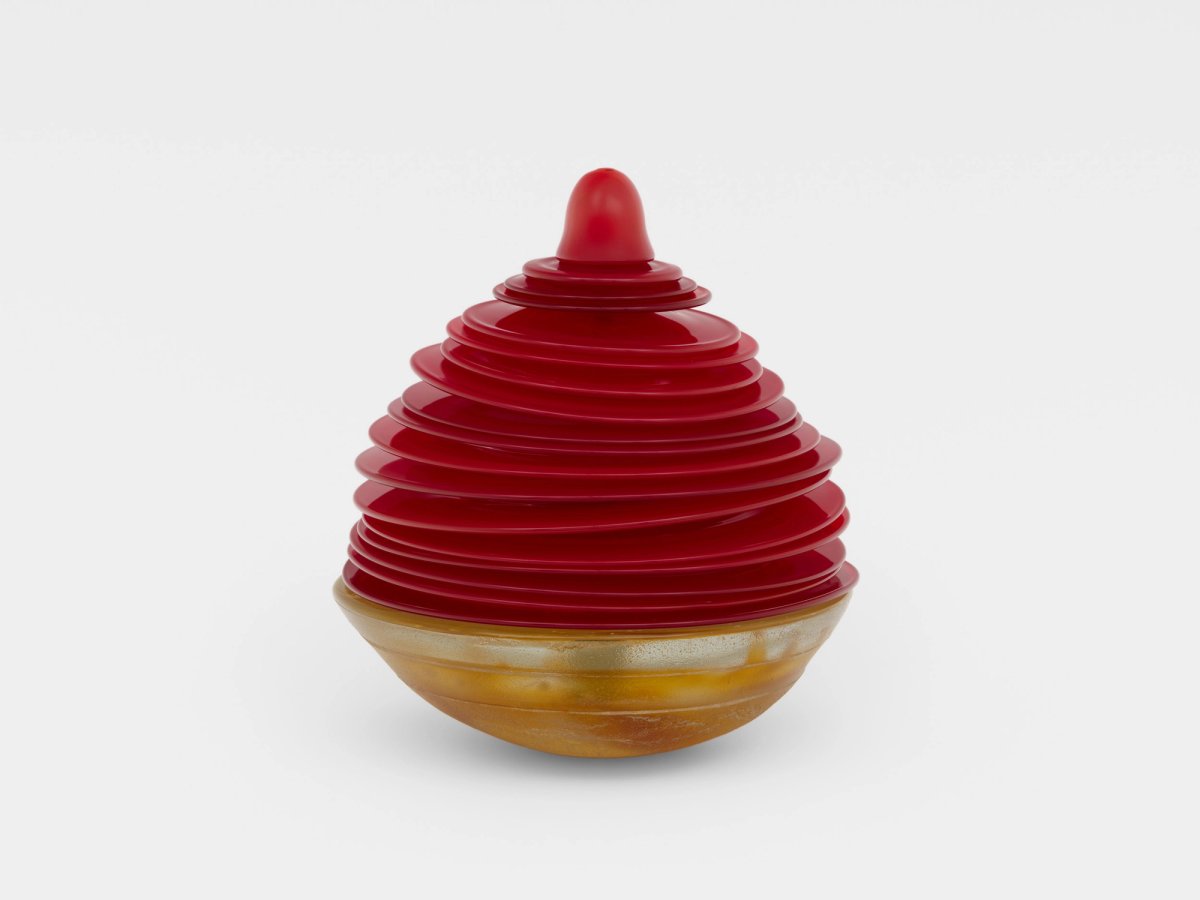
Pinaree Sanpitak, Stacked Offering I (2024-25)
Around US$5,000-US$20,000, Ames Yavuz
The Thai artist Pinaree Sanpitak began exploring female breasts in her work shortly after the birth of her son in 1994, when she began breastfeeding. Reflecting on her experience as a mother, the breast became a metaphor for herself as well as a broader celebration of womanhood. In 2001 Sanpitak began to draw parallels between the breast and Buddhist stupas—dome-shaped sites of veneration, and began her Breast Stupa series, combining the sacred with the sensuous. Over the past two decades, she has experimented with mediums including etching, painting, weaving and sculpture. Stacked Offering I (2024-25), is part of a new series made of luminous hand-blown glass. The delicate work builds upon her previous sculptures made of layered mulberry paper. Sanpitak has described her breast works as “evolving self-portraits” which reflect transformations in her body and life. At once fragile and playful, this glass form reflects the precarious nature of human existence and the need for balance in life.
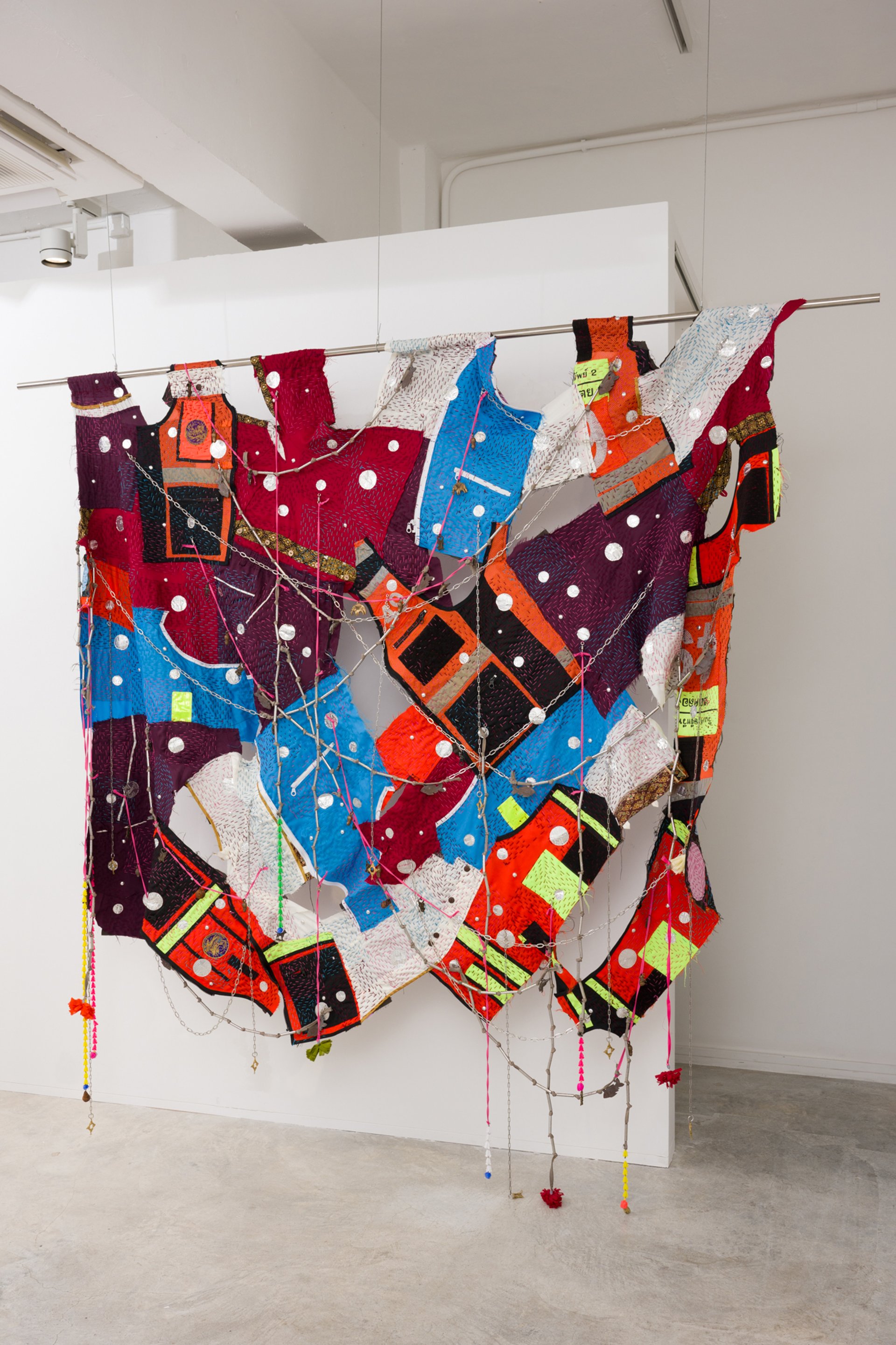
Jakkai Siributr, CG20 (2023) © the artist
Jakkai Siributr, CG20 (2023)
US$40,000, Flowers Gallery
When the Covid-19 pandemic hit, Thailand’s booming tourism industry ground to a halt. As visitor numbers fell, workers in the service industry across the country lost their jobs. While several years have passed, many individuals have yet to recover their livelihoods. When the Thai textile artist Jakkai Siributr learned that one of his studio assistants lived in a community of workers who were struggling, he was moved to help. Siributr purchased their old uniforms to provide financial support. For this work, he deconstructed orange vests from taxi drivers and spa uniforms of masseuses and stitched them together to form a vibrant tapestry. He adorned the work with beads, chains, threads and talismanic objects to symbolise how Thai people visit temples and turn to supernatural powers for healing and protection.
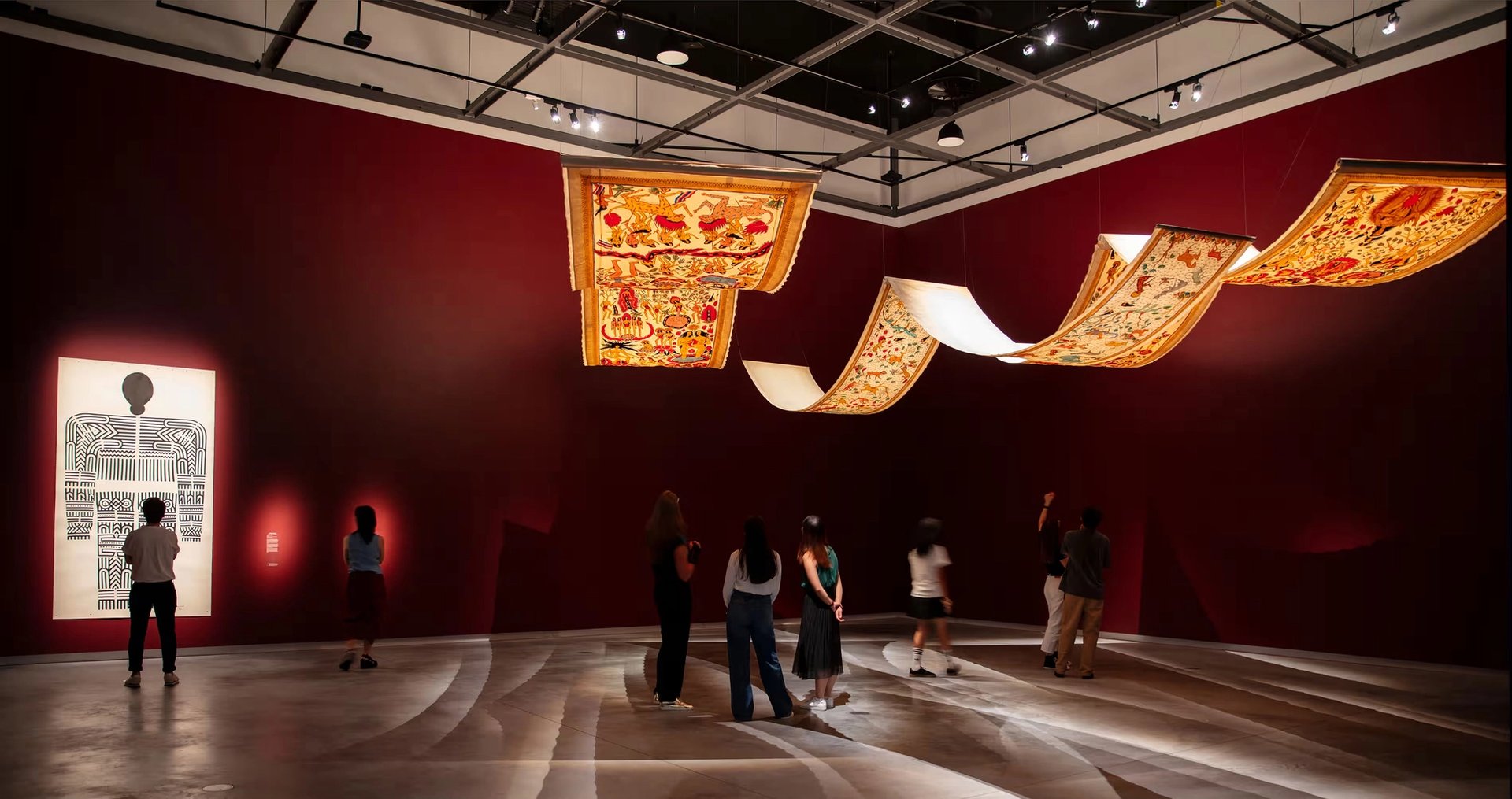
Citra Sasmita, Timur Merah Project XI: Bedtime Story (2023-24) Courtesy of David James
Citra Sasmita, Timur Merah Project XI: Bedtime Story (2023-24)
Price undisclosed, Yeo Workshop
The Balinese artist Citra Sasmita invites viewers to step away from the bustling fair ground and settle onto floor cushions beneath a protective canopy of monumental scroll paintings. Suspended from the ceiling, the scrolls are inspired by Bali’s traditional Kamasan paintings, which illustrate mythological narratives that often focus on male heroism. While women are typically relegated to the margins in these paintings, Sasmita shifts that balance, placing female protagonists at the centre. By portraying them as powerful beings, Sasmita subverts the exoticised image of Balinese women perpetuated in colonial imagery. The installation also features textile works and cowhide paintings inspired by the Pacific Ring of Fire, exploring fire both as a destructive force and one that has the capacity to purify and renew. Seen together, the works in this installation harness the Balinese philosophy of Taksu, a divine spiritual energy, which Sasmita channels to create a feeling of transcendence.
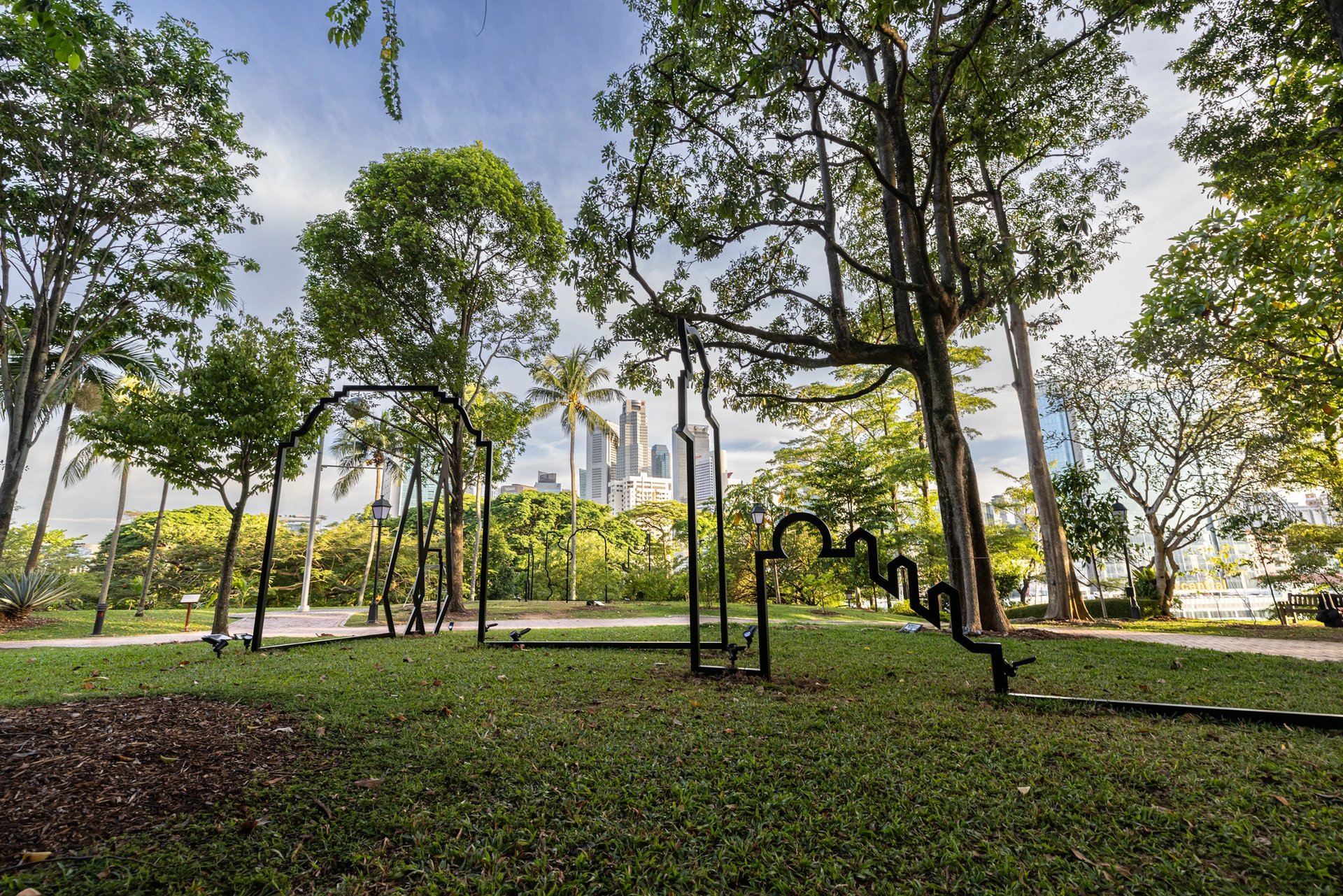
Ayesha Singh's Continuous Coexistences (Singapore) (2025) © the artist
Ayesha Singh, Evolution (2025)
Price undisclosed, Nature Morte
The Indian artist Ayesha Singh's Continuous Coexistences (Singapore) (2025, pictured) is among the highlights of this year’s Singapore Biennale. The sculpture perched atop a hill in Fort Canning Park transforms an architectural line drawing into a dynamic three-dimensional installation. At Art SG, she will show three new wall reliefs from her Evolution series, similar sculptural interpretations of line drawings. The calligraphic works map the evolving forms of Indian column capitals across the second to 17th centuries. Two black-and-grey sculptures will trace the outlines of column capitals from the caves of Karla, Ajanta and Varaha, followed by forms from the Hoysaleswara Temple and the Unesco World Heritage site of Hampi. Deliberately placed behind these two visual timelines will be a third sculpture in brass, documenting column capitals from ancient stepwells in Gujarat and Rajasthan—civic water structures commissioned by female patrons, who have historically been overlooked. By distilling forms from these sites into a reflective material, Singh critiques the erasure of women while also reasserting their significance.
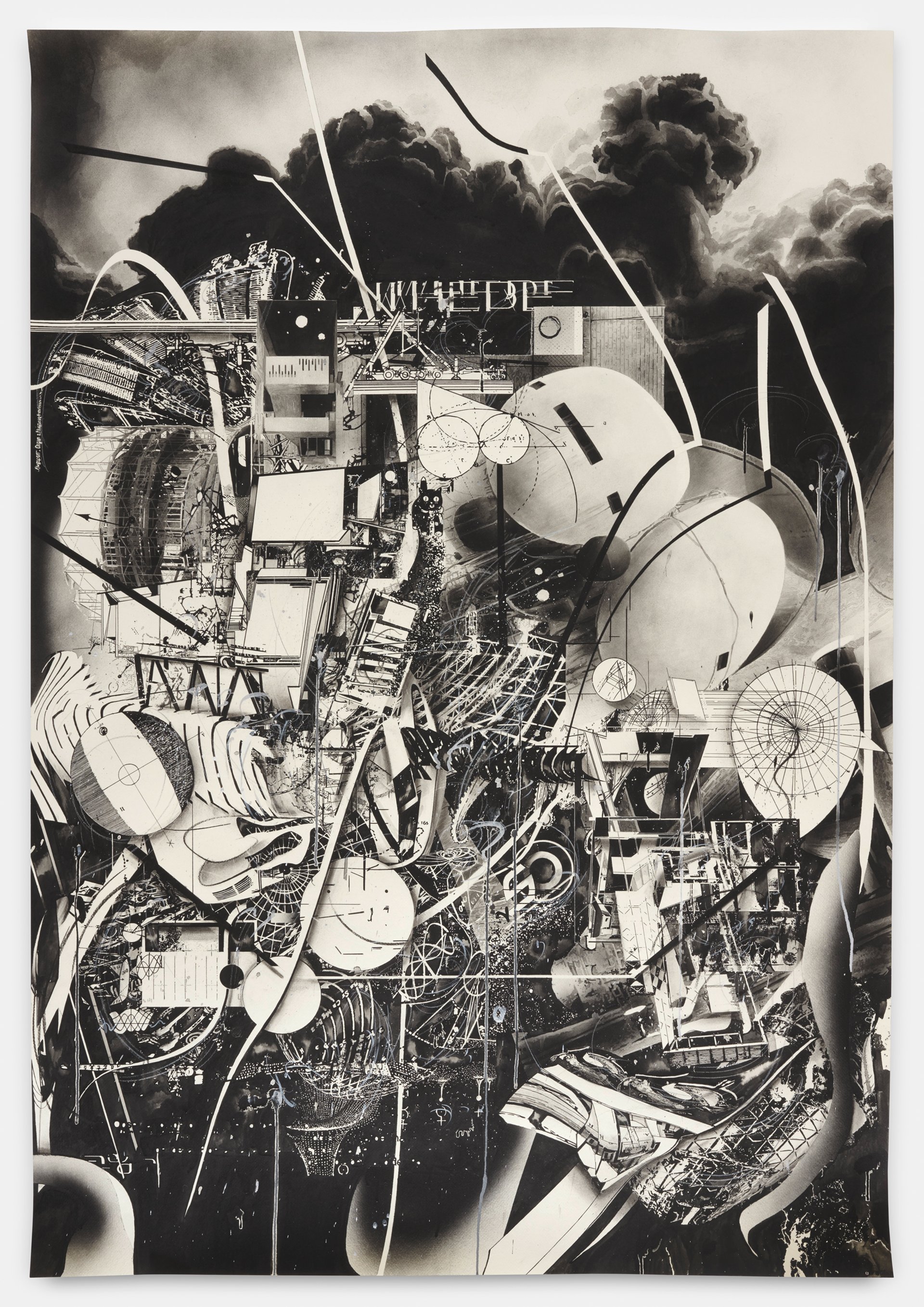
Hiroki Tsukuda, Giant aggregate creature (2025) Photo: Mareike Tocha; courtesy of the artist and Galerie Gisela Capitain
Hiroki Tsukuda, Giant aggregate creature (2025)
US$28,000, Galerie Gisela Capitain
Growing up in the countryside on the island of Shikoku, the Japanese artist Hiroki Tsukuda often imagined travelling to hidden realms beyond our world. Encounters with the most ordinary objects in everyday life would inspire him to conjure up fantastical scenarios in alternate realities. Today, he creates meticulous collages that evoke surreal, futuristic worlds inspired by science-fiction films, video games, comics and music. He often blends fragments of urban and natural environments with geometric shapes and speculative architectural forms. Tsukuda’s process begins by combining his photography with images gathered online to create complex compositions using computer software. He then uses ink and charcoal to draw intricately layered scenes. As part of Spotlight, a new curatorial initiative in the Galleries sector, Galerie Gisela Capitain will present his mixed-media works, including works on paper and sculpture.
• Art SG, Marina Bay Sands, Singapore, 23-25 January