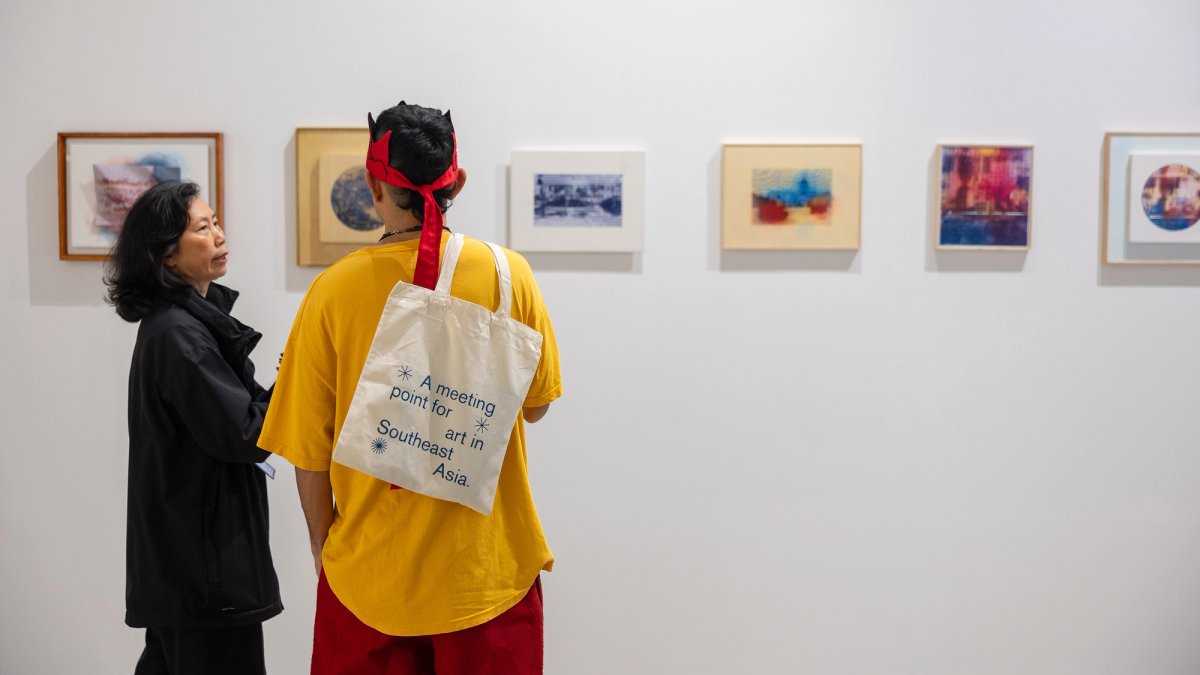
Southeast Asian art is experiencing a boom, with a slew of new projects opening around the region, the maturing of an earlier cohort of initiatives from the 2010s, and a growing global appreciation of the region’s culture. Head-turning launches in Thailand have joined established events in Indonesia and the Philippines, and a strong base of respected artists are fomenting a genuine new energy for Southeast Asia.
But while the spotlight is now shared more evenly, Singapore is still home to the region’s most established art scene and professional institutions. It also claims a unique role as a place where Southeast Asia’s otherwise often siloed national scenes converge and converse.
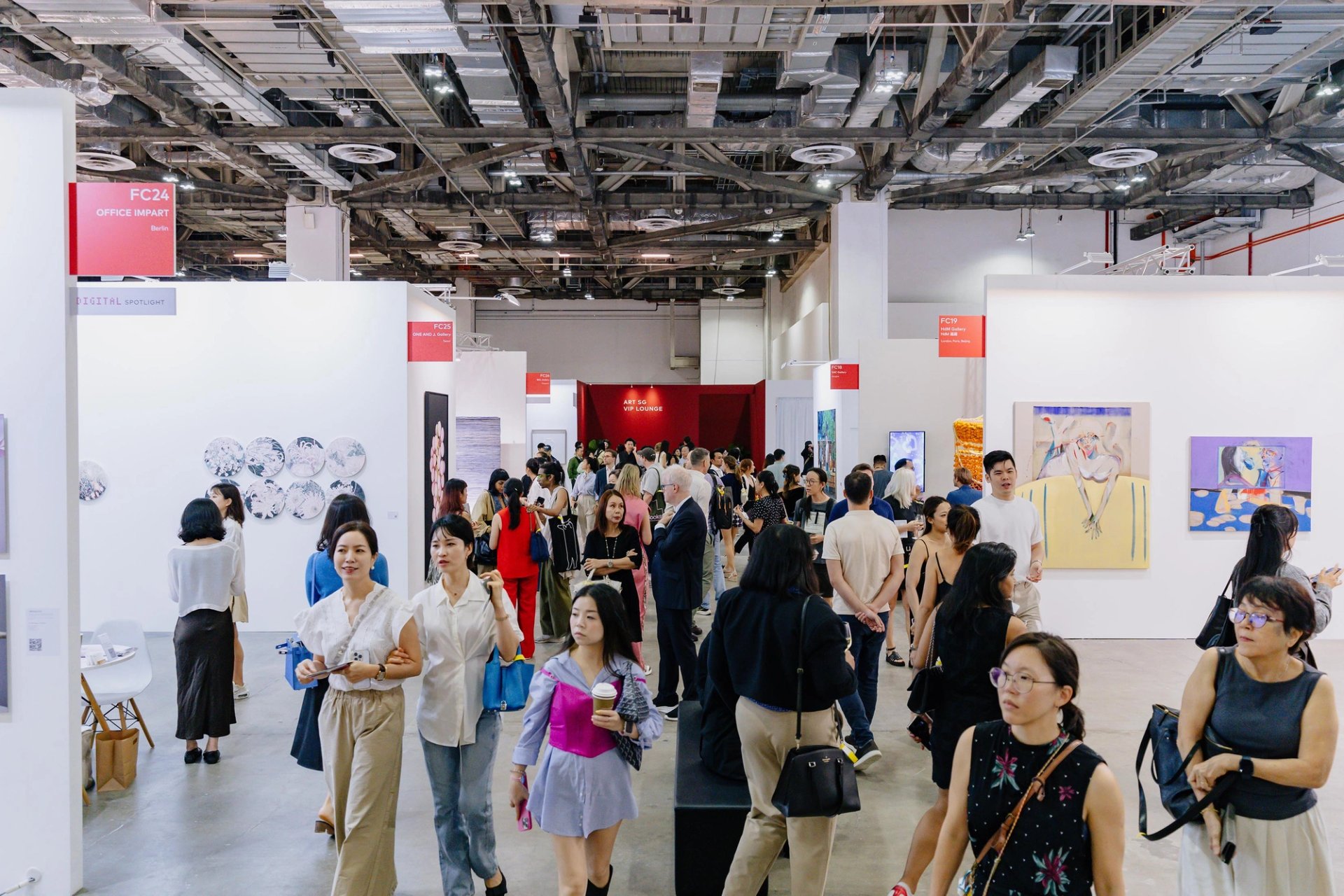
The Art SG fair is a big draw for collectors across the region with last year’s edition attracting more than 40,000 visitors Courtesy of ART SG
“What is interesting about Singapore is [that] the National Arts Council (NAC) seems to not just promote the art of their own national artists,” says Andreas Teoh, a collector who founded the Singapore non-profit art foundation The Institutum. “Singapore can really take the role of being the melting pot for all the artists in the region, and be the beacon for Southeast Asian art.”
While many countries, not surprisingly, prioritise their own artists, Singapore’s art scene at the grassroots, institutional and governmental levels embraces a broadly Southeast Asian remit. “There seems to an acceptance, an openness to greater diversity,” Teoh says. “That’s why it’s so important as a place to show and sell art. Singapore is really one of the only countries in the world that is [so officially supportive of regional art], and that is wonderful.”
Gunalan Nadarajan and Roopesh Sitharan, the curators of chapalang, an exhibition during Singapore Art Week, agree. They describe a regional art ecosystem that has developed significantly over the past few decades, with numerous cities, such as Jakarta, Bangkok and Manila, becoming important hubs for regional artists and exhibitions. But Singapore’s institutions, including the National Gallery Singapore and the Singapore Art Museum, and major events like the Singapore Biennale and Singapore Art Week have “sustained an unwavering mandate and curatorial focus on developing and showcasing regional arts”, they say. As a result, the city has become “a central node in this evolving ecosystem” and a catalyst for other hubs. While major exhibitions such as ArtJog (in Yogyakarta), the Bangkok Biennale, the Thailand Biennial (in Phuket), and the Yogyakarta Biennale have matured, they note, these forums have not always had a significant or consistent regional focus on Southeast Asia.
New institutions have raised the level of ambition to ‘curate the region’Gunalan Nadarajan and Roopesh Sitharan, curators
“The regional art scene is hopping!” says Iola Lenzi, a Singapore curator, researcher and critic specialising in Southeast Asian contemporary art, though she notes that the past 12 months have also “seen closures of several art spaces that, though small, have been important anchors of the SEA [Southeast Asian] independent contemporary ecosystem over years: Sàn Art in Saigon; Your Mother Gallery, Singapore, for example”. The absorption this year of the S.E.A. Focus fair into Art SG “has also taken a toll on the independent regional scene because S.E.A. Focus did a good job of representing some of the region’s less commercial and more risk-taking artists”, Lenzi says.
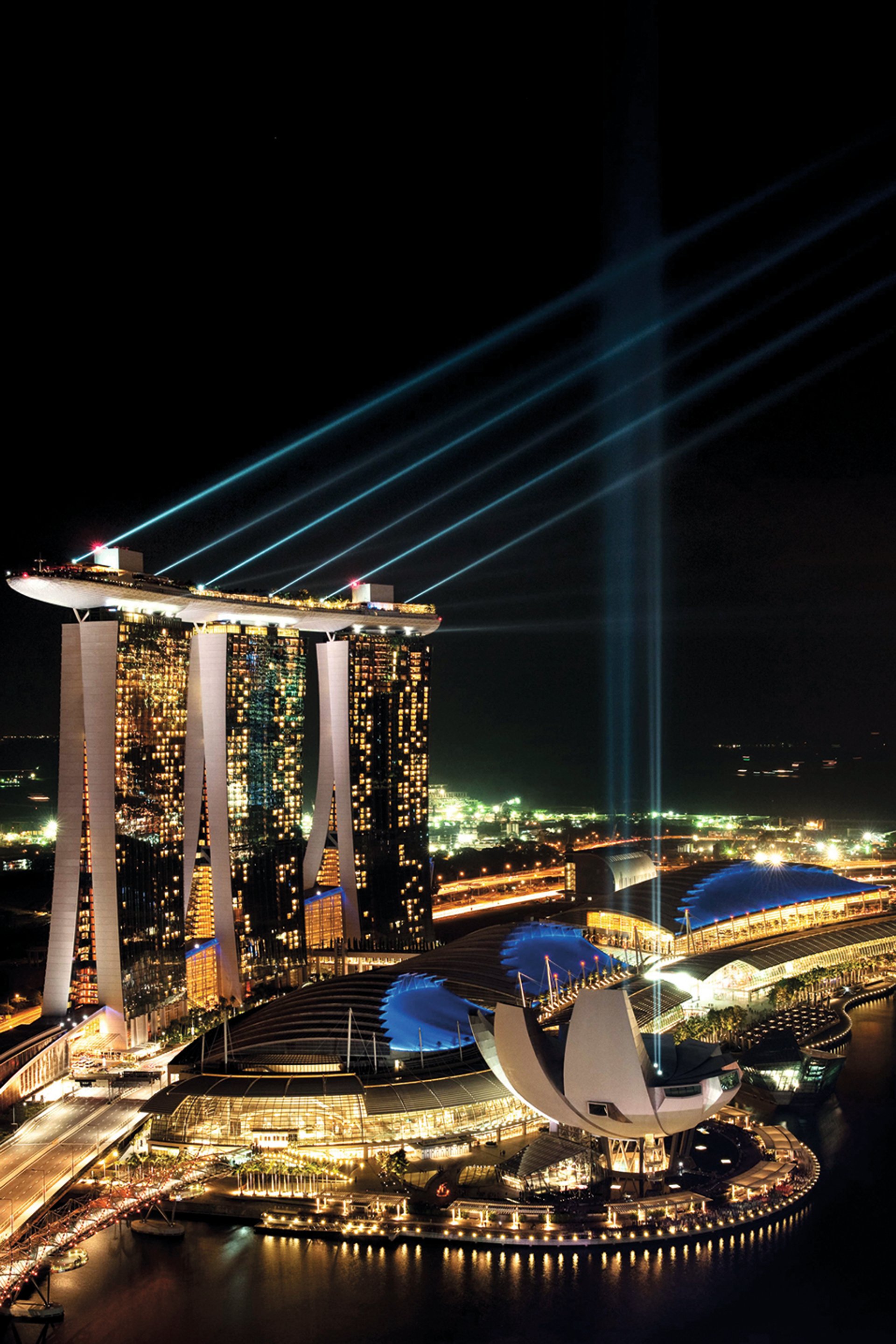
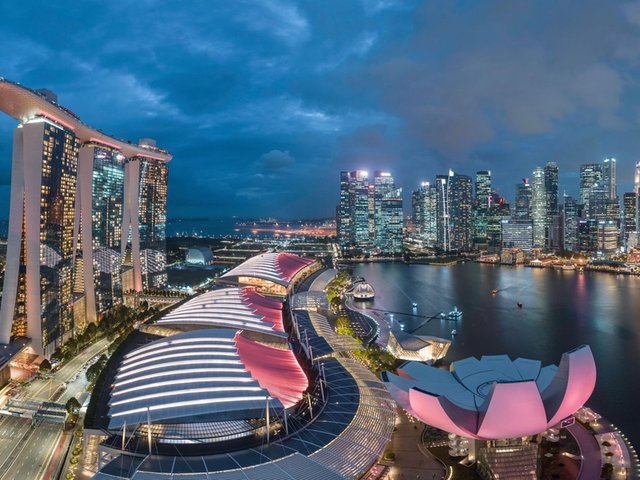
The spectacular Marina Bay Sands complex, which hosts the fair Courtesy of Marina Bay Sands
Still, new initiatives are emerging to balance out the losses. In Thailand, Lenzi points to the Bangkok Kunst-halle, which opened in a striking Chinatown industrial space in 2024, and Dib Bangkok, a private museum housing the Osathanugrah family collection of Thai contemporary art. In Vietnam, the new Vũ Dân Tân Museum, Hanoi, opened last month , and also promises to be a key research and exhibition space, says Lenzi, who curated its opening exhibition. Built by the family of Vũ Dân Tân (1946-2009), it will not only be dedicated to the pioneer of Vietnamese contemporary art, but also, through him, wider contemporary art practices in Vietnam, supported by strong educational programming.
Nadarajan and Sitharan also emphasise the ongoing contribution of earlier developments. Several new art museums and institutions have been established in the region over the past decade, including the Ilham Gallery (Kuala Lumpur, opened 2015), the MAIIAM Contemporary Art Museum (Chiang Mai, 2016), Museum MACAN (Jakarta, 2017) and the reopening of the Jim Thompson Art Center in new premises (Bangkok, 2021). “These new institutions have raised the level of ambition to ‘curate the region’ with an impressive range of exhibitions and programming as well continuing to connect Southeast Asian artistic practices with the pulse of global contemporary art currents,” they say.
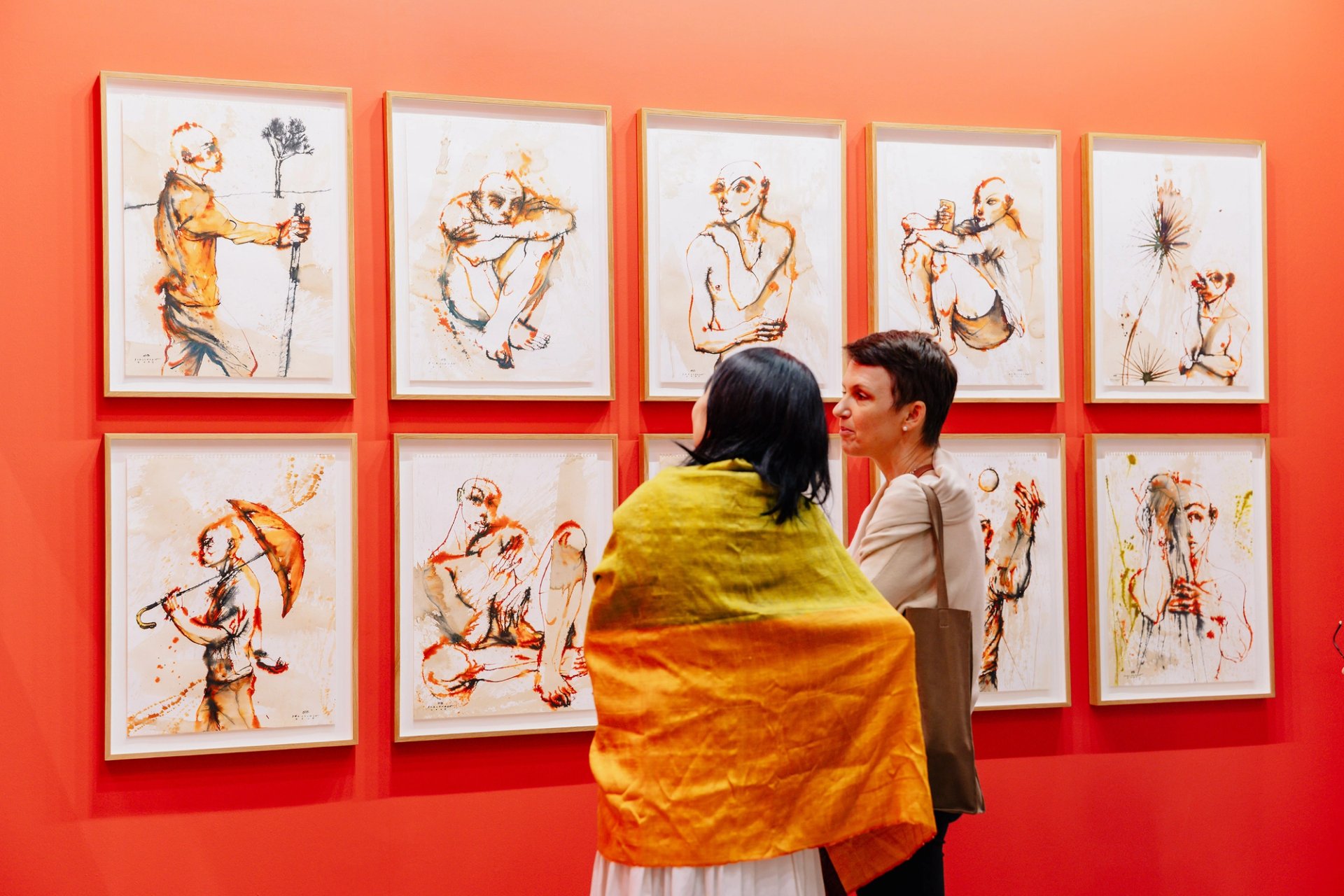
A series of works by Filipino artist Elmer Borlongan, on the stand of Ames Yavuz gallery at last year’s fair Courtesy of ART SG
The pair’s chapalang exhibition, which takes its name from a Hokkien-Singlish word for the blend of a mix of elements, features ten artists from around the region, including Witaya Junma (Thailand), Margaret Tan (Singapore) and Giang Nguyen Hoang (Vietnam), and explores how Southeast Asian creatives negotiate technologies in everyday cultural contexts. “In our research for the project we discovered surprising similarities in creative approaches to technologies despite the vast differences in levels of access and kinds of technologies available in the region,” Nadarajan and Sitharan say.
Chapalang is the second stop of a travelling concept organised by Nadarajan and Sitharan. Starting at Kuala Lumpur’s Ilham Gallery last August as menggodam (which means “disruption” in Malay), it will this summer continue in the Indonesian art hub of Bandung. In each iteration a different configuration of artists, works and curatorial tactics are employed to tease out the continuities and disjunctions in the region’s response to technological development.
Andreas Teoh sees such cross-border collaboration as essential to a sustainable future. Regional integration, he argues, “is already happening, with all the actors and people and private institutions coming up in Southeast Asia. We are all discussing ways to share and do projects together.” A strong ecosystem requires a holistic approach involving “audience, curators, artists, institutions—everything has to come together, across the region, not just in one place”.
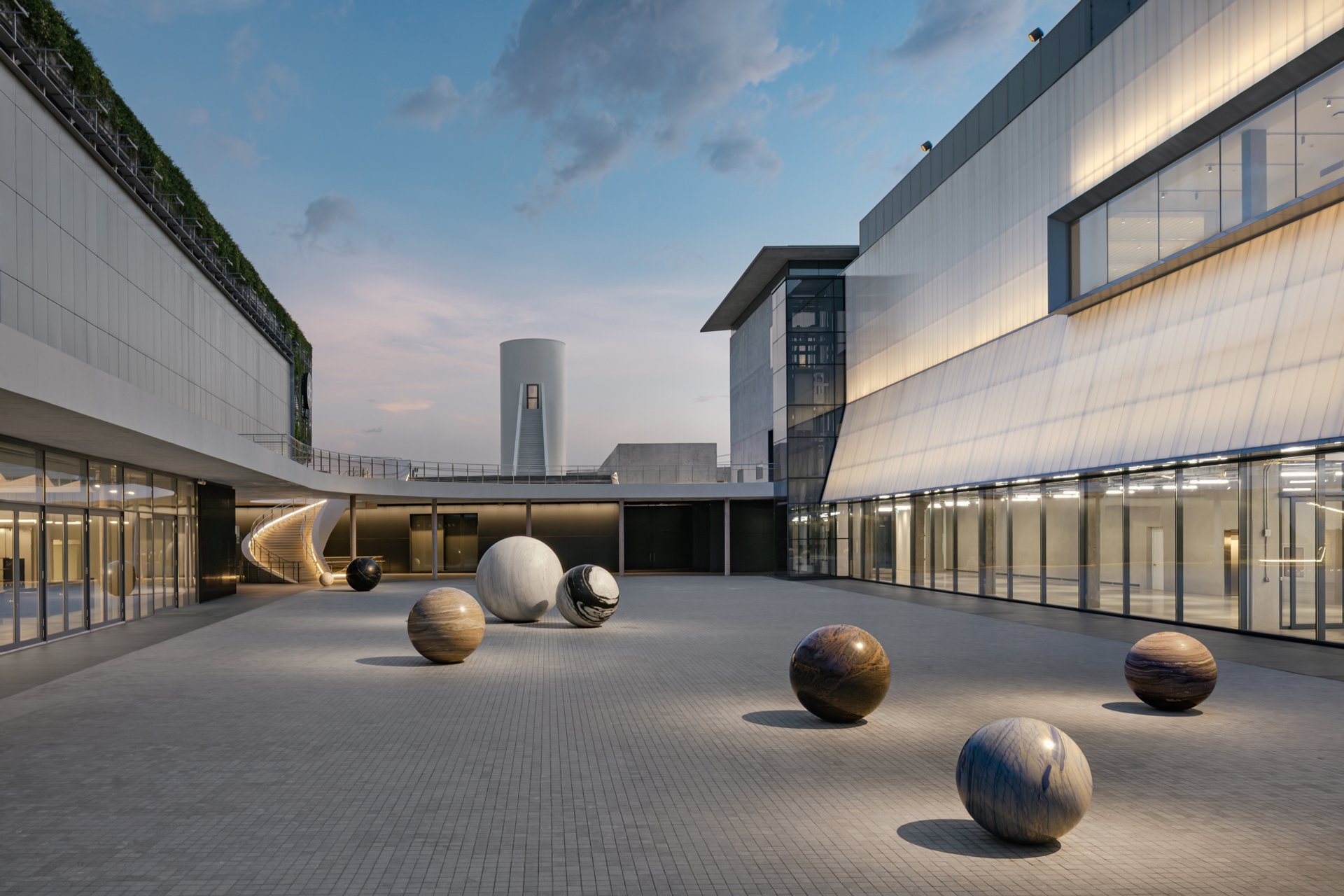
Dib Bangkok in Thailand Courtesy of Dib Bangkok
However, Teoh feels the audience for Southeast Asian art still remains underdeveloped locally and internationally, which has an impact on the artists. “If you have an audience that is entirely local, then what happens is the artists’ works also becomes siloed, because they start producing just for the home audience”, while others cater to overseas tastes, both limiting their reach, he says. “I think artists in the region need to develop entry points to their work so that a greater audience can be taken through the journey with them, rather than only an audience that shares their kind of demographic.”
Lenzi, whose recent book Power, Politics and the Street: Contemporary Art in Southeast Asia after 1970 examines the region’s artistic evolution, argues that Singapore must also continue to invest in its own grassroots infrastructure. “A few artist-led art spaces such as Objectifs and Deck are hopefully establishing strong roots, but more such bottom-up, artist-shaped initiatives would enrich the Singapore scene and distinguish it in an increasingly homogeneous global art world.”
While Art SG faces competition from Art Basel Hong Kong and, increasingly, Art Jakarta, Lenzi sees the regional grounding as Singapore’s strength. “The S.E.A. Focus art fair, although very small, is widely appreciated and judging by the crowd [last year], hits above its weight with international visitors. This interest suggests that Singapore, if interested in carving out a solid niche in the global art ecology, could do worse than hitch itself more assertively to Southeast Asian art.”
• Art SG, Marina Bay Sands, Singapore, 23-25 January