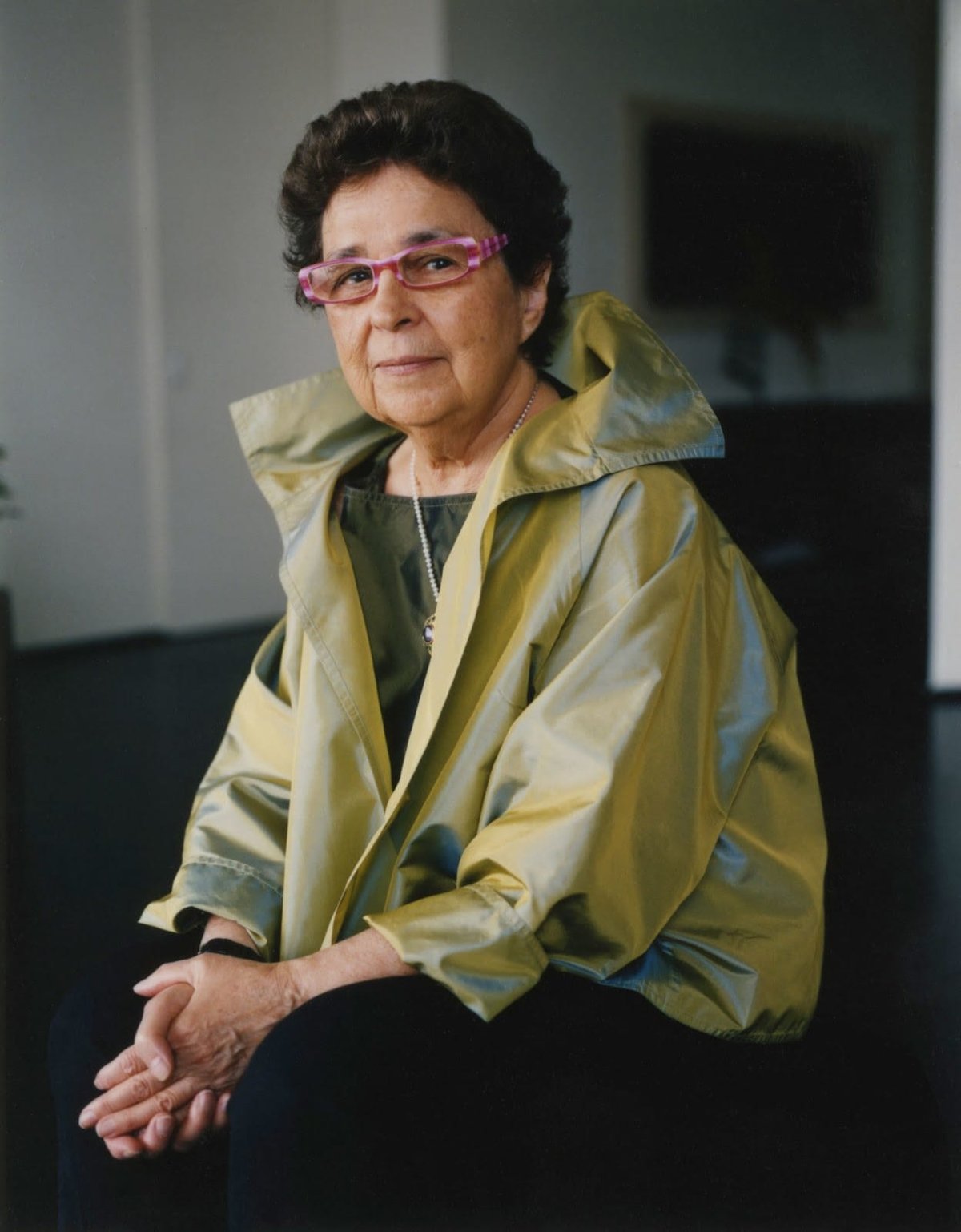
The esteemed contemporary art dealer Marian Goodman died on 22 January, aged 97. Her eponymous gallery confirmed the news yesterday in a statement, adding that she passed “peacefully of natural causes”.
Over a 60-year career, Goodman cultivated a venerable reputation for showing challenging, subtle and conceptually ambitious art that often resisted the lure of commercial tastes. Her New York-headquartered gallery has represented some of the world’s most acclaimed artists, including Gerhard Richter, Nan Goldin, Anselm Kiefer, Julie Mehretu, William Kentridge and Nairy Baghramian.
Goodman was noted by numerous industry figures for her intellectual rigour, loyalty to her artists, and professional discretion. She was described in a 2004 New Yorker profile as “one of the most powerful and influential dealers of the 20th century”, whose gallery “gives the art world rare jolts of self-esteem”.
She is quoted by her gallery’s in memoriam statement as having once said: “It is among the artists whose work I like that I have found the qualities I value from my own experience: a humanistic concern, a culture-critical sense of our way of life, a dialectical approach to reality and an artistic vision about civic life.”
Born Marian Ruth Geller in 1928 on the Upper West Side of New York, Goodman was introduced to art early on by her collector father, who favoured stranger and more unconventional artists like the painter Milton Avery and the folk artist Grandma Moses. In the early 1960s she enrolled in an art history graduate programme at Columbia University, where she was the only woman in her class, she told the Guardian in 2006.
In 1965, Goodman co-founded what would become a successful publishing business selling prints, multiples and books. She divorced her first husband, William Goodman, in 1968, and around that time began forging her art career in earnest. Goodman opened her first art gallery in 1977 on 57th E St with an exhibition of sculptural and text works by Marcel Broodthaers, whose work she had first encountered at the 1968 edition of Documenta in Kassel. The Belgian artist’s elliptical, recondite language would form the blueprint for the gallery’s programme, which subsequently brought the work of other northern European artists—including Richter, Kiefer, Lothar Baumgarten, Tony Cragg and Richard Deacon—to the US.
The gallery expanded to Paris in 1995, opening at rue du Temple and launching an adjacent space for books and editions in 2017. In 2014, it opened a London space in Soho.
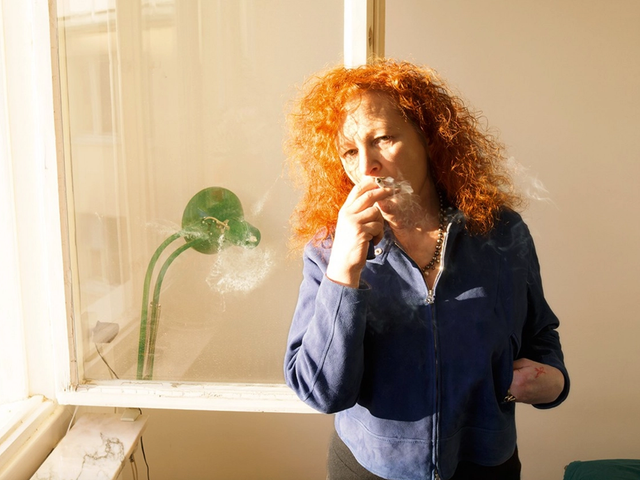
As Goodman’s health deteriorated over her final decade, her gallery experienced some contractions and defections. It closed its London space in 2020 and several high-profile artists departed: including Richter, who left after more than 30 years of working with the gallery to join David Zwirner, William Kentridge who went to Hauser & Wirth and Nan Goldin who joined Gagosian.
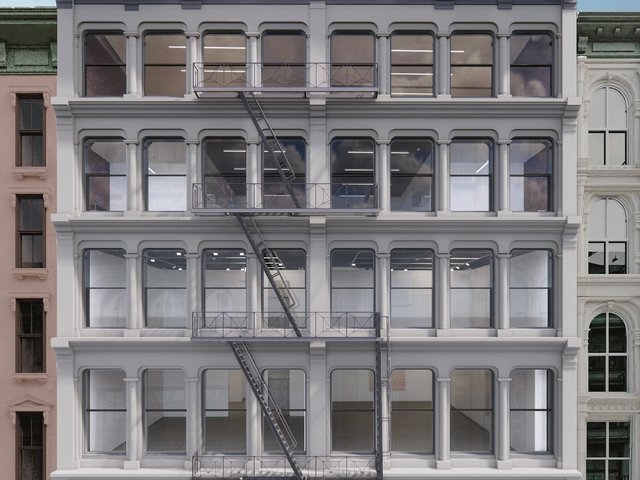
During that period, however, the gallery also continued to sign artists to its roster, including Alvaro Urbano, Andrea Fraser and the estate of Ana Mendieta. It also expanded its footprint, opening a Los Angeles location in 2023 and moving its New York location to a vast warehouse in Tribeca in 2024.
In 2021, the gallery announced a succession plan, and it is now led by its partners Emily-Jane Kirwan, Rose Lord, Leslie Nolen and Junette Teng.
Goodman was, in the late 20th century, a rare example of a powerful female dealer who rose up in an overwhelmingly male-dominated field. She spoke of the barriers she faced in her career, telling the Guardian that male collectors rarely took her seriously when she started out. From the 1980s she fostered and grew the careers of several women artists, including Tacita Dean, Anette Messager and the late Dara Birnbaum.
In a 2015 survey conducted by The Art Newspaper, Marian Goodman was one of five galleries—along with Gagosian, David Zwirner, Pace and Hauser & Wirth—whose represented artists accounted for 30% of all solo shows at New York museums.