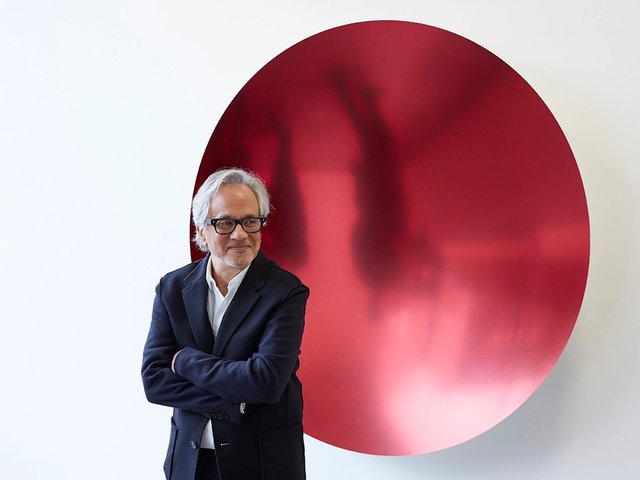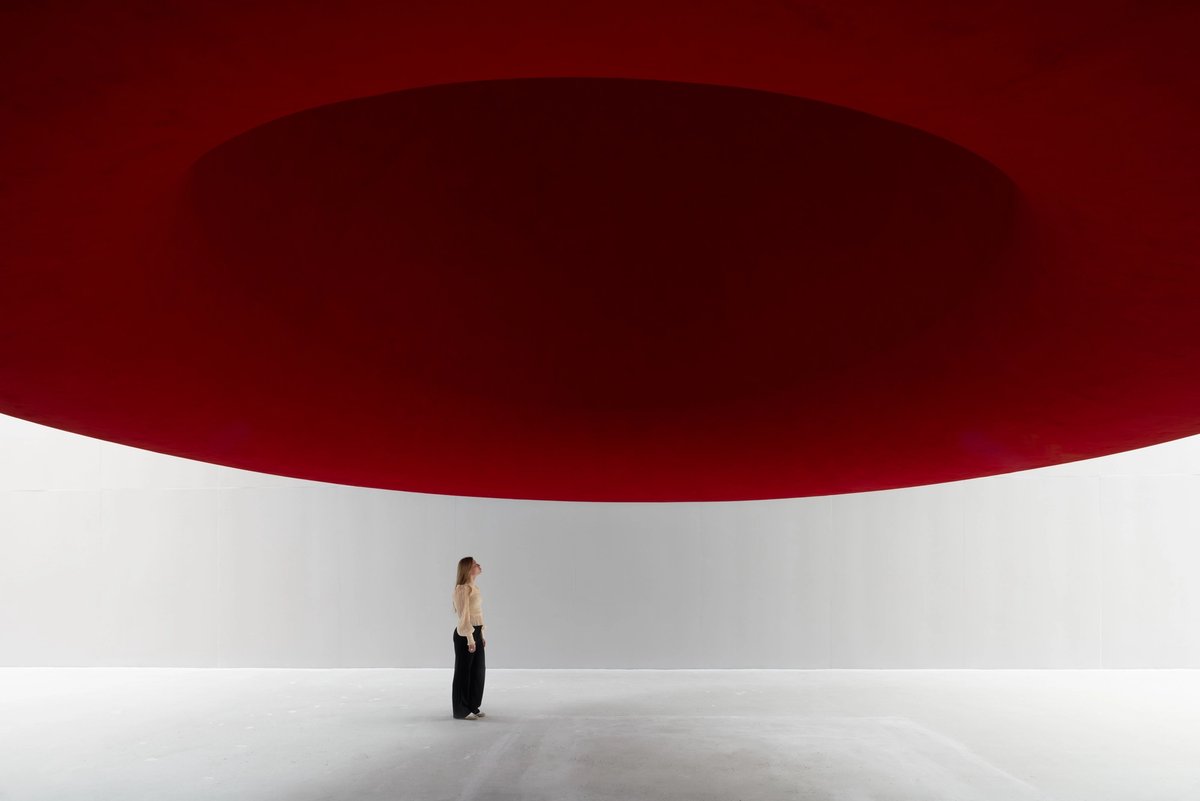
Anish Kapoor is, as he emphasises, “very much an artist”, but his next exhibition in Venice will focus on his architectural projects—or, perhaps more accurately, his sculptural projects that have verged on the architectural in terms of scale. The earliest work dates back more than 40 years.
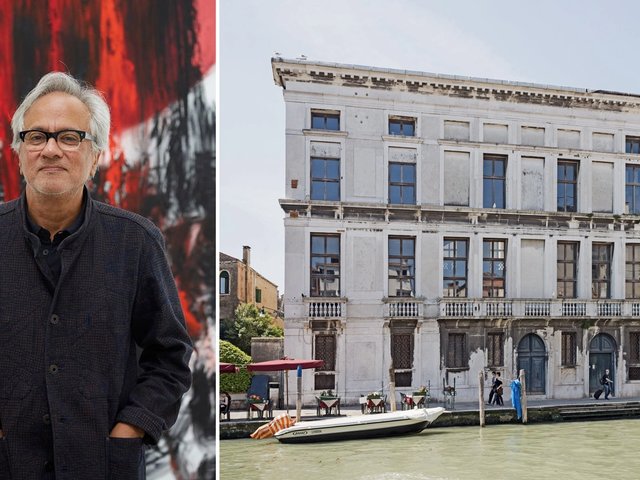
Some of them, such as Cloud Gate (2006) in Chicago and the recently opened Monte Sant’Angelo Metro Station in Naples have been realised; others have not. They exist only as models, and there will be between 50 to 70 of them on show at the Palazzo Manfrin, where Kapoor launched his foundation in 2022. This is the second time the historical space will open to the public.
Among Kapoor’s most ambitious unrealised projects are plans for a work in outer space. “It’s realistic in the sense that we’re in serious discussion—I can’t tell you with who—about doing something very ambitious out there, hopefully big enough to see from Earth. [It’s] not just a token,” Kapoor tells The Art Newspaper. It is not confirmed yet whether the model for this work will be unveiled in Venice.
Whether such projects are realised or not is almost immaterial to Kapoor. His Venice show, which opens 5 May, is a chance to explore the more non-commercial side of his work. “It’s about opening up my practice. It’s important that it isn’t restricted to what the market can consume. Yes, there’s a side of my practice that is for sale. But throughout my career I’ve always had all kinds of works—things made out of wax and all sorts of things—I’ve hardly ever sold a single one of those, and in a way that’s what keeps my practice alive. The real, or other, side of my practice has always been important.”
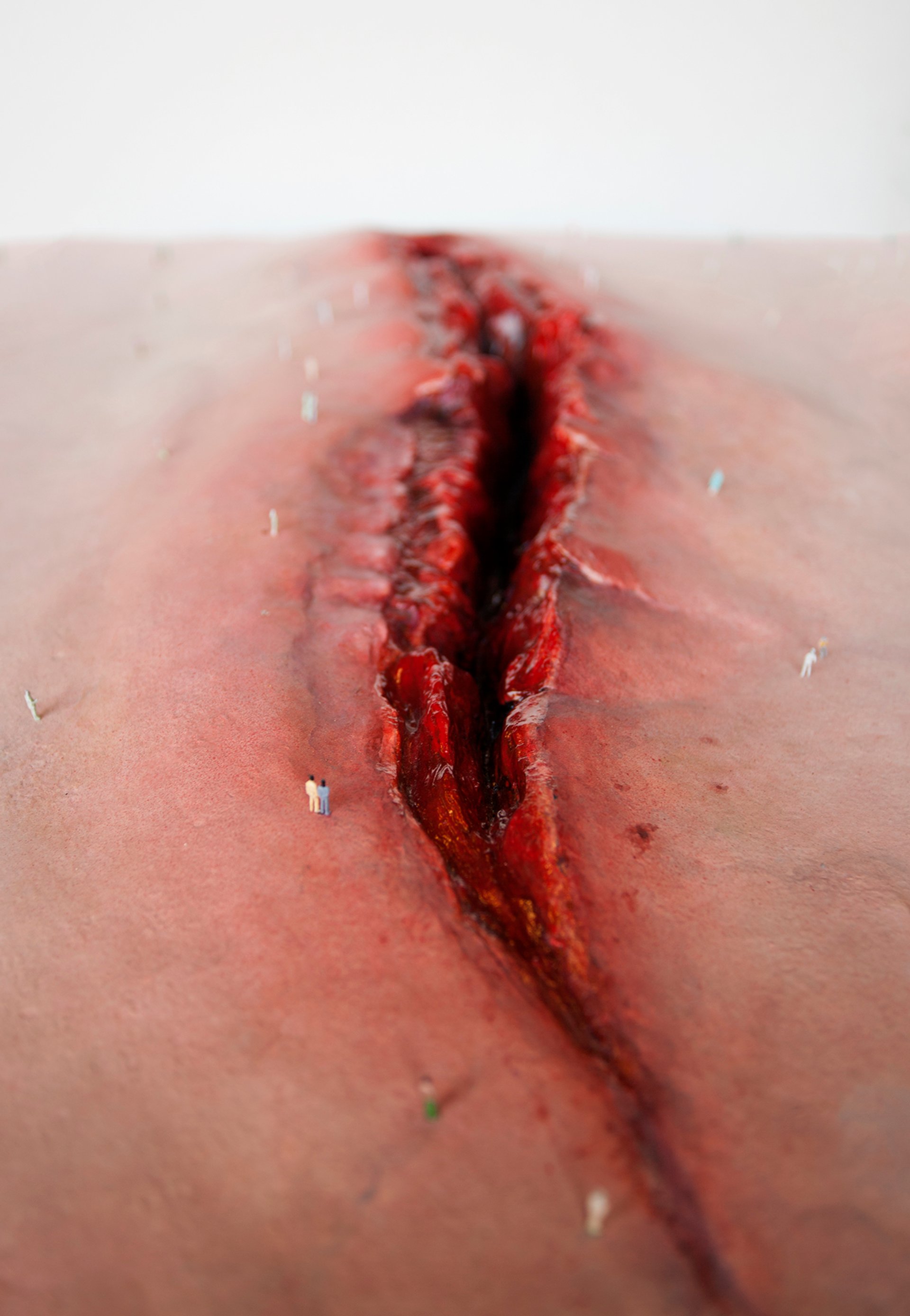
Model of Flesh (2002)
© Anish Kapoor
A mix of old and new works will go on show, including around six projects that have been realised. Among them is Descent into Limbo (1992), which will be installed on the Cannaregio site permanently once the exhibition closes in August. At the Edge of the World (1998), which already exists in two versions in red, has been remade for Venice in a “very sombre, dark, dark black”. Kapoor elaborates: “It’s a not-so-new paint that I’ve been using. Not Vantablack [a super-black coating developed by Surrey Nanosystems] but related to it.”
Then there are several new works. One of them consists of a small room measuring less than six-meters cubed, filled with lumps and smears of paint. “It’s an immersive painting,” Kapoor says. “You can’t enter it, of course, you just stand at the threshold.”
Kapoor has been outspoken about his political views in the past. He was loudly critical of Adriano Pedrosa’s title of the 2024 Venice Biennale exhibition, Foreigners Everywhere, which the artist described as “the re-appropriation of fascist sloganism”. Kapoor told The Art Newspaper at the time that the title and theme of the Biennale demonstrated “an utter naivety of the real effects these words still bear on people’s lives” and that the choice to use it came “from the perspective of a naively privileged white male curator”.
Today, Kapoor thinks the art world “is in a very weird place” when it comes to identity politics. “We seem to have been eclipsed somewhat by [the importance of] ethnic origin, and we’ve got to be rather careful about that, because what matters in the end is not where [art] comes from. What matters in the end is how it opens up our visual, emotional language. It’s very difficult. Obviously [this is] something that has been necessary, but I hope we’re at a point now where we can move beyond [identity] and return to connoisseurship and open the idea of what connoisseurship is—sense of multi various poetic language.”
So, what does Kapoor make of the Venice Biennale’s early beginnings, which were—and still continue to be—linked to ideas of Western views of nationalism? “Nationalism in a global, post-national world is in crisis,” he says. “But look where that has led us, to an extreme right-wing, nasty reiteration of ultra-nationalism. The Biennale was, of course, set up along so-called nationalistic lines, but that doesn’t mean that’s how we have to function.” He notes how, when he represented Britain at the Biennial in 1990, he was an Indian national. “I did not have a British passport. And what mattered at the time, and I hope still does, was that I was an artist working in Britain.”
Looking forward, Kapoor has a raft of exhibitions on his slate including a show dedicated to paintings at Scad Museum of Art, Savannah; an exhibition of steel sculptures at Lisson Gallery in New York; and a major show at the Hayward Gallery, which opens in June and will feature all new works. He last exhibited at the London institution almost 30 years ago, making him one of only two artists, alongside Bridget Riley, to have shown there twice. “The [gallery] hasn’t changed in 28 years. To revisit a space is a strange thing,” he says. “But the point is that the Hayward lends itself to formal adventure, which is what I’ve tried to do, to push it on.”
Form, it seems, is front of mind for Kapoor. “I truly feel that it’s important that, for me as an artist, I have nothing to say. I have no message to give the world. The whole point of the work is that it opens up the possibility of meaning,” he says. Quoting the French poet Paul Valéry, the artist adds: “A bad poem falls into meaning; therefore a good poem sits somewhere between meaning and no meaning. And that space for the viewer, that place in which one must ask the question, ‘Is it art? Does it matter? Who gives a shit?’ I think those things are very, very important in an age where [being] radical is hardly even possible anymore.”