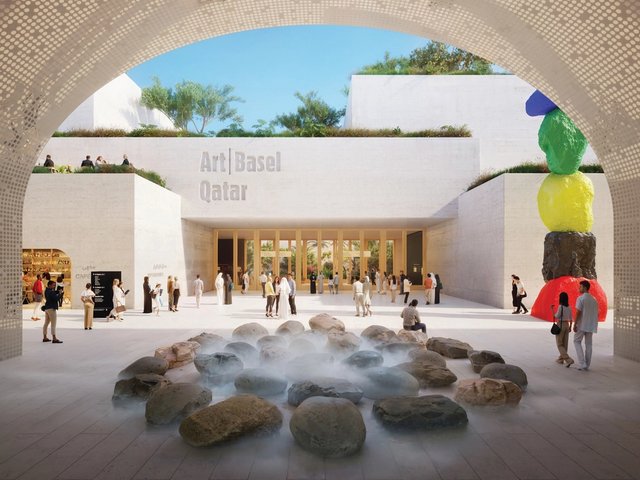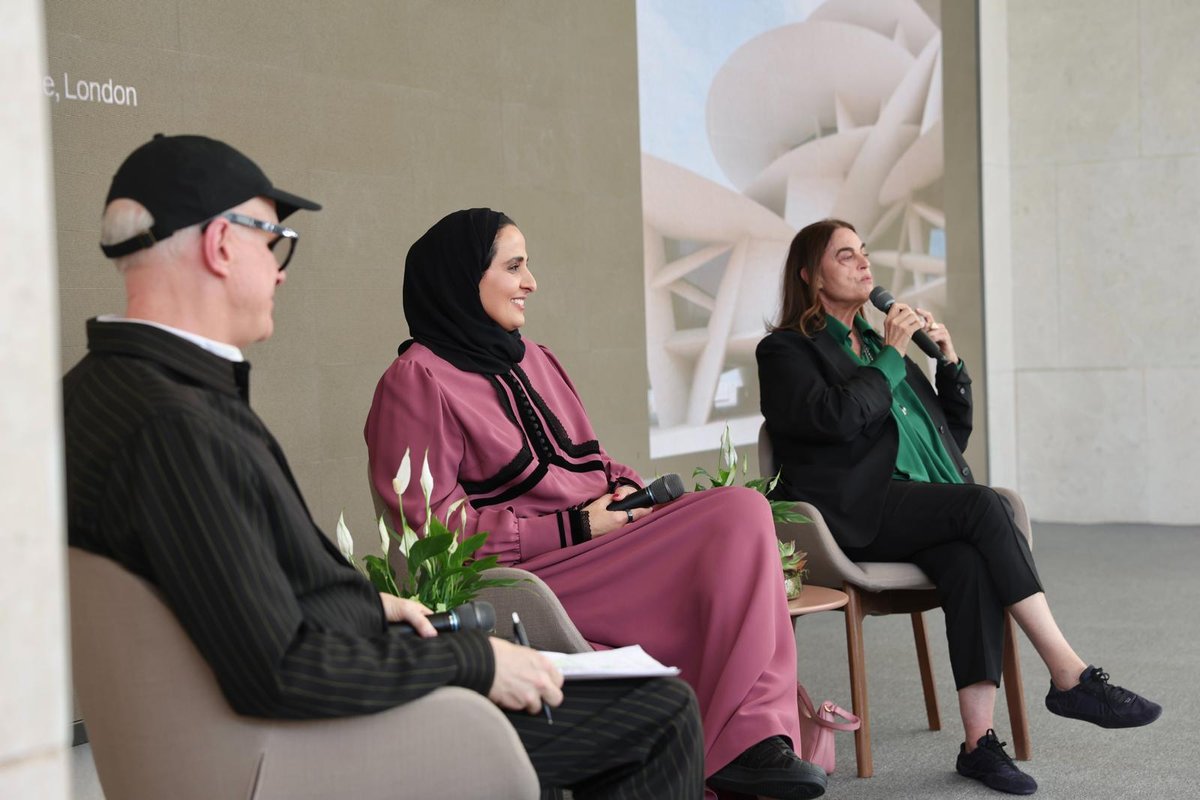
The hot ticket at the inaugural Art Basel Qatar fair this week (until 7 February) was a conversation on patronage with the country’s most prominent collector, Sheikha al-Mayassa, the sister of the current emir of Qatar and chair of Qatar Museums, a collection of over a dozen institutions and heritage sites in the country. The talk, entitled "Leaders of change: How is patronage shaping new art ecosystems?", was moderated by Hans Ulrich Obrist, the artistic director at the Serpentine gallery in London.
During the discussion with the Swiss mega collector Maja Hoffmann, Al-Mayassa discussed plans for a new “creative visa” aimed at attracting artists to the small, oil-rich state. The Egyptian artist Wael Shawky, the artistic director of the inaugural Art Basel Qatar fair, is the first recipient of the visa which allows creative professionals to collaborate with Qatari cultural organisations and work for extended periods in the country. At the Web Summit Qatar which also took place in the Qatari capital Doha this week, Al-Mayassa clarified that holders of the new Creative Visa are not required to reside in the country throughout the year. Full details on the visa are yet to be released.
She highlighted the “evolution of the nation towards a knowledge-based economy”, outlining the country’s decades-long cultural masterplan which rolls on with the long-awaited Art Mill museum of Modern and contemporary art due to launch around 2030.
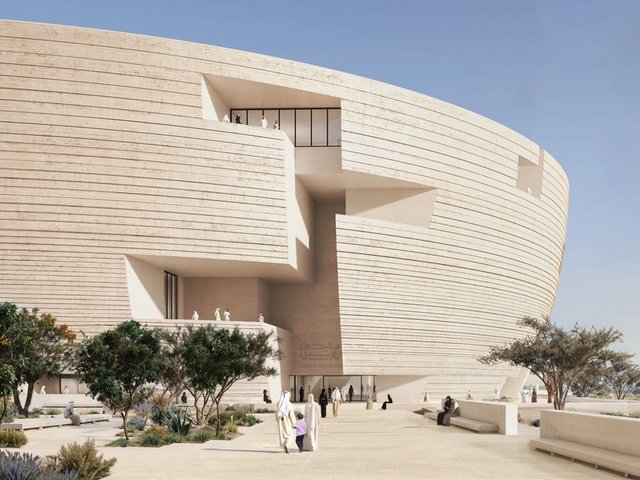
The Lusail Museum, designed by Basel architects Herzog & de Meuron, is another institution in development. The museum, located on Al Maha Island, will house the world’s biggest collection of Orientalist painting and photography. Crucially an accompanying think tank partnering with institutions around the world will address “ideas around colonialism and post-colonialism”, said Al-Mayassa.
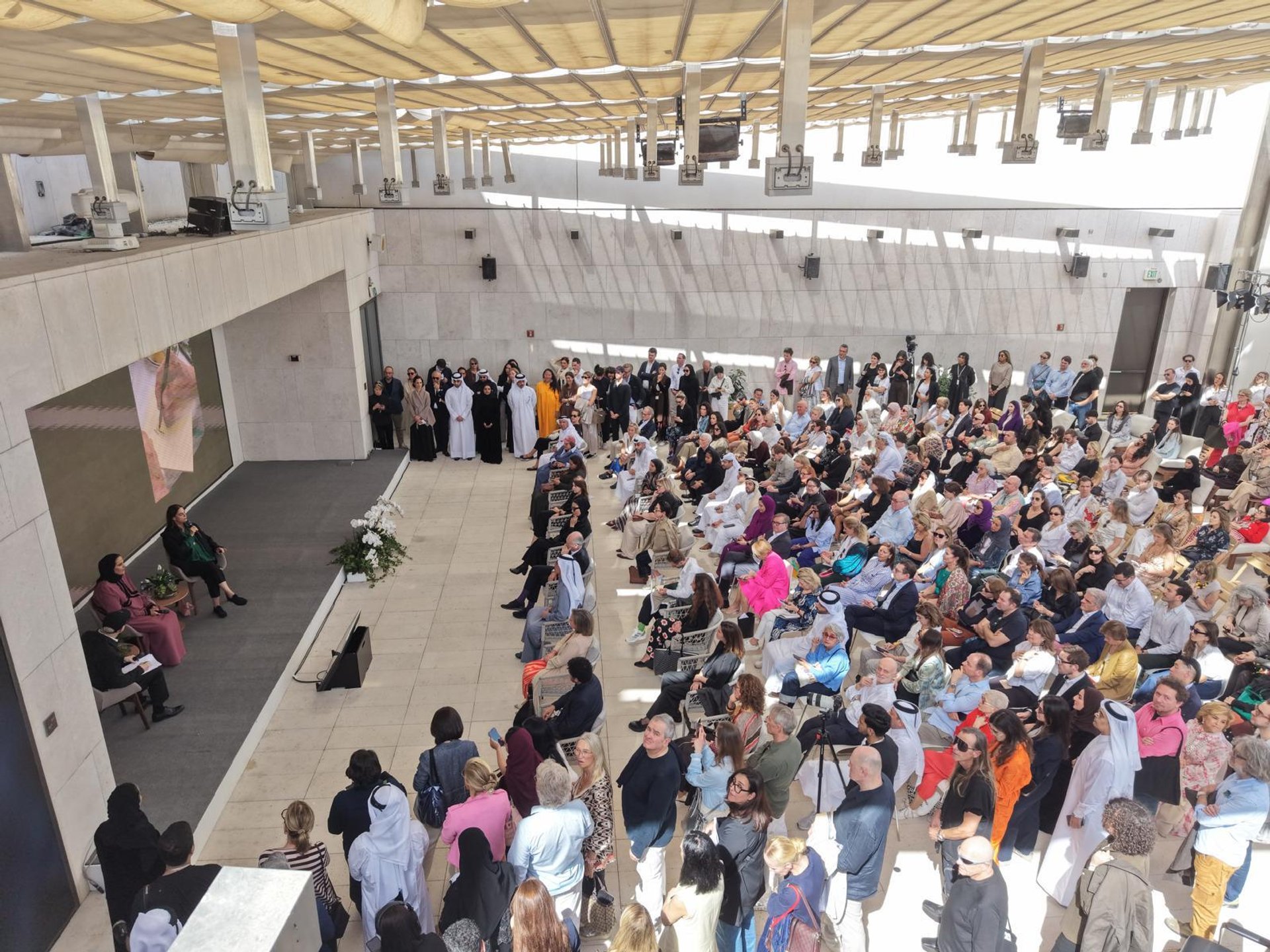
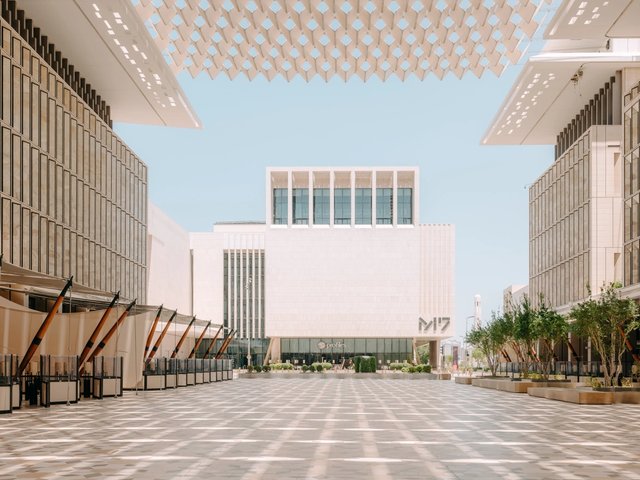
Hot ticket: a packed out auditorium for the Art Basel Conversations x Qatar Creates Talk "Leaders of change: How is patronage shaping new art ecosystems?" at M7 in Doha Courtesy of Qatar Museums
The launch of the Art Basel Qatar fair this week is meanwhile key in consolidating Qatar’s status as a cultural powerhouse in the region. “[Art Basel Qatar] is not your typical art fair… It’s a humane art fair where engagement is more important than transaction, discourse more important than division, and curiosity more important than conviction,” she added. “For the longest time, I can’t tell you how many art fairs came to us wanting to be here, and we never felt it was the right time.”
In spite of Qatar’s concerted cultural offensive however, questions still linger over its human rights record. Qatar hosted the Fifa World Cup in 2022, which drew substantial infrastructural investment to the country as well as international criticism over human rights violations.
“We were severely bullied when we won the World Cup,” said Al-Mayassa at the discussion, prompting her to ponder on how “we can use culture to bring people together”. She stressed also that “we are not intimidated by our belief system”.
As the conversation wound down, both speakers were asked about unrealised projects. Hoffmann wanted the late architect Frank Gehry to build a concert hall at her Luma campus in Arles in the south of France.
Al-Mayassa said: “I can share an example—Gerhard Richter, we are installing a pavilion [of his works] this year. This almost became an unreal project because it was very complicated and complex to realise. It has been a ten-year conversation, but it’s in the making and will be open in November as part of our quadrennial initiative. But until two years ago I didn’t think this project was ever going to happen”. The Rubaiya Qatar quadrennial opens in November across Doha, featuring more than 50 artists and over 20 new commissions.