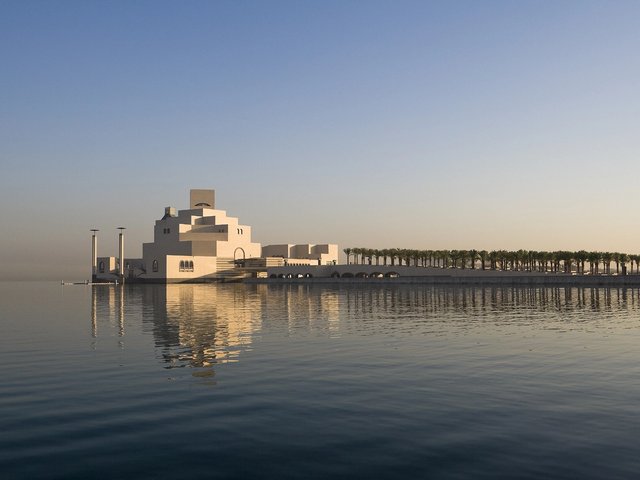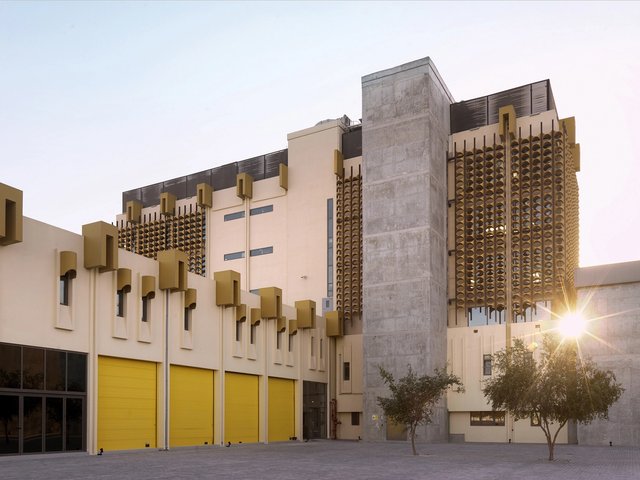
A new exhibition at the Museum of Islamic Art (MIA) in Doha shines a light on Afghanistan’s history and art from pre-Islamic times to the present day.
Empire of Light: Visions and Voices from Afghanistan (until 30 May), a highlight of Art Basel Qatar week, draws mainly on the MIA collection, presenting key works such as an early 13th-century ewer (Ghurid or Ilkhanid period) with silver and copper inlaid decoration and a folio from a Qur’an manuscript in kufic script in ink, gold and watercolour (9th century).
Nicoletta Fazio, the exhibition’s co-curator, tells The Art Newspaper that “MIA and Qatar Museums have rich and very diverse collections tackling different areas of the historical Islamic world including Afghanistan. We were lucky to be able to take out of storage some of our hidden treasures and to borrow from our sister institutions: The National Collection of Qatar and Lusail Museum, plus the Qatar National Library-Qatar Foundation.”
Both curators—Fazio and Thomas Lentz—also looked to international lenders, museums and libraries from the European Union and the United States, such as the National Museum of Asian Art at the Smithsonian Institution in Washington DC. Fazio adds. “For these we followed standard museum procedures for international loan requests.”
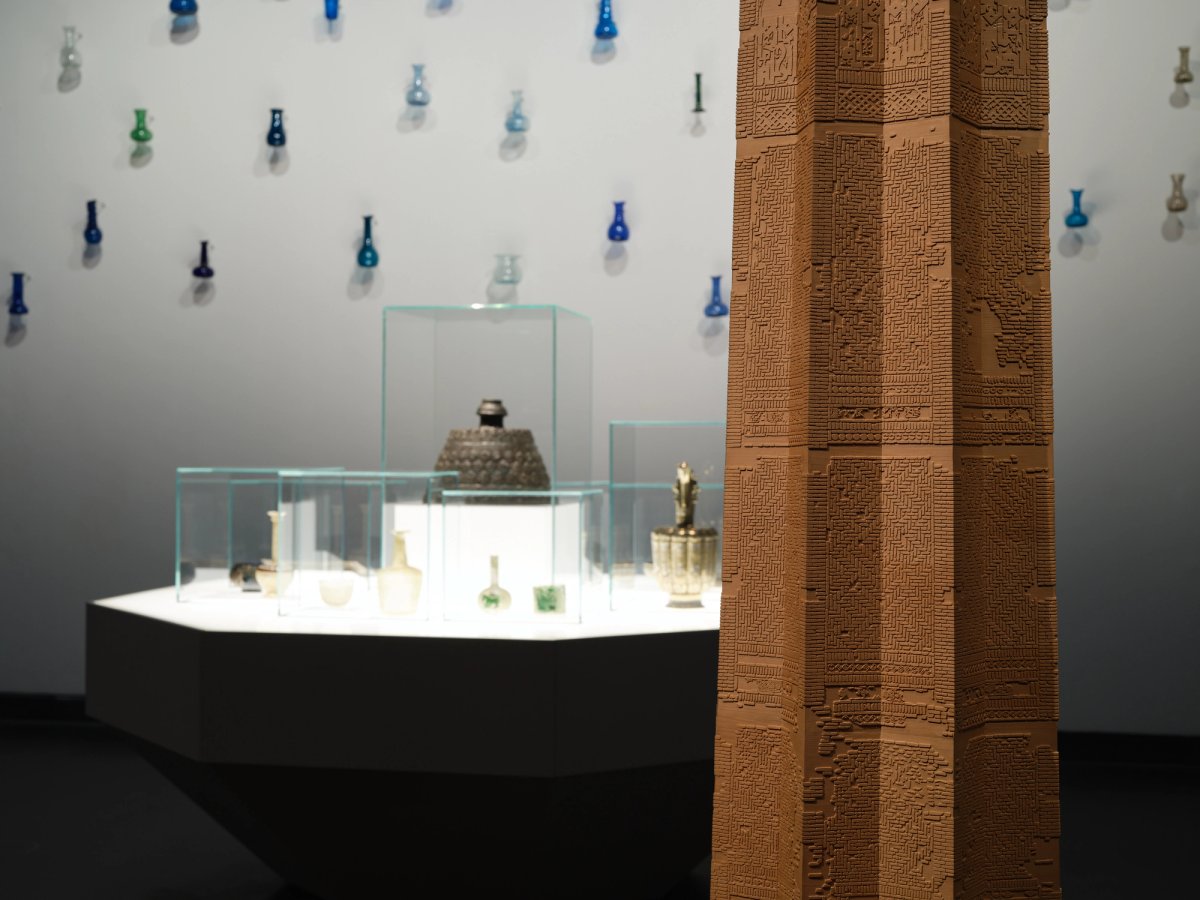
There are no objects from Afghan museums however but other objects have come from Afghanistan including a series of large-scale wooden pieces depicting key monuments; these were created in Kabul in the Jangalak Vocational Training Centre founded by the Aga Khan Trust for Culture (AKTC). One of these models shows what is left of the Noh Gunbad (nine domes) mosque which is considered the oldest Islamic building in the historical Eastern Islamic Lands.
“Noh Gunbad dates to latest the early ninth century and is built on a previous sacred site related to Buddhism. This shows continuity in religious practices and the memory of sacred landscape, which is specific of Afghanistan,” says Fazio. A wall of traditional glass vessels on display were produced in Herat in west Afghanistan by the craftsmen working with AKTC.
“As our partner for this project, AKTC dealt with the majority of the administrative tasks in Afghanistan to transfer the models and objects to Doha. They were of invaluable help being present on the ground in Kabul, taking care of the logistics from their side,” she adds.
Sections such as The Eastern Frontier explore the rise of Islam in Afghanistan from the mid-7th century to the Mongol invasions while another part focuses on art, architecture, and the development of intellectual life under Timurid rule in Herat during the 15th century. The final section, The Storms of History: Afghanistan in the Modern World, examines “historical burdens and present challenges”.
In 2021 the Taliban marched into Kabul and inaugurated the country’s second “Islamic Emirate”, imposing an extreme interpretation of Islamic law on 40 million Afghans. A report published in 2023 by the New York-based human rights organisation Artistic Freedom Initiative (AFI) says that the hardline militant group has criminalised artistic expression in the country.
The show also includes a number of contemporary works including Un-Safe Heaven (2025) by the Sydney-based artist Khadim Ali, who comes from Afghanistan’s historically marginalised Hazara community. This vivid fabric piece is “a deeply personal interpretation of Afghanistan’s turbulent recent past”, says an accompanying caption.
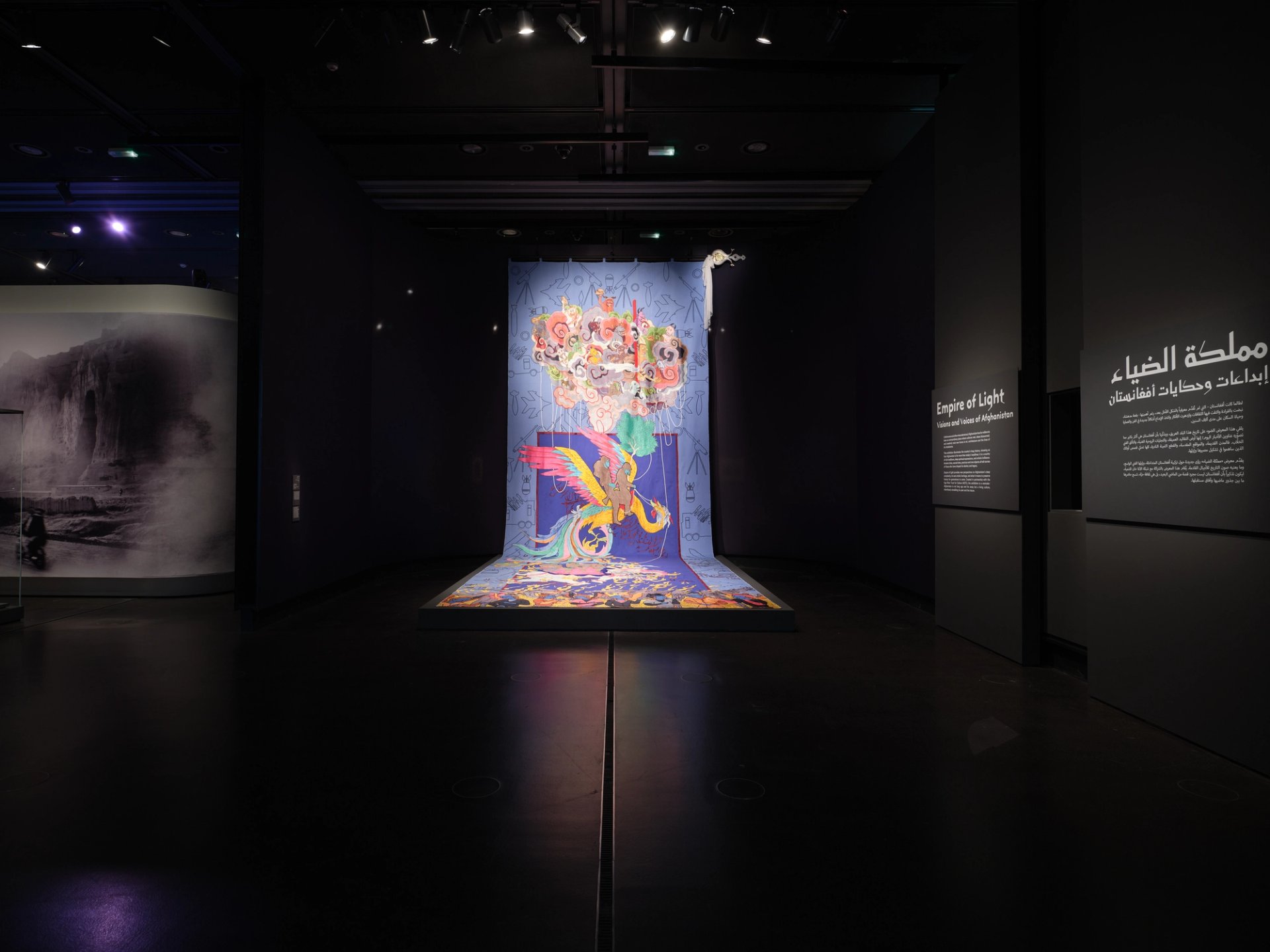
Khadim Ali, Un-Safe Heaven (2025)
Courtesy of Qatar Museums
“[The work] is a textile response to evacuation as a historical and spiritual condition. Embroidered by Afghan men and women, the work speaks through collective labour transforming a domestic craft into a language of witness. The embroidery becomes a flag not of nationhood or victory but of departure loss and survival,” Ali tells The Art Newspaper.