As Israel moves to expand its control of the West Bank—sparking international condemnation—concerns have been raised about the territory’s heritage.
A new bill aimed at establishing an Israeli civilian authority to govern antiquities and archaeological sites in the West Bank has been denounced by campaign groups, which claim that it violates international law.
The bill, which was approved for a first reading by members of the Israeli Knesset’s Ministerial Committee on Legislation on 8 February, would grant “sweeping authority” to the minister of heritage—currently Amihai Eliyahu—to appoint the governing council, declare antiquity sites, and expropriate land and antiquities throughout the West Bank. It is now due to have a first, second and third reading in the Knesset Plenu—the Knesset’s central authoritative body—and is expected to be passed later this month.
The advocate groups Peace Now and the Geneva Initiative, along with the Israeli NGO Emek Shaveh, released a joint statement expressing their concern about the heritage bill. The letter described the bill as “extraterritorial annexation” that “poses a serious threat to the viability of a negotiated two-state solution.”
It also says that the bill violates the 1954 Hague Convention and the Fourth Geneva Convention, “which prohibit an occupying power from making permanent institutional changes or exercising sovereign rights”. The statement adds that “applying Israeli authority to Areas A and B would effectively dismantle the Oslo II Accord, which assigned civilian responsibility for antiquities to the Palestinian Authority”.
The Oslo Accords divided the West Bank into three administrative areas: Area A, Area B, and Area C. Under the accords, heritage in Area A and B is overseen by the Palestinian Authority (though Israel controls security in B) and Israel has authority over heritage sites in Area C. According to the release “The Oslo II framework recognised that these ancient sites are the shared heritage of both Israelis and Palestinians and stipulated for the establishment of a joint Israeli-Palestinian committee for governing antiquities (Annex III, Article 2:Archaeology). The committee never met but the rationale that informed its creation is more relevant than ever.”
In a recent Facebook post, Israel’s heritage minister Amichai Eliyahu, a member of the far-right ultranationalist Otzma Yehudit party, which is part of Israel’s coalition government, confirmed plans to move “forward with the establishment of an independent Antiquities Authority for Judea and Samaria” (terms used by the settler movement to describe the West Bank.)
He wrote: “And the world is watching and understanding the message: The people of Israel will not leave the sites of its birthplace... Sovereignty is not a declaration. It is an action. There is no need for false piety or denial. Indeed, we are conquering. Just as Joshua conquered the land of Abraham, Isaac, and Jacob, his forefathers.
He continued: “Israel takes full responsibility for its heritage... All we're doing now, is taking care of this legacy properly”.
The campaign groups behind the letter criticising the move say it is a land grab. Many of the 6,000 antiquity sites in the West Bank are situated within or near Palestinian towns, and the notice claims that “the power to declare sites and expropriate land provides a legal pretext for establishing Israeli control deep within Palestinian population centres”.
New measures also announced on 8 February that would expand Israeli control of the West Bank to include Areas A and B, and make it easier for settlers to take over Palestinian land in areas under Palestinian control, have added a sense of urgency to the situation. The measures are expected to be signed off by Israel's top military commander for the West Bank.
Seizure of Sebastia
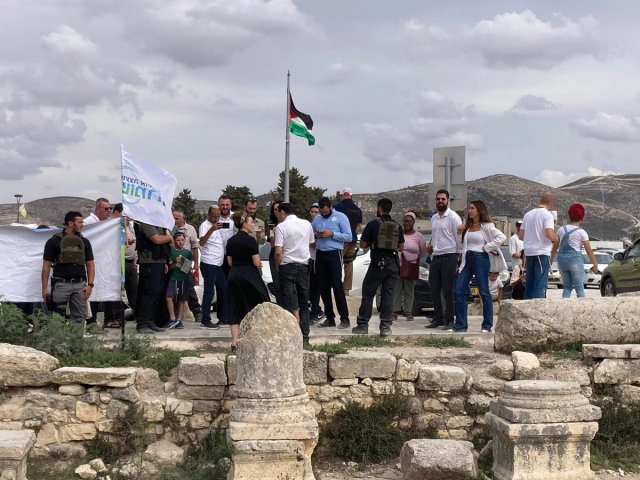
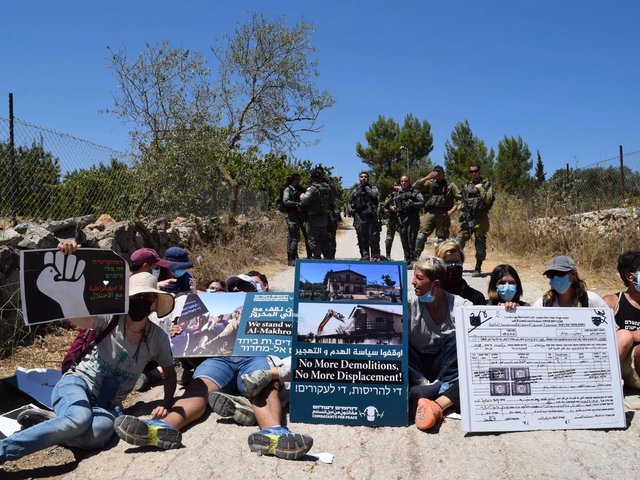
The antiquities bill is the latest apparent example of Israeli authorities attempting to seize control of heritage on the West Bank. For residents of the West Bank town of Sebastia, in Area B, the bill adds to stress already caused by a recent expropriation order. In November 2025, the Israeli Civil Administration (ICA) served a notice announcing that it was seizing the heritage site adjacent to the town, in Area C, as well as plots of land belonging to residents of Sebastia and its neighbouring town of Burqa.
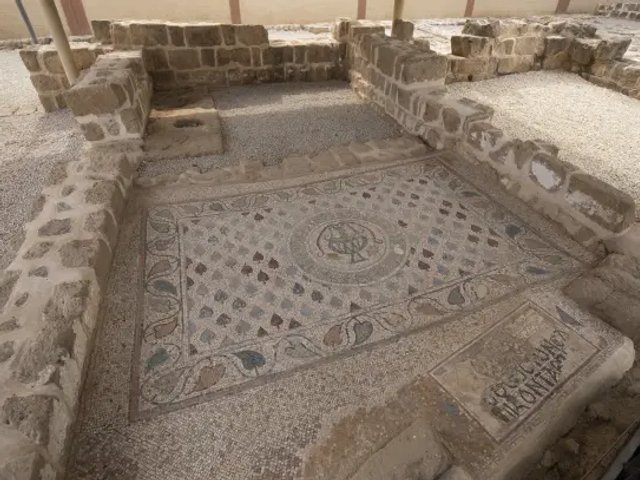
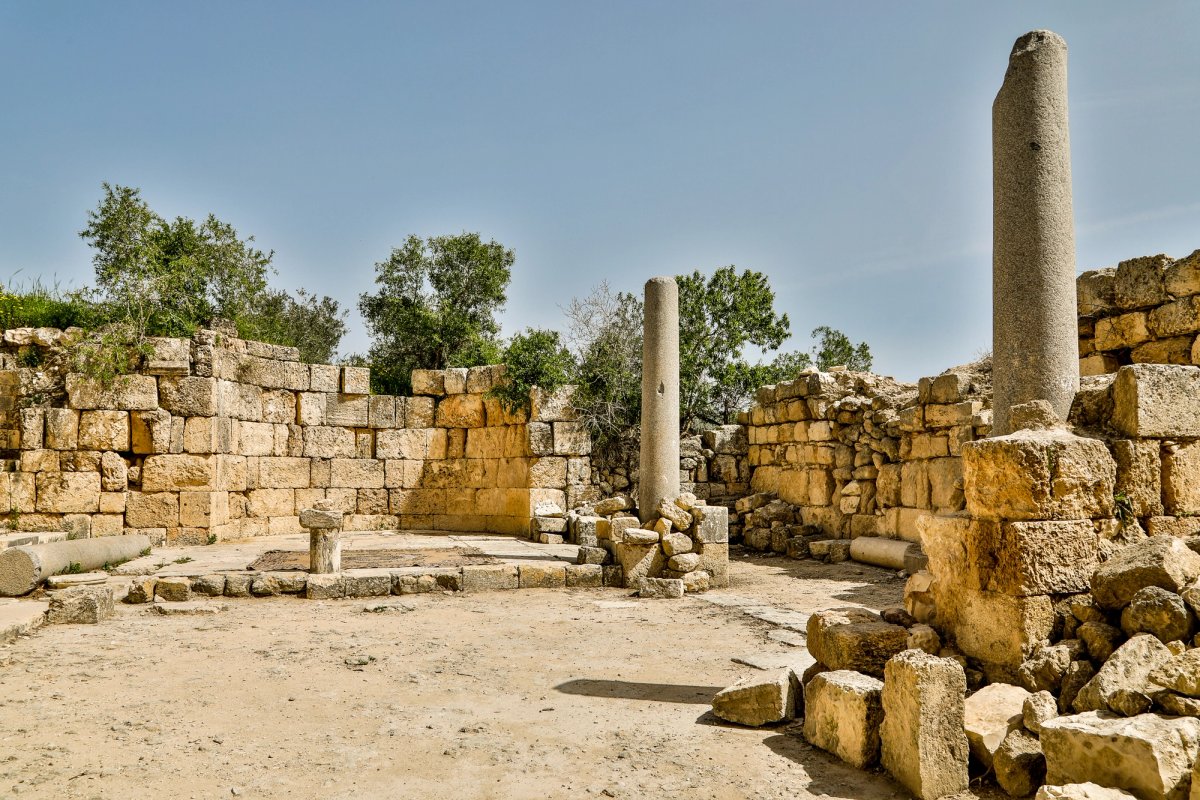
The site and the town embody a continuous cultural history spanning millennia, with impressive remains from the Iron Age through the Hellenistic, Roman, Byzantine, Crusader, Mamluk and Ottoman periods. The ancient site has been inscribed on the tentative Unesco World Heritage list for Palestine since 2012 and is the subject of heritage alerts by both Unesco and Icomos, due to threats from illegal settlements, military activities and infrastructure development.
Zaid Azahari, a tour guide from Sebastia, says that residents who rely on cultural tourism economically—who are the majority—fear that, based on previous instances, the Israeli ministry of heritage will move in very soon to physically separate the site from the village through bypass roads, fences, and controlled entrances, giving settlers exclusive control of the site.
The expropriation will be the largest seizure of land for an archaeological project in the West Bank since Israel occupied the area after the Six-Day War in 1967.
After the expropriation order was declared in November last year, Binyamin Har-Even, the staff officer for archaeology within the Civil Administration, told the Israeli media outlet Channel 7: “Sebastia is one of the most important archaeological sites in Judea and Samaria. The expropriation will make it possible to protect the remains, rehabilitate the damage, and make the site accessible for future generations. We will continue to act to safeguard the assets of our national heritage.”
Tayla Ezrahi, the head of International Relations and Advocacy at Emek Shaveh, however, says: “The Israeli argument that the expropriation of 1,800 dunams of land from the residents of Sebastia and Aqraba is necessary is pure gaslighting. Israel claims that the land must be confiscated in order to protect the site, yet it already exercises full enforcement powers over the area. The expropriation is in fact intended to facilitate the development of the site, the construction of a road that will bring Israelis from Area C, and the fencing off of the site to block Palestinian access. None of these measures are in any way related to preservation; rather, they serve as tools to push Palestinians out of the site.”
Prior to this order in 2023, Israel’s ministry of heritage allocated $8.8m to transform Sebastia into a tourism destination, with plans for a surveillance infrastructure and a military tower.
Azahari says of the new expropriation order: “The site is our livelihood and our identity. Our families have lived with and protected these ruins for generations and cutting us off from them means destroying local tourism, shutting down shops and cafés, and erasing our ability to make a living. This is not preservation it is displacement under the cover of archaeology.”
What is happening now goes beyond laws and bills, Azahari says. “It is about a living town trying to defend itself. We have seen this model before in other places, and we know exactly what it leads to. That is why our community, together with the municipality, tour guides, farmers, and heritage groups, is mobilising to save Sebastia by speaking out, engaging international institutions, and insisting that this site remains connected to the people who have protected it for generations.”
“This is a struggle to keep Sebastia alive,” he says. “Not just on a map, but as a community.”