UK cultural organisations focused on prisons have criticised government contractor Serco for tearing down works of art from court custody suites across England and Wales, claiming the move undermines rehabilitation efforts.
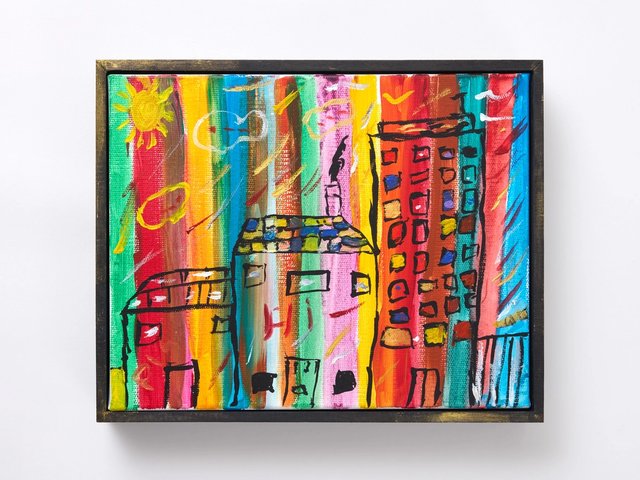
The works, produced by prisoners at HMP Doncaster, were commissioned by the government's Prisoner Escort and Custody Services to brighten court cells that are often underground with little natural light. However, according to a report from the Lay Observers—members of the public who monitor those in court custody—“aside from a small number of exceptions, only courts operated by the contractor GEOAmey have displayed them”. The report adds that some Serco-operated courts “initially put up the artwork, but quickly removed it following instructions from Serco management”.
Robert Morrall, the director of Pictora, which has worked with art in prisons since 2009, told The Art Newspaper the removal was “a sad day” that "goes against the values of a civilised society". He emphasised that creating and viewing art is enshrined in Article 27 of the Universal Declaration of Human Rights, which starts: “Everyone has the right freely to participate in the cultural life of the community, to enjoy the arts and to share in scientific advancement and its benefits.“
Morall says: “Just simple art on walls of secure establishments helps facilitate valuable mindfulness and a calming influence for those most vulnerable in our society, in their darkest hours.”
He adds: "Within the criminal justice system’s secure estate the value of art cannot be underestimated. For those creating art, it builds self esteem, confidence and soft skills that link to employability. It can be a key to positive resettlement and the reduction of reoffending, which currently costs the country in terms of economic and social cost around £18.1 billion.”
Gemma Peppé, the founder of Art on a Postcard, which commissions postcard sized artwork to raise money for charities, has worked extensively with people in the criminal justice system. She tells The Art Newspaper: “It's been proved that art is a powerful tool to unlock health and happiness, so why would Serco want to undermine this simple and harmless tool in women who are supposed to be undergoing rehabilitation? It's as if they want them to come out in a poorer state.”
A spokesperson for Prodigal Arts, a charity that supports rehabilitation through the creation and sale of art, says: “Prodigal Arts is troubled by the decision to remove murals from court custody areas. These works were installed to humanise stark environments and support people at a moment of extreme stress and taking them down sends the opposite message about dignity and respect within the justice system.”
A Serco spokesperson said in a statement: “Serco is committed to providing a safe and welcoming environment for detainees in our care. We are working with HMPPS to enhance the look and feel of Court Custody Suites.”