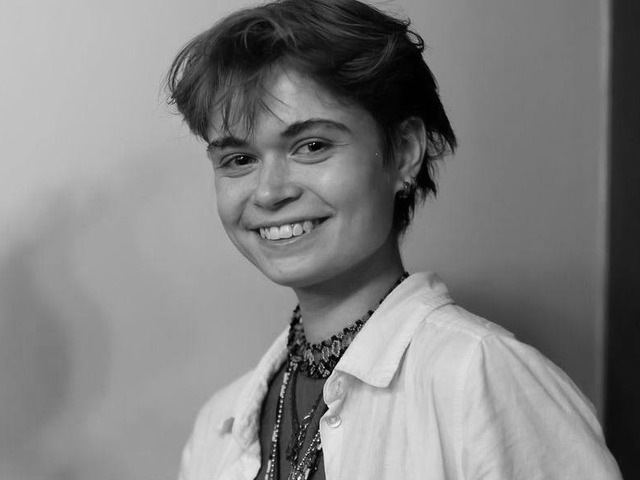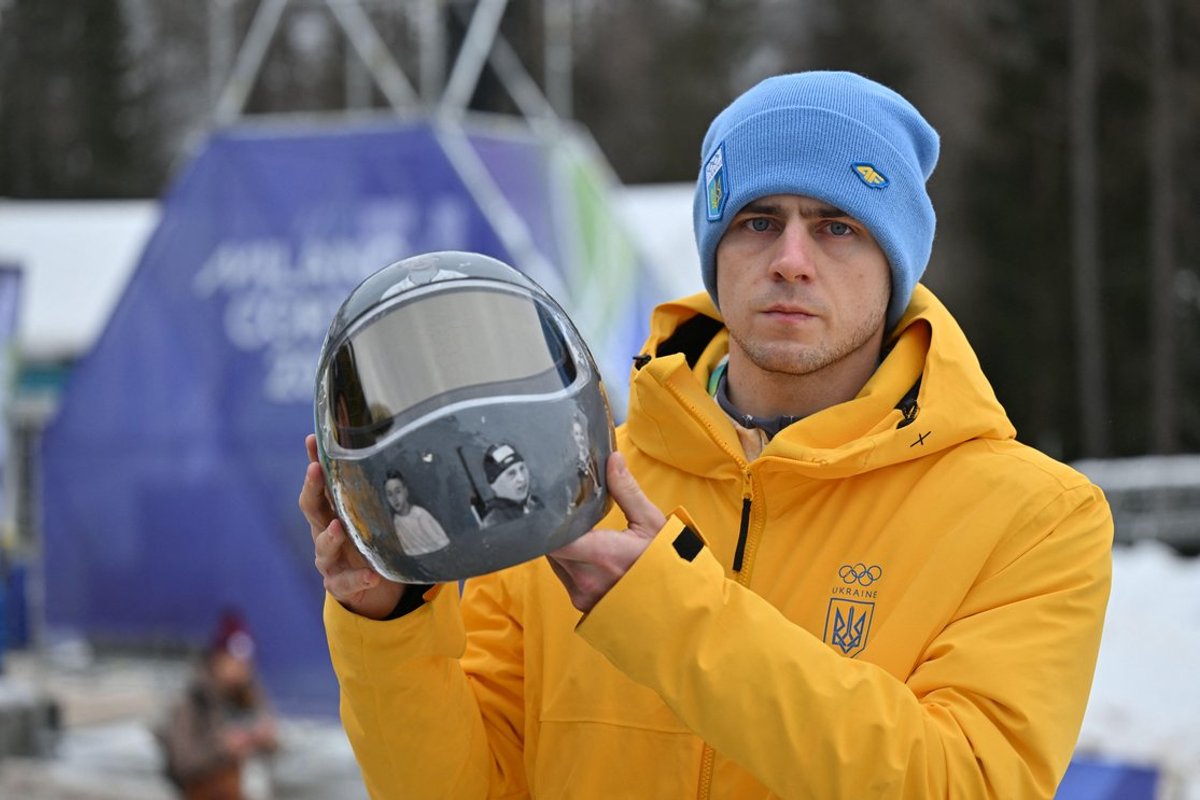
The Ukrainian skeleton racer Vladyslav Heraskevych was barred from the Winter Olympics on Thursday for refusing to abandon his “helmet of memory”, which featured imagery honouring athletes killed during the conflict with Russia. The artist behind the images, Iryna Prots, tells The Art Newspaper that she feels “anger, rage, pain” at the International Olympic Committee (IOC)’s decision.
Prots, speaking amid continuing missile and drone strikes—which have led to energy blackouts in Ukraine and left many in the country without heat—says that banning Heraskevych and the helmet violates the Olympic spirit.
“I believe that they did not treat Vladyslav fairly,” she says. “The helmet was dedicated not just to athletes, but to Olympians, former or future, whose lives were taken by war.”
The memory helmet features portraits of 21 athletes, including nine-year old Viktoria Ivashko, a judo athlete who was killed with her mother in 2022 by a Russian strike on Kyiv, and Maksym Halinichev, 22, a Youth Olympics silver medallist boxer killed in the Luhansk region in March 2023.
Wearing the helmet, Prots says, was “a very courageous act. He could have taken another helmet and taken part in the games,” she continues—referencing IOC officials’ explanations that they had sought a compromise with the athlete, suggesting he could wear a black armband or ribbon instead. “He is a hero to me… My heart breaks that instead of support, he received punishment for Memory.”
Prots explains she is a family friend of Heraskevych, and has known him since he was a boy. He had come to her, she says, “not as an athlete to an artist” but “as a person to a person”, with a wish to commemorate Ukrainian athletes who had fallen in the war. “He said, ‘I want them to be with me. Those who did not reach this start’. And I understood: this will not be a drawing; it will be a presence.”
Both sport and art are at the centre of Ukraine’s identity, Prots adds, who is known for her paintings of flowering fields in the Tuscan countryside, which she has visited often. “Sport is about the body and spirit. Art is about the soul. Today, Ukraine is defending both. We are fighting not only for territory. We are fighting for the right to remember. For the right to be ourselves. For the right to live.”
Heraskevych has chronicled his Olympic odyssey and his intentions with the helmet in Instagram posts. In posts leading up to his suspension, he called out what he describes a the “IOC’s double standards”, noting that at this year’s opening ceremony, Jared Firestone wore a kippah with the names of Israeli athletes killed during the Munich Massacre of 1972.
In a statement on 12 February after Heraskevych’s disqualification, the IOC said that it had tried to find with him “the most respectful way to address his desire to remember his fellow athletes who have lost their lives following Russia’s invasion of Ukraine”, but he had chosen to “openly defy the IOC’s Guidelines on Athletic Expression.”
The Ukrainian President Volodymyr Zelensky said in a statement on X:
“I thank our athlete for his clear stance. His helmet, bearing the portraits of fallen Ukrainian athletes, is about honour and remembrance. It is a reminder to the whole world of what Russian aggression is and the cost of fighting for independence. And in this, no rule has been broken.”
On Friday (13 February) in Milan, as he prepared for a hearing on his case at the Court of Arbitration for Sports, Heraskevych said in another post: “I am confident that I did not violate any IOC rules, so I consider my disqualification absolutely unjustified.”
Heritage shirt sparks controversy
Meanwhile, German politicians and media outlets have criticised the IOC’s decision to sell a T-shirt featuring artwork relating to the 1936 Berlin Games—which was held in Nazi Germany—via its online shop. The shirt depicts a man wearing a laurel wreath, with the Olympic rings above him, while an Brandenburg Gate is also featured. The Nazis used the 1936 Olympics as an opportunity to promote their regime and ideals.
In a statement to The Art Newspaper, an IOC spokesperson said: “While we of course acknowledge the historical issues of ‘Nazi propaganda’ related to the Berlin 1936 Olympic Games, we must also remember that the Games in Berlin saw 4,483 athletes from 49 countries compete in 149 medal events. Many of them stunned the world with their athletic achievements, including [the Black US track and field athlete] Jesse Owens.”