Judith F. Baca: Great Wall of Los Angeles: The 1970s—A Decade of Defiance and Dreams
Jeffrey Deitch, until 4 April
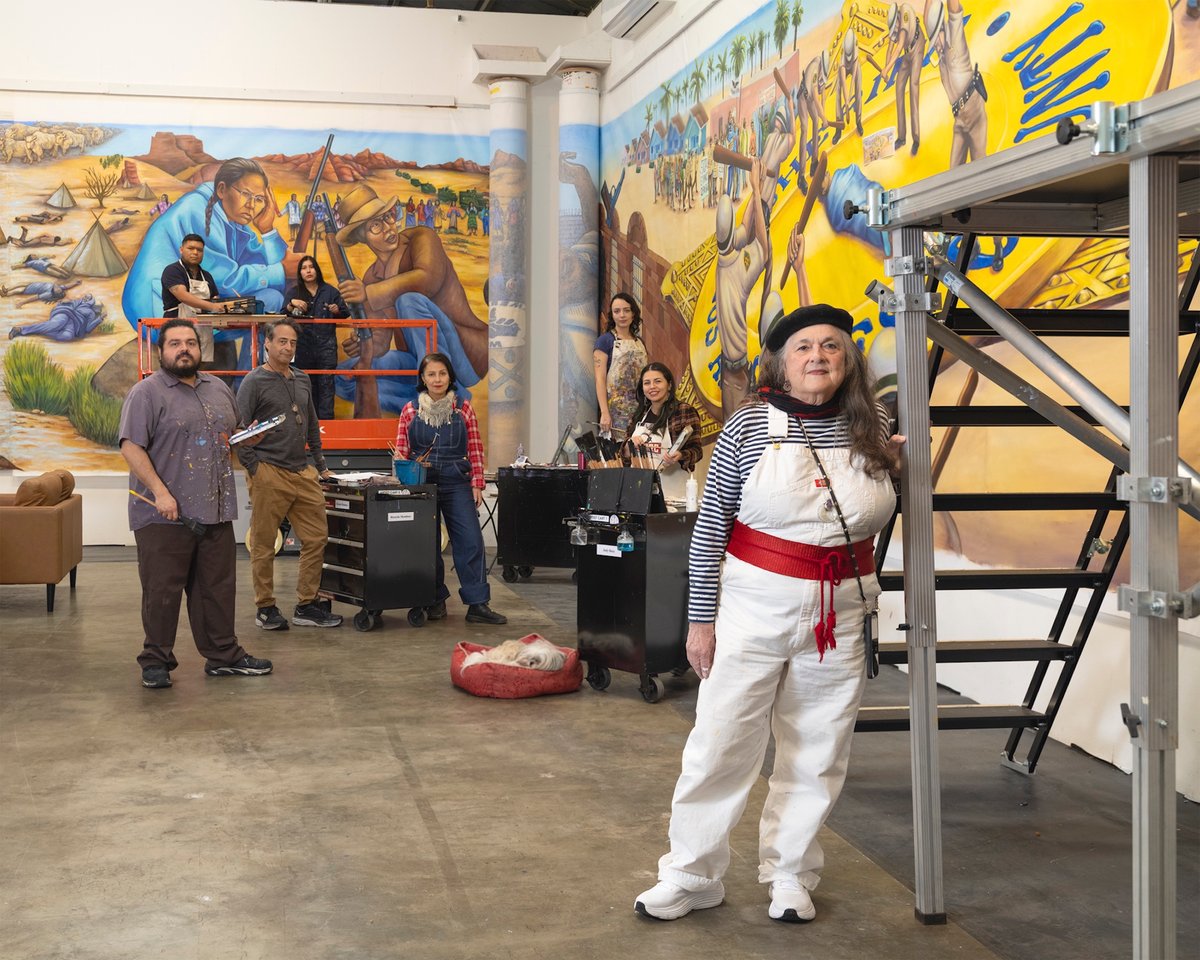
Connecting the protest art of yesteryear to the resistance of today, this show chronicles the early development of The Great Wall of Los Angeles. Led by the artist and activist Judith F. Baca on behalf of her organisation, the Social and Public Art Resource Center, it extends the legacy of the public mural she started in 1976. It memorialises a series of indelible moments from the political solidarity movements that defined the 1970s, including the Chicano Moratorium march against the Vietnam War and the campus uprisings protesting police violence at Kent State. Baca, who was awarded the National Medal of Arts by former US president Joe Biden, is working with a team of artists to tell socially engaged stories on 12ft-tall panels. “I want to use public space to create … consciousness about the presence of people who are often the majority of the population but who may not be represented in any visual way,” she says. T.A.
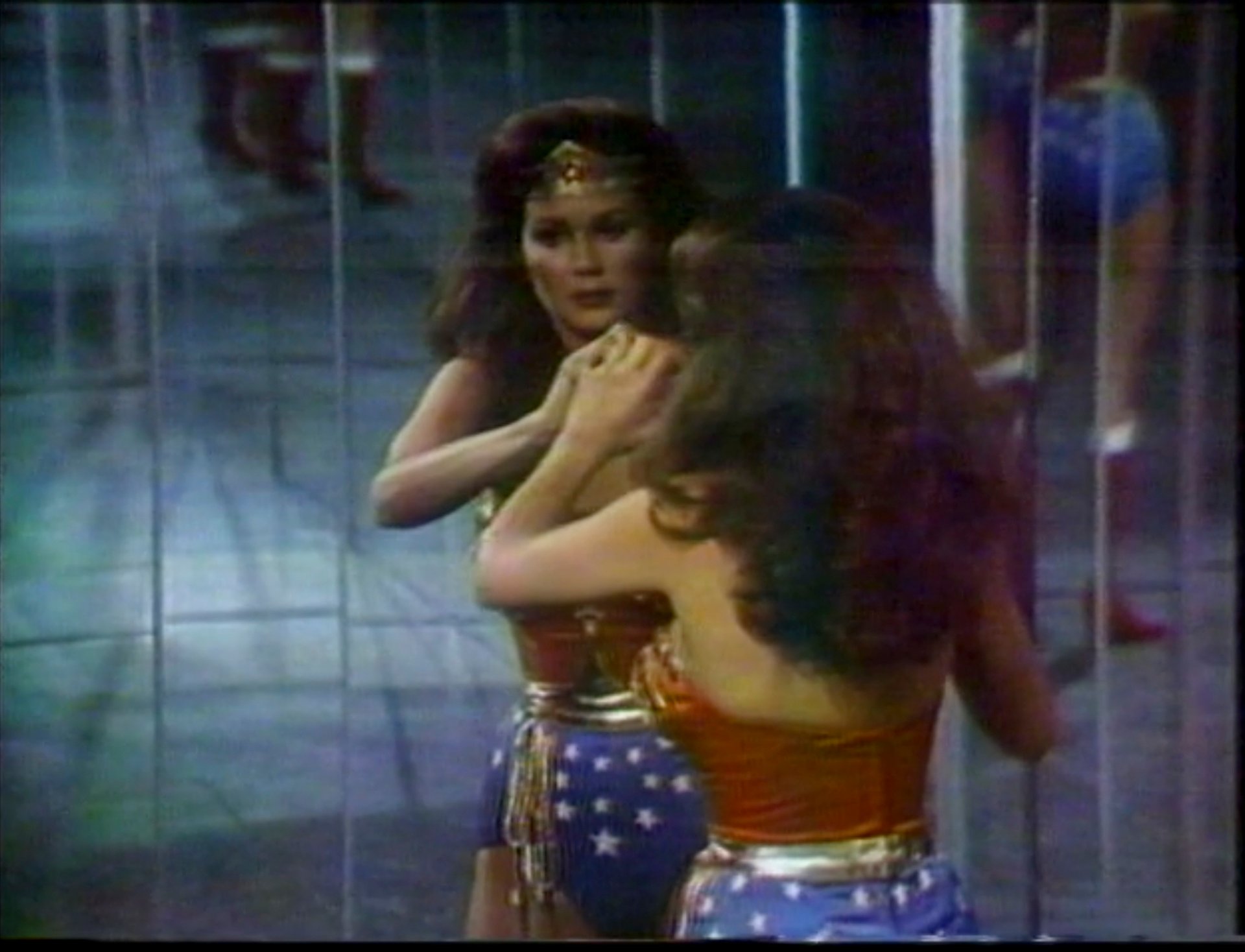
Dara Birnbaum, Technology/Transformation: Wonder Woman, 1978/79. Video still. Courtesy of the artist and Electronic Arts Intermix, New York.
What a Wonderful World: An Audiovisual Poem
Variety Arts Theater, until 20 March
The Variety Arts Theater in Downtown Los Angeles plays host to the first major US exhibition of time-based works from Germany’s lauded Julia Stoschek Foundation. The title of the exhibition is taken from the Louis Armstrong song from 1967; it was ironic even then, coming out during a particularly tumultuous period.
Forty-five works are on view throughout the theatre’s labyrinthine spaces. The works were chosen by Udo Kittelmann, who likes to refer to himself as an “editor” rather than a curator, and run the gamut from early motion-picture history (Alice Guy-Blaché, Georges Méliès, Walt Disney) to contemporary works by Doug Aitken, Arthur Jafa and Bunny Rogers. Pieces from the foundation’s collection are shown alongside a selection of borrowed and archival materials. Some of the contemporary pieces are critical, ironic, even cynical.
One of the most emotional works on view is a Rogers animation, Mandy’s Piano Solo in Columbine Cafeteria (2016), in which a young woman plays a melancholy tune while red wine is splattered on the ground. The piece references the 1999 Columbine High School massacre, when two students killed 12 fellow students and one teacher in a violent rampage. S.C.
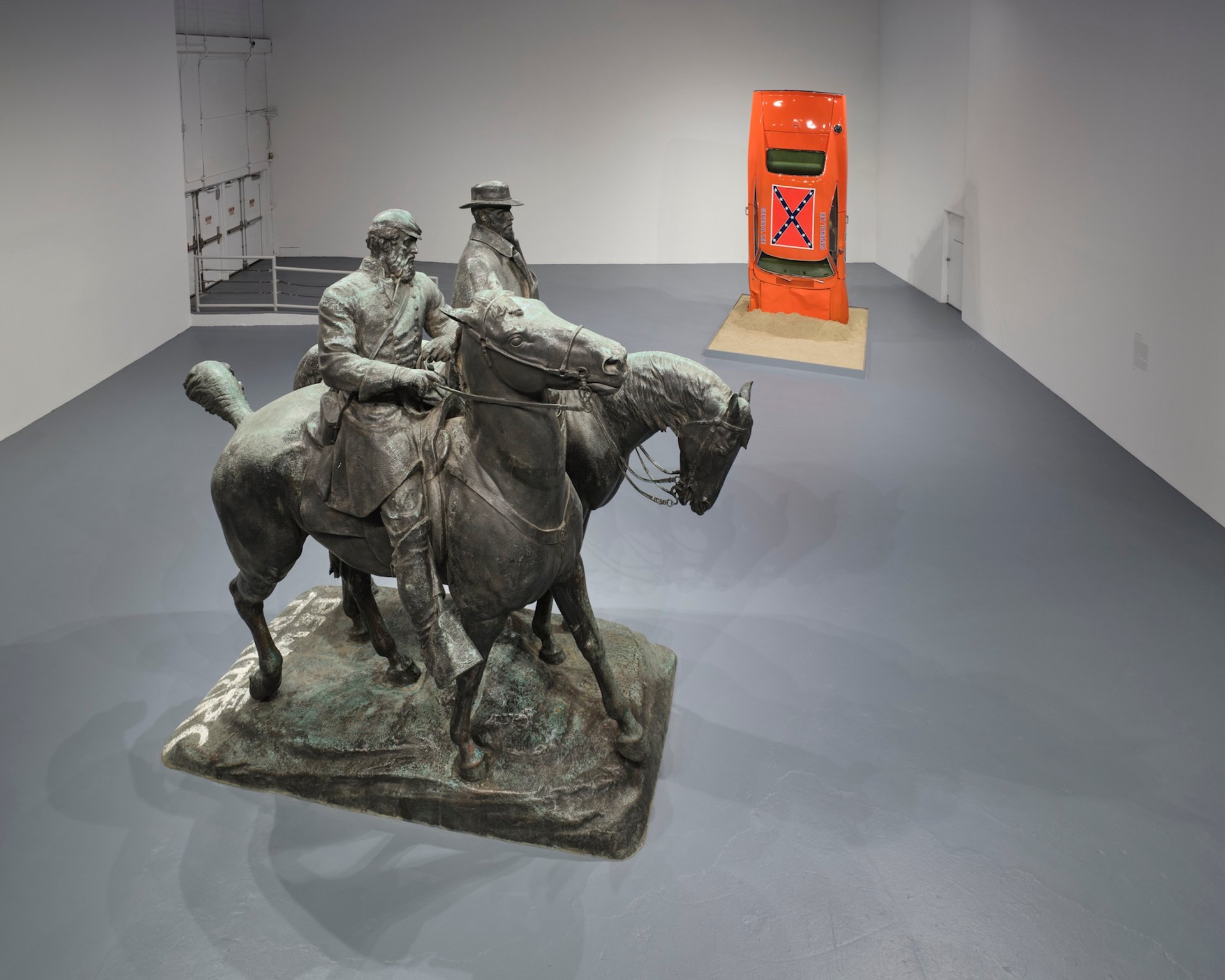
Installation view of Monuments, until 3 May at The Geffen Contemporary at Moca. Courtesy of The Museum of Contemporary Art (Moca) and The Brick. Photo by Fredrik Nilsen.
Monuments
The Brick and the Geffen Contemporary at the Museum of Contemporary Art, until 3 May
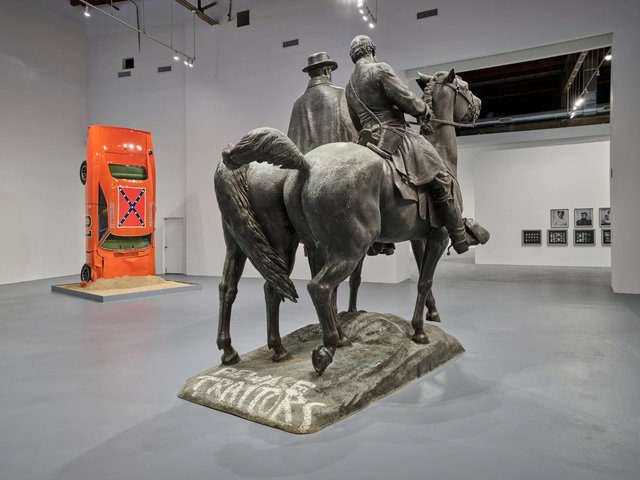
The co-curators Hamza Walker of the Brick and Bennett Simpson at the Museum of Contemporary Art embraced a freewheeling and thought-provoking approach, placing a number of Confederate monuments, some of which were already paint-bombed or defaced with graffiti, into searching, expansive and multi-directional dialogues with around 20 (mainly Black, almost all contemporary) artists. A few artists successfully took on monumentality itself as a theme, with Hank Willis Thomas upturning a full-scale replica of the General Lee car from the old television hit The Dukes of Hazzard, and Karon Davis casting her dreadlocked son into the outsized, heroic role in her sculpture. He holds a miniaturised monument by the tail, like a Baroque David holding the head of Goliath. Then there is the deconstructed sculpture by Kara Walker, a contribution so central to the show that she is credited as a co-curator and it occupies its own venue, the Brick, while all other works are displayed at the Geffen. It represents one way—certainly the most hands-on—of responding to the hotly politicised removal of Confederate monuments that has impacted US cities from Baltimore to Montgomery. J.F.
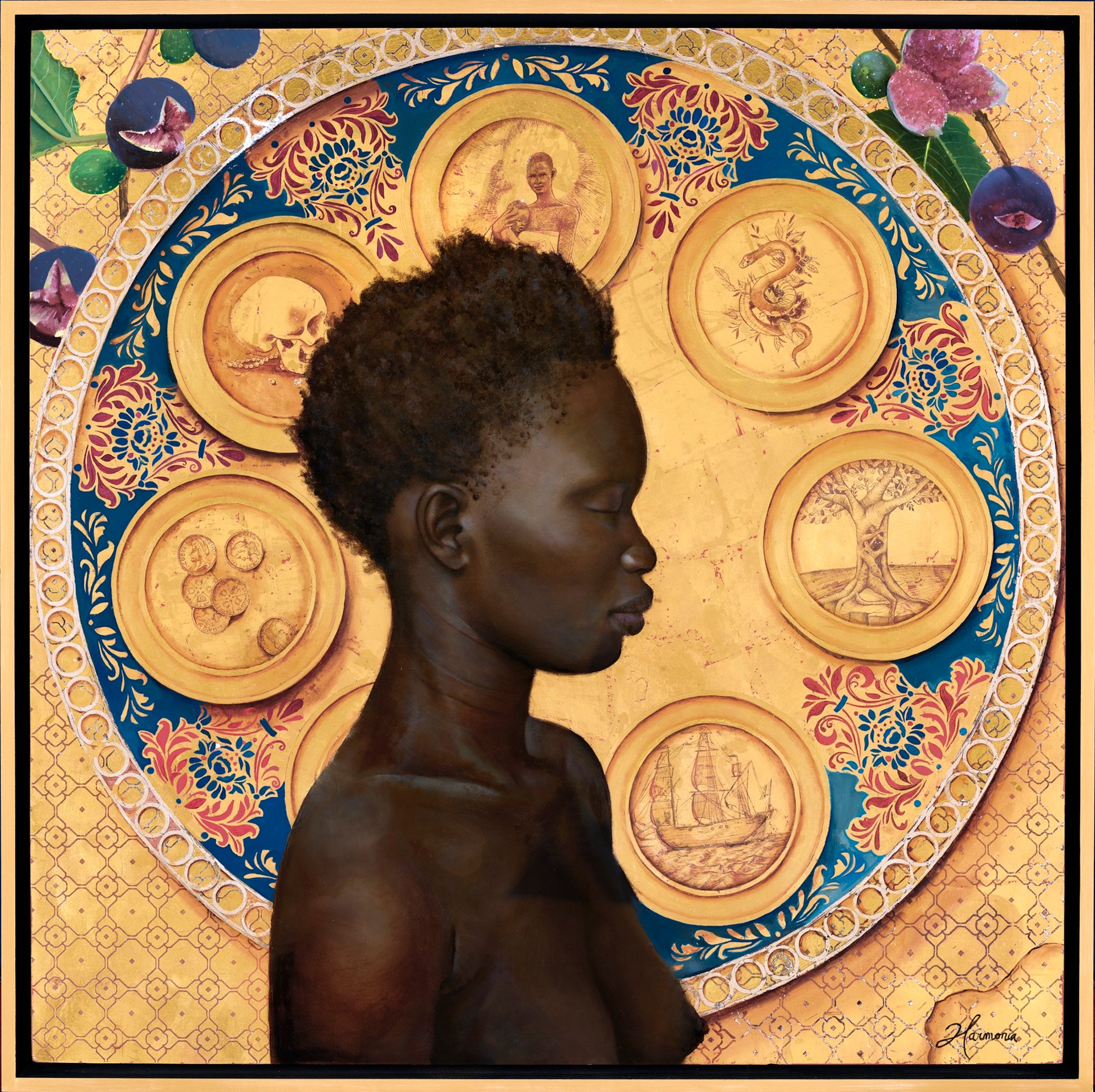
Harmonia Rosales, Portrait of Eve, 2021 The Akil Family. © Harmonia Rosales. Photo: Brad Kaye
Beginnings: The Story of Creation in the Middle Ages
Getty Center, until 19 April
The Getty has paired 15 Medieval manuscripts from its collection with four contemporary works by the Los Angeles-based artist Harmonia Rosales. The theme of the exhibition is the Judeo-Christian creation story, with a special section focusing on Adam and Eve—and the tale’s ongoing influence on sociocultural beliefs about gender. “The biblical story of Creation formed the basis of how medieval Christians viewed the world and continues to exert a strong influence on many artists today, seeing it both as an etiological origin story and as a metaphor for the human condition,” says Timothy Potts, the Getty’s director.
Appearing alongside illuminated manuscripts hundreds of years old, Rosales’s paintings remix the Book of Genesis with West African mythology. The artist says her goal is to “reclaim stories long erased, using Yoruba cosmology to restore strength and presence to figures often left out of history”. E.G.
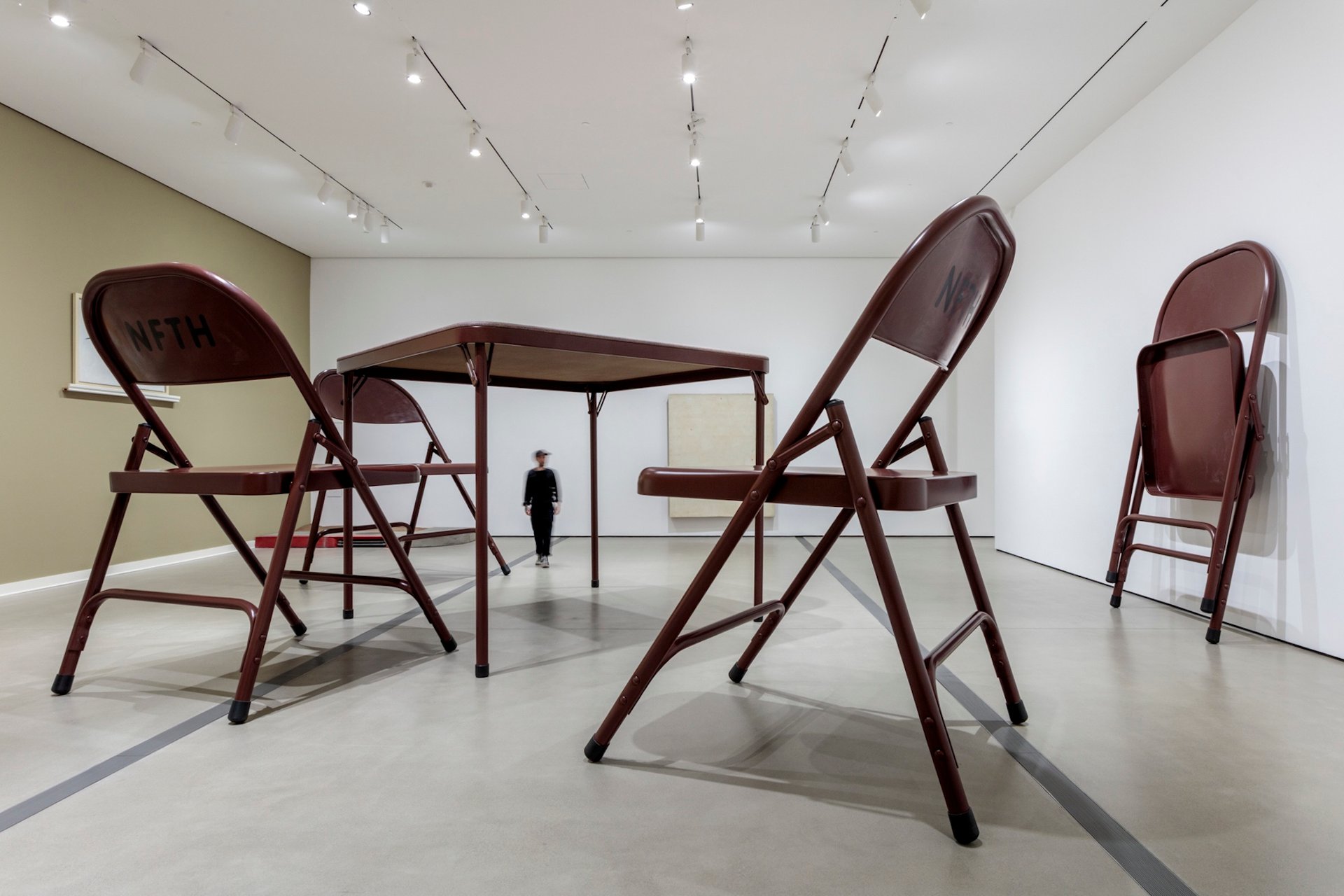
Installation view of Robert Therrien: This is a Story at the Broad Photo: Joshua White
Robert Therrien: This is a Story
The Broad, until 5 April
Robert Therrien (1947-2019) started making oversized sculpture in the early 1990s. Today he is best known for the gargantuan versions of everyday objects he started making in the early 1990s, from tables and chairs to fake beards and stacks of plates. There are examples of all these here. The first gallery includes a set of white plates stacked taller than most people. Elsewhere there is an off-kilter stack of regular dishes as well as a miniature set of dishes.
“He’s an artist that was a major presence in Los Angeles art for almost 50 years, one of the best sculptors to emerge in this town,” says Ed Schad, who curated The Broad’s Therrien retrospective. “But he hides in plain sight. Not enough people know about what makes him the artist that he is. When we look closer at Bob’s work, he was an artist that was a part of the discussion here in Los Angeles for a very long time.” S.C.
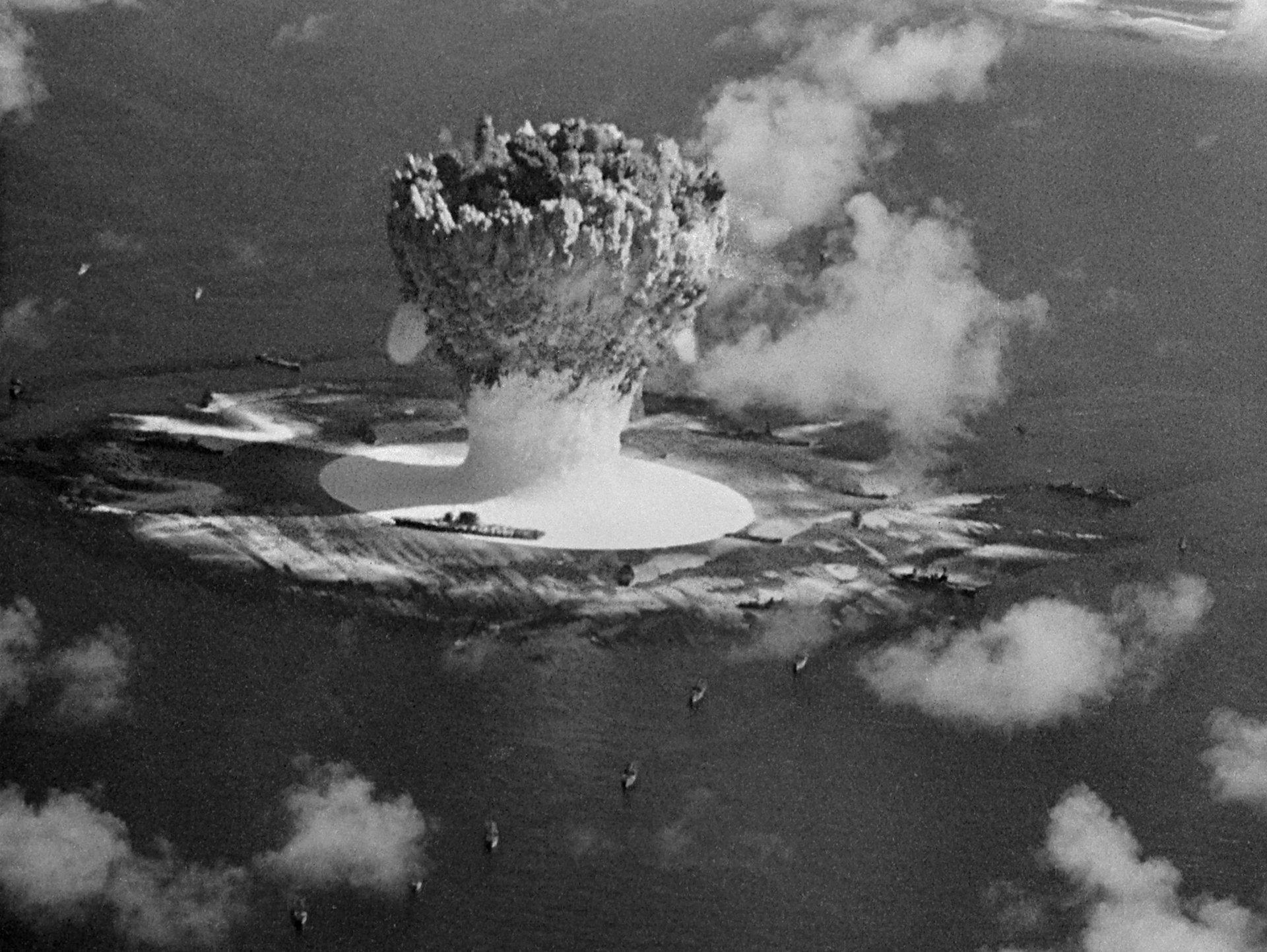
Bruce Conner, Crossroads, 1976, still Digitally Restored, 2013. Original Music by Patrick Gleeson and Terry Riley Restored by UCLA Film & Television Archive. Courtesy of the Conner Family Trust and Michael Kohn Gallery, Los Angeles. © Conner Family Trust
Bruce Conner / Recording Angel
Marciano Art Foundation, until 17 July
The multidisciplinary artist Bruce Conner (1933-2008) defied categorisation throughout his long and enigmatic career, drawing from the countercultural milieus of the post-war Beat poets and the nascent punk scenes of the 1970s and 80s to create biting, uncanny conceptual art. Bruce Conner / Recording Angel features seven of Conner’s most important experimental films on view in the Marciano Art Foundation’s Theater Gallery, projected in an alternating sequence on four separate screens. His pioneering assemblage technique of cutting up and re-editing found footage spliced references as disparate as car crash newsreels, softcore “stag” films and declassified documentation of atomic bomb tests, casting a surreal, radical gaze onto an increasingly fractal modernity. Organised by the curator Douglas Fogle, Recording Angel tracks Conner’s output from 1958 to 2006, telling the story of an indefatigable, critical mind. T.A.
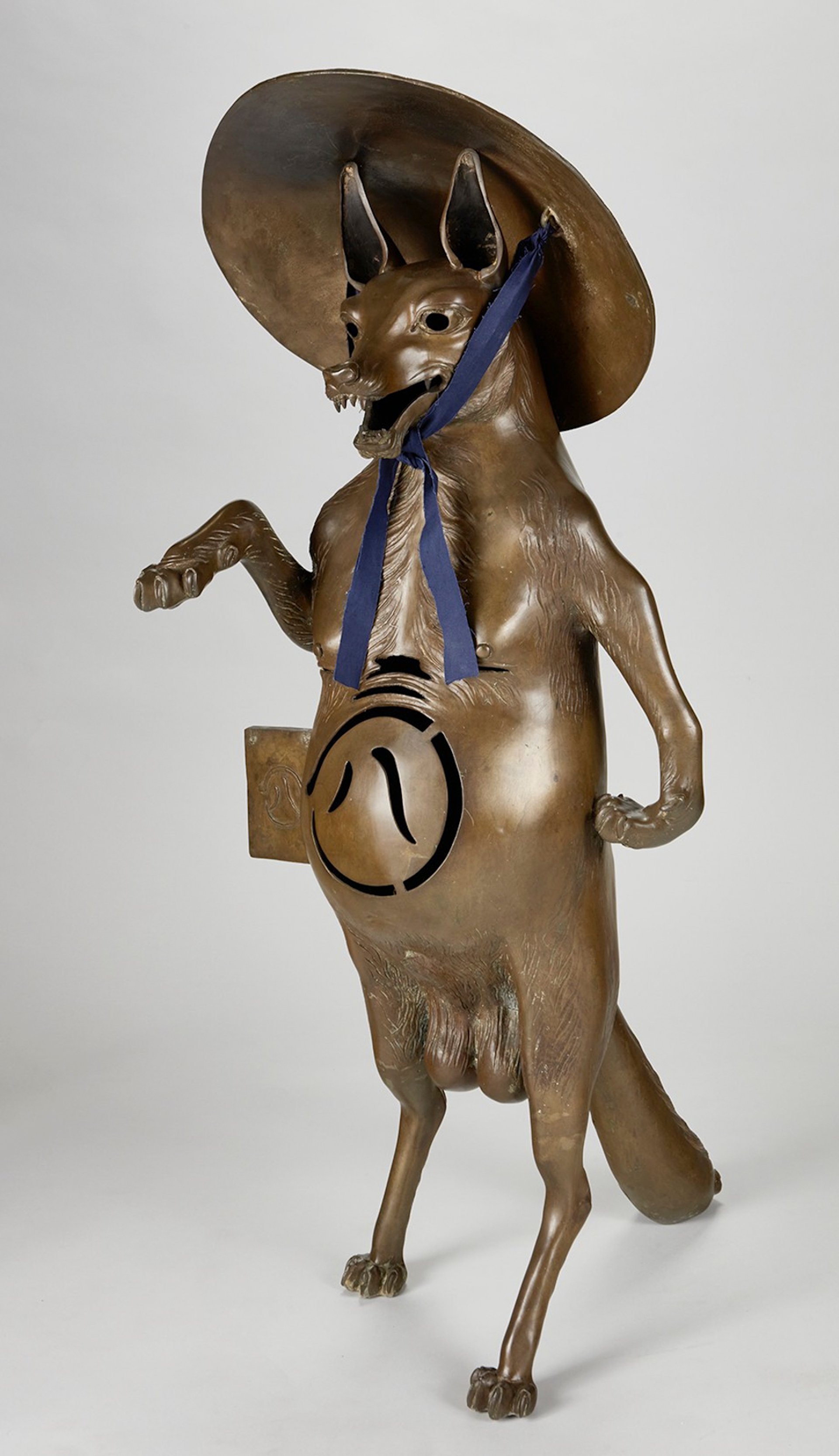
Tanuki Censer, Japan, 20th century, bronze USC Pacific Asia Museum. Gift of Ruth Horgan.
Mythical Creatures: The Stories We Carry
USC Pacific Asia Museum, Pasadena, until 6 September
The Los Angeles-based artist Dave Young Kim has curated a unique new exhibition exploring 5,000 years of art from Asia and its diaspora. Blending the historical with the contemporary, the Korean American artist chose around 100 objects from the USC Pacific Asia Museum’s expansive collection to accompany works by more than 20 living artists, including Dominique Fung, Dinh Q. Lê, Wendy Park, Kyungmi Shin and Lauren YS.
Kim’s own works also feature in the show, and he has created immersive environments for the art on view. His 12 different galleries run the gamut from a dark room filled with demons to a welcoming but humble immigrant apartment. Throughout, Kim uses mythical creatures and verses written on the gallery walls as means of linking cultural histories to the present day. His goal is to give “timeless stories a renewed life”, and he likens the experience to “stepping inside an illustrated book of poetry written by a cherished loved one”. E.G.
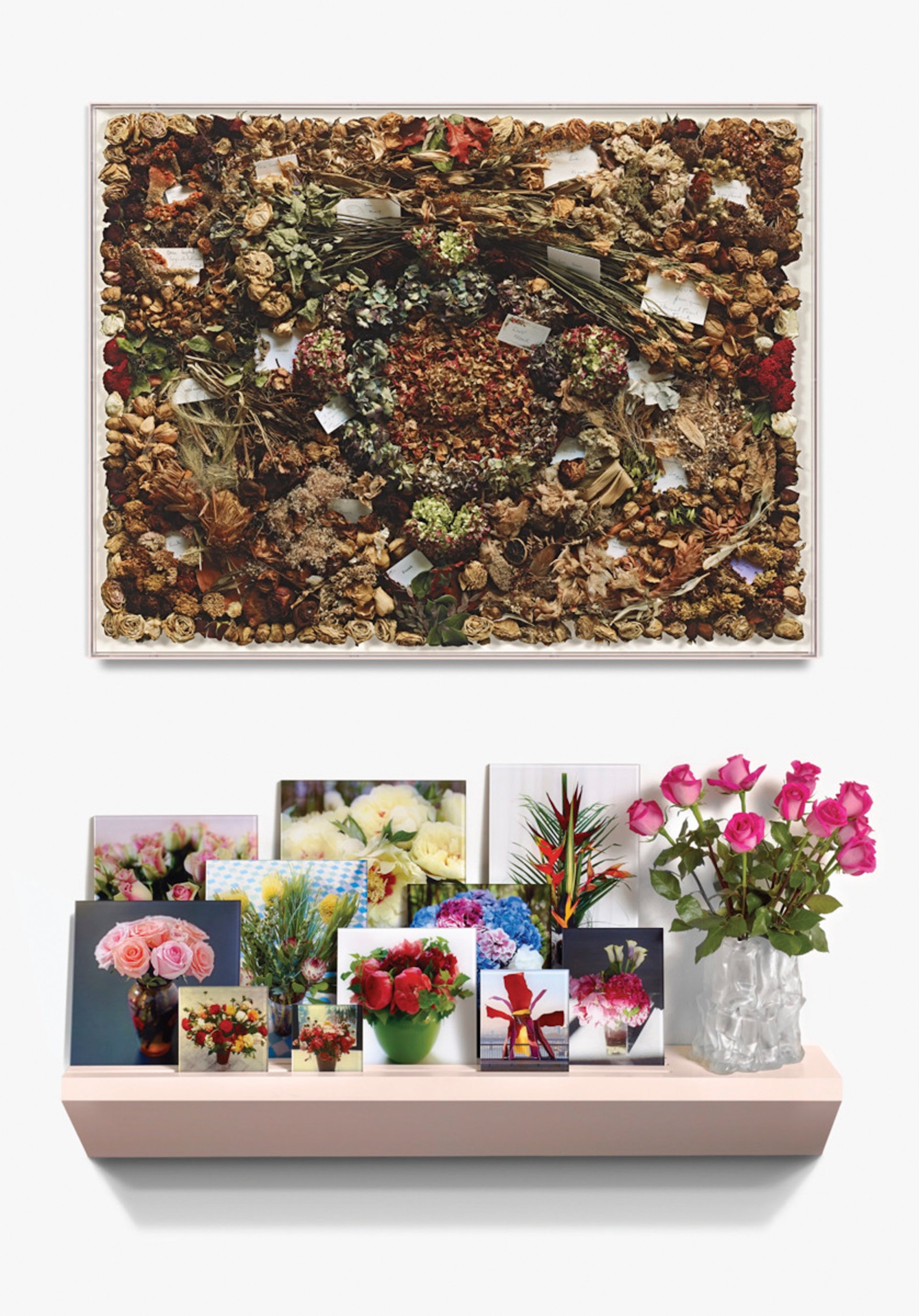
Sophie Calle, In Memory of Frank Gehry's Flowers, 2014 Courtesy of the artist and Gemini G.E.L. © 2024 Artists Rights Society (ARS), New York / ADAGP, Paris. © 2014 Sophie Calle and Gemini G.E.L. LLC
Sophie Calle: Overshare
UC Irvine Langson Orange County Museum of Art, until 24 May
For more than 50 years, the French artist Sophie Calle has worked in the space between facts and their retelling, demonstrating how the narratives we share about ourselves are always partial, constructed. These preoccupations with what is public and private, documented and performed, form the throughline of the French artist’s exhibition Overshare at the UC Irvine Langson Museum Orange County Museum of Art.
The survey, Calle’s first in North America, gathers work from the 1970s to the present. Organised by the Walker Art Center and curated by Henriette Huldisch, it premiered in Minneapolis in October 2024. For Courtenay Finn, the chief curator and director of programmes at UC Irvine Langson Museum Orange County Museum of Art, the decision to bring the show to California was an obvious one. “The state appears like a character in her work over the past five decades,” she tells The Art Newspaper.
For example, in the installation Journey to California (2003), correspondence, black-and-white photographs and a carefully wrapped oversize package document the time that the San Francisco artist Josh Greene wrote to Calle asking if he might spend the months following a breakup in her bed. Calle duly shipped off her bedstead, mattress and sheets, which Greene returned to Paris six months later. T.A.D.
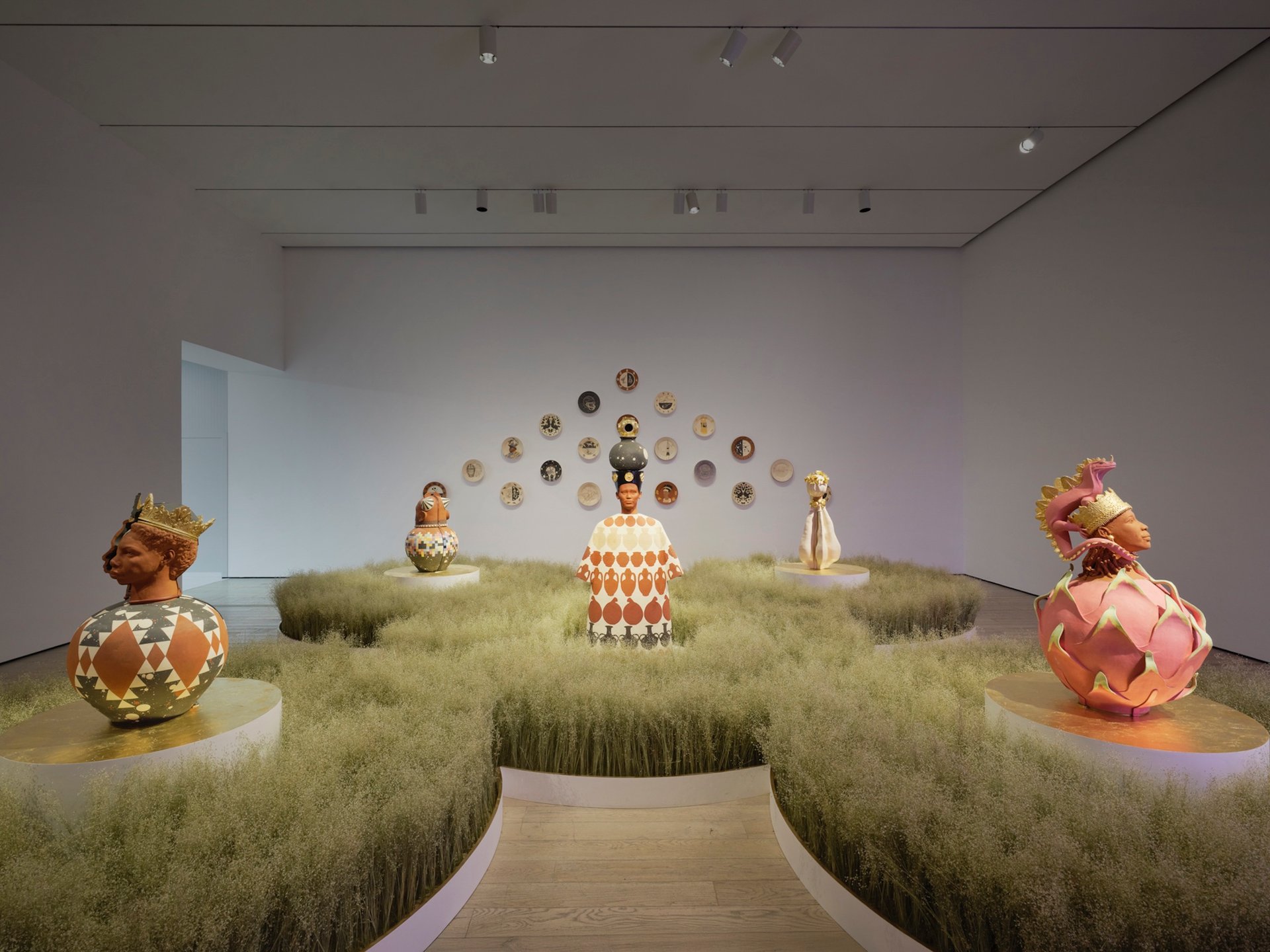
Installation view of Tavares Strachan: The Day Tomorrow Began at the Los Angeles County Museum of Art Courtesyof the artist and Marian Goodman. Photo: Elon Schoenholz
Tavares Strachan: The Day Tomorrow Began
Los Angeles County Museum of Art, until 29 March
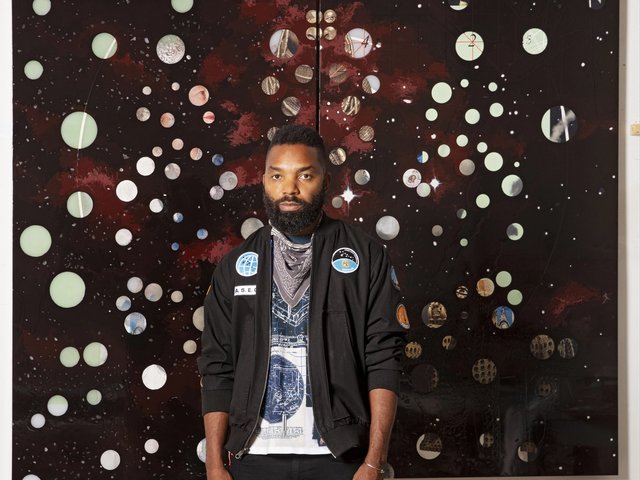
The Bahamian artist Tavares Strachan’s solo exhibition, co-organised with the Columbus Museum of Art in Ohio, leads visitors through a maze of multi-sensory installations, combining neon, ceramics, bronze, painting, text and performance elements in service of immersive, kaleidoscopic world-building. It features 20 new works that excavate invisible histories, the sort of stories that do not fit neatly inside dominant narratives of the past.
In a geopolitical context marked by censorship and surveillance, The Day Tomorrow Began feels like a deep, recalibrating exhale by an artist daring to dream of a less encumbered, more equitable future. Of the exhibition’s themes and title, Strachan says: “In this moment with such intense anxiety about everything going on in the world, I thought it was appropriate to focus on the potential hope in that one second between one day and the next. T.A.
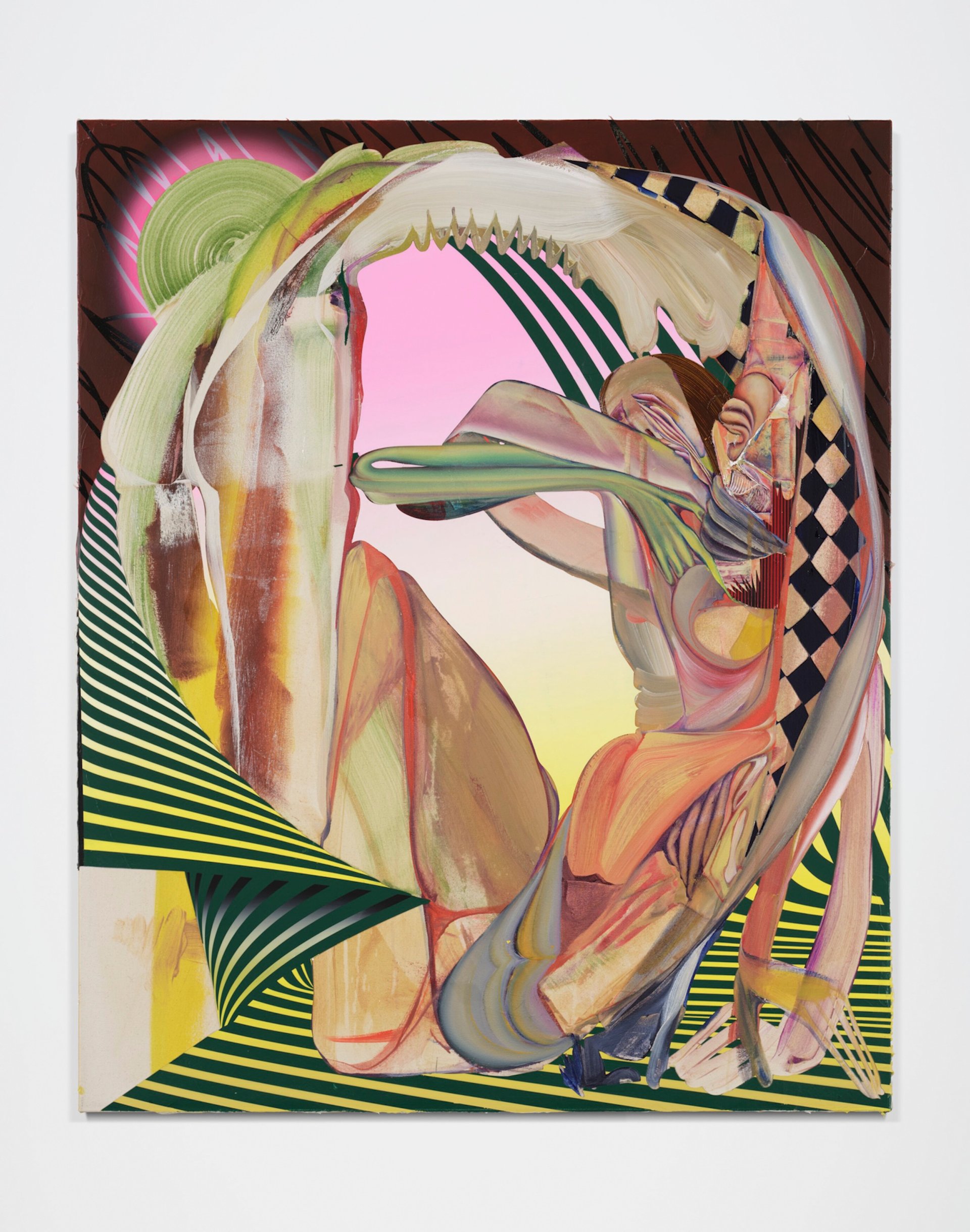
Christina Quarles, Is This The Return to Oz?, 2025 © Christina Quarles. Courtesy the artist, Hauser & Wirth and Pilar Corrias, London. Photo: Fredrik Nilsen
Christina Quarles: The Ground Glows Black
Hauser & Wirth, Downtown Los Angeles, until 3 May
Christina Quarles has explored the power and vulnerability of the self since earning her Master of Fine Arts degree from Yale University in 2016. But her new work, made after the Eaton fire decimated her Altadena community last year, seems even more “untethered”, as she says. Another word for it is wild, as visitors can see in The Ground Glows Black, her first solo exhibition with Hauser & Wirth in Los Angeles.
"My paintings are always really kitchen sink, everything’s thrown into them," Quarles says. "But I think that these latest works are like two or three of my paintings jammed together. There’s a dysregulation having so much of my sense of home and place and community just continually uprooted." J.F.
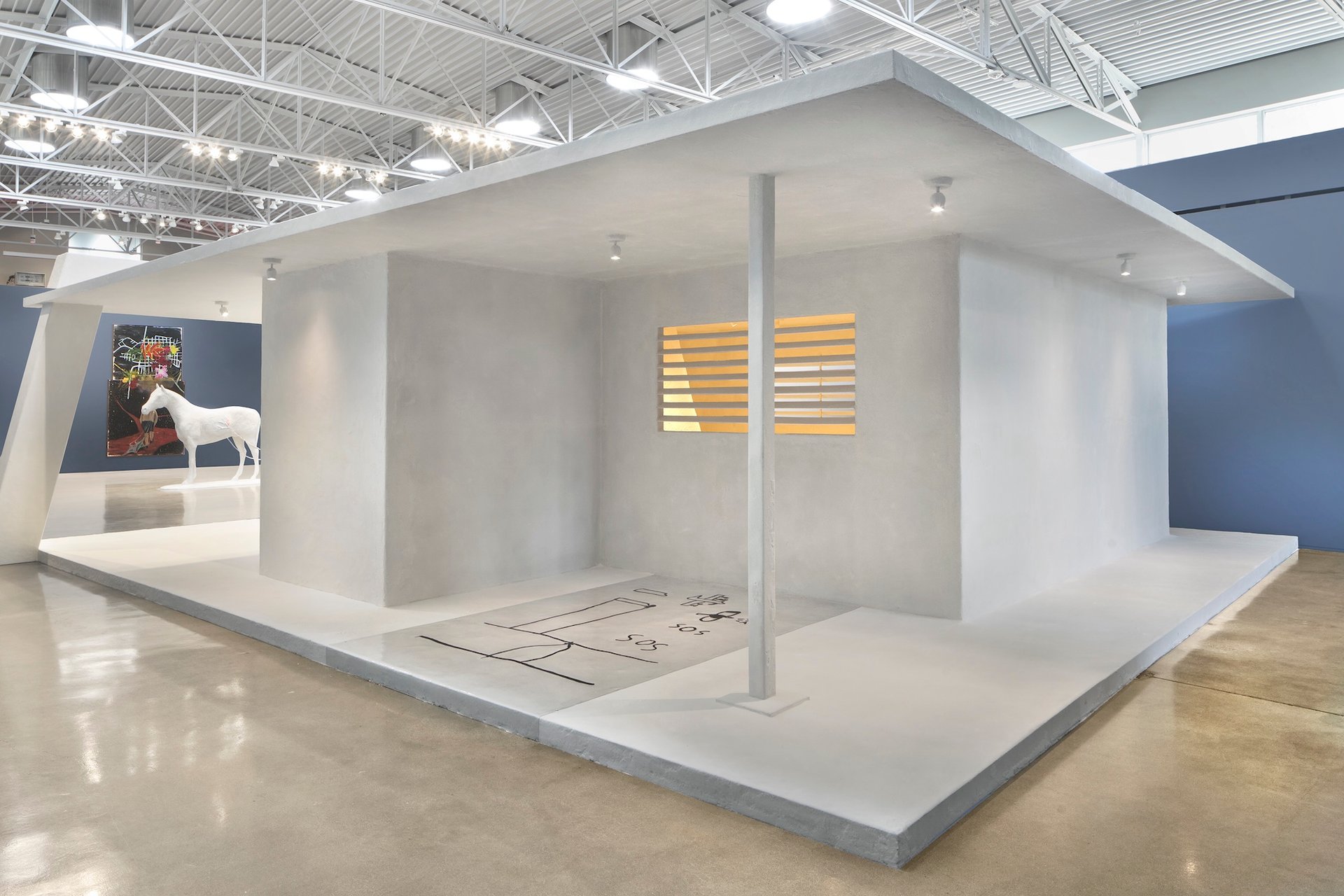
Installation view of Enrique Martínez Celaya: The Sextant at the Wende Museum Courtesy the Wende Museum
Enrique Martínez Celaya: The Sextant
Wende Museum, until 26 October
The past is always with us, as the artist Enrique Martínez Celaya has shown in his trilogy of exhibitions exploring and evoking his childhood in Cuba. Conceived and realised over the past decade, the first exhibition was at the National Museum of Fine Arts in Havana, the second at the Hispanic Society Museum and Library in New York. The final exhibition is currently on view at the Wende Museum in Culver City. Filling the Wende’s main gallery space, The Sextant centres on a full-scale reconstruction of the artist’s childhood home, a small Modernist house designed by his father.
"This house was built between 1957 and 1963—the height of the Cold War, right? The embargo, the missile crisis, all of that," Celaya says. "Here, it’s speaking with the Wende’s Cold War collection and all that history, which informed our entire experience of the period. My father left in 1970 and we left in 1972, but almost the entire time we were in this house, we were waiting for that exit." S.C.
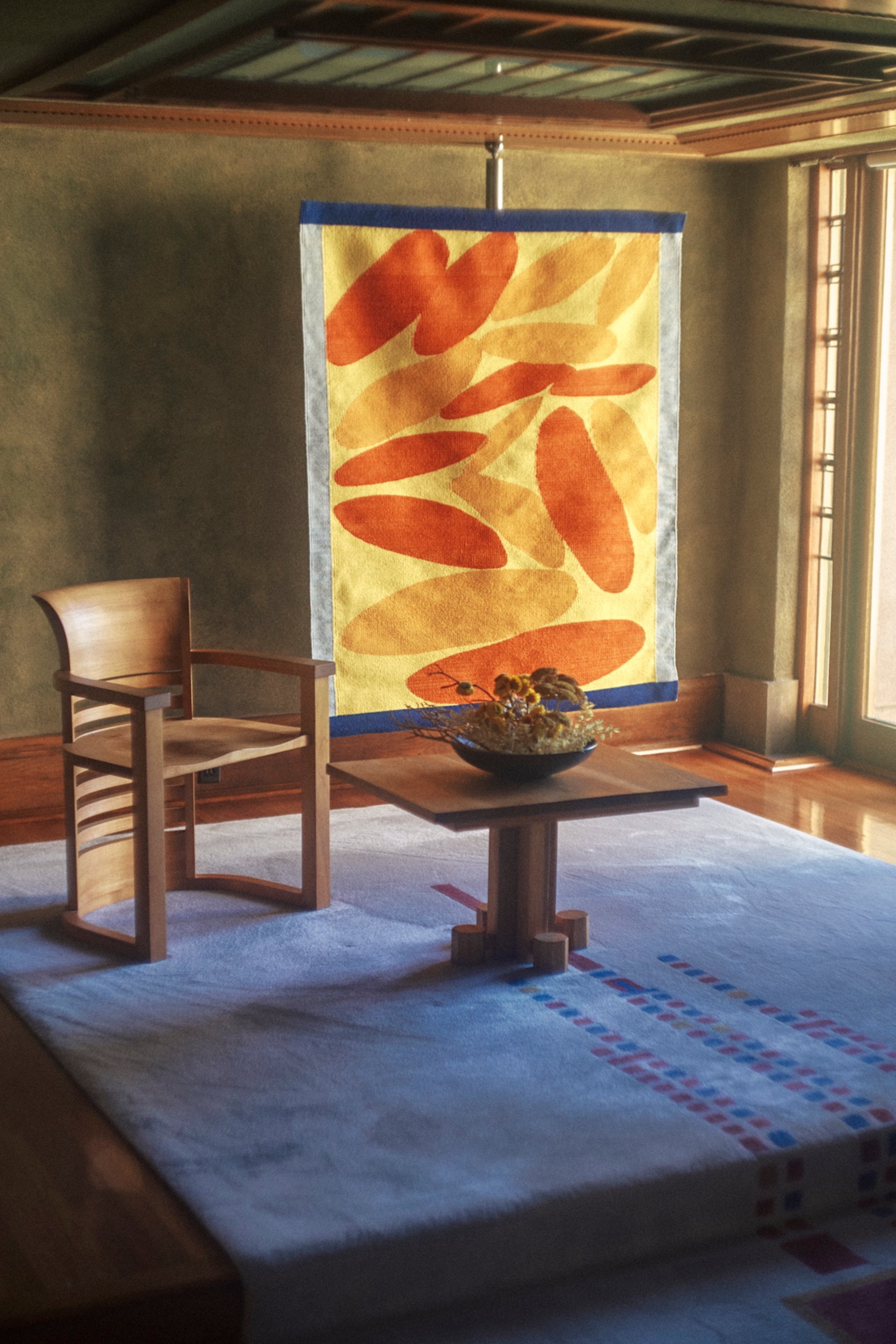
Installation view of Ryan Preciado: Diary of a Fly at the Hollyhock House Photo: Roman Koval. © Ryan Preciado. Courtesy the artist and Karma.
Ryan Preciado: Diary of a Fly
Hollyhock House, until 25 April
The Los Angeles-based artist Ryan Preciado consistently blurs the boundaries between functional craft and sculptural inquiry, drawing on carpentry, material histories and everyday encounters to rethink how objects shape space. In this exhibition at Frank Lloyd Wright’s Hollyhock House (a Unesco World Heritage Site), Preciado places high-gloss steel sculptures, woven tapestries and Memphis Design-inflected furniture in conversation with the late architect’s Modernist masterwork. Rather than clashing with Wright’s rigorously choreographed interiors, the works are absorbed into the house’s rhythmic play of light and shade, reframing the encounter as a collaboration.
"I thought the house was going to be way more of a bully," Preciado says. "It was strange how easily it absorbed the colours and accepted everything. This is a very pretty show because of the house. I think my next one will be a little uglier—in a good way." T.A.D.