The recent discovery in the Valley of the Kings of nearly 30 inscriptions in ancient Indian languages, across six tombs, provides new evidence for the presence of Indians in Egypt between the first and third centuries AD.
At last week’s International Conference on Tamil Epigraphy in the South Indian city of Chennai, Charlotte Schmid, of the French School of Asian Studies in Paris and Ingo Strauch, of the University of Lausanne, presented a paper on their latest research, identifying the inscriptions as coming from several regions of the Indian subcontinent, with the majority in Tamil-Brahmi, an ancient language connected with modern Tamil.
The discoveries significantly expand understanding of Indo-Egyptian connections in the Roman period. They add to existing evidence in Socotra, an island off the coast of Yemen, and Berenike, an ancient city on the Red Sea coast—where longer texts and material remains attest to a sustained Indian religious and commercial presence.
The Egyptologist Steve Harvey tells The Art Newspaper: “It seems that the reason that the Tamil graffiti in tombs in the Valley of the Kings went unrecognised is essentially that no one with adequate knowledge noticed them before. Very few scholars who focus on languages of India tend to study graffiti in Egypt—whereas Greek and Aramaic graffiti have been recognised and studied for a very long time.”
From the sixth century BC, Egypt was closely associated with the Persian Achaemenid empire, which also had extensive trade links with India. Later, during the Roman era, India and Egypt were once more indirectly connected by trade routes: in the first century BC, the Roman poet Horace spoke of India and Egypt as synonymous with wealth and luxury in his Odes. And, although archaeologists knew of an Indian presence on the Red Sea coast of Egypt during the later Roman era, Harvey tells The Art Newspaper, “until this discovery we never had any solid proof of visitors from India to the Nile Valley in this early period”.
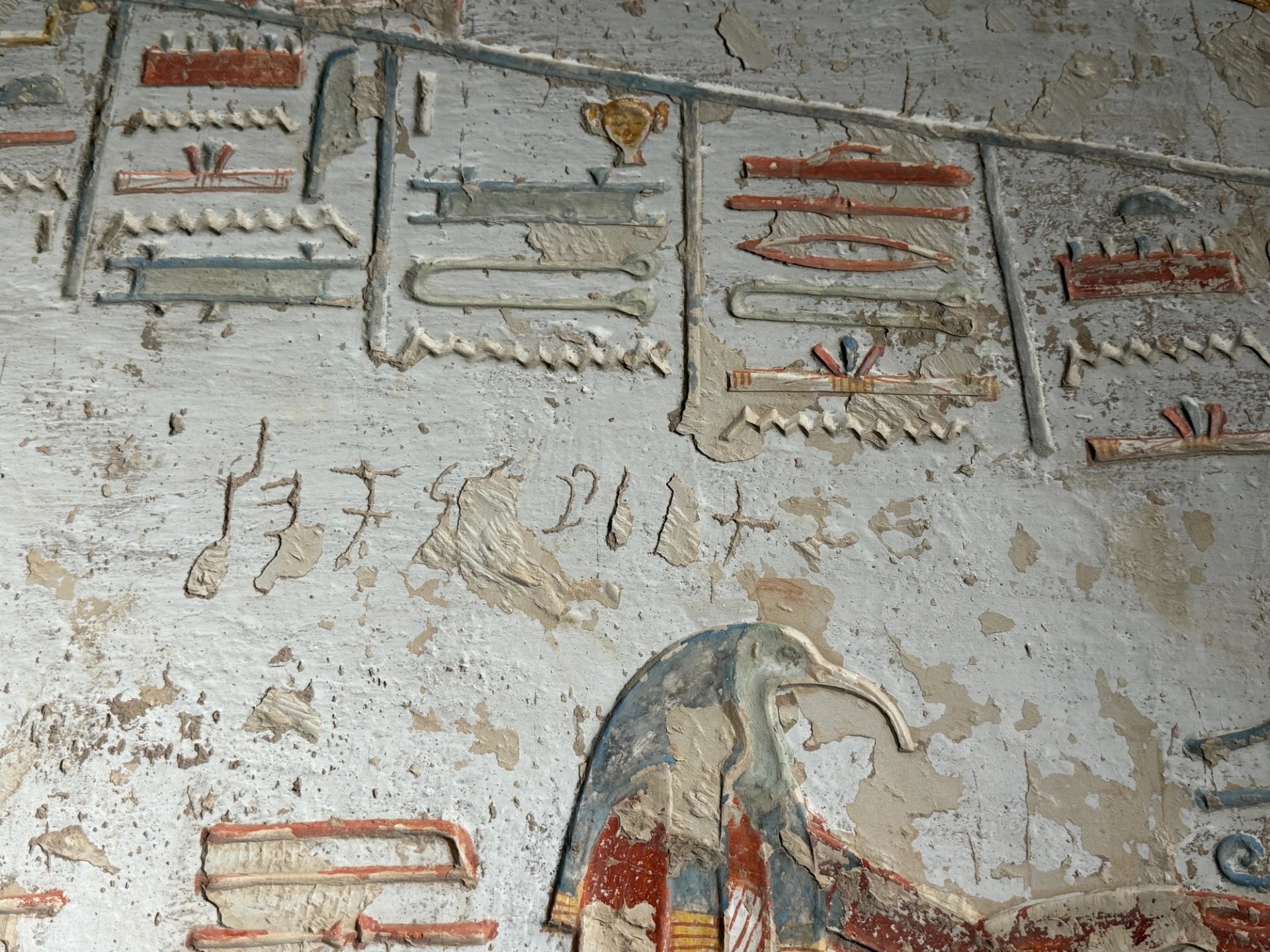
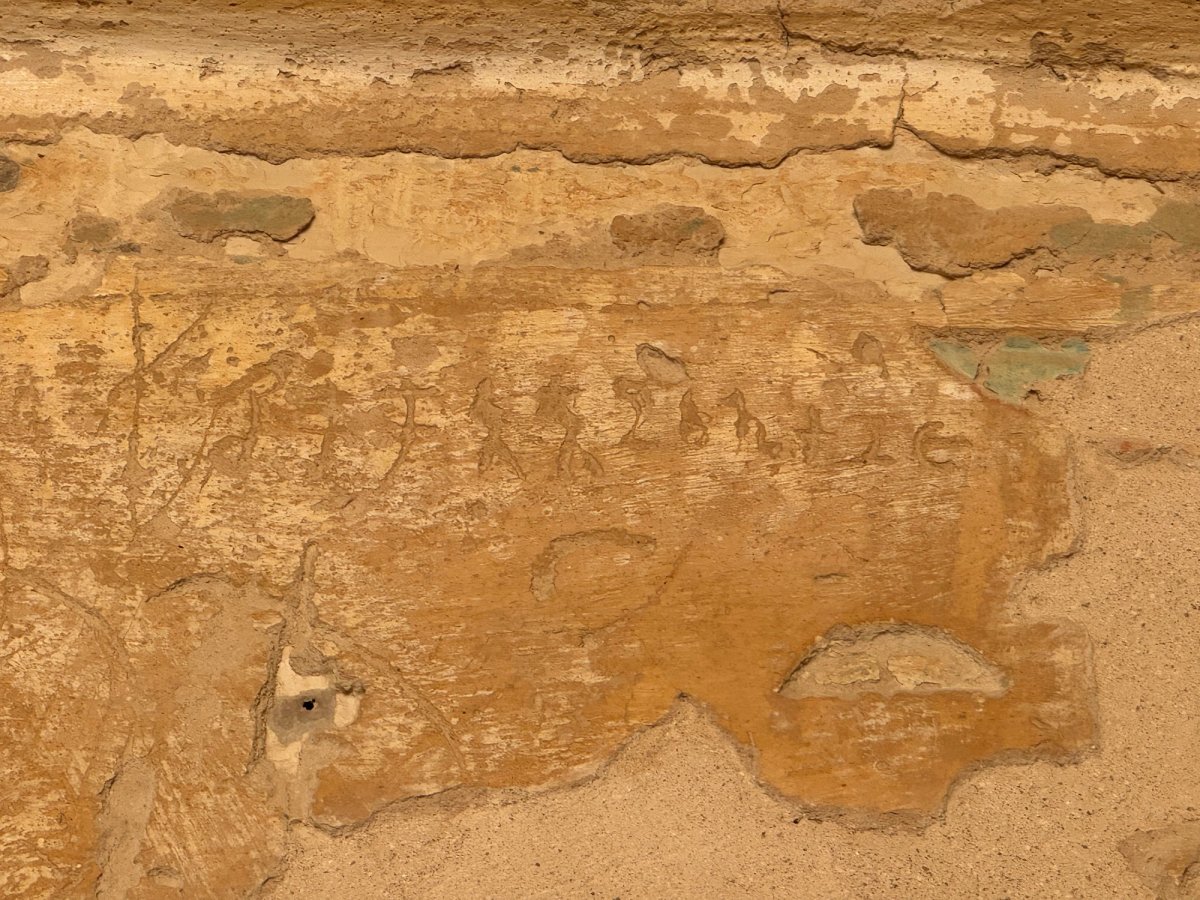
Grafitti by an individual called Cikai Korran, who left his name eight times in five tombs, in Tamil
Photo: Ingo Strauch and Charlotte Schmid
“What seems most important to me is a form of awareness of Indian identity that is manifested in these inscriptions, [which are] engraved in four languages and four scripts that all originate from India,” Schmid tells The Art Newspaper,
Schmid pointed to a tomb containing writing in Greek, Sanskrit and Tamil, in which the Tamil and Sanskrit inscriptions made reference to the content of the Greek. “They were therefore aware of a common cultural origin and wanted to express this in these tombs.” Schmid says. ”They were also [clearly] able to read Tamil and Sanskrit, as well as Greek, which is the language most commonly used in the graffiti engraved in these tombs.”
Strauch says: “These new inscriptions show the integration of people of Indian origin from all parts of the subcontinent into the society of Roman Egypt. This discovery makes it likely that additional Indian inscriptions or other Indian artefacts may yet be found in Egypt.”