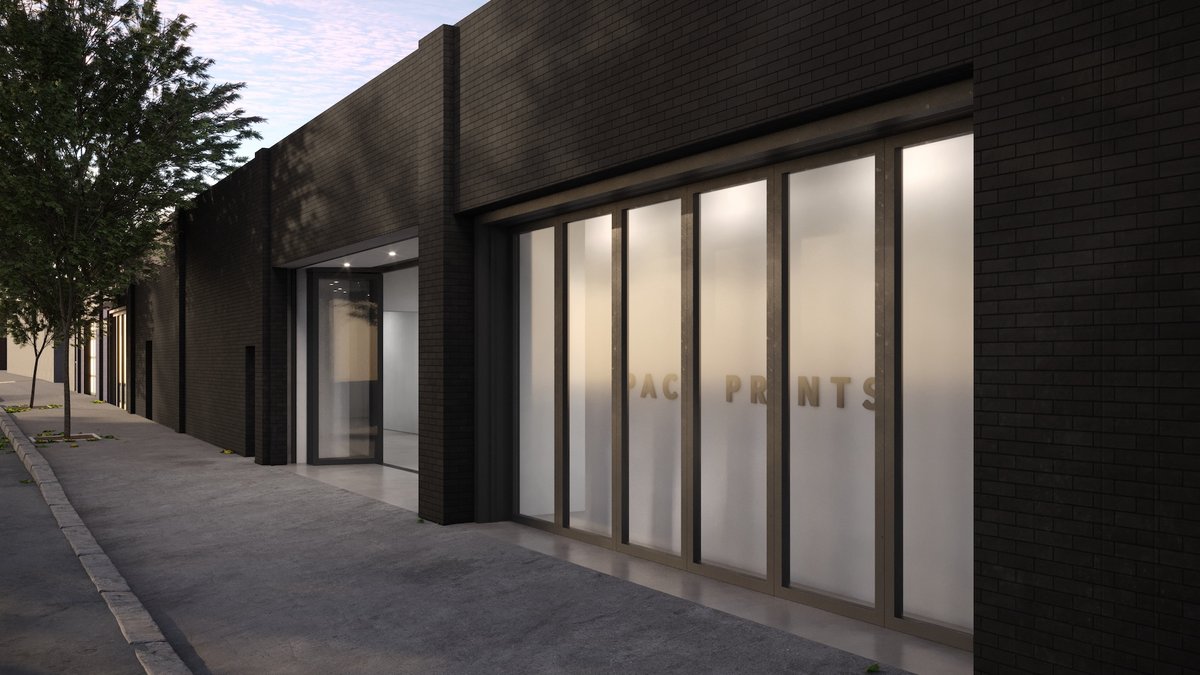
Since launching its first project in 1968—a sculptural embossed silkscreen book by the multimedia artist Lucas Samaras—Pace Prints has worked with artists to expand the formal and technical possibilities of printmaking. In the ensuing decades, the publisher has supported projects by artists like Louise Nevelson and John Chamberlain that blur distinctions between print, collage, sculpture and painting,often emphasising scale and material experimentation. This autumn, Pace Prints will bring that ethos to the West Coast with the opening of a new space in Los Angeles.
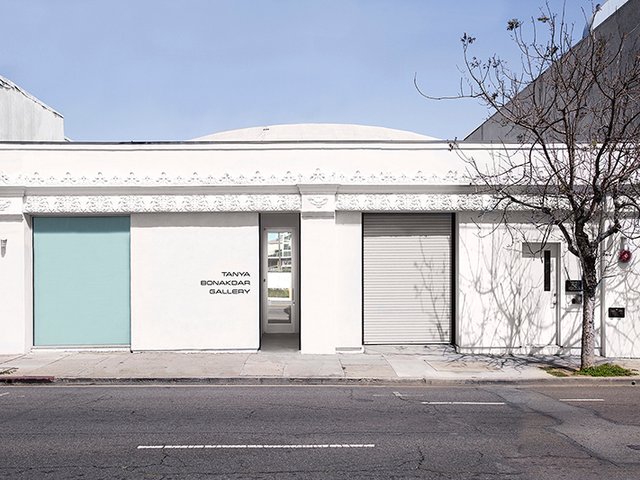
Located in Hollywood, next-door to Marian Goodman Gallery, the new outpost will combine a fully equipped printmaking workshop with a gallery for exhibitions and public programming. The move marks the publisher’s first venture outside New York City, where it operates a Manhattan workshop and a papermaking facility, Pace Paper, in Brooklyn’s Gowanus neighbourhood. From the outset, Pace Prints has centred its production on relationships between artists and master printers, tracing its lineage back to Aldo Crommelynck, who printed Pablo Picasso’s etchings and Henri Matisse’s line drawings.
Jacob Lewis, the president and chief executive of Pace Prints, tells The Art Newspaper that the decision to expand west was driven by the growing concentration of artists based in Los Angeles rather than by market considerations. “We’ve been fortunate enough to work with so many artists from Los Angeles,” he says. “We came to the conclusion that LA deserved to have the same thing as New York.” The space, he added, is intended to allow artists to work locally over extended periods, providing a venue to experiment and develop their practices, rather than traveling cross-country for short, intensive projects.
Modelled on Pace Prints’ Manhattan location, the Los Angeles space will be equipped for etching, linocut, various styles of woodcut, collage and large-format printing. The programme is designed to support both monoprints and multiples, enabling artists to pursue technically ambitious work while also broadening their collector bases with offerings at more accessible price points.
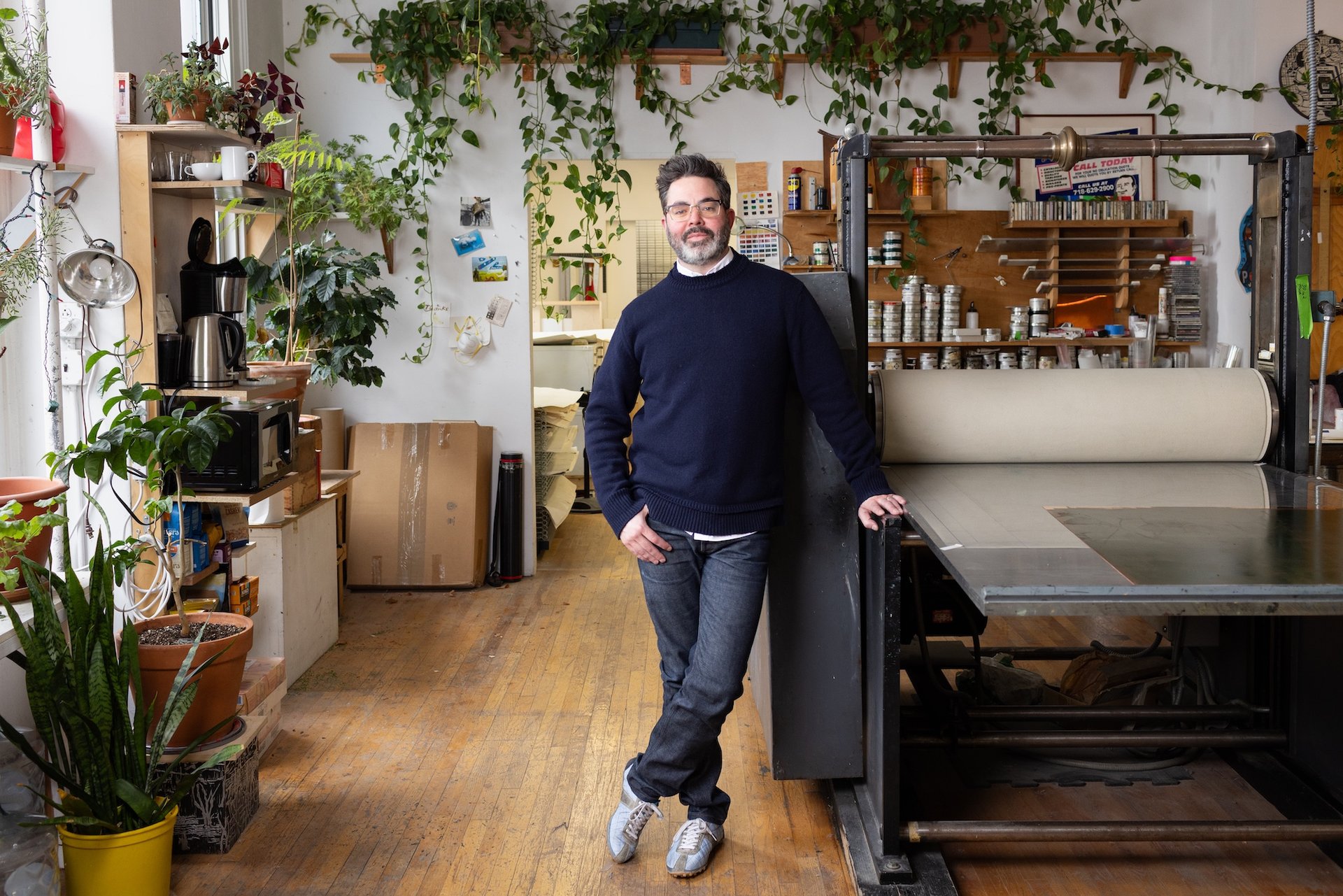
Jacob Lewis, the president and chief executive of Pace Prints Photo: Anna Watts
Nina Chanel Abney is among the artists who have integrated printmaking into their studio practices through Pace Prints. Works from her 2025 exhibition with Jeffrey Deitch in Los Angeles—including 8ft-by-24ft printed panels—as well as the monumental prints shown in her 2022 exhibition at the Institute of Contemporary Art, Miami, were produced at the workshop. Other ongoing collaborations include projects with Jonas Wood, Tara Donovan and Kiki Smith.
The Los Angeles opening comes amid renewed interest in printmaking more broadly, as rising prices for paintings have pushed young and seasoned collectors alike toward works on paper. Long associated with seriality and relative affordability, prints are increasingly shedding those designations as artists push the processes toward larger formats and more complex modes of production. “Artists are creating works that are extremely dynamic,” Lewis says, “that can have the power of paintings.”
Los Angeles, meanwhile, has its own storied printmaking history with institutions like Gemini GEL and Cirrus Editions playing central roles in shaping the medium and elevating its status from the 1970s onward. Lewis emphasises that Pace Prints is not seeking to replicate its New York programme wholesale, but rather to develop a space that responds to Los Angeles’s existing artist ecosystem, meeting the community’s specific needs. “It can’t be New York coming to LA,” he says. “LA needs to be LA.” That said, he hopes that exhibitions will eventually be able to rotate between the two locations, allowing projects to take on second lives.
The new Pace Prints location is expected to open in late autumn. The inaugural exhibition has yet to be announced, though Lewis says it will feature a Los Angeles-based artist. West Coast audiences will get a taste this week when the gallery shows at Frieze Los Angeles (26 February-1 March) for the first time, with a stand highlighting works by local artists including Elliott Hundley, Friedrich Kunath, Hilary Pecis and Jonas Wood.