Tefaf Maastricht is the first major European fair to take place since new EU regulations on documentation required to import cultural goods over 250 years old came into full force last June—and early signs suggest the new rules are causing a variety of problems for dealers, customs officials, shippers and would-be collectors.
One of biggest problems is confusion over how the law is applied (the types of work affected include everything from paintings, sculptures and prints to books, stamps, furniture, coins and botanical collections—among other things). Industry sources say customs authorities are seizing items that lack the proper documentation even though they are not subject to the rules. “One of the complaints we have had from collectors is that acquiring the essential EU EORI number [Economic Operator Registration and Identification, mandatory for customs clearance] has proved extremely difficult because customs authorities are not properly briefed on the regulation and still insist that private citizens can’t have one when they can,” one trade association source tells The Art Newspaper.
“Others have just given up because the process of buying and importing has become too complex and difficult for them. Auction houses and dealers are definitely losing business over this,” they add.
Dealers and others in the trade say exhibitors at forthcoming fairs such as Tefaf Maastricht cannot rely on customs authorities to act in accordance with the regulation, which is giving rise to a crisis of confidence when shipping stock to the venue. Because the law only applies to goods being imported from outside the EU, Salomon Aaron, a director of the London-based antiquities dealership David Aaron, expects the Dutch fair to have more of a European flavour this year. “The effects of the rules are that items of European origin can move more freely in and out of Europe, and those that are non-European require more proof of provenance,” he says. “As a result, dealers will gravitate towards showing more items discovered in Europe, just to make life simpler.”
Testing the waters
Charis Tyndall, a director at Charles Ede gallery in London, notes that the Greek and Roman artefacts in the gallery’s inventory are exempt, but Egyptian antiquit-ies are not. She says that the gallery will not bring any Egyptian amulets to Maastricht this year, which are usually very popular with museums and private collectors. “Why would you spend €900 on administration to buy something that’s worth a thousand?” she says. “We are bringing one Romano-British piece and one Egyptian piece because we still don’t know exactly what we’re meant to do. We’re very much using this as a test to see how easy or difficult it is.”
The issue with art fairs is that pieces are usually imported before sales are guaranteed. Tyndall says Charles Ede is still offering Egyptian pieces in the catalogue it produced for Maastricht, but they will deal with the shipping and import rules after any sale. The onus, she adds, will still fall on the gallery to manage administrative matters, though it is likely dealers will have to start passing on the additional costs to collectors.
Because there is so much uncertainty and little consensus among shippers, Tyndall says Kortmann is the only company currently handling art entering the Netherlands for Tefaf Maastricht. “They’re the only [firm] willing to bring in items [that are affected] under their temporary admission, so they’ve got a monopoly right now,” she says.
Sonja Kappenburg, the director of Gander & White Paris, confirms that her art handling firm is not shipping to Maastricht this year. She says the burden is increasingly falling to shippers to prove an item’s legitimacy. “It used to be that customs or the police would track down an owner if they thought something had entered a country illegally, and the owner would then have to prove their innocence,” she says. “Now, right off the bat, everyone must prove an object or work of art is legal before it even enters [a country]. We’re taking away a lot of the work that customs used to be doing.”
The added administration for both shippers and dealers means that shipping is taking considerably longer, particularly for older items. Kappenburg notes that one application for an archaeological object logged in November has still not been processed, though importer statements are usually issued immediately online once an item has been checked and approved.
While some of these issues might be ironed out over time, others are more concerning. According to some trade groups, the new regulations could mean the UK and Europe lose out to business elsewhere. As Tyndall says: “We have some incredible objects but we are finding the burden and uncertainty to be too great at the moment, so we are not going to bring them to Maastricht this year. We can easily take them to Tefaf New York instead.”
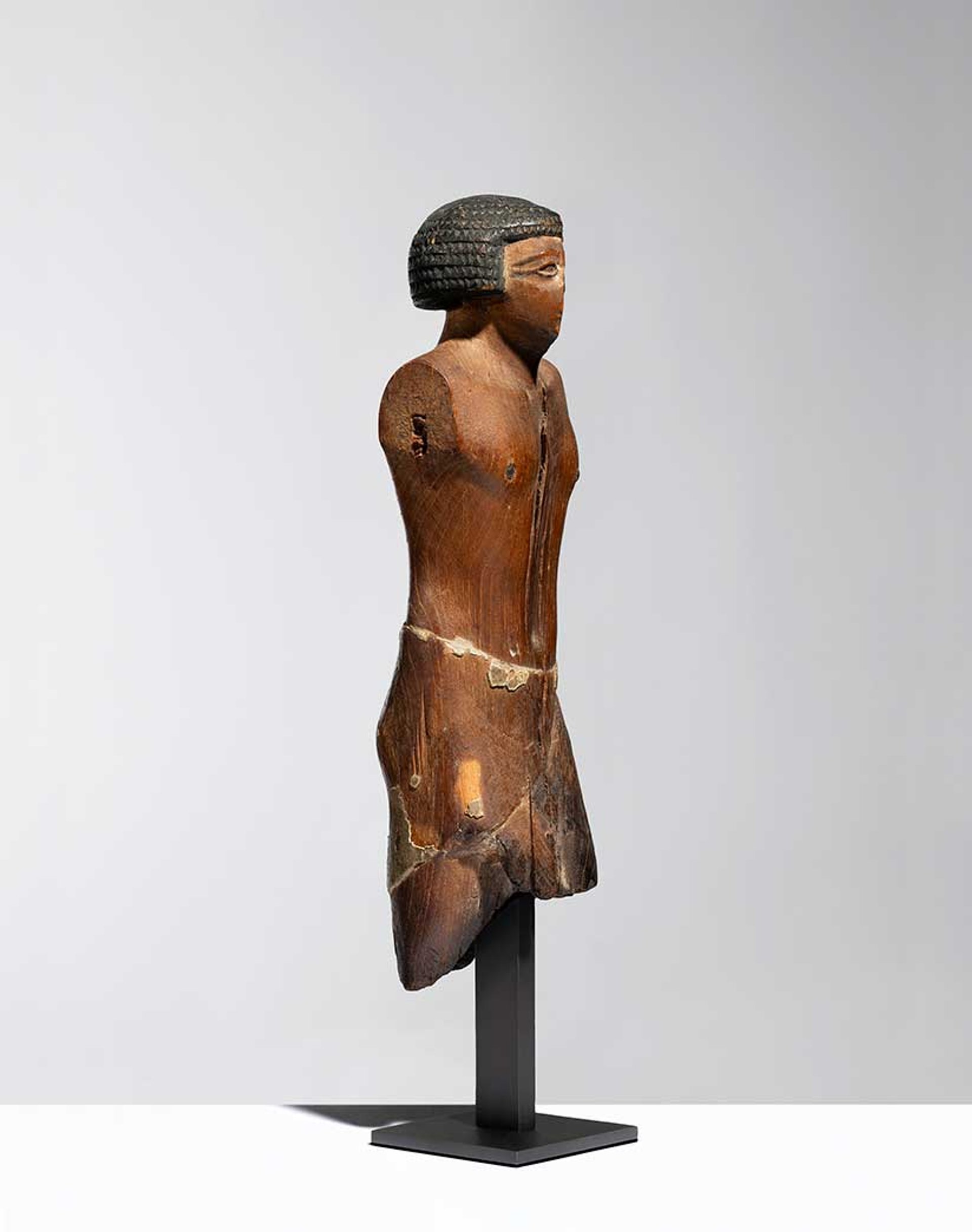
An Egyptian statuette, brought to Tefaf by London dealer Charles Ede gallery, which says it is still unclear about how it needs to comply with the new rules Courtesy Charles Ede
Dealers of Asian, African and Oceanic art are also likely to be negatively impacted. Looking at the market more broadly, Ivan Macquisten, a media consultant and director of the UK dealers’ trade association Lapada, says that there is now a greater focus on examining the import of Asian and tribal art than in the past. “[Dealers in these areas] definitely need to be more organised in how they address the issues that they’re going to face [as a result of the EU rules],” he says.
Requests for clarity
Macquisten notes that UK trade associations have made numerous requests for direct guidance from the European Commission on the distinction between archaeological items (assessed as category B, with a higher risk of illicit trading, no value threshold and requiring an import licence) and antiquities (category C, lower risk, with an €18,000 threshold and requiring an importer statement)—but to no avail.
Meanwhile, the second half of 2025 brought little feedback on the regulation’s impact. “This appears to be because so many people were still unaware of the law and what it meant, but also because some dealers, anticipating problems, sent items to the EU prior to enforcement to cover themselves for the first few months,” according to one source. “Now people are becoming far more aware, as the regulation hits them directly, and exported stocks have started to dwindle, we are beginning to see where the problems lie. We are continuing to gather as much information as we can to see what can be done practically to improve the situation quickly.”
The UK’s downgrading of the art market from high to medium risk for money laundering last summer (with Brussels set to follow) could indicate that the EU’s tightening of rules governing the trade is having a positive effect. And many dealers support the need to separate those who sell objects with little or no provenance from those who have proper documentation. But critics also point out that the art market’s downgrading is just more proof that ever-stricter regulations are simply not needed. As Tyndall puts it: “The new cultural import law feels very isolationist, which is exactly the opposite of where we should be headed.”