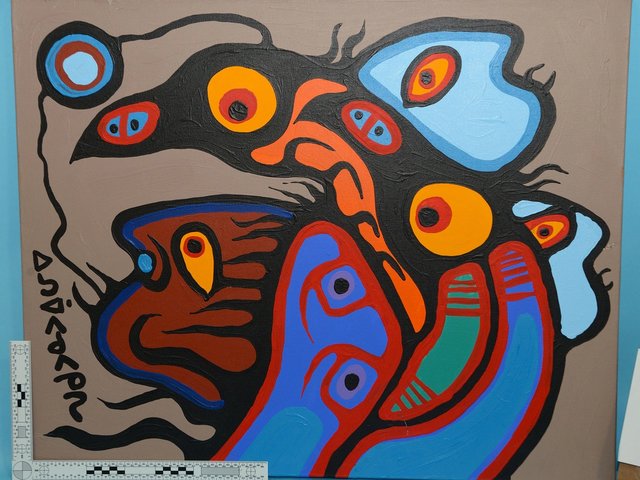
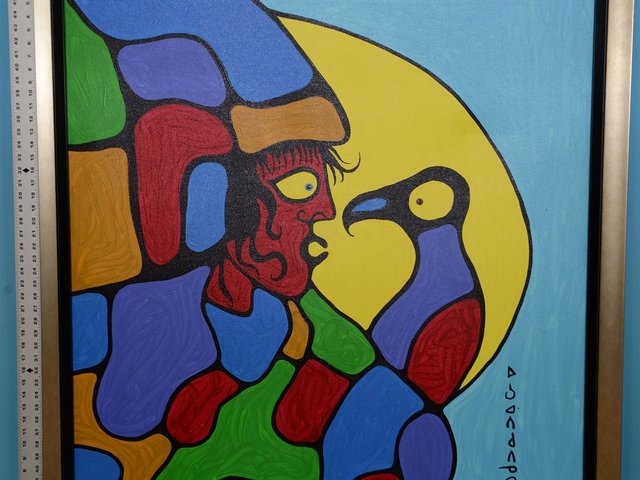
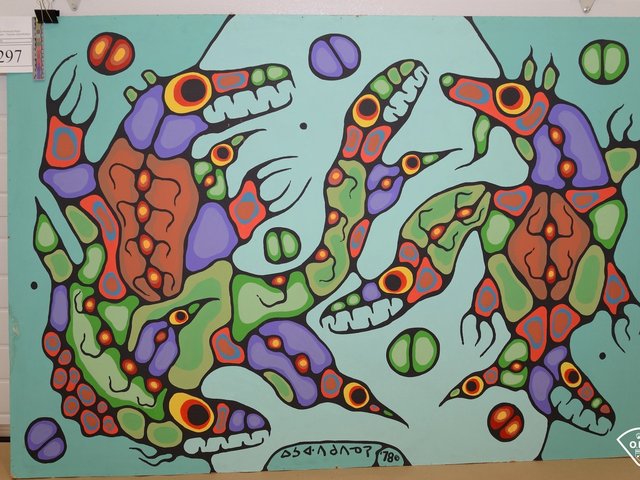
There was another plot twist late last month in the decades-long investigation into forged works by the acclaimed Ojibway artist Norval Morrisseau, who died in 2007. As a result, the sentencing of the convicted art fraudster Jeff Cowan has been delayed.
What was supposed to be the end of a scandal involving family feuds, Indigenous exploitation and art market skullduggery was upended by allegations made by Cowan’s lawyer that Morrisseau’s estate was complicit in the forgeries.
Cowan, who last November was found guilty on four counts relating to the selling of fake Morrisseau paintings, had previously represented himself in court. But during last month’s sentencing hearing in Barrie, Ontario, he was defended by Nathan Gorham, a criminal defence lawyer with offices in Toronto and Fredericton, New Brunswick.
According to a court document Gorham shared with The Art Newspaper, the lawyer representing Cory Dingle and Gabor Vadas of Norval Morisseau Estate Limited, Jason Gratl, “threatened defence counsel with a defamation action if counsel impugns the conduct of Gabor Vadas and the Morrisseau Estate in this proceeding” on 25 February, by way of a letter. Such action is rare because lawyers typically have absolute privilege to explore most, if not all, avenues and issues when defending a client.
In response, Gorham filed an application for an order that “absolute privilege applies to the conduct of defence counsel in this proceeding”. The application notes that on 26 February, Jonathan Sommers, an art fraud expert and lawyer who led investigations into the Morrisseau case for 17 years, provided the defence with an affidavit from John Zemanovich, his business partner and an expert in the investigation and examination of Morrisseau artworks, “detailing evidence tending to prove that members of the Morrisseau family created and disseminated forgeries. The affidavit further raises questions whether members of the Morrisseau Estate—including the children of Mr Morrisseau, Mr Vadas and Mr Dingle—have profited directly or indirectly from the existence of the forgeries in the market.”
Sommer is the chief executive and Zemanovich the chief operating officer of Art Experts Canada Inc, a company specialised in authenticating works by Morrisseau and the self-taught artist Maud Lewis. Gorham tells The Art Newspaper that Cowan did not have access to the affidavit before he was hired as his defence lawyer.
In the same application, Gorham stated that on 19 February “counsel raised concerns regarding sweeping and hyperbolic statements found in some of the victim impact statements”. Subsequently Dingle and Vadas, who were expected to make victim impact statements, withdrew them.
Sentencing set back
In the application, Gorham added that “Gratl’s threat is distracting, and it introduces an apparent conflict of interest into the proceeding”. Superior court justice Laura Bird voiced concerns about Gratl’s letter and gave the Vancouver-based lawyer a week to respond. Sentencing is due to resume in late April, but how Gratl’s letter impacts the case remains to be seen.
The affidavit, which Zemanovich says is in no way an attempt to exonerate Cowan but rather to offer the court “the benefit of knowing the full context in this matter”, contains allegations that are yet to be proven in court.
Zemanovich says that in December 2023, Norval Morisseau Estate Limited entered a victim impact statement into the record at the sentencing of Gary Lamont, after he pleaded guilty to his participation in the Morrisseau art fraud. In that victim impact statement, Zemanovich claims, “the estate portrayed [Morrisseau’s] children as victims of the fraud, despite the facts demonstrated throughout this affidavit showing that, for decades, they defended, promoted, participated in and profited from that fraud. These are the same people who now appear to be equal partners in the estate. To my knowledge, none of them have ever admitted publicly to the role they have played, identified problematic works they produced or authenticated, or apologised.”
Zemanovich adds: “To my knowledge, despite the fraud having been proven, the estate has not sued anyone. It also has not taken any action to invalidate the Children’s fraudulent copyright.”
Contacted by The Art Newspaper, Dingle declined to comment due to the ongoing legal case. The lawyer for Norval Morisseau Estate Limited, Gratl, tells The Art Newspaper: “However you look at it, there is an important distinction to be drawn between the conduct of the executor of an estate and the alleged conduct of beneficiaries of an estate, particularly if the beneficiaries are deceased.”
Legal logjam
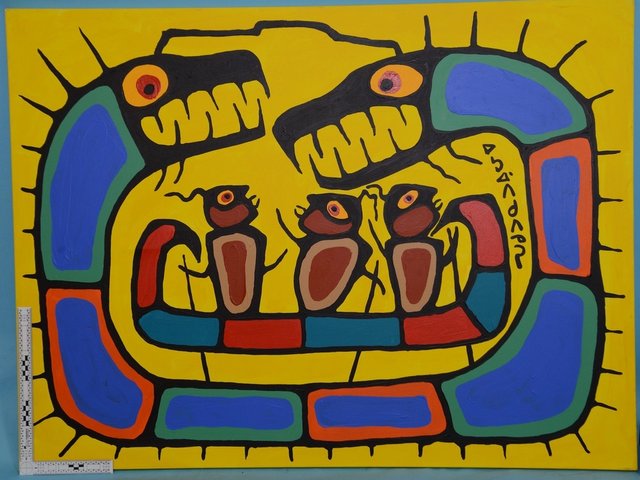
At issue, Sommer tells The Art Newspaper, is the often-murky relationship between the corporation called the Norval Morisseau Estate Limited and the Morrisseau Family Foundation. Morrisseau was estranged from his family at the time of his death in 2007 and left his estate to his long-time caregiver Gabe Vadas. His children founded the Morrisseau Family Foundation in 2009, claiming copyright to Morrisseau’s work—though, according to Sommer, “they had no legal right to do so”—and working with James White, who last year pleaded guilty to forgery and trafficking. The family subsequently sued Vadas in 2010 and in 2013 worked out an agreement by which they shared equally in the estate. Then in 2023, after eight people were arrested for fraud (including Cowan), Vadas created Norval Morisseau Estate Limited, which Dingle now heads.
Zemanovich writes in his affidavit that, in early 2024, “after becoming concerned about the estate and its many members’ relationship to the fraud, our company wrote to Dingle asking him to provide basic information about himself and the ‘shareholders’ of the estate, to whom he had referred repeatedly. Dingle never responded.”
To further complicate matters, in 2023 Sommer and Zemanovich began negotiations with Dingle to act as experts on Morrisseau forgeries for potential buyers. Sommer and Zemanovich subsequently withdrew from those negotiations, claiming “an attempt to unduly influence and possibly control our opinion-making independence”.
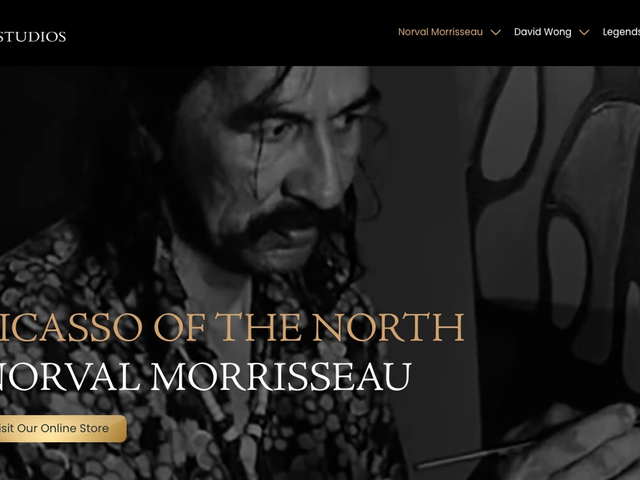
Concurrently, Sommers is representing EA Studios, a gallery in Alberta, in a lawsuit against Norval Morisseau Estate Limited and Dingle. That case revolves around claims that EA Studios, Norval Morisseau Estate Limited and Dingle “entered into contractual arrangements with EA whereby the defendants would reassure EA’s prospective clients that EA was a seller of authentic works of Norval Morrisseau”, Sommers says. “The lawsuit further alleges that, instead of reassuring those prospective clients, the defendants defamed EA and falsely suggested that EA’s inventory might not be authentic, or that it was obtained by EA improperly taking advantage of Morrisseau and then tried to steer those prospective clients to buy from the Estate’s inventory instead.”
None of the allegations in EA Studios’ lawsuit have been proven in court, and the defendants deny them. Dingle declined to comment on the EA Studios lawsuit.