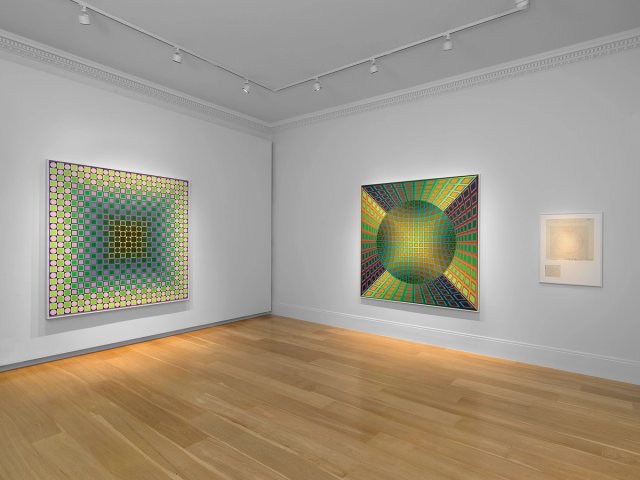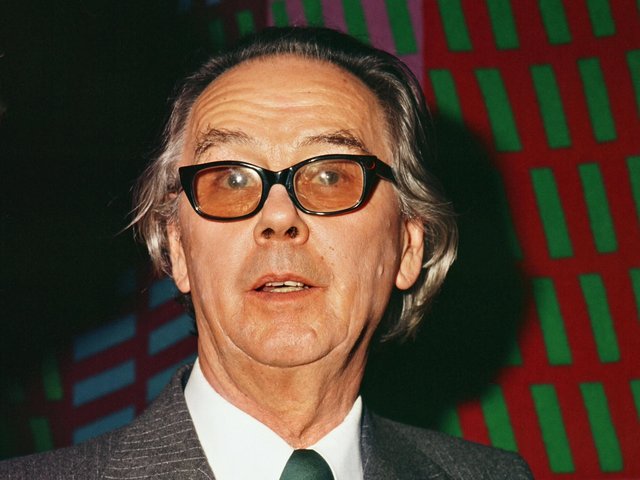
The family of Victor Vasarely, the flamboyant French-Hungarian ad man turned Op Art pioneer, is hoping that 2026 is the year the foundation he created will finally get back on track.
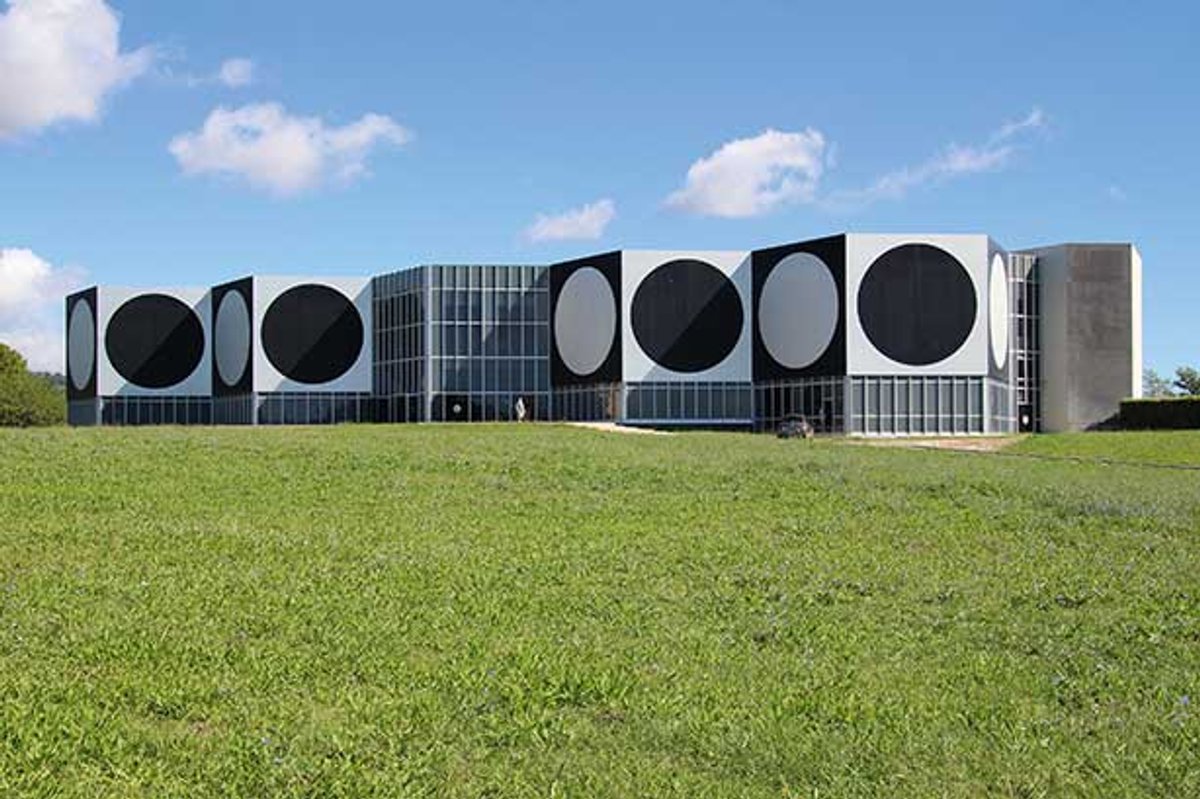
Vasarely was one of the first artists to launch his own foundation, in 1971. The hilltop building that now houses it celebrates its 50th anniversary this year. It is unmissable to visitors to Aix-en-Provence, with its striking concertinaed façade of circles within squares in black and white. But closer inspection reveals a decrepit sculpture in the garden shrouded in protective netting and monumental interior works in urgent need of attention.
A year ago, Fondation Vasarely auctioned works to raise funds to continue the restoration of both the iconic building and its many site-specific works. The foundation’s administrator, Caroline Vasarely, explained on TV that, since 2019, state funding had all but dried up. “The longer we wait,” she said, “the more difficult it will become to remedy the damage.”
This sits at odds with the building’s illustrious beginnings, when its 1976 inauguration was broadcast on national TV. After that, the foundation suffered local political strife and inheritance woes. When Victor fell ill in the 1980s, his sons were not able to take the building on, and it was put in the care of the director of the law school in Aix. After he died in 1997, legal wranglings over the works held in the foundation and the now-closed Museum Vasarely resulted in a dispute, still ongoing, between the foundation and the second wife of one of Victor Vasarely’s sons. It was not until Pierre Vasarely, the artist’s grandson, became chief executive of the foundation in 2009 that its fortunes started improving.
Critical repairs needed
The Aix building was listed as a historic monument in 2013, but years of neglect have left their mark. “Nothing had been maintained,” Pierre Vasarely says. “There was no heating, no air-conditioning. The roof leaked.” Before conservators could get to work on the site-specific works of art, essential repairs were required. External cladding and the roof, with its 14 pyramidal skylights, was fixed; heating, air-conditioning and humidity control systems were installed.
Vasarely says the museum received unprecedented financial support, covering 85% of the €12m budget, from every level of government, with the foundation footing the remaining 15% of costs.
Work on the art has proceeded more slowly, as the impact of pandemic closures has been compounded by the subsequent tightening of public funds.
Of the 42 monumental wall pieces and two sculptures, the foundation has restored about half. This is no small feat: these diverse works are made with an array of materials and techniques and many are huge, up to 8m by 6m. “For the 20 remaining, we’re taking our time. Restoring each work costs between €100,000 and €120,000,” Vasarely says.
The foundation is a private non-profit and, as he puts it, is used to getting by on its own strength. “We needed state funding for investment, which we were able to get as a historic monument, but for running costs, it’s more complicated,” he says. Boosting attendance is key, though the museum has yet to return to its pre-Covid peak of 102,000 visitors, in 2019.
It is banking on 2026 being a big year. To mark the 120th anniversary of Victor’s birth and the 50th anniversary of the building’s opening, the foundation is putting on a large exhibition of the artist’s work (12 June-1 November).
Pierre Vasarely says the recent opening of Cezanne’s family home nearby as a study and heritage centre should also help: “It repositions the foundation,” he says. His grandfather would agree. In 1973, he buried a message with the building’s cornerstone that reads “From Cezanne to Vasarely: we will be worthy.”