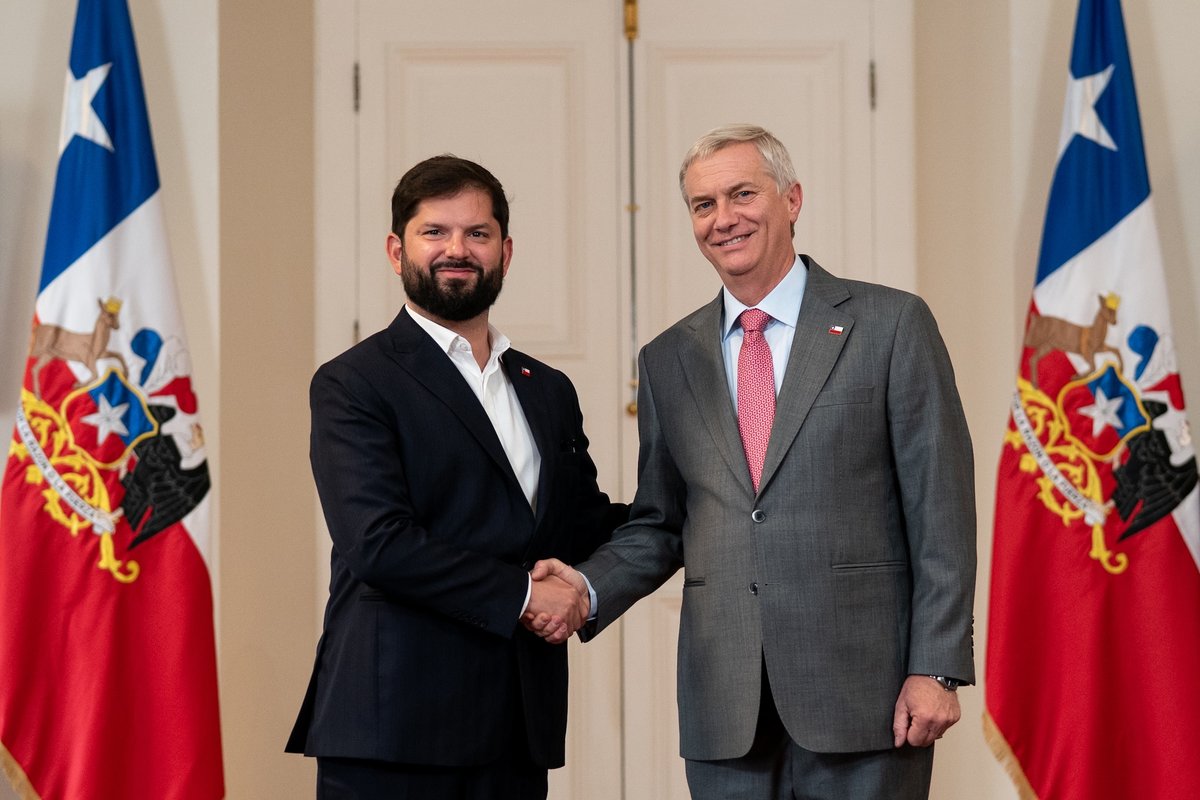
Chile’s new president, José Antonio Kast, has already shaken up the public sector after his finance minister requested a 3% budget cut across all ministries. The measure was announced before Kast officially took office on 11 March.
Of the country’s 25 ministries, the Ministry of Cultures, Arts and Heritage ranks 16th in terms of budget. Former president Gabriel Boric’s administration increased the culture budget year after year to around $580m for 2026 from $310 for 2023. Part of this increase was due to the incorporation of programmes previously managed by other ministries. At one point during Boric’s administration, the president tried to increase the culture ministry's budget to the equivalent of 1% of all public spending, although its funding level never surpassed 0.56%, according to the Observatory of Cultural Policies (OPC)—an organisation for research, analysis and training in the Chilean cultural sector.
Unlike under Boric, art, culture and heritage were absent from Kast’s programme. “It’s a government with no cultural programme. That’s for sure,” Bárbara Negrón, the general director of the OPC, tells The Art Newspaper. “It’s been decades since that happened, that a government takes office without a cultural programme.”
In addition to the 3% budget reduction, the government is seeking to cut another $1bn across all ministries. Each ministry has received a document requiring it to identify abuses and wrongdoing in its use of public funds, as well as austerity measures, and submit them to the Ministry of Finance’s budget office by 20 March.
“What worries me most is the part that somehow suggests or implies that there are institutionalised bad practices,” Negrón says. “We don't know if Cultures will be included in these additional cuts. There isn’t a plan that one can say: ‘Well, they’re going to prioritise this and not that.’”
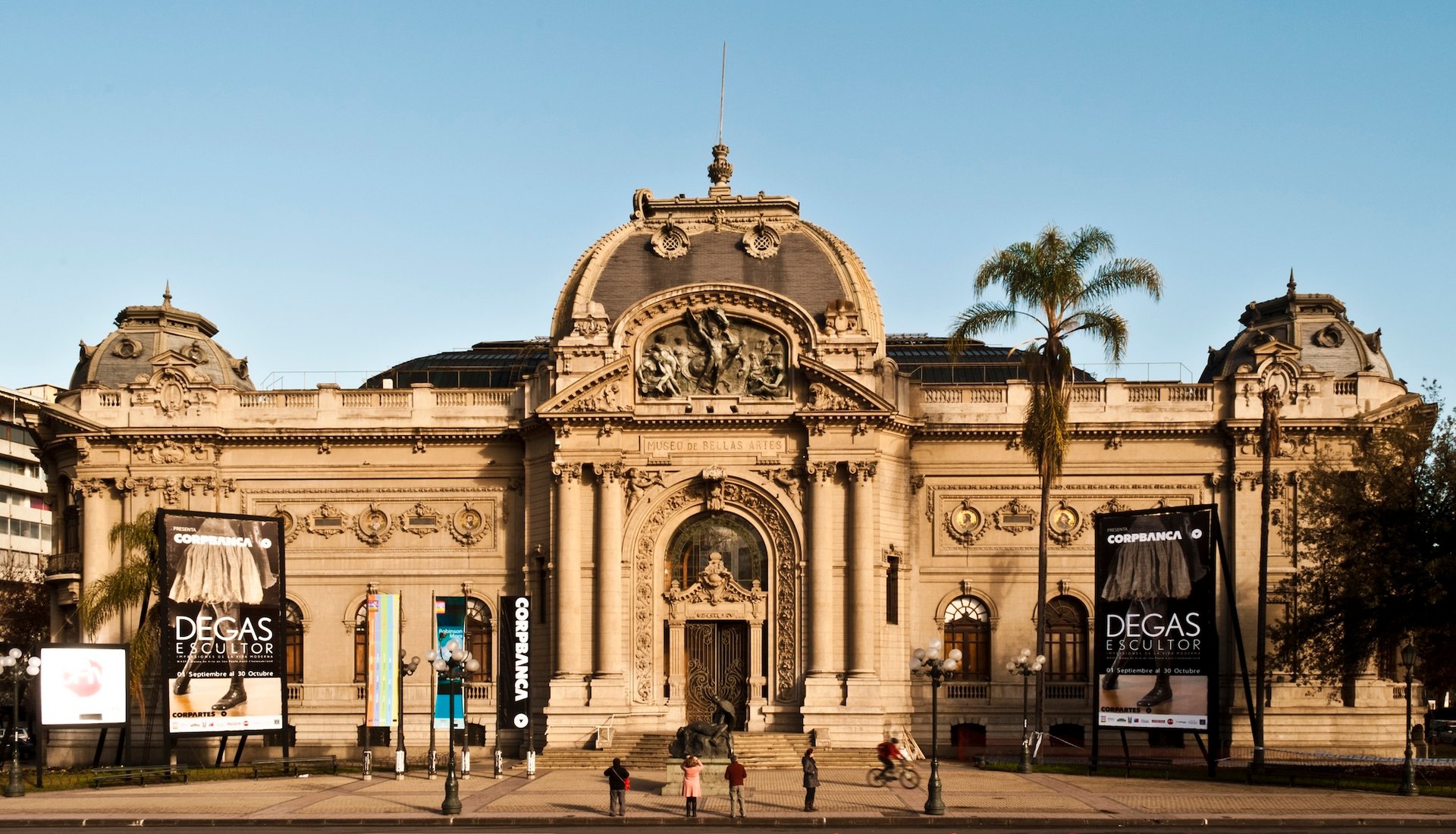
The National Museum of Fine Arts in Santiago Photo: SebasGZ, via Wikimedia Commons
Francisco Undurraga, the new Minister of Cultures, Arts and Heritage and a former representative of the right-wing party Evópoli, told the local press that his ministry is studying how to implement the 3% cut. “There is excessive spending on culture,” he said, causing concern among the National Union of Artists, which issued a statement rejecting that claim.
“Investment remains insufficient,” the union posted on Instagram.
Around 59% of the culture ministry’s budget is allocated to the Undersecretariat of Cultures and Arts and 40% to the National Service for Cultural Heritage, which is overseen by the Undersecretary of Cultural Heritage. The Undersecretariat of Cultures and Arts proposes policies to the minister and designs, implements and evaluates plans and programmes related to arts and culture. The National Service for Cultural Heritage manages the national and regional libraries as well as archives and museums such as the National Museum of Fine Arts in Santiago.
“One way to save money is not running some programmes,” says Juan Carlos Silva, who served as undersecretary of cultures and arts between 2018 and 2022. Before taking office, Undurraga said that he would eliminate the cultural pass—a programme aimed at giving 18- and 19-year-olds from 60% of the most vulnerable households $55 to spend on cultural goods and services such as books and tickets for theatre, dance, circus, concerts, festivals and exhibitions.
“The Ministry of Cultures had a budget increase that did not translate into any substantial change in the maintenance and conservation of heritage,” says Cecilia García-Huidobro, a former director of the Violeta Parra Museum and a member of the National Monuments Council, referring to the previous administration. “The ministry needs to focus on creators, on heritage, and have a streamlined institution that allows for the efficient transfer of funds with the best oversight and evaluation. It shouldn’t all end up in a giant bureaucracy, because that's not culture—[cutting] 3% is quite manageable for any institution. It's not like they’re telling you to cut 20%, which is something that definitely affects you. But everyone can save 3%. Furthermore, it forces a process of reviewing and evaluating how resources are being spent. It’s a great measure, not only for culture but for the entire public sector.”
While the ministry reviews how to address the budget cuts, the Chilean government has granted urgent status to the Cultural Heritage Bill in the Senate. The bill, introduced to congress in 2019, seeks to modernise the protection and management of heritage in Chile.