In Iran, the weeks around Nowruz—the Persian New Year beginning on 20 March—are typically among the busiest of the year. Markets fill with shoppers preparing for the holiday, while millions travel across the country to visit relatives and explore cultural and natural landmarks.
This year, however, the atmosphere was very different. Since the US-Israeli bombardment began on 28 February, travel across the country has become increasingly unsafe and streets that would normally be crowded with shoppers have remained unusually quiet. Internet blackouts have also left people largely cut off from one another and the outside world, while museum collections have been evacuated, studios have fallen idle and galleries have closed.
“I can hardly even remember what I used to think about — how I painted, or what life felt like,” says Homa (not her real name), an emerging contemporary artist in Tehran. For Homa, fear began even before the first bombs fell. In the weeks leading up to the war, she had already stopped regularly going to her studio, unsettled by the sense that war was approaching.
“We were living with Trump’s constant threats and analysing every statement by this or that politician, trying to understand whether war would really happen,” she says. “Some people awaited it [war] eagerly, while others—like me—were terrified.” As the US and Israel threatened to attack Iran, Iranians were sharply divided. Some supported the prospect of military action, while others warned that war would bring widespread chaos and destruction.
Homa says the anxiety has consumed her, leaving little room for creative work. The uncertainty has also shaken her sense of identity as an artist. “In these days and under these conditions, when survival becomes the priority and even living itself loses its meaning beside simply staying alive, I no longer know how to keep the artist within me alive,” she says.
Living through what she describes as one of the most frightening times of her life, she says she is baffled that some Western governments still refuse to describe what is happening as a war. (Many US Republican politicians have also avoided using the word “war”.) “For me, hearing the terrifying sound of explosions and bombardment, feeling death so close to myself and everyone I love, this experience has only one name: war,” she explains.
Another artist, Mina (not her real name), tells The Art Newspaper that the war has completely changed her daily life. When their neighbourhoods were targeted by US-Israeli missiles, she moved in with friends, feeling “safer together”. She says she goes out far less and only when necessary. Recently she has tried to reintroduce some routine by going to the gym, but she keeps her movements limited to a handful of locations in the city and only sees a small circle of close friends.
Mina says that being an artist in Iran has always been challenging, but that the war has pushed those difficulties to a new level. Her projects have stopped entirely, and friends who rely on painting for their income are in the same situation. “There is nothing happening now. No one even has the mental capacity to create.”
While goods remain available, she says prices have risen sharply; with many people now without an income, large parts of society are struggling.
Mina says her feelings about the situation remain complicated. “It’s a weird, mixed feeling,” she says. With internet blackouts and limits on movement, she is cautious about feeling hopeful for the new year, aware that she may not fully know what tragedies are unfolding elsewhere. “I can’t call it hope,” she says. “It’s a belief in a possible change—not just for Iran and its politics, but for the world.”
Uncertain art scene
Iran’s already fragile art market, which depends largely on independent galleries and their private collectors, has been severely impacted. Homa believes that the future of galleries, artists and the wider art scene remains uncertain and will, “like everything else, depend on the outcome of this war”.
A gallery owner in Tehran tells The Art Newspaper that her gallery has been closed since 7 January, when unrest in the capital turned violent. Despite the closure she still faces the financial burden of end-of-year bills and payments to artists and employees.
Unlike last year’s Twelve-Day War with Israel, when many residents left Tehran, the gallery owner says the vast majority have remained in the capital but are staying indoors. “Having the gallery open for gatherings doesn’t add anything to what people are going through,” she says. “We also don’t know where they’re going to strike next, so I can’t ask my employees to come to work. It’s really not safe.”
She says morale in the art community is extremely low—not only because sales have stopped but because of the wider situation in the country. Whether the gallery will be able to survive this war remains uncertain. “I honestly don’t know,” she says.
Strike damage
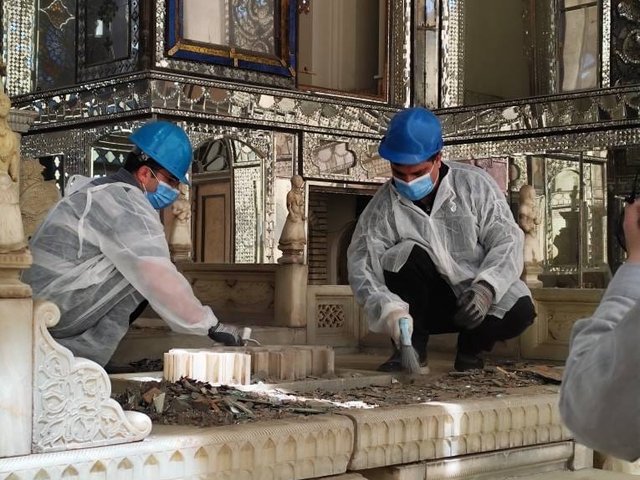
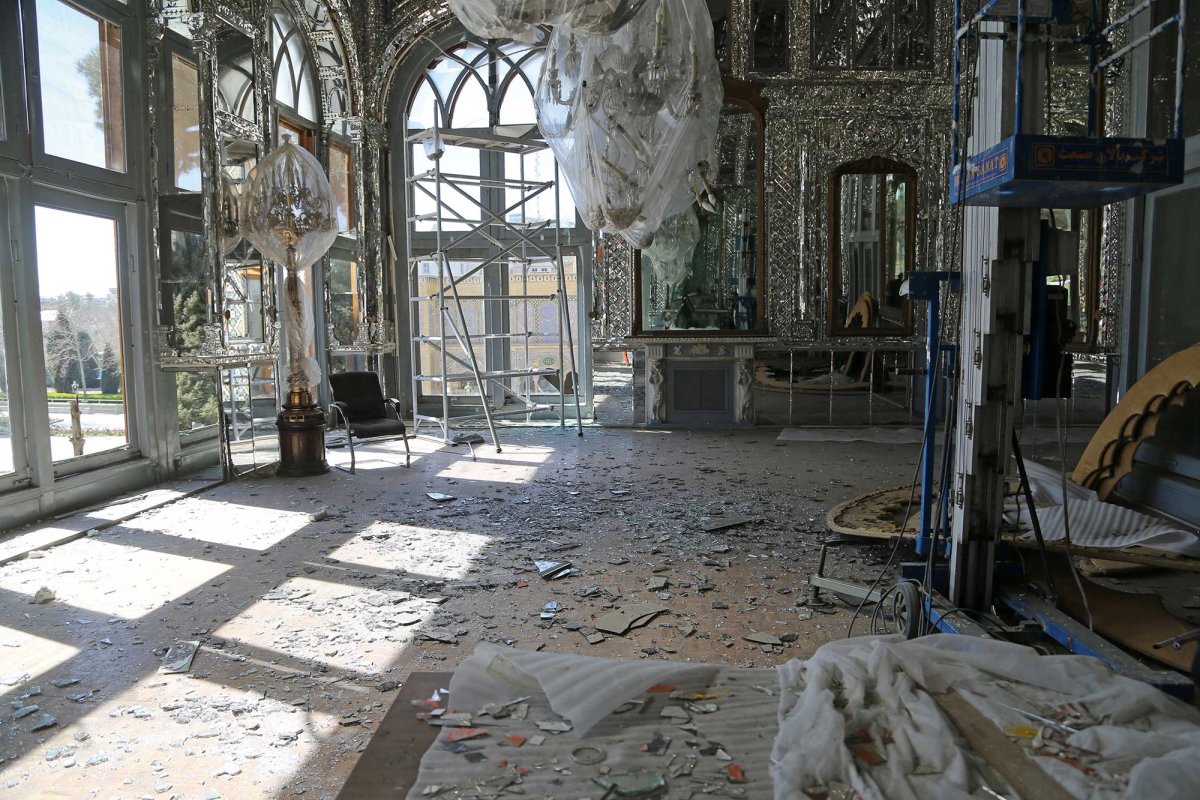
The war has also affected cultural heritage across the country. Iran’s Ministry of Heritage, Tourism and Handicrafts announced on 14 March that 56 sites, including Unesco World Heritage properties, museums and historic landmarks, had been damaged in the strikes.
In Tehran, the 400-year-old Golestan Palace, the capital’s only Unesco World Heritage site, was damaged on the second day of the war when an attack reportedly struck a judicial complex in nearby Arg Square, within the palace’s Unesco-designated buffer zone. Subsequently, on 17 March, the 19th century Sa'adabad Palace complex in North Tehran was seriously damaged in airstrikes. In total, 120 historic sites have been damaged in the course of the war so far, according to Iranian officials.
In Isfahan, blasts damaged several historic landmarks, including the city’s central Naqsh-e Jahan Square, also a Unesco World Heritage site. Other historic sites in the city’s Dawlatkhaneh complex were also affected, including the Rakeb-Khaneh pavilion, Ashraf Hall and the Teymouri Hall, a Timurid-era structure later converted into a museum.
Elsewhere, officials in Lorestan province reported damage to buildings within the perimeter of the third-century Falak-ol-Aflak Citadel in Khorramabad.
In Kurdistan province, several historic buildings in Sanandaj—including Khosroabad Mansion, Asif Mansion (Kurd House) and the Sanandaj Museum—were also reportedly damaged.
Authorities raced to install the Blue Shield emblem at historic sites and museums. The symbol, recognised under the 1954 Hague Convention, marks cultural property that should be protected during armed conflict. Officials in Isfahan and Lorestan say the emblem had already been installed at some sites before nearby attacks occurred.
However, Peter Stone, the president of Blue Shield International, a non-profit heritage protection NGO, tells The Art Newspaper that installing the emblem offers limited protection. “The problem is twofold. First, the emblem was placed there after the conflict had begun—therefore after the Americans had finalised their ‘no-strike list’. And, secondly, putting the emblem on a roof in the current means of warfare is almost irrelevant, because weapons are launched from potentially hundreds of miles away,” Stone explains.
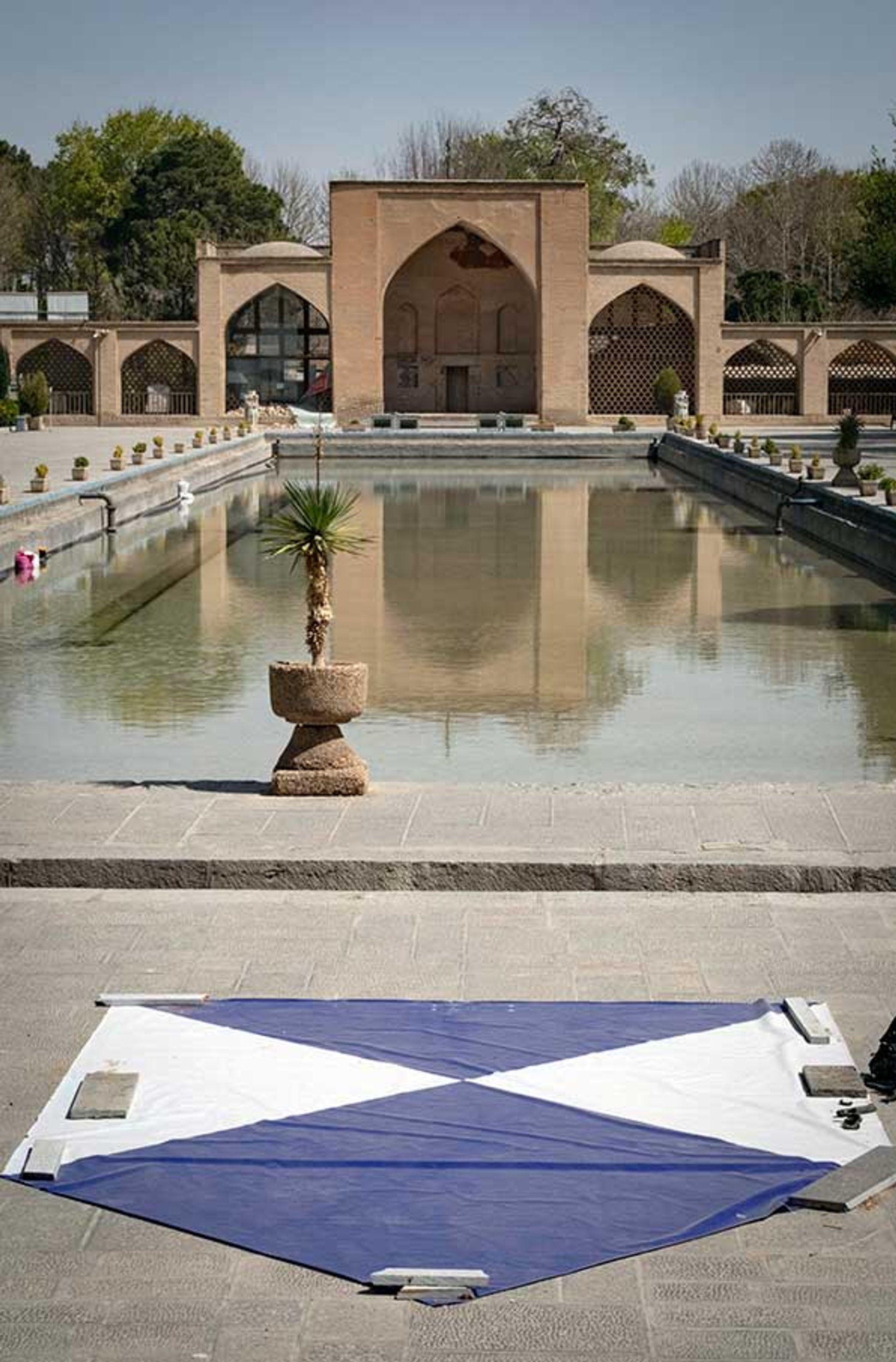
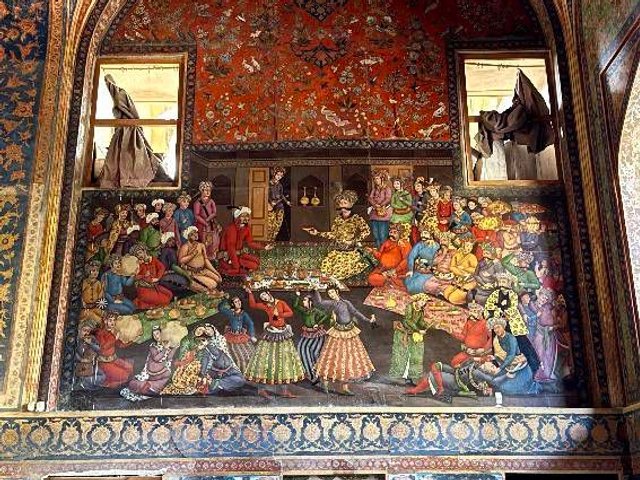
A Blue Shield has been installed at the historic Chehel Sotoun Palace in Isfahan
Photo: Morteza Nikoubazl/NurPhoto via Getty Images
Stone, whose organisation shares its name with the emblem but is not connected to it, says that most militaries now compile “no-strike lists” that include cultural heritage sites protected under the 1954 Hague Convention, alongside hospitals, schools and religious buildings, which should not be targeted unless military necessity dictates. He notes that in 2020, when US President Donald Trump threatened to target sites “important to Iran and the Iranian culture”, it was the Pentagon that intervened to stop him.
Stone says Blue Shield has confirmed that the US military does maintain a comprehensive no-strike list that includes “a large amount of heritage sites” and that “that puts the obligation on the Americans not to target those sites unless military necessity dictates,” he notes. He adds that while the organisation does not have “a clear link” with the Israeli military, he assumes that they, too, have a list.
Some recent statements by US officials, however, have raised alarm among heritage experts. On 2 March, US Secretary of War Pete Hegseth said that operations were being conducted with “maximum authorities” and “no stupid rules of engagement”. Stone says the statement is “absolutely astounding and extraordinarily worrying”. In a statement issued on 4 March, the US Committee of the Blue Shield—one of Blue Shield International’s 34 national committees—warned that failure to observe international humanitarian law “can lead to the commission of war crimes”.
Stone says Blue Shield has attempted to contact cultural professionals within Iran’s heritage ministry to see whether additional cultural sites should be included on the US no-strike list. However, due to widespread internet disruptions, they have so far been unable to reach them.
“One of the things that we insist on in terms of our independence and partiality and neutrality is that we will talk to anybody involved in a conflict, and try to keep channels open with everybody, being the Red Cross for cultural property,” Stone says.