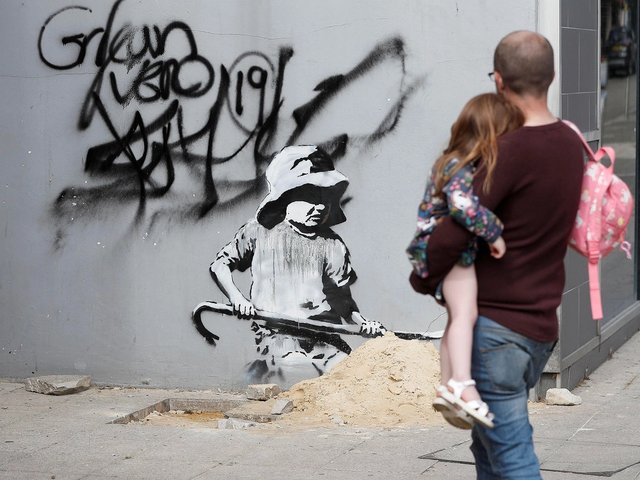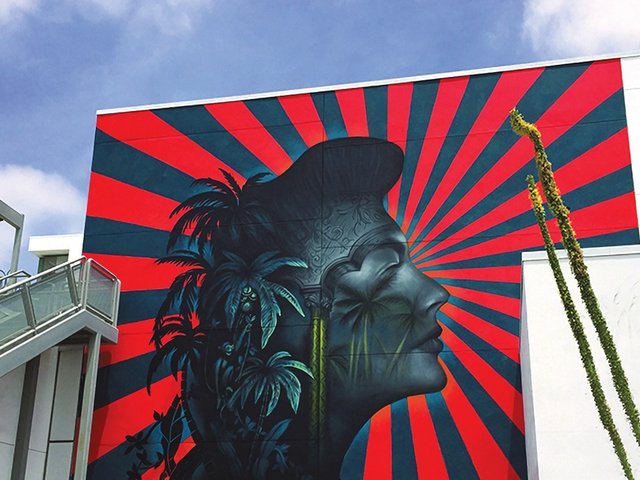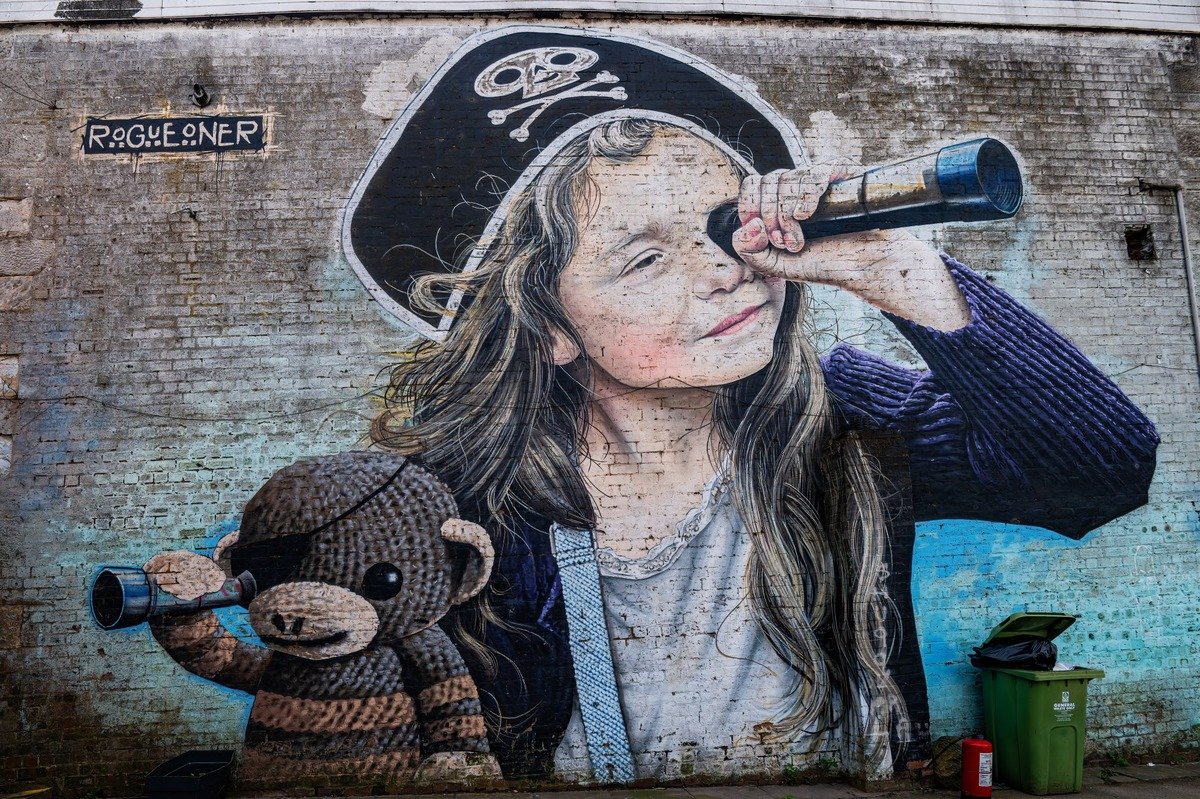
The charity Art UK has completed a major nationwide effort to document murals and street art, creating what it describes as an “unprecedented cultural snapshot” of one of the UK’s most “accessible and democratic” art forms. The Murals Digitisation and Engagement Programme, launched in January 2024, has recorded more than 6,600 works, bringing the total number of outdoor public artworks catalogued on the organisation’s online database to more than 21,000.
Funded principally by the National Lottery Heritage Fund, the project spans the length of the UK, from Kirkwall in Orkney, an archipelago off the northeastern coast of Scotland to Penzance in Cornwall, southwestern England. It captures works ranging from medieval church wall paintings to contemporary murals from 2025, some recorded while still in progress. The largest is a 16‐storey abstract mosaic in Gosport, Hampshire, while the smallest is a 50cm-high artwork depicting a man walking, painted on a utility box in Aberdeen.
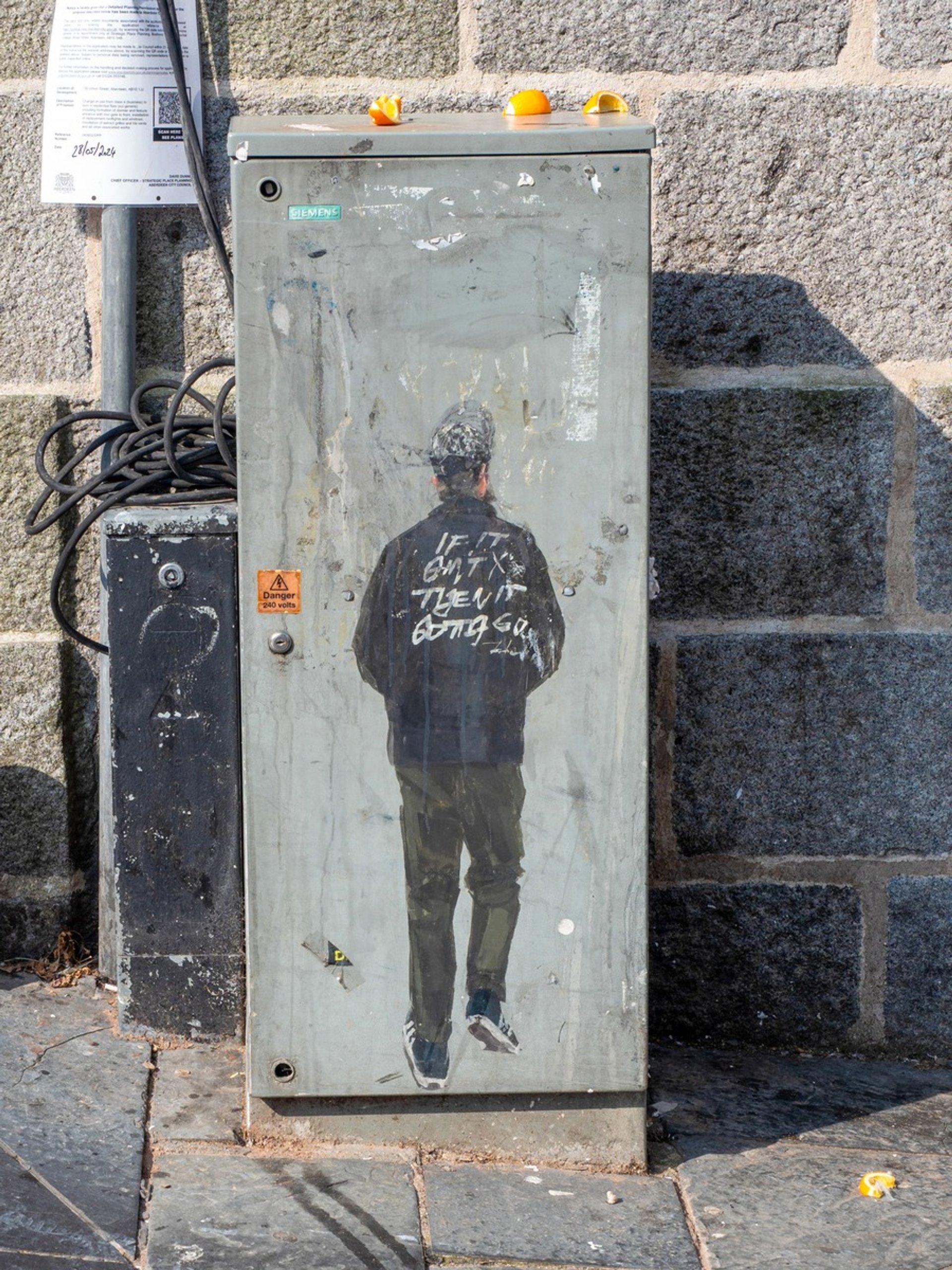
Helen Bur, Gotta Go Man, Belmont Street / Union Bridge, Aberdeen, Aberdeenshire
© the artist. Photo: Andy Hayes / Art UK
Around 19% of the works are commemorative, according to an Art UK statement, marking events including sporting triumphs and moments of collective mourning. Animals appear in 23% of murals, while 11% reference local heritage and industry, reflecting Britain’s industrial past. Other works address themes such as climate change, nature and social cohesion.
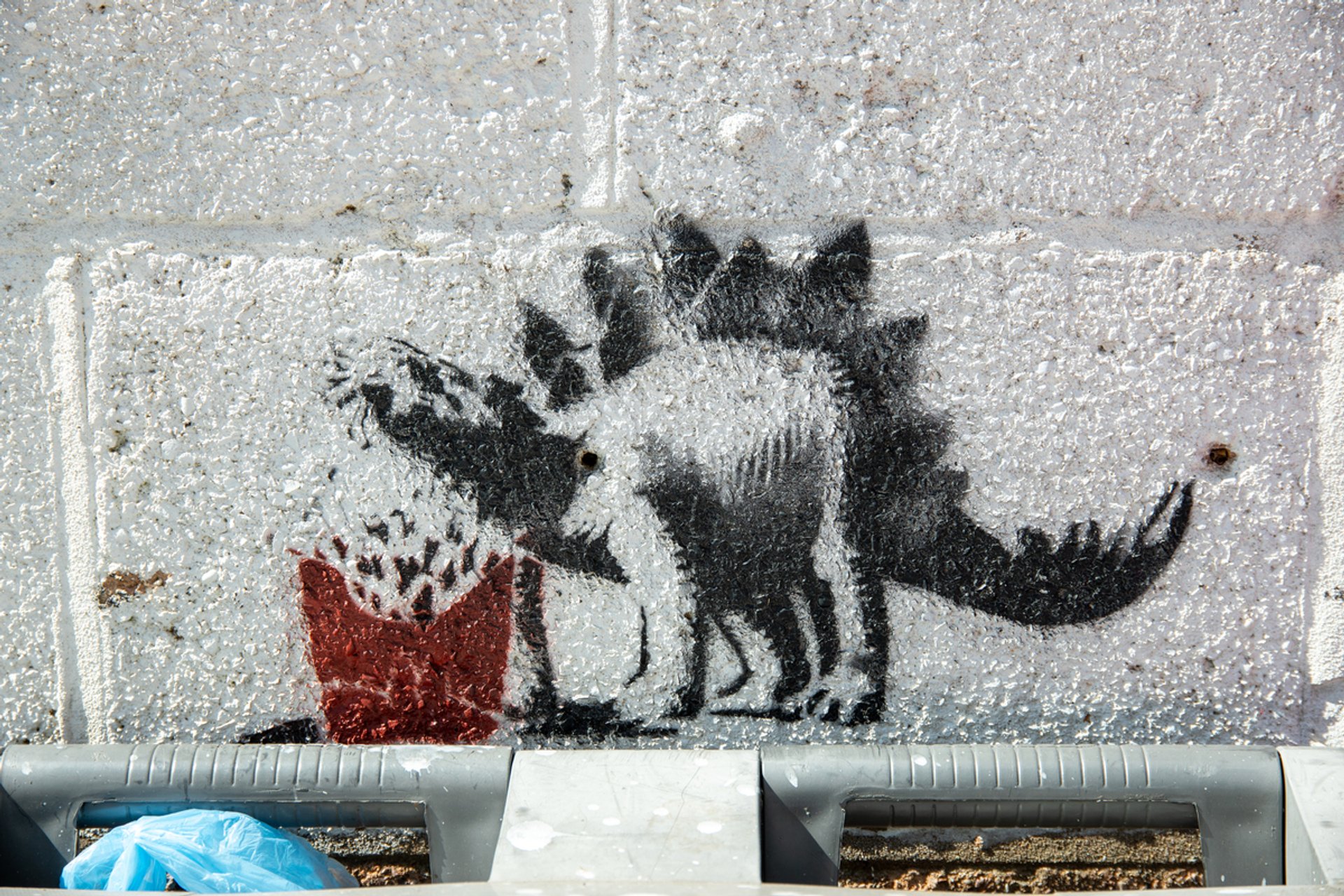
Gary Cook, Dino Eating Fries Stencil, Queen Street, Exmouth, Devon
© the artist. Photo: Tracy Jenkins / Art UK
While murals in the UK still depict more named men than women, the statement says, they offer greater diversity than public sculpture, more frequently representing, for example, individuals from the Global South, community leaders and activists.
The initiative relies heavily on a network of around 90 “public art volunteers”. According to Katey Goodwin, the charity’s deputy chief executive, most of these volunteers were originally recruited in 2017 through a partnership with the Royal Photographic Society, when they were tasked with photographing public sculpture across the UK. “It was during the sculpture project that we set up a volunteering programme for the first time,” she told The Art Newspaper.
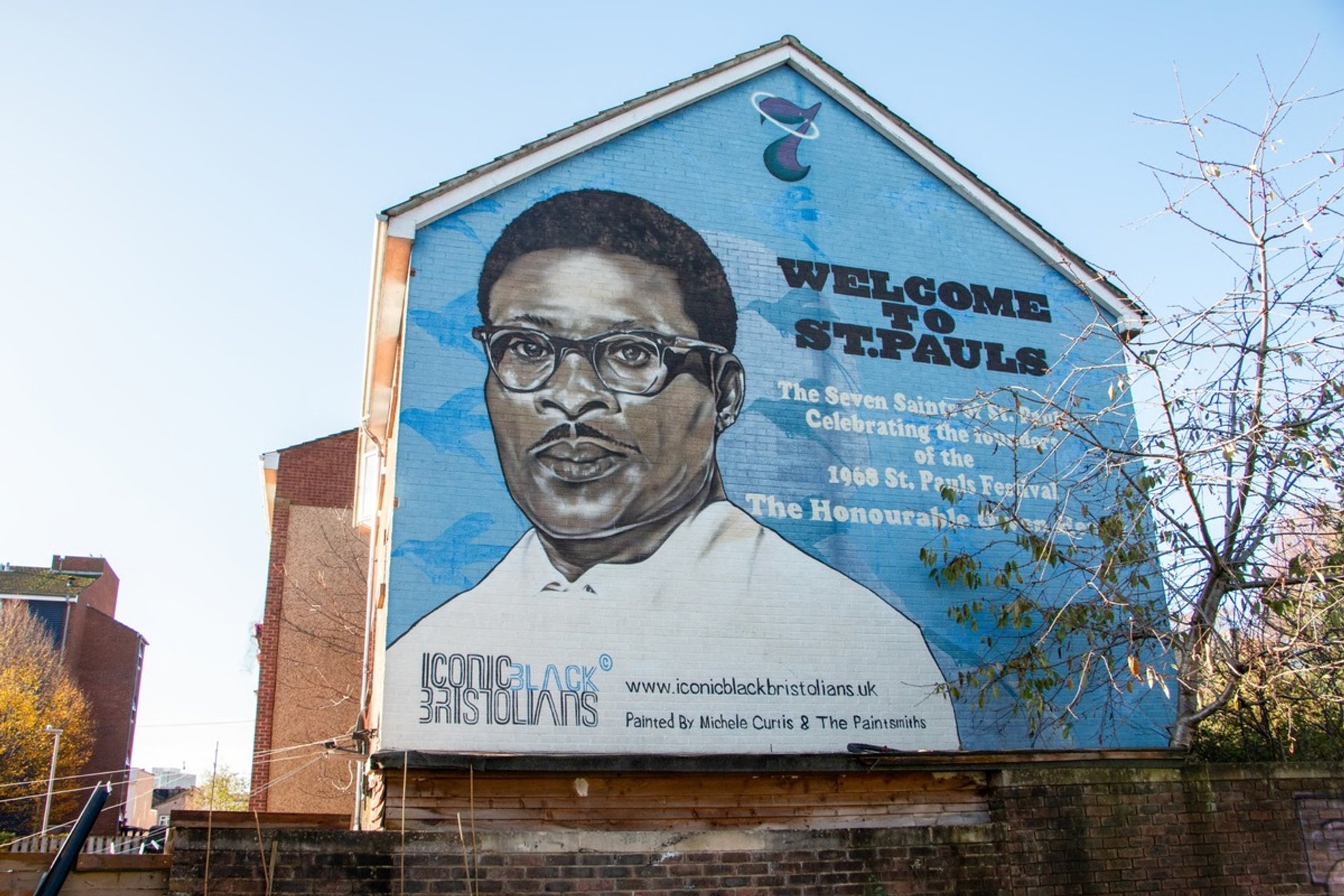
Michele Curtis, Owen Henry (1928–1989), City Road, Bristol
© the artist. Photo: Paul Francis / Art UK
The murals initiative builds on that project, which was completed in 2021.
When the murals project was announced, many volunteers “jumped at the chance” to take part. Volunteers were assigned works in their local areas but often went beyond their briefs, identifying additional murals while on location. Collectively, they contributed nearly 5,500 hours over two years, Goodwin says.
Andrew Ellis, Art UK’s chief executive, said in a statement: “Our volunteers have once again achieved something extraordinary. Their dedication has allowed us to make an invaluable record of one of the most accessible and democratic art forms, one we encounter almost every day in urban Britain, brightening our lives and provoking discussion.”
The programme coincides with a broader rise in mural-making in the UK, as street art has shifted from a largely subversive practice to one increasingly commissioned by local authorities and business groups to revitalise public spaces.
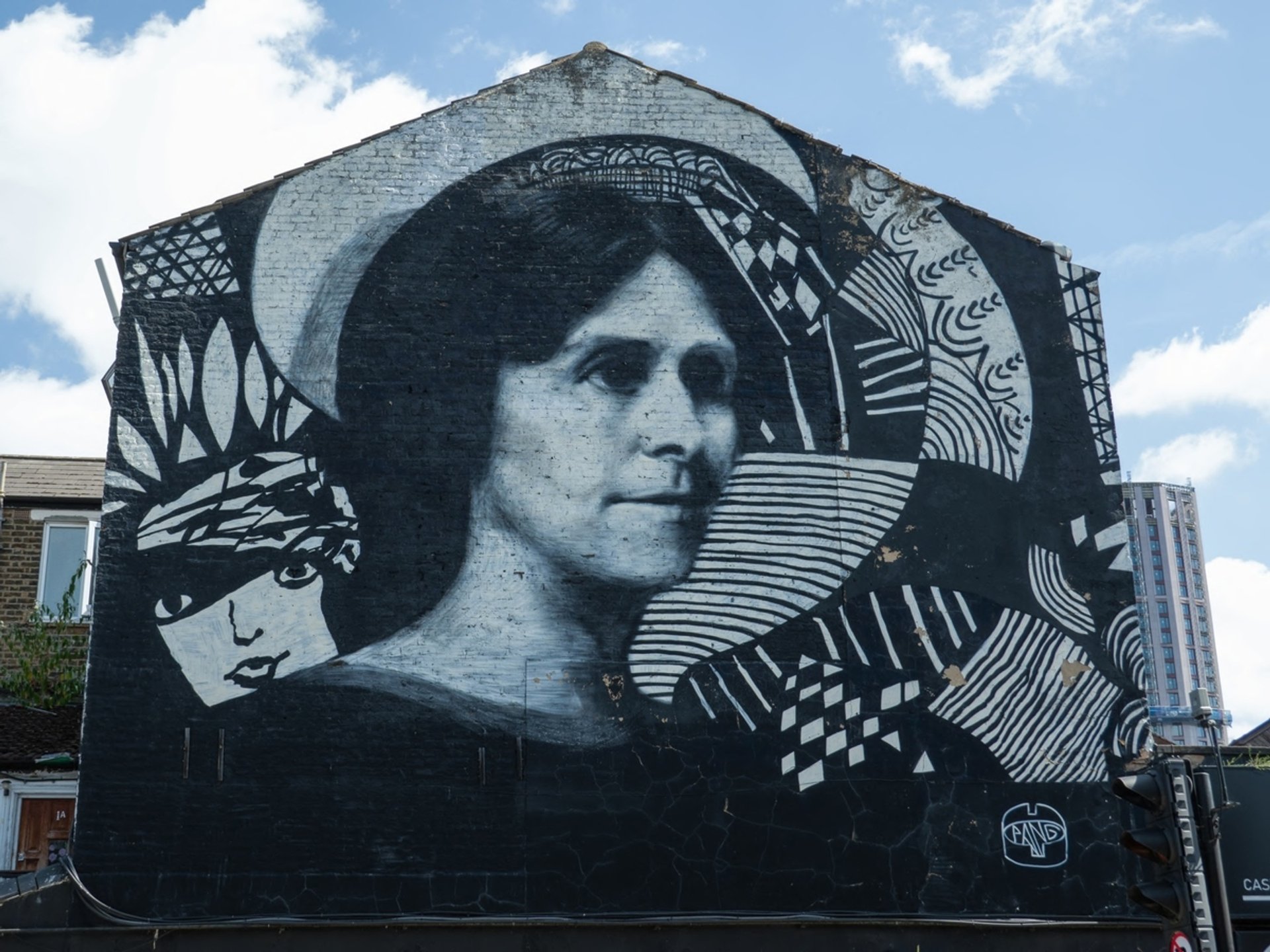
Fipsi Seilern / PANG (b.1984), Madge Gill (1882–1961), Palmerston Road, Waltham Forest
© the artist. Photo: David Ovenden / Art UK
Scotty Irving, the founder of the street art firm Brave Arts, said in a statement: “One of the reasons I am a street artist is because I want to share with the world the value art can have by just being in public. Street art connects people to true stories.”
Art UK plans to continue the initiative through 2026, expanding coverage to include indoor murals and further developing learning resources, including films, school activities and audio descriptions.