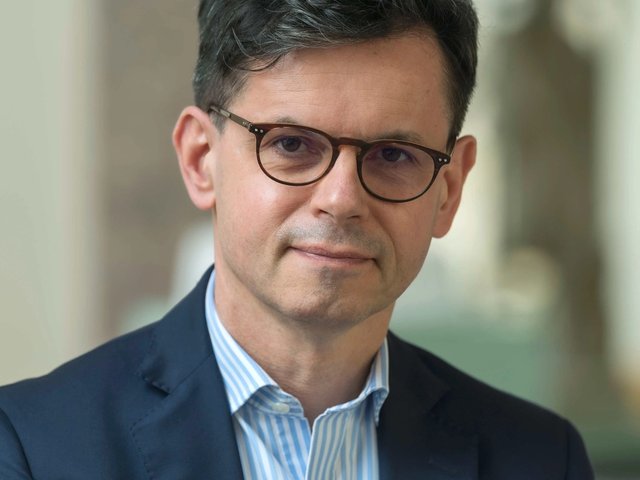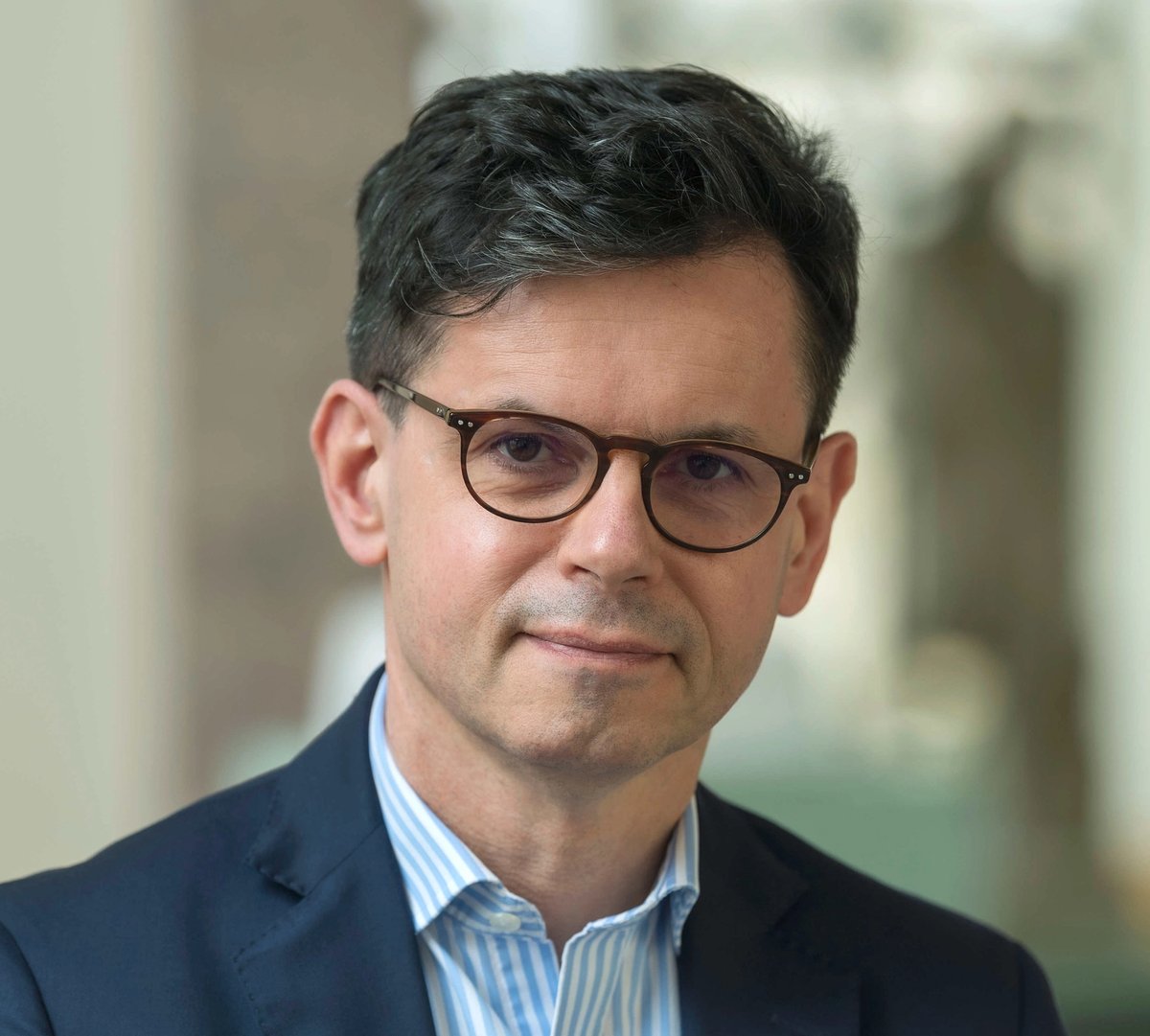
The Musée du Louvre is in deep trouble, traumatised by the theft of the crown jewels last October and the non-stop high drama of the weeks and months since. The mission for its new director Christophe Leribault, according to President Emmanuel Macron, is one of “appeasement”.
Leribault’s arrival on 25 February coincided with Macron’s appointment of a close collaborator, Catherine Pégard, as culture minister after the resignation of Rachida Dati, who left to run in the March election for Paris mayor. In both cases, the contrast of characters is striking. Pégard, 71, is as discreet and cautious as Dati is outspoken. Leribault, 62, is a pure art historian with an unassuming demeanour. The reign of his predecessor, Laurence des Cars, has been criticised as autocratic and for prioritising style over substance.
The former head of the Château de Versailles, Leribault arrived after Des Cars’s desperate five-month struggle to save her job came to an end. A string of management failures had been confirmed in stinging reports from various bodies and parliamentary hearings in the wake of the heist.
As the Cour des Comptes (France’s state auditing body) put it, the Louvre “accumulated considerable delays in the deployment of its security equipment”, in favour of an “event-driven policy”, a judgment Des Cars said was “unfair”. But less than 0.3% of the budget was dedicated to security and fire prevention. In strategic documents prepared before the burglary, Des Cars had concluded theft no longer posed a threat to the museum.
“The robbery was made possible because of these inadequacies”, said Pierre Moscovici, the Cour des Comptes’s president. The parliamentary hearings found that upon her arrival in 2021, Des Cars chose to drop the safety plans launched by her predecessor and give top priority to her grand vision of a new entrance for the museum—a plan Macron enthusiastically endorsed.
Along with the scathing reports came a spate of calamities: floods, structural beam damage, revelations of a massive ticket fraud, along with a 40% rise in ticket prices for non-European tourists. Des Cars’s management style was described by Elise Muller, a union representative, as “top down, haughty and brittle”. According to the Cour des Comptes, the director had doubled the payroll of the management and spent €500,000 on setting up a private dining room.
From mid-December, staff conducted regular strikes in an unprecedented protest movement. Alexis Corbière, rapporteur for a parliamentary investigation committee, denounced a “hyper presidency” with “a director taking decisions all on her own”. In a damning verdict, his colleague Alexandre Poitier said “in any other country, or establishment, this list of failures would have long since led to the departure of the director.”
Des Cars, who rarely gives interviews, did not respond to a request for comment. She has failed to show up to two parliamentary hearings since her departure.
Does Leribault have what it takes to repair the damage? His CV is impressive. A passionate art history student, he studied at the Sorbonne, the École du Louvre and the Medici Villa in Rome, writing theses on the interiors of Parisian mansions between 1770 and 1830 and the French rococo painter Jean-François de Troy (1679-1752).
A career in Paris museums
Apart from stints at the Getty in Los Angeles (where he says he survived without a driving licence) and the Wallace Collection in London, Leribault spent most of his career at Paris museums. He stayed 16 years at the Musée Carnavalet, dedicated to the history of Paris, before joining the graphic department of the Louvre for six years while taking care of the small Musée National Eugène-Delacroix, located in the artist’s workshop.
In 2012 he was appointed director of the fine arts museum in the Petit Palais in Paris, where he staged original exhibitions of little-known or forgotten artists with spectacular scenography, far removed from the staid displays of the Louvre. He promoted shows and acquisitions of artists from Scandinavia, Russia, Switzerland and the UK, mounted the first show on Oscar Wilde in France and shaped an outstanding pre-Raphaelite collection. Attendance jumped from 300,000 visitors in 2012 to 1.2m in 2018.
In 2021 he was appointed the head of the Musée d’Orsay, but only two years later, was called by Macron to hastily replace Pégard, who had been controversially kept in her post at Versailles for three years after the obligatory retirement age.
But Leribault’s biggest challenge yet is to fix the mess at the Louvre. The artist Erik Desmazières, who, like Leribault, is a member of the Académie des Beaux-Arts, describes “a modest man, even elusive”. (Leribault declined to be interviewed for this article.)
Relief among Louvre staff
The staff of the Louvre have heaved a collective sigh of relief, according to one curator, who declined to be named. “From one day to another, the atmosphere changed,” he says. “Everyone was relieved. He knows the place and he knows everyone. He left excellent memories of his six-year stint here. He has always shown attention to the human side of the job. And he has this innovative capacity which can lead us further. This said, everyone knows the challenge is immense”.
A former manager of the Louvre describes the museum’s infrastructure as partially derelict. “Maintenance work, and even urgent repairs, were stopped for five years,” he says. “Overall, the museum has lost at least eight years in even the most basic structural update.”
The government and parliament agree that top priority must be given to the implementation of technical masterplans that come with an estimated price tag of €480m. The elephant in the room is the pharaonic project for a new entrance, leading to a 93,000 sq. m subterranean complex around the Mona Lisa and an exhibition hall, which Macron still supports. The estimated budget for this part has already increased to €666m from €400m. The plan is considered “financially unsound” by the Cour des Comptes and was criticised in parliament. Sponsorship funding set at €300m has yet to be found. Technical studies, especially on the underground flood risk along the banks of the Seine, have not been concluded.
Yet Des Cars had already launched an architecture competition, which has now been suspended. In the budget for this year, she included €100m spending for the controversial project’s preliminary studies. A meagre €17m was allocated to the technical masterplans, with only €1.8m earmarked for the safety of the collections and €500,000 for fire prevention.
The staff unions consider the new entrance project “insane” and demand that it be dropped. Navigating Macron’s desires while finding a way to “appease” staff and angry MPs will require all the professional prowess and dexterity Leribault can muster.