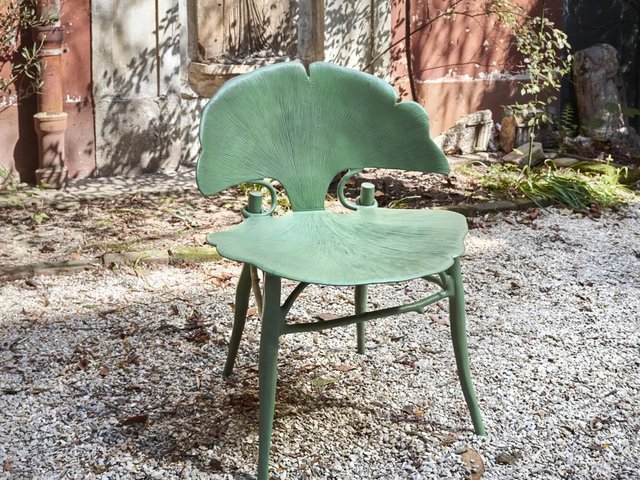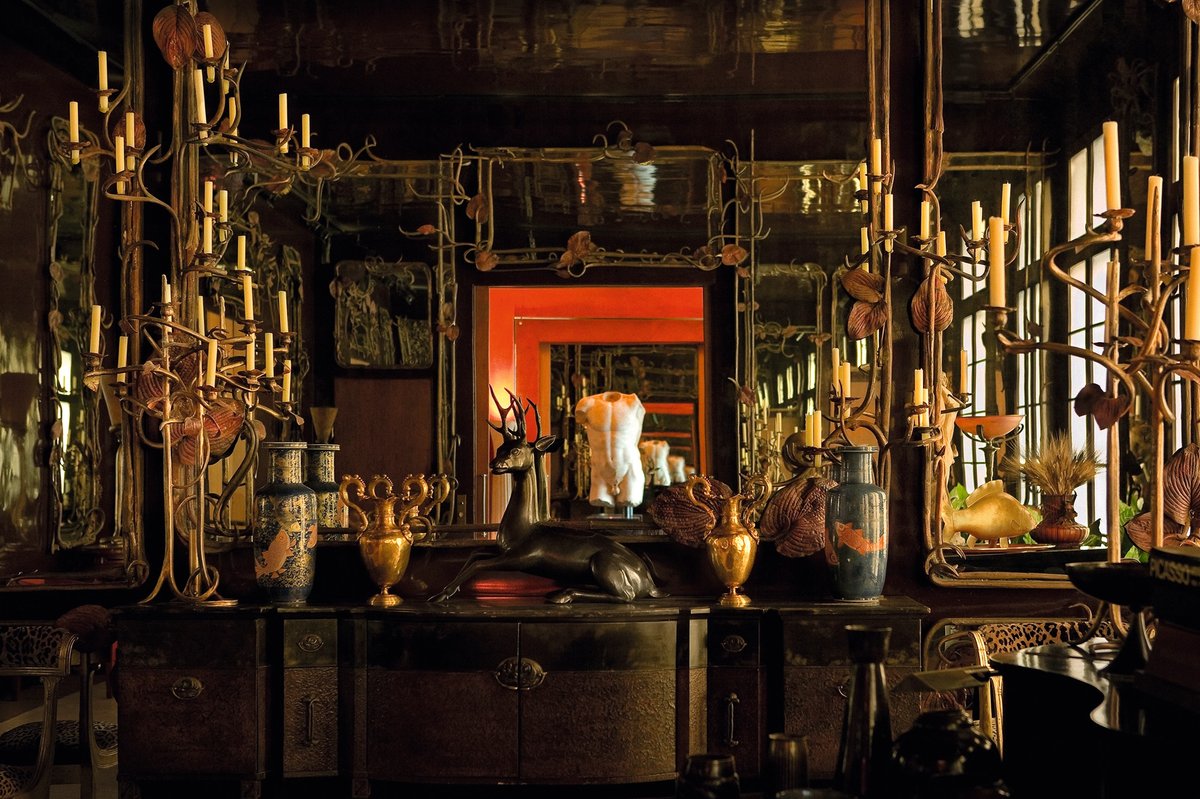
Claude Lalanne, An Important Ensemble of Fifteen Mirrors, from the Salon de Musique of Yves Saint Laurent and Pierre Bergé’s Apartment, Paris (1974-85)
Collection of Jean & Terry de Gunzburg: Design Masters, Sotheby’s, New York, 22 April
Estimate: $10m to $15m
This collection of 15 leafy gilt-bronze and galvanic copper mirrors once hung in the music room of fashion designer Yves Saint Laurent and his partner, the industrialist Pierre Bergé, in their Paris apartment. They commissioned the renowned artist Claude Lalanne, who produced the mirrors—each of a different size—over the course of a decade. During the 2009 sale of Saint Laurent and Bergé’s collection at Christie’s in Paris, the mirrors were purchased for €1.8m by beauty pioneer Terry de Gunzburg, the former creative director of Yves Saint Laurent Beauty.
Now, with De Gunzburg and her husband Jean’s own collection coming to auction, the mirrors are back on the market, albeit with a far higher estimate. Remarkably, the De Gunzbergs never hung the mirrors in their home, though they were included in the Les Lalanne retrospective at the Musée des Arts Décoratifs, Paris, in 2022. The market for works by Claude and François-Xavier Lalanne remains strong, and the mirrors will almost certainly surpass Claude’s current auction record of €4.9m, set in 2023.
Courtesy Bonhams
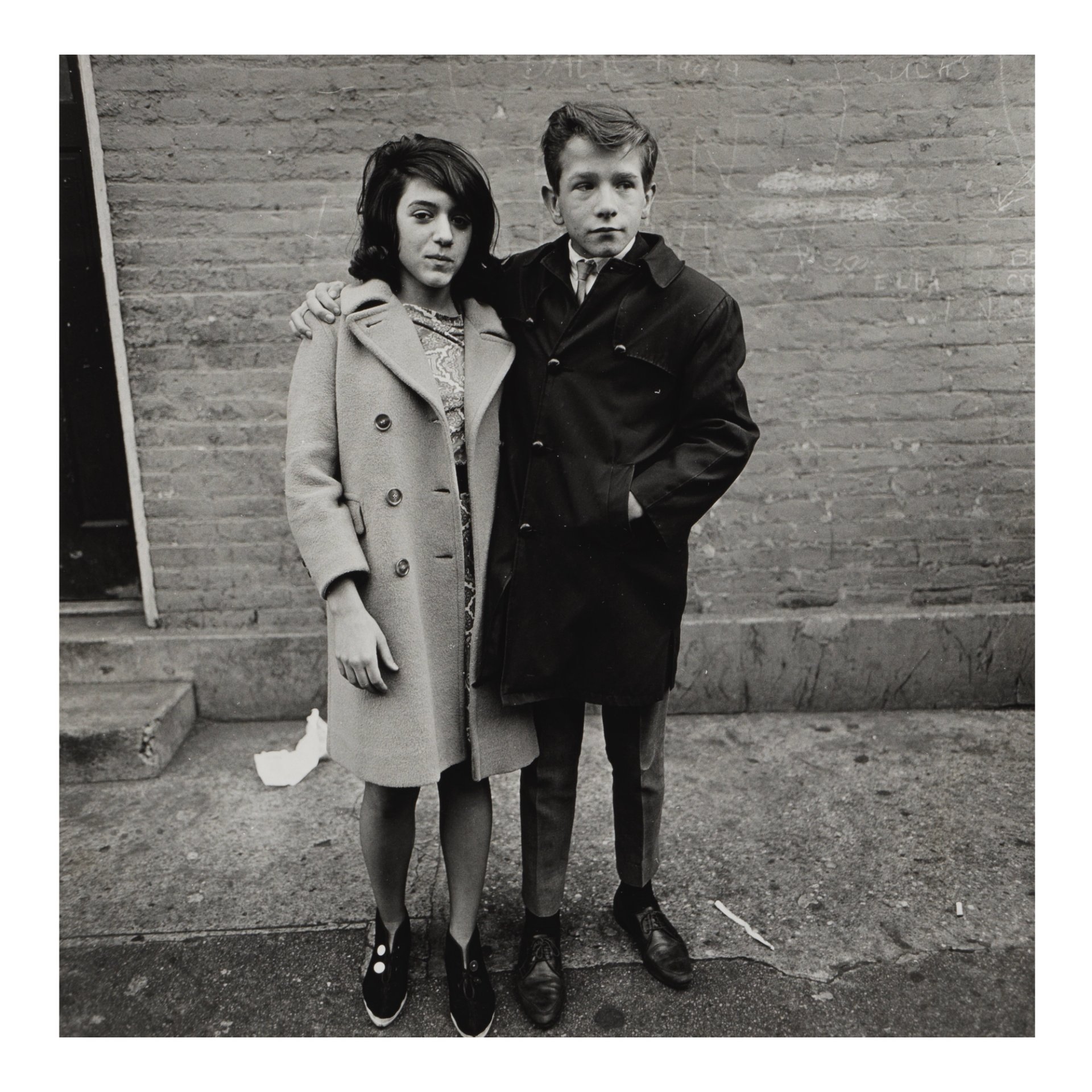
Diane Arbus, Courtship, Teenage Couple, Hudson St. (1963)
Lily Tomlin & Jane Wagner: Wit, Women & the Art of Collecting, Bonhams, New York, 8 April
Estimate: $60,000 to $90,000
During the 1963 holiday season, the photographer Diane Arbus made this portrait of a young couple at Hudson and West 10th streets, near her own home on Charles Street in Greenwich Village. Typical of her practice at this time, she would often station herself in a public area—Washington Square Park and Central Park were among her favourites—so she could observe the wide variety of people moving through the city.
One of her most recognisable images, the composition and angle emphasise the awkward earnestness of teenage love. Prints made during her lifetime are rare, according to Bonhams, which notes that only two examples have appeared at auction in the past 25 years, both achieving prices in excess of $200,000. The image appears in major museum collections, including the Metropolitan Museum of Art, New York, and the Centre Pompidou, Paris.
Courtesy Doyle
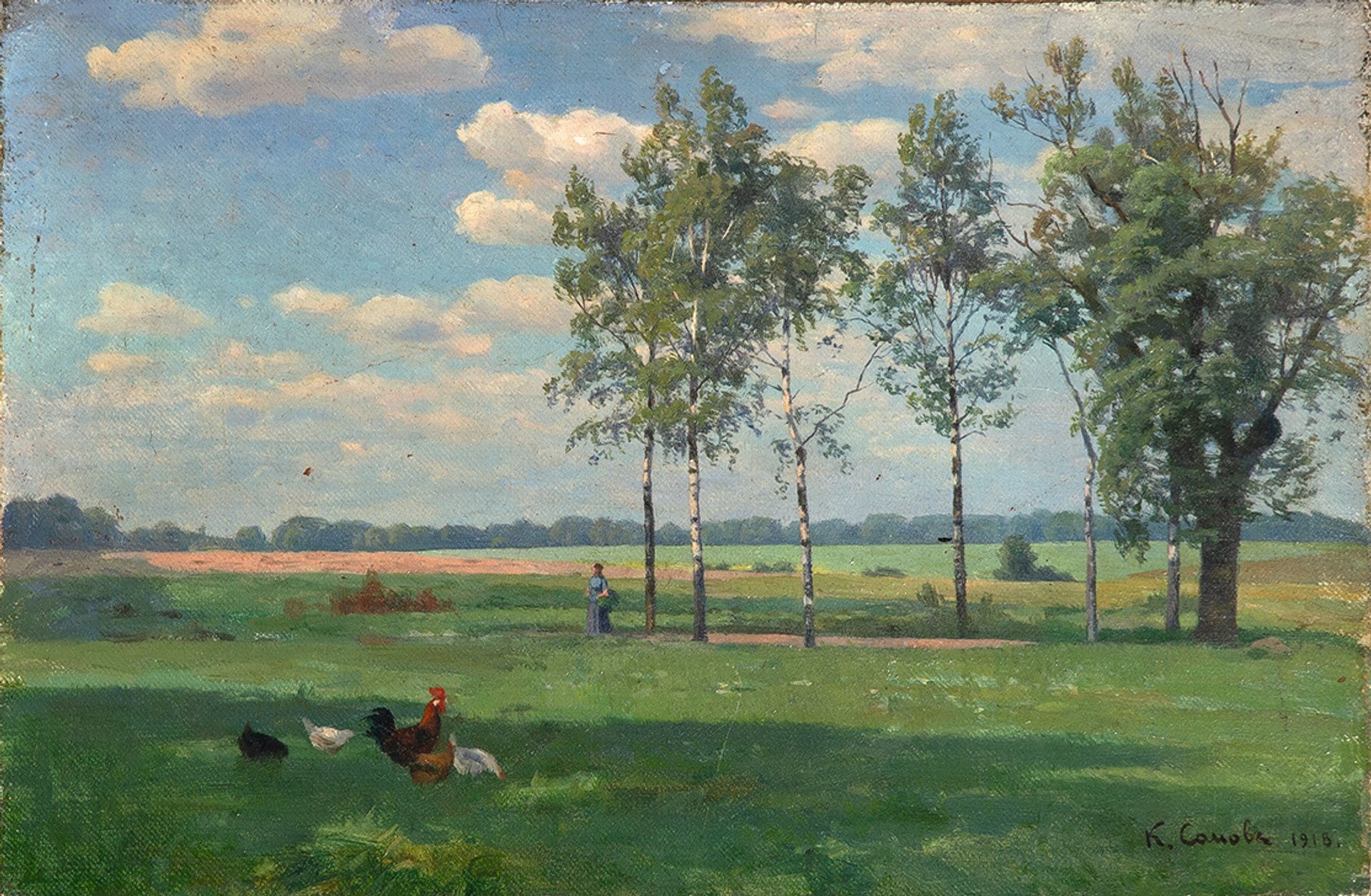
Konstantin Andreevich Somov, Summer Day (1918)
Russian Paintings / Russian Works of Art, Doyle, New York, 21 April
Estimate: $40,000 to $60,000
Konstantin Andreevich Somov was a founding member of the influential Mir Iskusstva—or World of Art—movement, which emerged in late 19th-century St Petersburg in opposition to the dominant styles of Russian art at the time. Somov and his contemporaries favoured refined and poetic scenes, such as this tranquil view of birch trees in a grassy field. Chickens wander in the foreground, while a solitary human figure appears in the distance. Birch trees are widely considered the national tree of Russia and are deeply ingrained in the country’s folklore and cultural identity, as well as its landscape. Summer Day comes to auction at Doyle from a private collection of Russian art in New York.
Courtesy Phillips
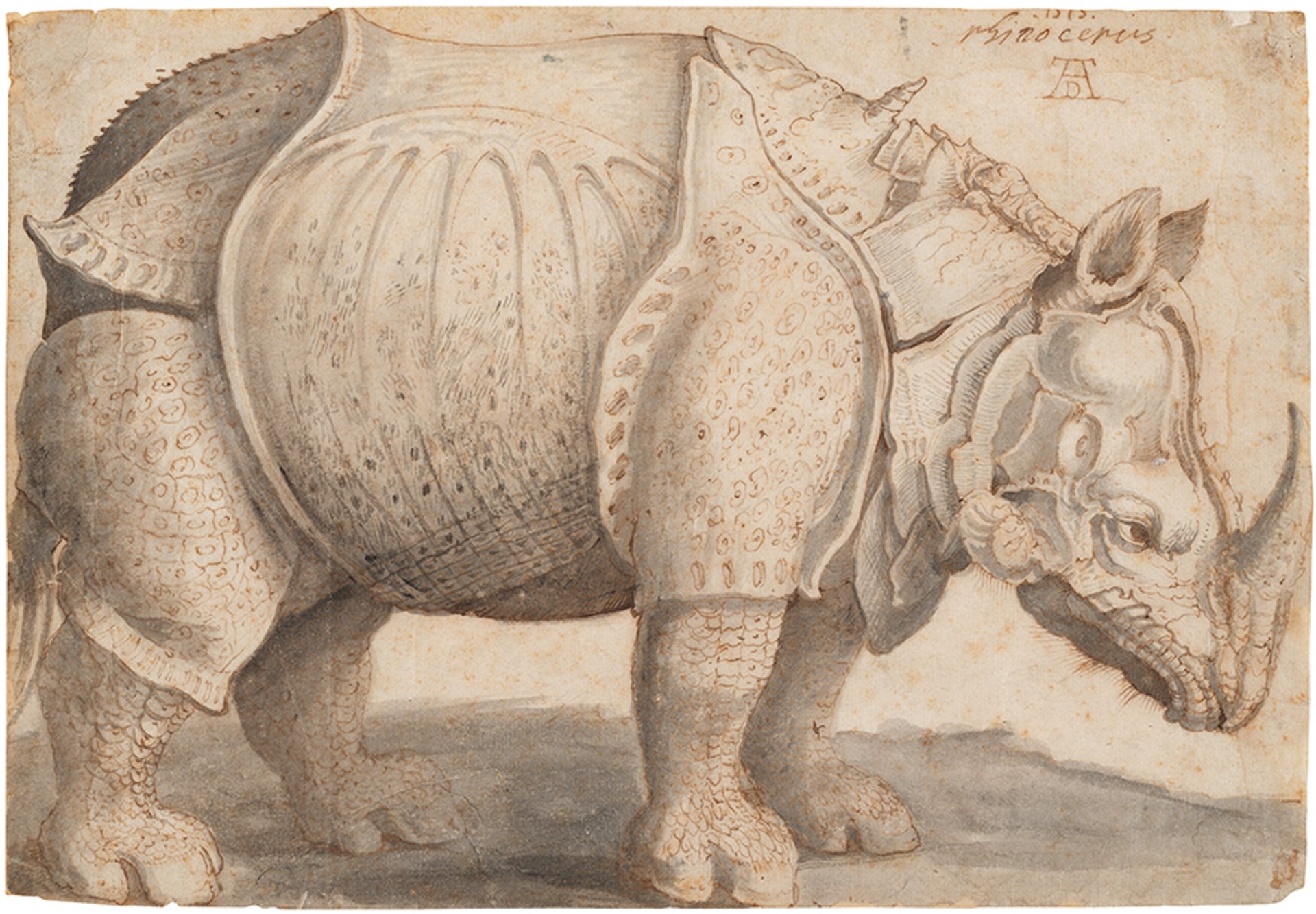
After Albrecht Dürer, Rhinoceros (around mid to late 16th century and early 17th century)
Editions and Works on Paper, Phillips, New York, 23 April
Estimate: $20,000 to $30,000
This drawing of an anatomically incorrect rhinoceros is a copy of Dürer’s celebrated 1515 woodcut, created by a skilled but unidentified artist. Despite never having seen the exotic animal, Dürer’s depiction became the leading representation of rhinoceroses in Europe for the next several centuries. He based his image on descriptions of an Indian rhinoceros, Ulysses, brought to Portugal in 1515 as a diplomatic gift and believed to be the first rhinoceros seen in Europe since the fall of the Roman Empire more than 1,000 years earlier.
Another rhinoceros would not be recorded in Europe until 1577, almost 50 years after Dürer’s death. The image remained influential even after more accurate depictions became available—Salvador Dalí based several of his own rhinoceros images on Dürer’s, having kept a copy of the etching on the wall of his childhood bedroom.