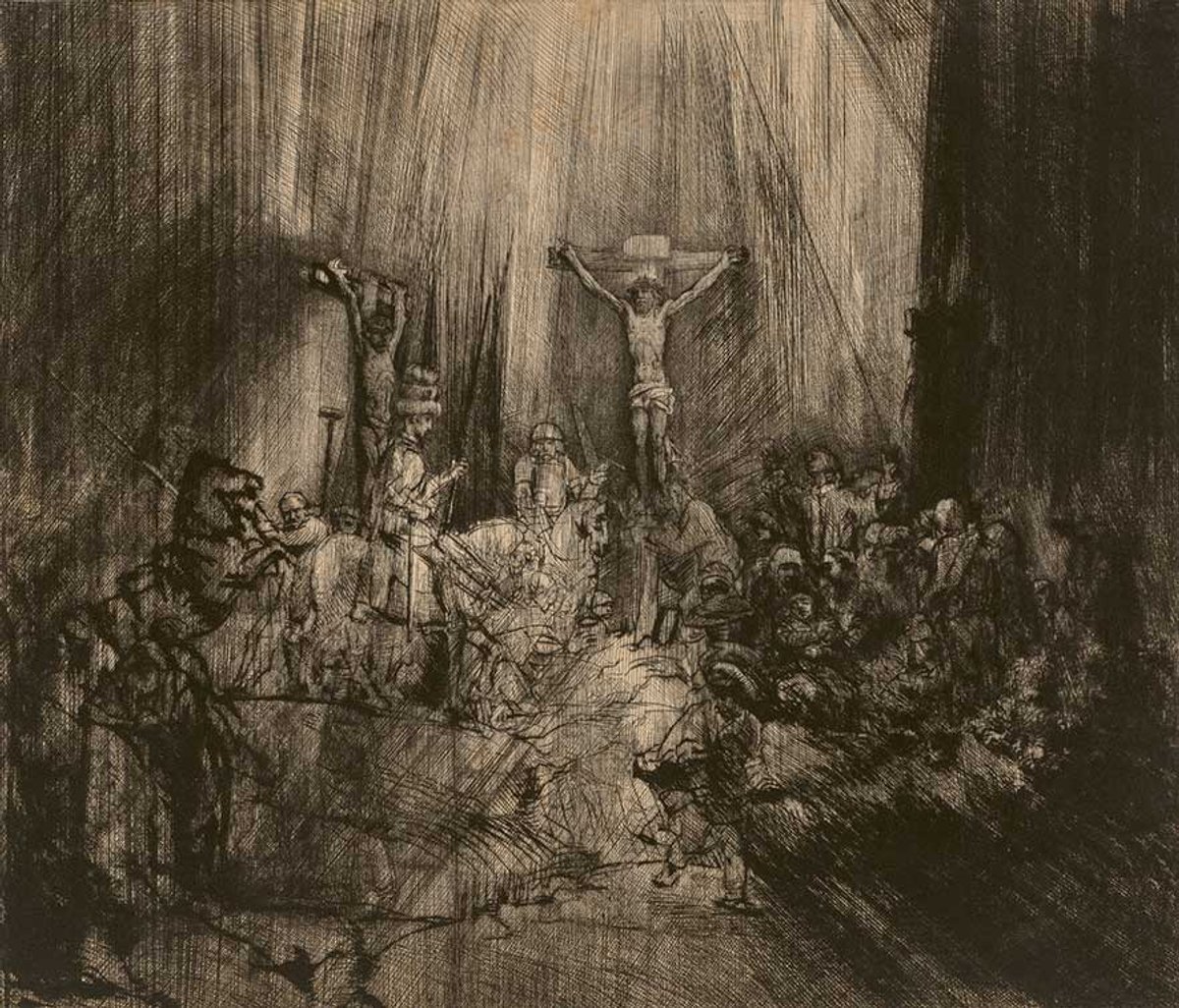
The UK author and journalist Holly Black set clear boundaries for her new publication, The Story of Printmaking: A Global History of Art, which according to the publisher tells the “story of artist prints from across the globe”. Black outlines the history of printmaking from its origins in ninth-century East Asia, and the innovations of Old Masters such as Albrecht Dürer and Rembrandt, to 21st-century digital developments.
“Yale came to me and said there isn’t an overarching book about the history of printmaking; they wanted it to be about the printed image. There are a lot of books about printing—about the history of journalism or the history of books, the printing press and the printed word—but not so much about the printed image and its processes. So that was my challenge,” Black tells The Art Newspaper.
“It was with trepidation then that I embarked on setting out the definitions and parameters that would shape this book,” she writes in it, adding that she “determined the following: a print is created through the action of impressing one surface onto another, to transfer a design by way of ink or another viscous substance. In essence, it is also something that can be produced in multiple.”
Black is equipped to deliver this history due to her art school training at the London College of Printing. “I’ve made prints and learned new techniques as part of my research—one of the most important things for the book was actually describing how prints are made in a way that people could understand and that they could get excited by.”

The author Holly Black Courtesy Holly E.J. Black
This practical experience means that printmaking, an underrated and largely misunderstood strand of art history, is demystified in the book. The term “print” can describe a baffling number of techniques, stresses Black, from monotypes to mezzotint, an intaglio process (from intagliare in Italian—to engrave—the general term given to a range of printing processes which inscribe into the surface of a plate).
“I had the idea [of introducing technical information] from the beginning. I felt it was really important to establish it as soon as a new printing process was introduced and give an idea of how it feels to physically make a work,” she says.
The book begins with a description of an image Black saw in a college library depicting St John the Evangelist, who surveys a man in overalls toiling over a printing press. The image carries the name of its creator, the 20th-century French printmaker Jean Chièze. This work though did not come from a “freshly carved block of wood” but was instead a “facsimile dragged from the internet” printed on a humble inkjet machine.
From Dürer to Picasso
Male artists across the centuries are credited with furthering print creation. Dürer, acknowledges Black, revolutionised the print image and its application across 16th-century Europe, conceiving “utterly original compositions that were specifically designed as prints”. In the 20th century, Pablo Picasso, whose print archive numbered over 2,400 unique designs, reigns supreme. “One thing that I really wanted to hammer home with Picasso was the fact he was such an incredible printmaker because he really learned from all of these master printers and pushed his own abilities,” Black says. These mentors included the French etcher Auguste Delâtre, who nurtured Picasso’s interest in intaglio, inspiring works such as the line etching piece The Frugal Repast (1904).
Other lesser known figures are highlighted, such as Robert Blackburn, who established his printing workshop in Chelsea, New York, in the late 1940s. His legacy is integral, argues Black, because his workshop remains in operation as part of the Elizabeth Foundation for the Arts, whose roster includes artists such as Faith Ringgold and Romare Bearden. “The academic work that’s still being done at the studio is incredible. [Blackburn] was embedded in the legacy of the Harlem Renaissance scene, and really facilitated a way for artists to work, not just in his studio but all around the world,” Black says.
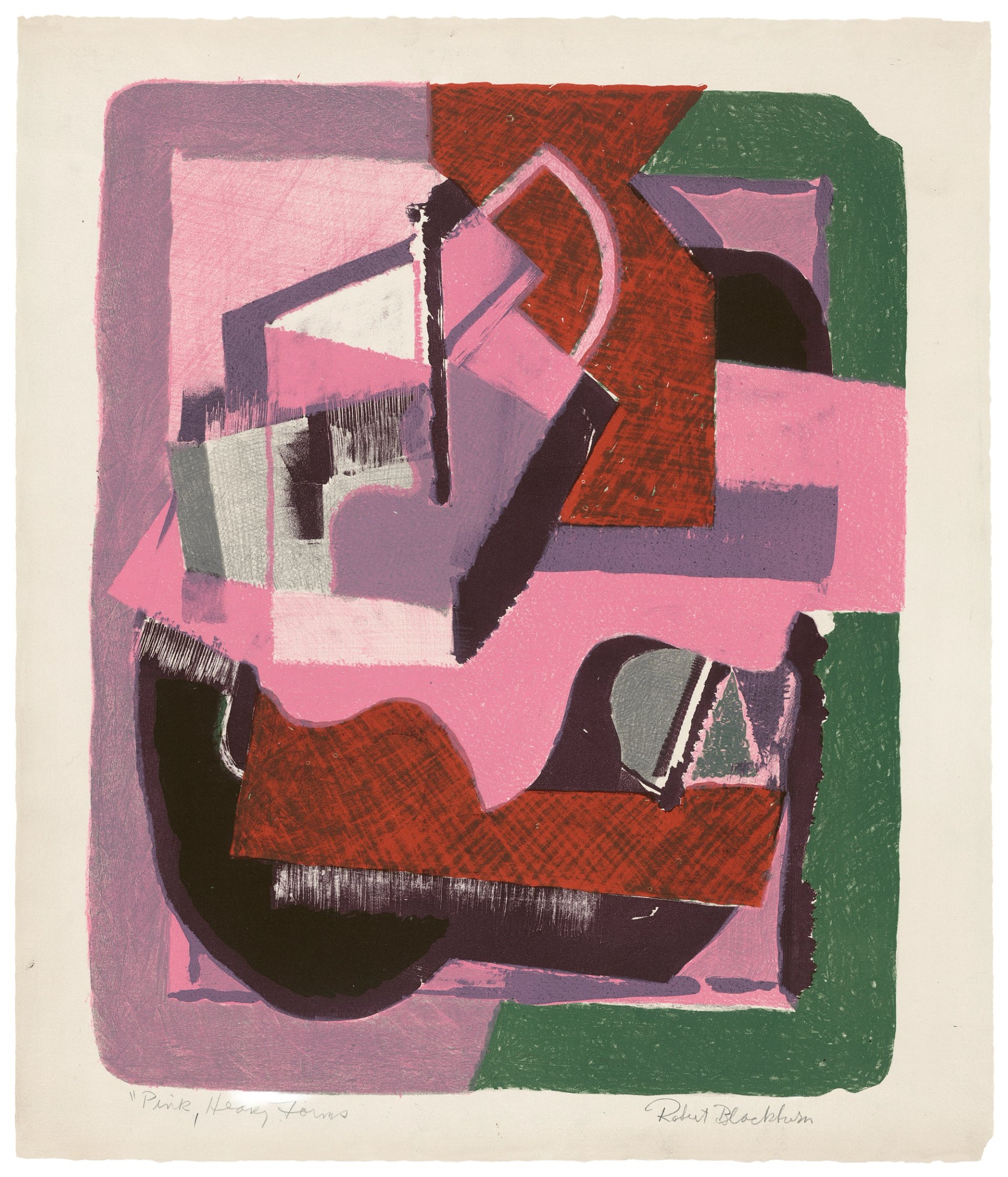
Heavy Forms (Pink) (1958), a lithograph by printmaker Robert Blackburn
© Trust for Robert Blackburn; courtesy Library of Congress, Prints & Photographs Division
The book excels especially in outlining the pivotal roles played by women in the medium’s history, from the enlightened attitude of Wu Zetian (624-705)—the only Empress in the history of China (Tang Dynasty) and a prominent print patron who “utilised nascent printing technology to assert her dominance”—to Volcxken Diericx, the 16th-century Flemish printmaker who was instrumental in developing a key publishing house in Antwerp called Aux Quatre Vents. “[Diericx is] just painted as Hieronymus Cock’s wife, but that’s not true at all. They were business partners; then she led the business after he died,” Black says.
Tatyana Grosman, a Siberian refugee who set up the influential studio Universal Limited Art Editions (ULAE) on Long Island in 1957 is also recognised. Crucially ULAE set the artist Robert Rauschenberg on an entirely new path of printmaking, writes Black, by producing Accident (1963), an abstract composition produced by a broken stone that gave way under the pressure of the press. “I think the legacy of women running 20th-century studios is very well known within the print world, but not in a wider sense. I think that’s the same for print studios in general; their creative influence is under appreciated.”
• Holly Black, The Story of Printmaking: A Global History of Art, Yale University Press, 272pp, £25 (hb)