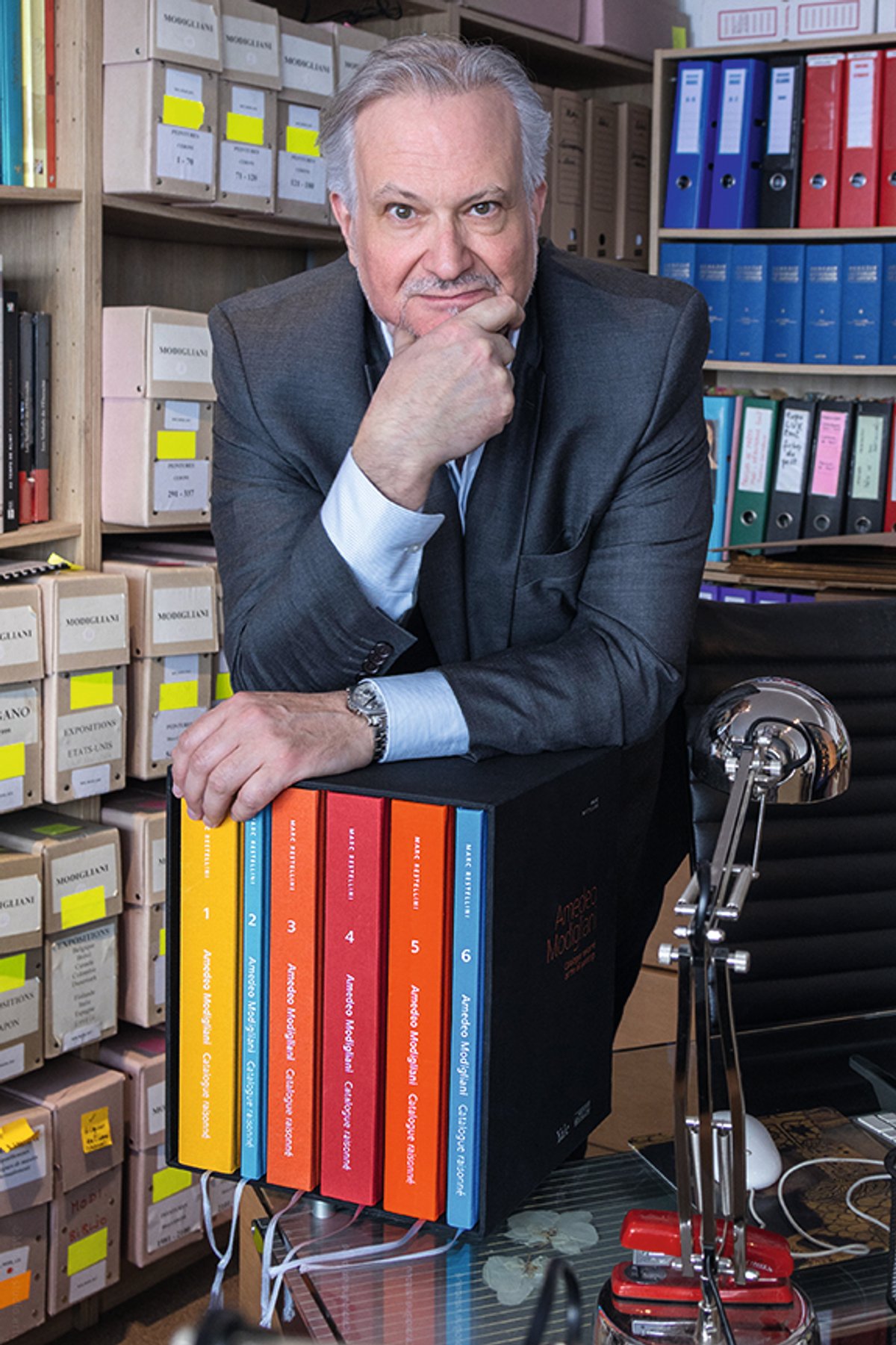
After almost 30 years, several legal battles and a few death threats, Marc Restellini’s catalogue raisonné of Amedeo Modigliani’s oil paintings is finally published today (14 April) by the art historian and curator’s Institut Restellini, distributed by Yale University Press.
At six hefty volumes—and a £2,000 price tag—the catalogue took seven people three months to proofread each volume. It includes 100 newly authenticated works, half of which are in museums, and has removed 15 others “due to lack of definitive evidence attributing them solely to the artist”—or simply because they could not be located for analysis.
Restellini’s methodology is forensic, with each work subjected to scientific analysis (including spectrometry, carbon-14, infrared and x-ray imaging) cross-referenced against archival documentary evidence and stylistic analysis.
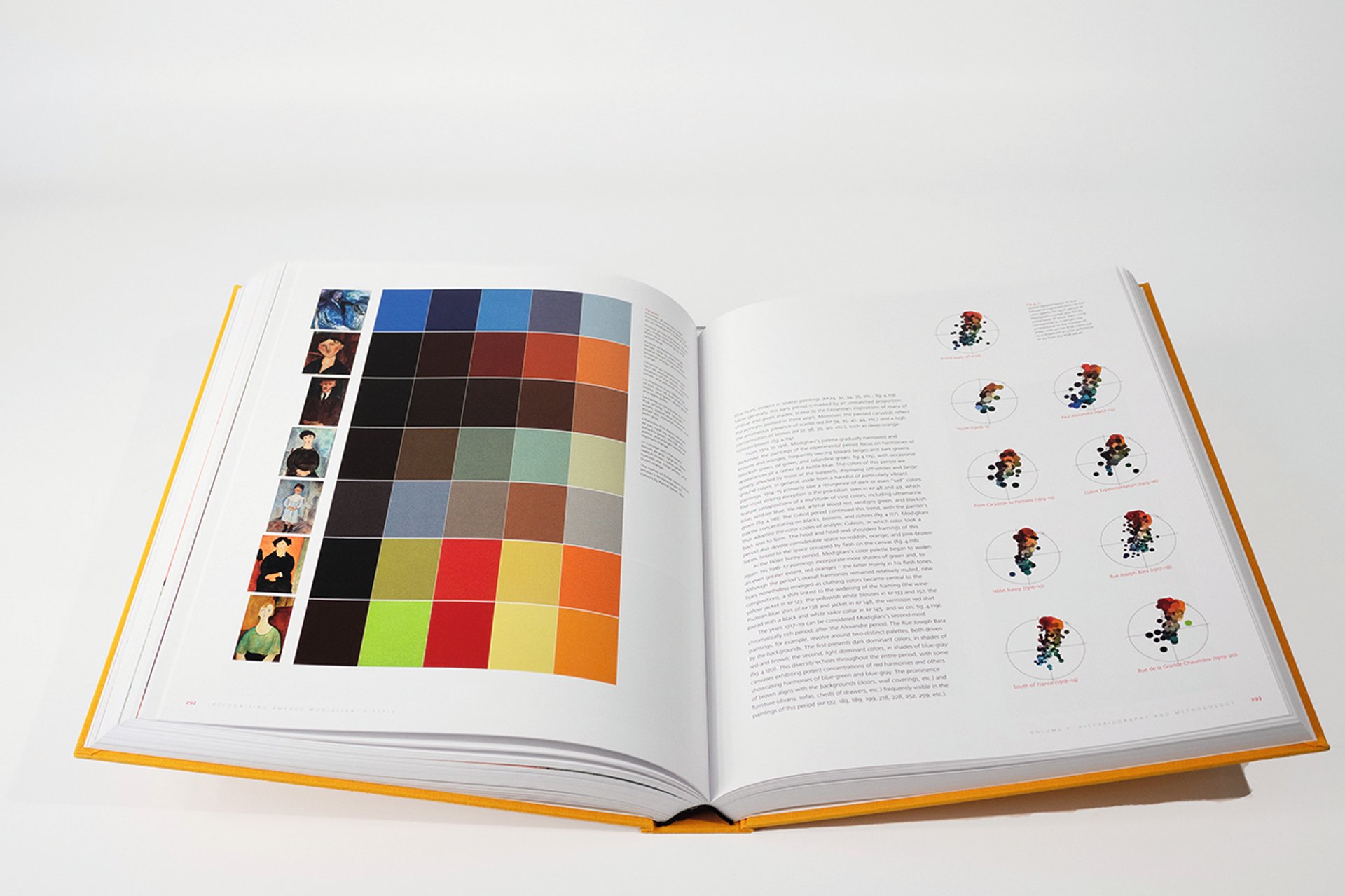
Inside the book, which details the documentary, stylistic and scientific analysis each painting underwent
Courtesy of Yale University Press
“As with any catalogue raisonné, this work grapples with the unbridgeable distance between the aspiration to total exhaustiveness and the practical limitations that make this goal nearly impossible to achieve”, writes Restellini when setting out his methodology in the first volume. “Close to 15 paintings, at least, are known to exist that could have been included but, for various reasons, were not.” Restellini adds: “Paintings that have been declared questionable in previous trustworthy publications have been left out for now.”
For those that have been left out, the impact on their value is likely to be huge. But, in an interview with The Art Newspaper, Restellini says that if a work is not included, it does not necessarily mean he thinks it is a fake. Nor is his sole opinion the ultimate arbiter. “It is not a job where I decide what is good, what is not,” he says. “I’m not alone; I have a team. I just receive all the information that they collect—scientific, historic, archivistic, stylistic. It’s this information that finally decides if a painting is included or not. It’s not really my opinion.”
Fact, not opinion
This distinction is important, Restellini says, because when he started writing, “it was the time of the catalogue raisonné being written by the expert, the ‘king-maker’ saying this one is good, this one is not, with no reasons given.” He adds: “An authenticity for a painting is not an opinion. A painting is genuine or fake. It’s a fact, not an opinion.”
Restellini is well aware of how incendiary this book could be. Speaking to The Art Newspaper in 2012—for an article reporting that its publication had been delayed from 2006—Restellini said: “There are people who don’t want my catalogue to appear. It is going to be an atom bomb”.
(A fuller account of past controversies surrounding Restellini's catalogue raisonné can be found at the end of this article.)
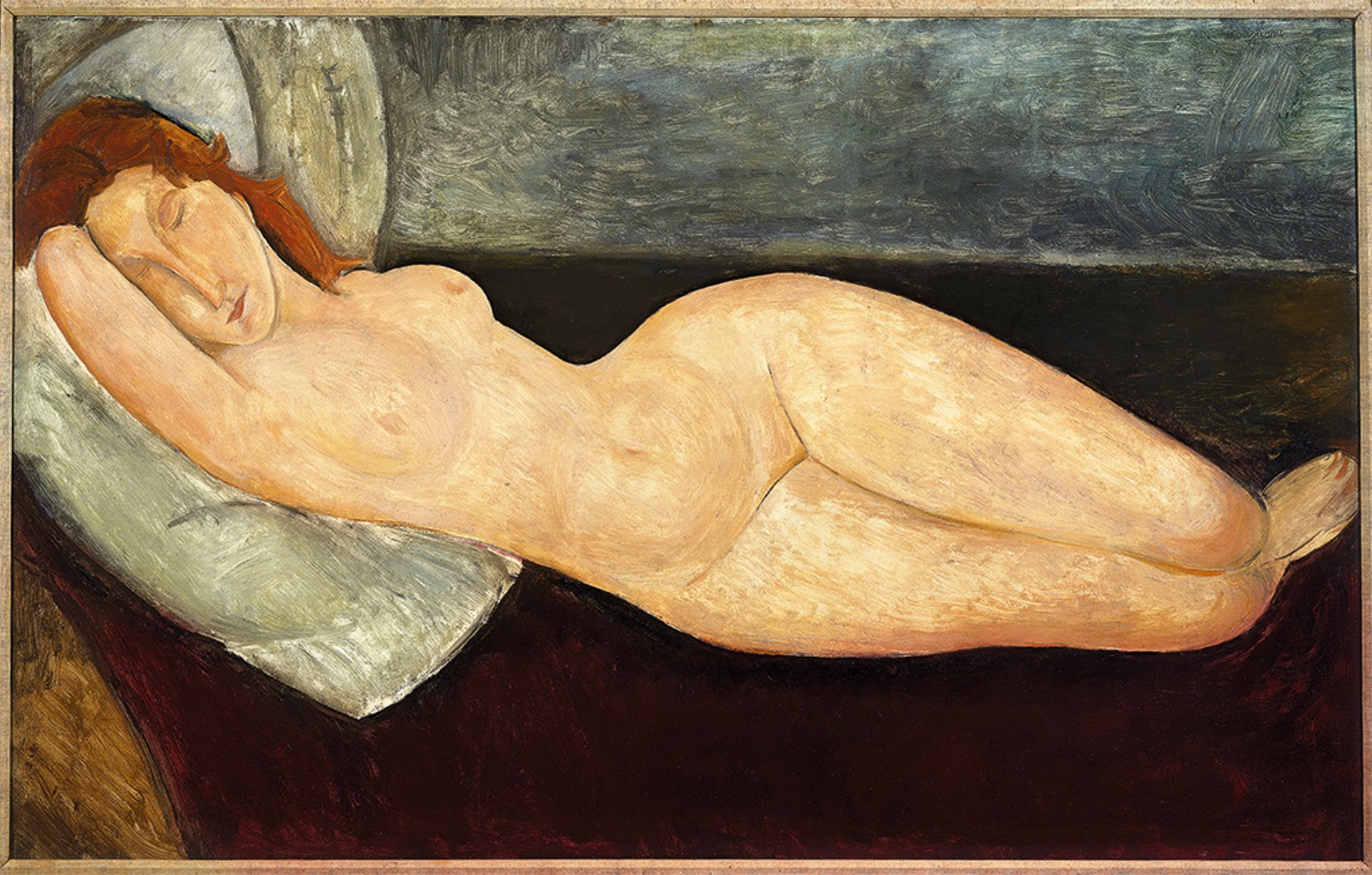
Nu couché (1919) is one of 421 oil paintings included in the catalogue raisonné
© Marc Restellini/Institut Restellini
No wonder. The Modigliani world has long been one of warring experts, and fakes are rife. The artist died young—at 35 in 1920 of tuberculosis—leaving behind no memoirs, inventories or records of his work, nor an estate to protect his legacy. This has made him fertile ground for forgers, and the number of fakes in circulation is “striking”, writes Restellini, with trade in counterfeits dating back to soon after his death. (The notorious forger Elmyr de Hory was churning out “Modiglianis” in the US in the 1950s and 1960s, many of which are still at large.)
Part of the reason fakes—and lawsuits—are rife is because the financial stakes are so high. Two nudes by Modigliani are among the most valuable works ever to sell at auction: Nu couché (1917-18) at Christie’s for $170.4m (with fees) in 2015 and Nu couché (sur le côté gauche) (1917) at Sotheby’s for $157.2m (with fees) in 2018.
And yet despite these prices, auction houses and other art market professionals have so far relied on a half-century-old catalogue raisonné by the Italian scholar Ambrogio Ceroni, last updated in 1972 and well known to have its gaps. (Ceroni only included works that he saw in person.) Restellini dismisses this work in volume one of his catalogue, writing that “for lack of a better option, art historians and art market professionals have long preferred to settle for the lesser of evils: Ceroni’s ‘incomplete’ catalogue.” Ceroni has become “truly obsolete over time”, Restellini argues in the text, frustrated that the number of recognised Modiglianis has been “frozen” at the 337 Ceroni included. Restellini’s own catalogue includes 421 (plus three addenda).
Scientific results
It was the Parisian art dealer Daniel Wildenstein who persuaded Restellini to write a new Modigliani catalogue raisonné in the late 1990s. “I was reluctant, because I knew it would not be easy, and it was a really big task.” He laughs wryly. “I was not wrong!”. But in 1997 Restellini agreed, with Wildenstein providing finance and an office at the Wildenstein Institute in Paris. Following Wildenstein’s death in 2001, Restellini stayed at the institute until 2015, when he moved his research to his own Institut Restellini, which has since financed the catalogue project through fees charged for authentication work and organising exhibitions worldwide.
The first step was to establish a database of scientific results drawn from a group of authentic “benchmark” works. Restellini was able to do this by working with the collections of Jonas Netter and Paul Alexandre, two key Modigliani collectors who bought from the artist. These paintings also provided the bedrock for stylistic comparisons. Since 1997, “every painting selected for this catalogue raisonné has undergone the same methodology: a triple evaluation (documentary, stylistic and scientific) against the ‘benchmark’ corpus,” Restellini writes. “The results of this threefold assessment were then interpreted and further informed by my connoisseurship, enabling choices to be made in cases of conflicting results or incomplete data.”
Past controversies: from withheld research to obstructive owners
The journey to publication has been tumultuous from the start, and Marc Restellini has attracted ample controversy—death threats after refusing to authenticate works, spats with other experts, several lawsuits.
Knowledge is power, particularly when its application has the ability to make or break the value of a work. This was at the crux of a lawsuit brought by Restellini in 2020 against the US-based Wildenstein Plattner Institute (WPI), a separate entity to the Wildenstein Institute (WI) but to which the latter’s archives, including the Modigliani material, passed in 2017. Restellini sued the WPI, claiming it was holding his research “hostage”. The WPI, which threatened to publish the research online for free, shot back that Restellini “hopes to create monopoly power for himself over historical information about Modigliani, which Restellini further plans to leverage for his own, maximum profit”. A judge dismissed the WPI’s counterclaim accusing Restellini of copyright infringement in 2021. Eventually the parties settled, and Restellini was provided with the research.
Speaking to The Art Newspaper, Restellini says some of the work omitted simply could not be located: “This was mainly the issue we had. There are very few paintings, maximum two, which are problematic for sure.” He declines to name them.
“There are people who don’t want my catalogue to appear.Marc Restellini
Restellini also declines to give details of the paintings he could not locate. “We know they existed, but we don’t know what happened to them—maybe they were stolen, or destroyed,” Restellini says. “We have to be extremely prudent. We don’t put old photos, usually in black and white, of these lost paintings in the catalogues, because in the past a forger has seen old black-and-white-pictures, then copied them.”
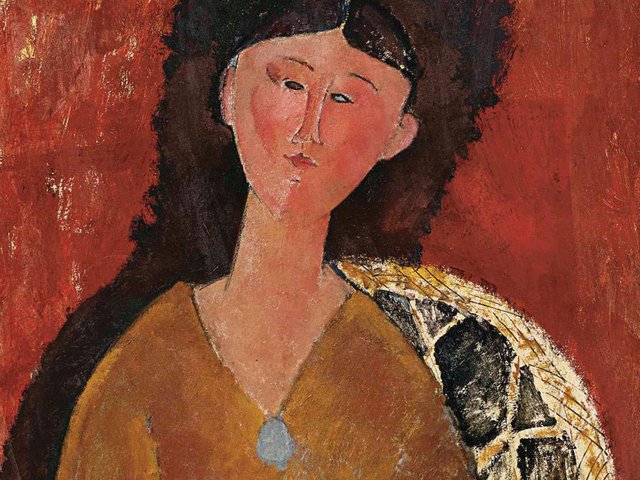
One of the works omitted, Portrait of Beatrice Hastings Seated (1915), was used as evidence in Restellini’s 2020 lawsuit against the WPI to point out the flaws in Ceroni’s catalogue, which had included the work. Restellini claimed the work had been significantly altered between its completion in 1915 and when it first came up for sale at Christie’s in 1997 (where it was sold again in 2019), something which was not mentioned by Ceroni. “I asked to see the painting and was refused,” Restellini says. “All we know is that until 1957 the painting was in its former condition, then suddenly it’s changed, it has been finished. I’m not saying it’s fake, but if the owners don’t give me access to the paintings, there is no way to know what has happened to it.”
Next year at Pace New York, Restellini will organise an exhibition of paintings in museum collections that were not in Ceroni’s catalogue but have been accepted into his. The exhibition is part of a larger collaboration with the gallery with which Restellini is also hosting a symposium in New York on 30 April, titled “Reimagining the catalogue raisonné”.
So, does Restellini think his will topple Ceroni’s as the pre-eminent catalogue raisonné for Modigliani? “This is not for me to say. What I can say is that I have done my best to make the best catalogue possible with a methodology I believe in and will defend.” He pauses. “We have used the best way to make as sure as possible that there are no fakes in this catalogue. That’s all I can say.” Next, Restellini will turn to Modigliani’s drawings—an even greater minefield of fakes.