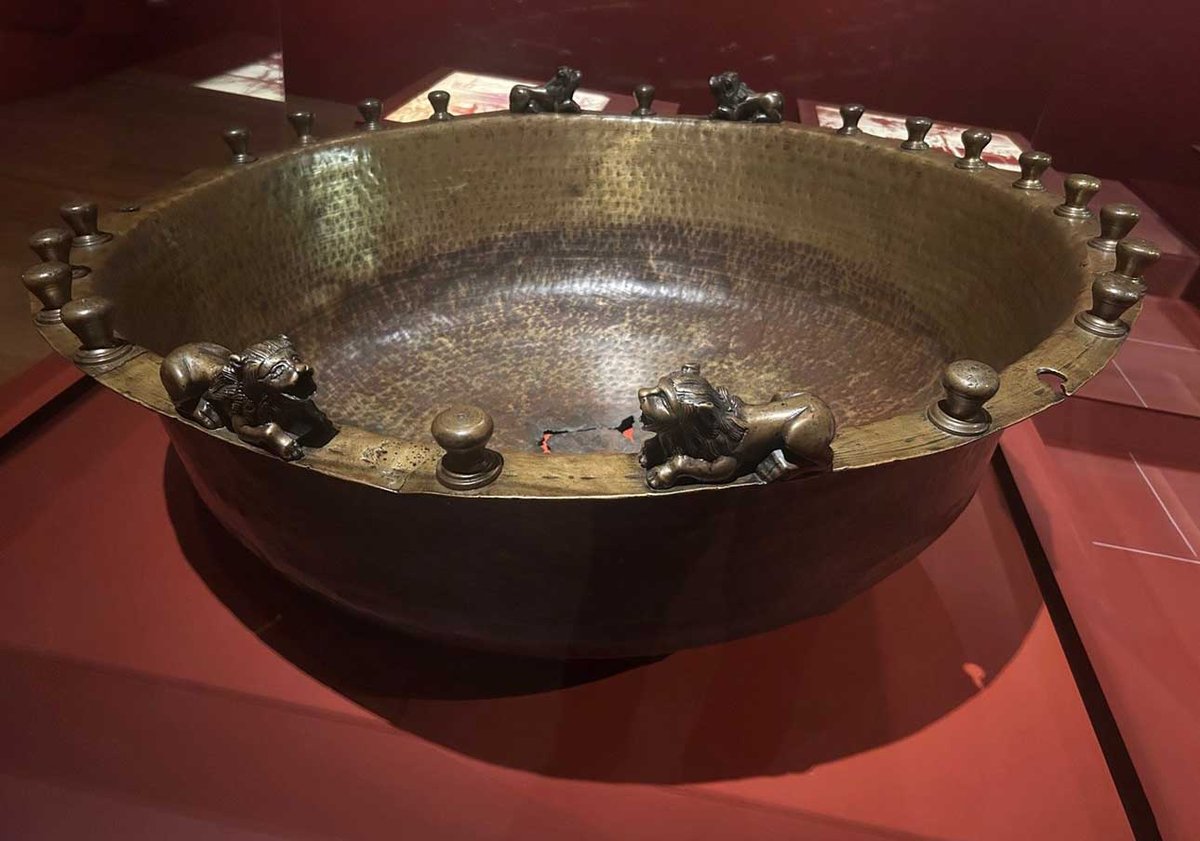
Mystery surrounds where a huge northern European brass basin decorated with figures of lions was made and how it then reached the West African kingdom of the Asante centuries ago. Known as the Aya Kese (the great brass basin), it was said by Europeans to have been used to hold the blood of human sacrifices. The ceremonial basin, just over a metre in diameter, was looted by British troops in 1896 in what is now Ghana. Owned by London’s National Army Museum, it is temporarily on display at the British Museum.
British Museum curators believe the basin was made in England, Germany or the Netherlands and most likely dates from the 16th century. By the early 18th century, and possibly well before, it had reached the Asante (or Ashanti) kingdom and then became a sacred object in the royal mausoleum complex. The Asante king, Prempeh I, wrote in 1930 that the Aya Kese had originally descended from heaven on a gold chain, after a great thunderstorm. The truth is probably more prosaic: it most likely came on a trading ship that sailed from northern Europe or Portugal around the coast of West Africa.
The basin’s rim is decorated with a series of knobs, but what is most distinctive is a group of four small sculpted lions. These beasts were used in European decorative art over many centuries, so an examination of the sculptures has so far not helped in dating or establishing where they were made. It is probably just chance that the sculpted lions ended up in the Asante empire, at a time when the animals still roamed in the territory’s northern areas of savanna.
Looted from mausoleum
In 1817, a British visitor to the Asante kingdom’s capital of Kumasi, Thomas Bowditch, saw the Aya Kese in the royal mausoleum complex at Bantama, just outside the city. He wrote about “the largest brass pan I ever saw (for sacrifices), being about five feet in diameter, with four small lions on the edge”. Bowditch then commented that “human sacrifices are frequent and ordinary, to water the graves of the kings”. The basin was photographed as early as 1884 in front of the mausoleum’s entrance, placed beneath a pair of trees.
In 1896 British troops invaded the Asante kingdom. During the military operation, the Aya Kese was looted by Robert Baden-Powell (who later founded the Boy Scouts Association). The Bantama mausoleum was then burned to the ground, with Baden-Powell later recalling: “We set the whole of the fetish village in flames, and a splendid blaze it made.”
In 1930 Prempeh I, who was ill and nearing the end of his life, formally asked the British authorities to return the Aya Kese to the royal mausoleum. He sent a five-page “History of the Bantama Brass Pan”, in which he wrote that “all souls of Ashantis are within it”. The Asante king commented that “the allegation that human beings were killed in the brass pan is not a fact”. Despite his entreaties, the restitution request was refused by the British government.
After his return to England, Baden-Powell kept the Aya Kese until 1913, when he donated it to the Royal United Services Institute, a centre for the study of defence and security. In 1963 the organisation transferred the basin to the National Army Museum, at the time at Sandhurst, now in London. The museum’s website now records that it “seems unlikely” that the brass basin had been used to collect the blood of beheaded sacrificial victims.
Although enemies may not have been killed in the pan and their blood may not have been stored there, Tom McCaskie, a professor of African Studies at the University of Birmingham, records in a recent academic paper that the Asante “did perform ritual killings (‘human sacrifices’)”. McCaskie is among those who feel that the Aya Kese should be restituted to Kumasi. He regards it as “an integral part of the Asante past… with vibrant meaning for Asante people today”.
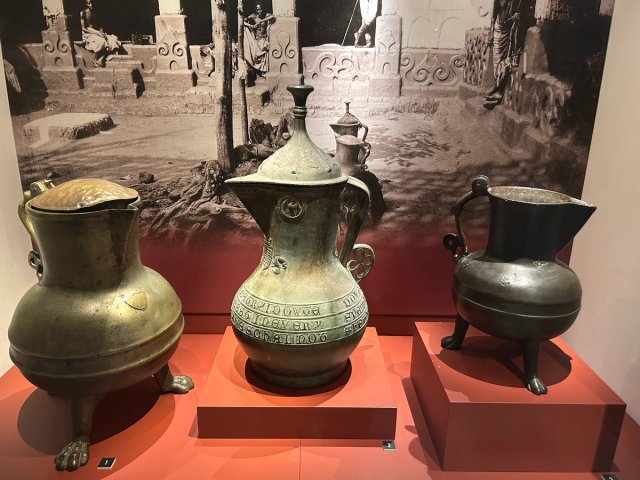
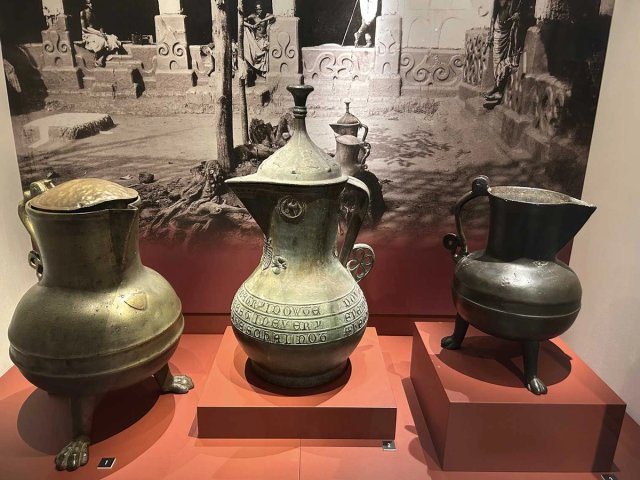
The Aya Kese is currently on show at the British Museum in a display titled The Asante Ewer (until 7 June). It is being presented with two ancient large brass ewers which were also made in England or northern Europe, taken to the Asante kingdom, looted by British troops in the late 19th century, and are now in UK museums.
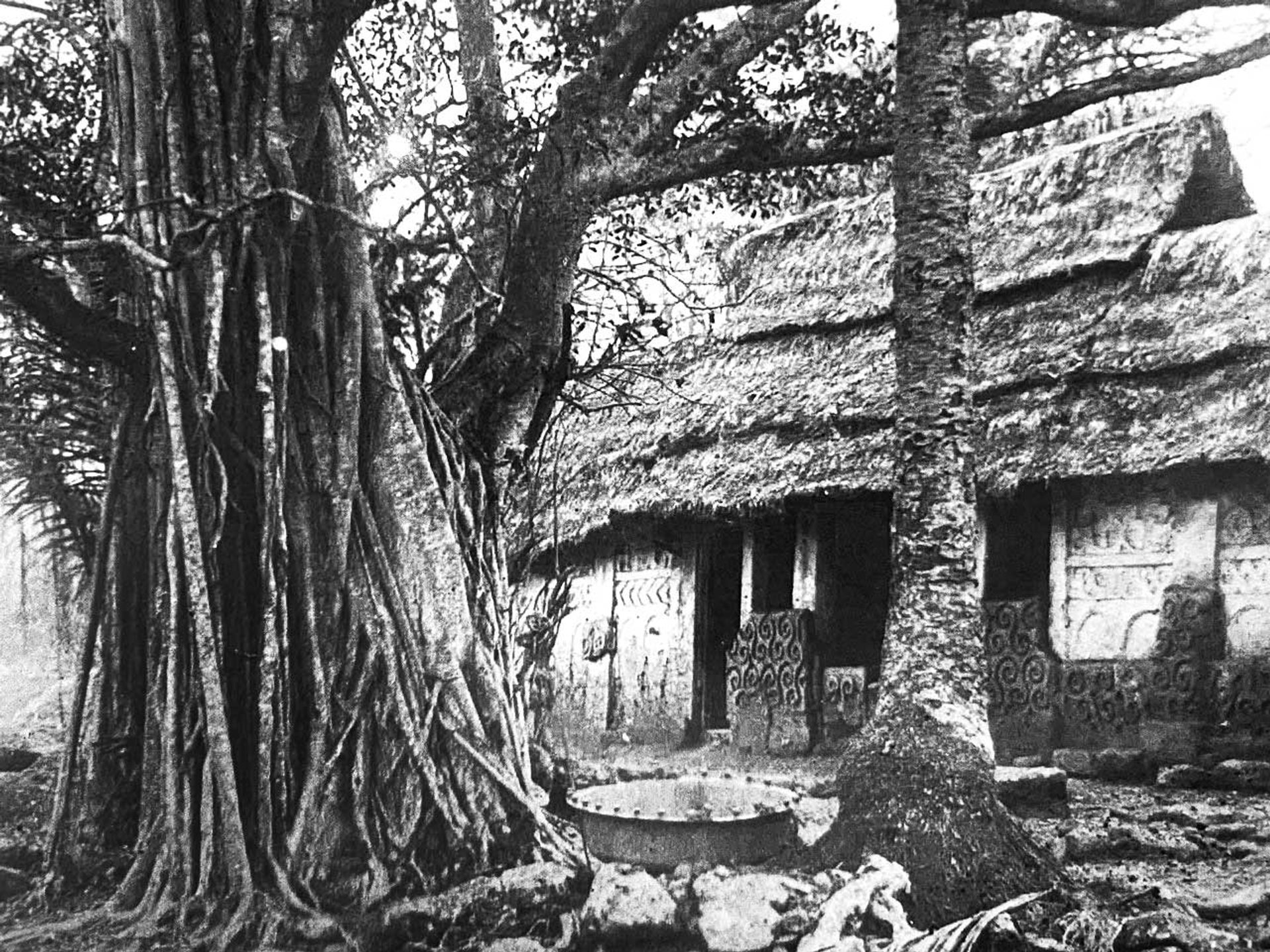
The Aya Kese has been identified in an 1884 photo of a royal courtyard in the Asante kingdom, in what is now Ghana Photo: Robert Sutherland Rattray/National Archives
After the British Museum display, curators there hope to conduct further research on the Aya Kese. Lloyd de Beer, a co-author of the museum’s booklet The Asante Ewer, says that “we could look at the composition of the metal in greater detail, the techniques used to form the basin, such as hammering and casting, and instances of damage or repair”.
The Aya Kese had been taken off show at the National Army Museum in 2021 when the permanent collection displays were refreshed. A museum spokesperson tells The Art Newspaper that after it returns from the British Museum, the basin will go back to the National Army Museum’s storage facility. After that, “we will consider its display as part of our wider interpretation plans”.
Any potential loan requests, either from Ghana or elsewhere, would also be considered under the National Army Museum’s normal lending policy. This leaves open the question of whether the Asante king’s Manhyia Palace Museum in Kumasi might request a long-term loan or even its permanent return.
In researching his new book The African Kingdom of Gold: Britain and the Asante Treasure, Barnaby Phillips asked to see the Aya Kese, which at the time was in storage. He writes of a visit to the National Army Museum’s facility on an industrial park outside Stevenage: “Perched on top of a ladder in a chilly warehouse next to the A1 [road], I was struck by an overwhelming sense of absurdity. What on earth was the Aya Kese doing here? It meant so much to the Asante, and so little to Britain.”
- The Asante Ewer, British Museum, London, until 7 June