Jonathan Marsden joined the UK’s royal household in 1996—he was surveyor of works of art from 2010 to 2017—and, since then, he has embarked on a daunting mission: cataloguing around 1,800 sculptures in the Royal Collection, divided mainly between Buckingham Palace, Windsor Castle, Hampton Court, Kensington Palace and Osborne House (in the guardianship of English Heritage).
This was not a scientific process of acquisition to create a balanced ensemble of European sculpture, as might be the case with a museum, but an accumulation of regal preferences and opportunities. Marsden’s introduction is very lucid, setting out the development of sculpture at court; royal involvement with sculptors; displaying sculpture (in galleries, state rooms, libraries and gardens); and stewardship of the collection. Then comes the catalogue, arranged by likely date of production.
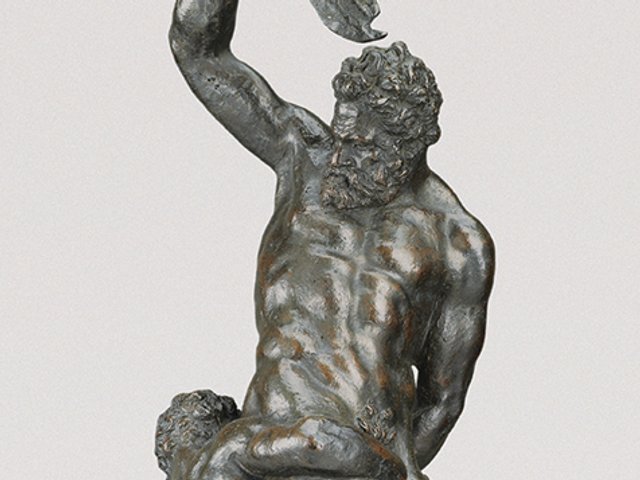
One of the great recent discoveries comes early on: a bronze satyr by Benvenuto Cellini (1500-71), which came to light in a cupboard in 2002. The thoroughness of the catalogue reflects the care now devoted to the collection, but there have been accidents in the past. A melancholy entry for a series of four historical royal heads modelled in terracotta by John Michael Rysbrack for George II’s consort, Queen Caroline, notes that they are the survivors of a series of ten commissioned for her library at St James’s Palace in 1735: the rest were smashed when a shelf collapsed in 1906. Out of the many busts on parade here, the Louis-François Roubiliac portrait of Field Marshal John Ligonier is a highlight. Antonio Canova’s Mars and Venus (1815-19) took eight years to arrive in London but would become one of George IV’s outstanding acquisitions. This monarch benefited hugely from the disruption of the French Revolution and the Napoleonic Wars and added extensively to the royal holdings.
Perhaps the greatest surprise here is the extent to which Queen Victoria and her consort Prince Albert enlarged the collection. Of works where provenance is known, over half the sculptures in the Royal Collection were acquired by them. They would buy many versions of the great works of antiquity, beside works by modern sculptors: Rome-based John Gibson (1790-1866) was a particular favourite. Albert rated sculpture as superior to painting because, as quoted by Marsden, “we have to deal with the three dimensions, and not with surface merely, and we are not called upon to resort to the illusion of perspective”. Several of Queen Victoria’s daughters were student sculptors, notably Louise under Joseph Edgar Boehm (1834-90), who rose to become the pre-eminent court sculptor during Victoria’s widowhood.
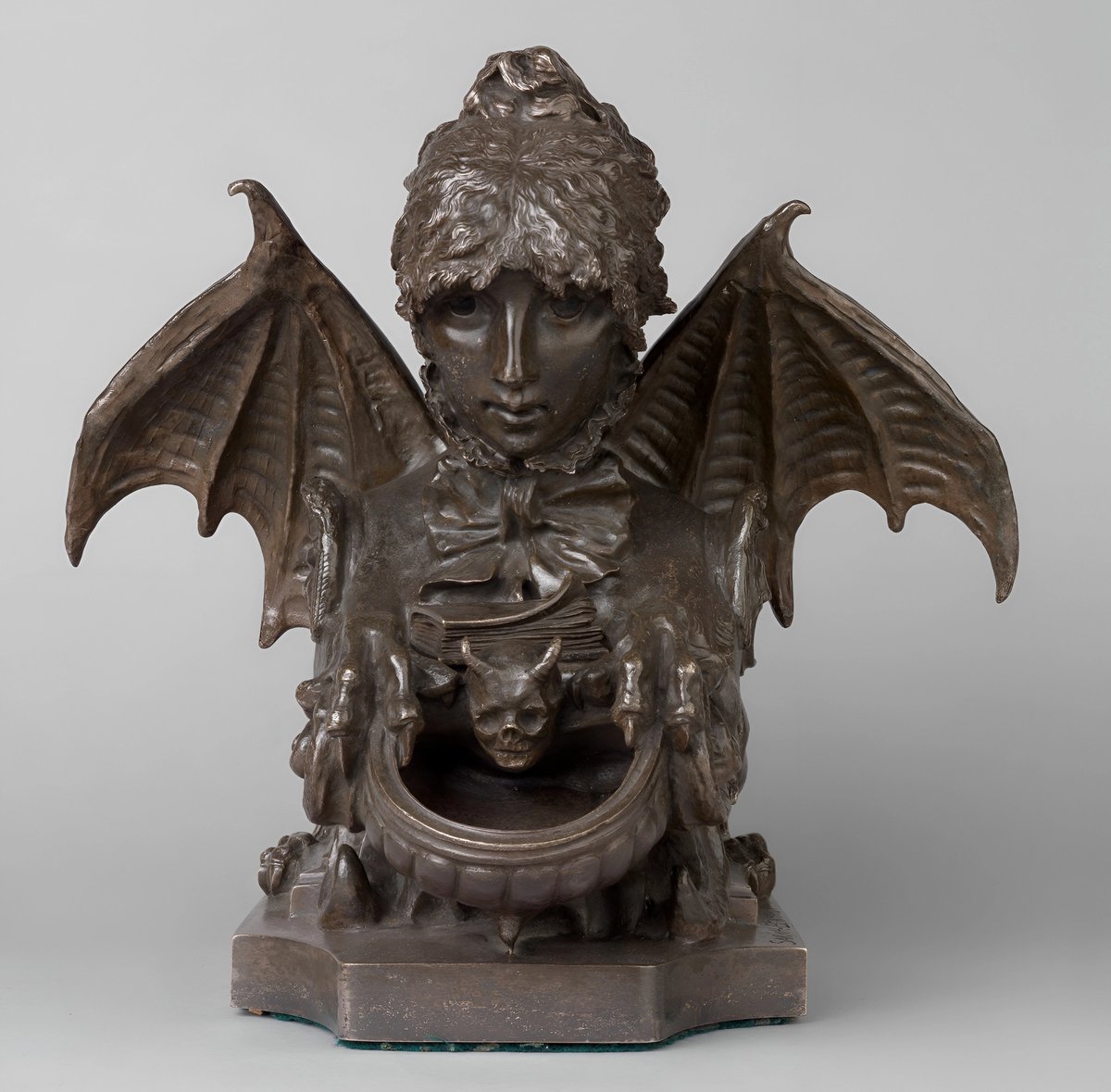
Alfred Gilbert (1854-1934) gets thorough coverage too, including his model for the Duke of Clarence’s tomb: as Marsden writes of this monument, it is “considered by many the greatest work of its kind to be erected in Britain in the second half of the 19th century”. Edward VII (prior to his accession in 1901) acquired several enticing nude statues, but his oddest purchase was surely the “uniquely weird” (Marsden’s words) bronze self-portrait-cum-inkwell by the actor and artist Sarah Bernhardt, Autoportrait en Chimère (1880), which shows her head over sinister bat wings.
Edwardian statuettes of soldiers, animals and royalty abound in volume four, but Marsden never relaxes his forensic and learned study of this outstanding collection, which closes with entries on works from the 20th-century by Oscar Nemon, Henry Moore, Barbara Hepworth and (surprisingly) Anthony Caro.
With the welcome move to open up royal residences, the audience for encountering these notable works where they belong is set to grow. With Marsden’s magisterial catalogue to boost appreciation, these visits will be richer still.
Jonathan Marsden, European Sculpture in the Collection of His Majesty The King, Modern Art Press/Royal Collection Trust, 4 vols, 1648pp, 2510 col. & b/w illust., £350 (hb), published 23 September 2025
• Roger Bowdler is a partner at Montagu Evans, advising owners on historic buildings