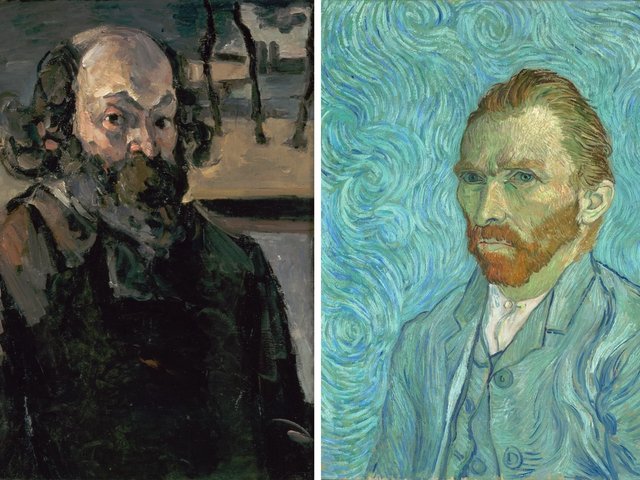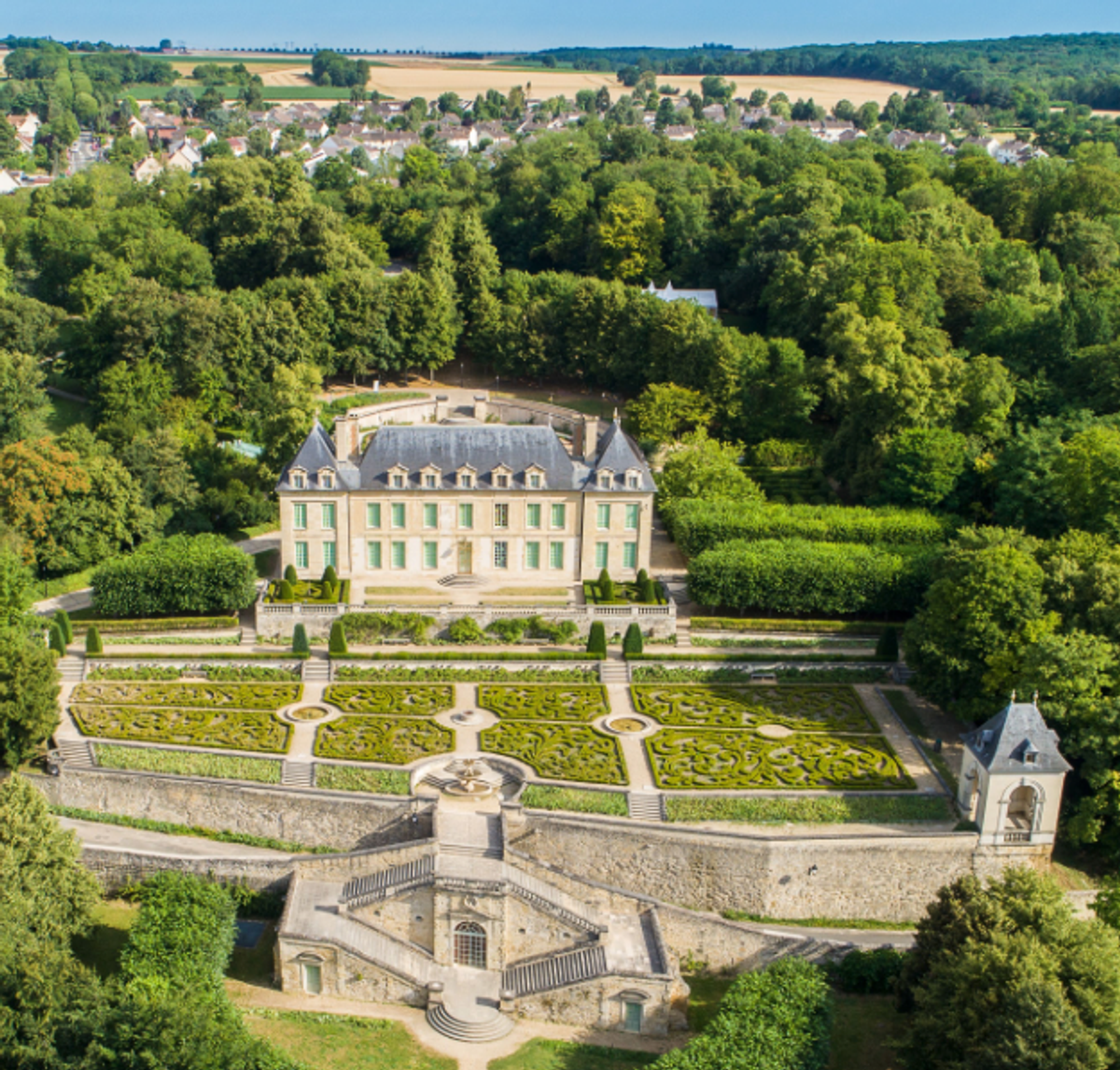

An exhibition focussing on Van Gogh and his influence opened this week at the Château of Auvers-sur-Oise, the village 30 kilometres north west of Paris where the artist spent his last 70 days. With nearly a hundred works by a wide range of artists, the show traces the painter's impact on his followers. While original paintings by Van Gogh himself do not feature, it provides a fascinating insight into his art.
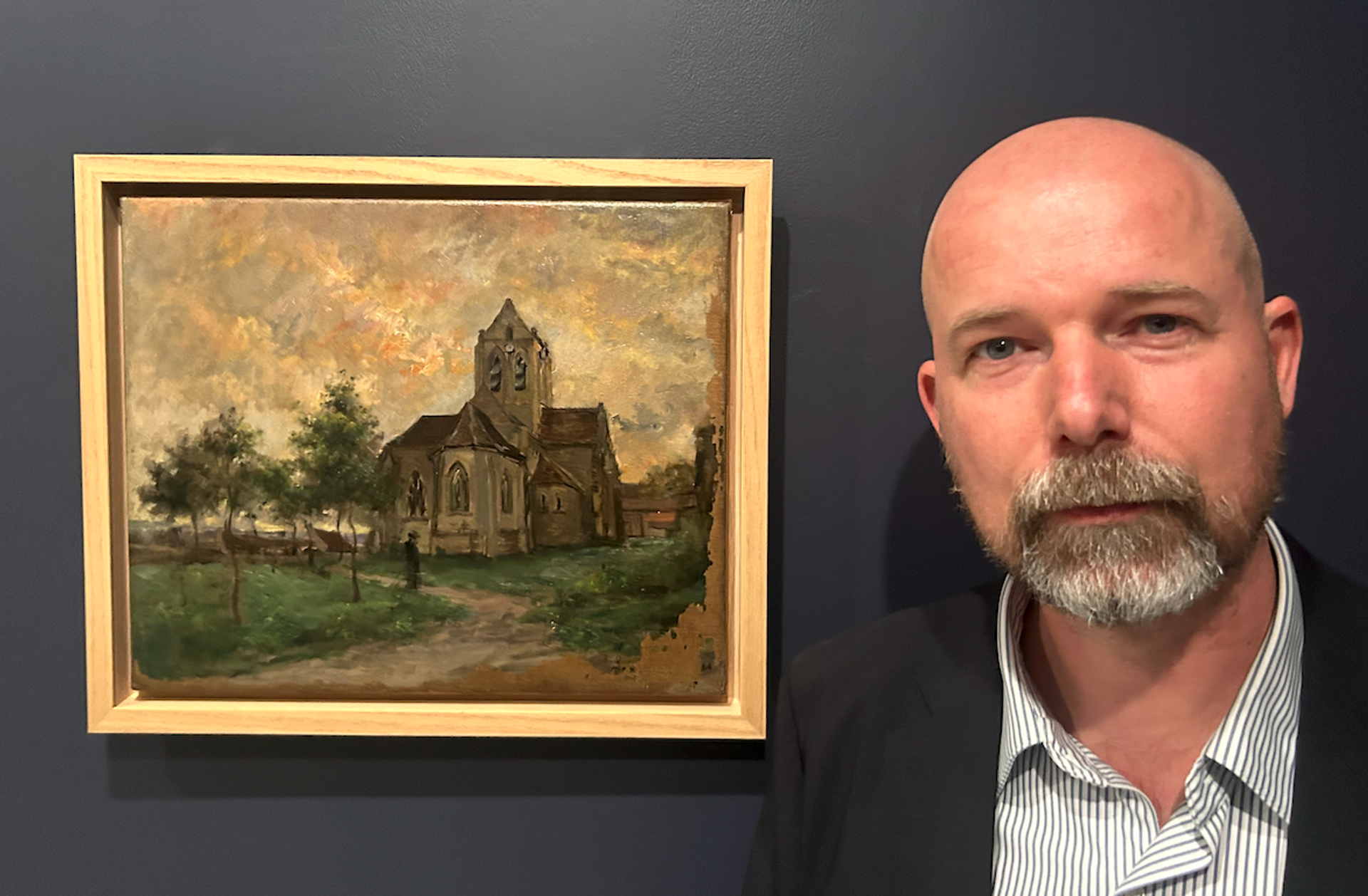
Léonide Bourges’ Church at Auvers, with curator Wouter van der Veen
Conseil Départemental du Val-d’Oise, Pontoise (painting donated by Wouter and Catherine van der Veen). Photograph The Art Newspaper
The setting of Van Gogh, Influencer: Legacies in Motion (until 3 January 2027) may come as a surprise: a 17th-century château which has been transformed into an exhibition venue. Built on a hillside above the River Oise, it dominates the village of Auvers, where Van Gogh arrived on 20 May 1890. The artist must have seen the imposing private mansion from a distance almost every day.
Van Gogh was highly productive in Auvers, completing a painting a day. But during the evening of 27 July he suddenly suffered a mental crisis, walking up into the wheatfields above the village and shooting himself in the chest. He died of his wounds two days later.
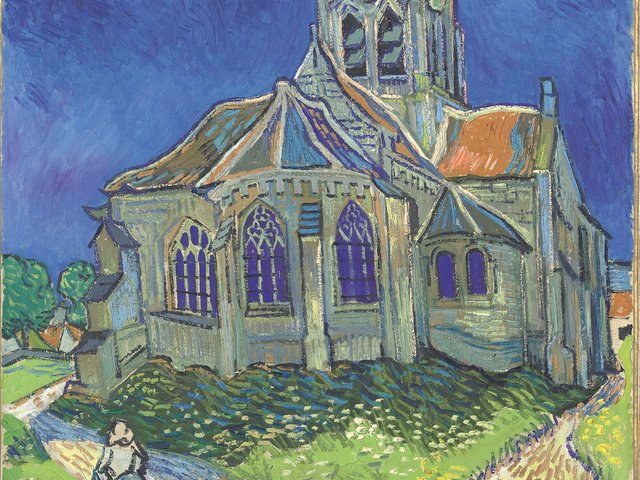
Van Gogh, Influencer opens with a group of paintings of the Auvers area by other late 19th-century artists, providing a fascinating contrast with the Dutchman’s work. In terms of subject matter, a picture by the Auvers artist Léonide Bourges most closely resembles a specific work by Van Gogh - his celebrated Church at Auvers (June 1890, now Musée d’Orsay, Paris).
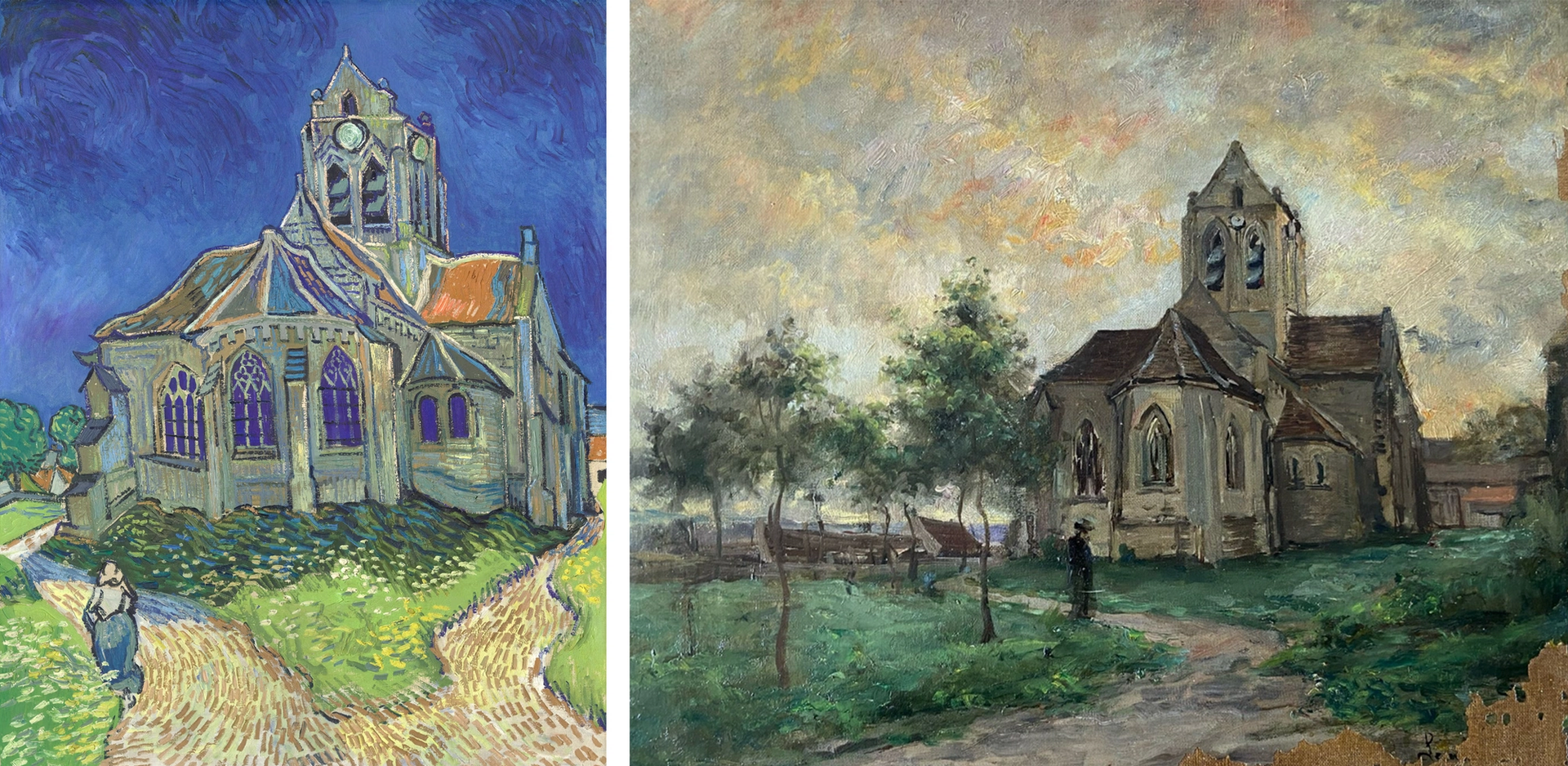
Van Gogh’s Church at Auvers (June 1890) and Léonide Bourges’ Church at Auvers (1880s-90s)
Musée d’Orsay, Paris and Conseil Départemental du Val-d’Oise, Pontoise
The angle of the church, with the inclusion of a walking female figure, are so similar in the two paintings that it is difficult to determine whether Van Gogh influenced Bourges or the reverse. As the château’s exhibition curator Wouter van der Veen suggests, it might even have been "a curious coincidence". My own hunch is that Bourges was paying homage to the Van Gogh, which she could well have seen hanging in the home of the local collector Dr Paul Gachet, whom she knew.
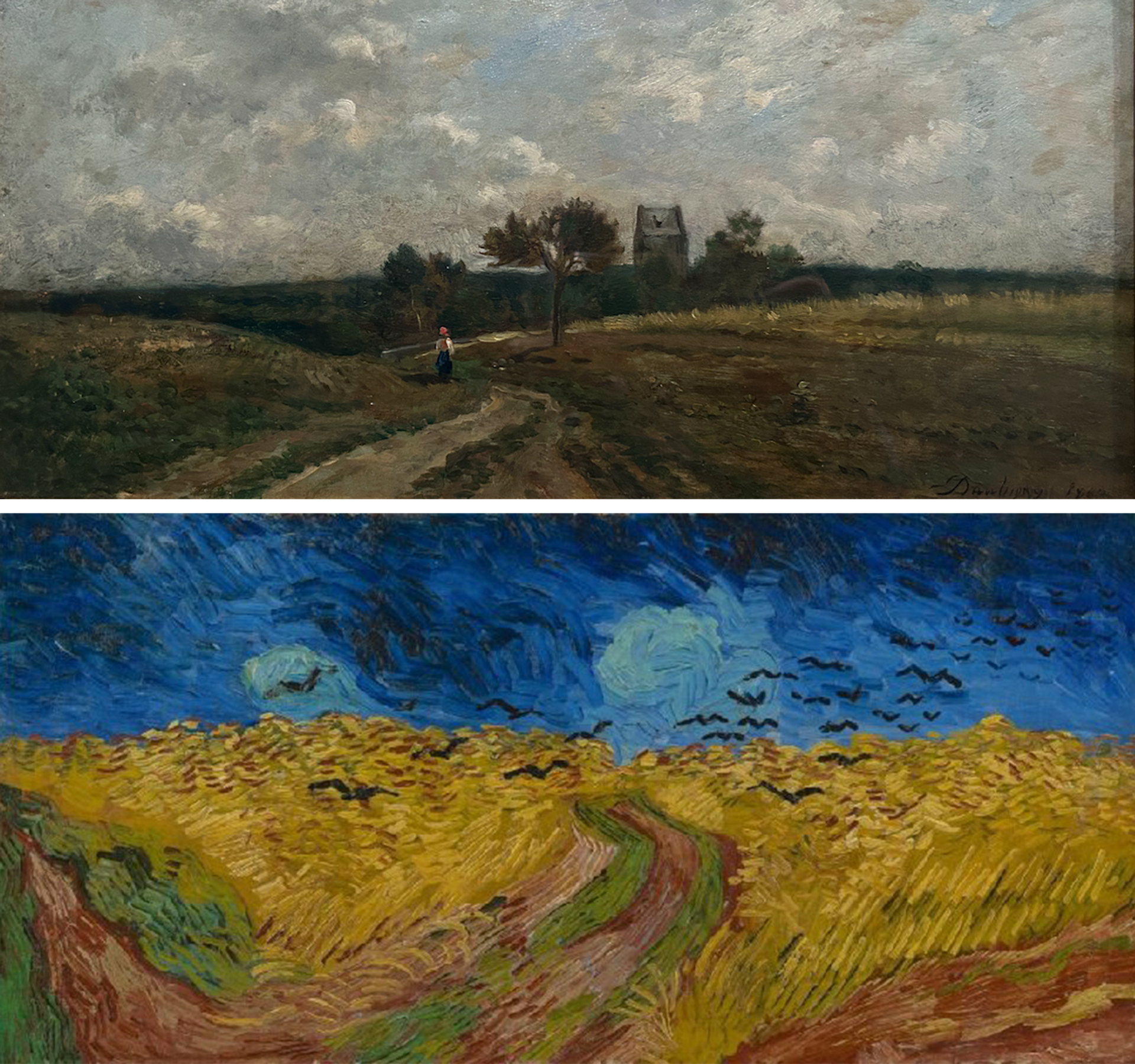
Daubigny’s Woman crossing a Field (1869) and Van Gogh’s Wheatfield with Crows (July 1890)
Galerie de la Vallée de l’Oise, Auvers and Van Gogh Museum, Amsterdam (Vincent van Gogh Foundation)
Another intriguing link in terms of subject matter, and this one is certainly by chance, is between a landscape by the earlier Auvers artist Charles-François Daubigny and Van Gogh’s series of wheatfield paintings. In 1869, Daubigny had set up his easel near the lane which runs up from the church to the cemetery (where Van Gogh would later be buried). Although Van Gogh never painted from this spot, his wheatfield landscapes were mostly done just a few minutes’ walk away.
The stylistic contrast between the wheatfields of Daubigny and Van Gogh is striking. Daubigny produced relatively realistic-looking atmospheric landscapes, whereas Van Gogh employed bold colours and brushwork to produce highly personal, more emotional paintings.
One of the key pictures in Van Gogh, Influencer which demonstrates the early impact of the Dutch artist on his fellow painters is Path in the Fields (around 1891-92) by Léo Gausson. One can immediately see its links with Van Gogh’s Wheatfield with Crows (July 1890).
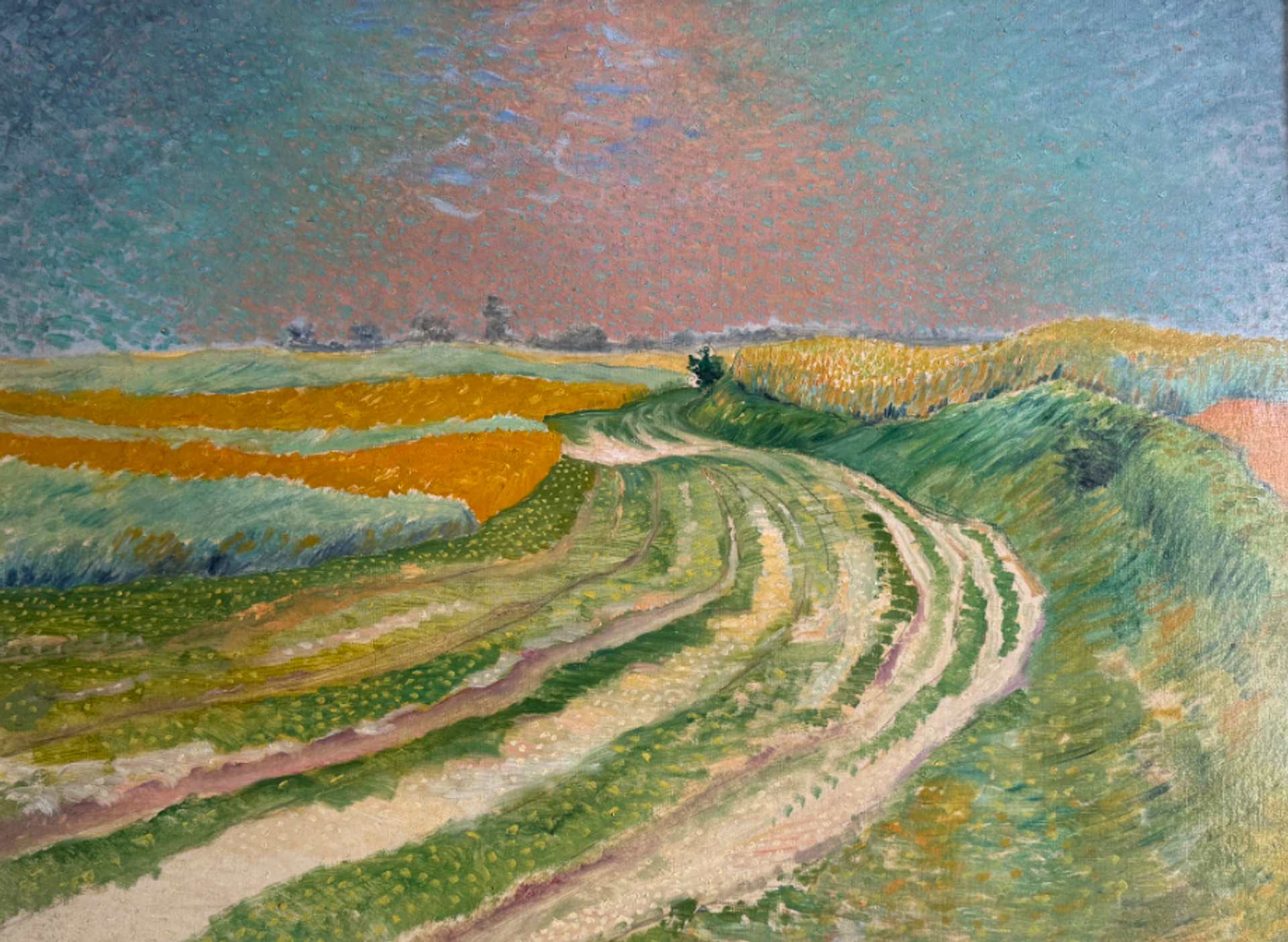
Léo Gausson’s Path in the Fields (around 1891-92)
Galerie de la Vallée de l’Oise, Auvers
Gausson does not set out to replicate Van Gogh’s scene, but instead conjures his own personal interpretation, with a twisting path abruptly disappearing into the wheat. The red-hued sky in the centre represents Gausson’s vision of the sun, a key motif in Van Gogh’s work.
Although Gausson did not work in Auvers, he certainly knew Vincent’s work, having seen it in the Paris apartment of the Dutchman’s brother Theo. An admirer of Van Gogh, Gausson had wanted to exchange paintings with him, although this would not be arranged with Theo until August 1890, very soon after the funeral.
Altogether, Van Gogh, Influencer includes just over a dozen paintings by other artists created before Van Gogh’s stay in Auvers and around 80 dating from afterwards. All of these later works either consciously or unconsciously represent a debt to Van Gogh. As Van der Veen put it: “Van Gogh threw a stone into the pond, creating ripples that have reached thousands of artists, across countries and cultures.”
Maison Gachet
The other show which opened this week in Auvers is at the Maison du docteur Gachet, the former home of Dr Paul Gachet, who cared for Van Gogh at the end of his life. Gachet, the Talent of Father and Son, the Collection of Yves d'Auvers Revealed (until 2 August) provides an unusual opportunity to see paintings by the doctor and his son, also named Paul, who were both amateur artists.
The pictures come from the collection assembled by Yves Diguet (he adopted the surname d’Auvers), who died in 2023. They are on loan from his daughter, Edmée Dorléans. Paintings by the Gachets are rarely on display.
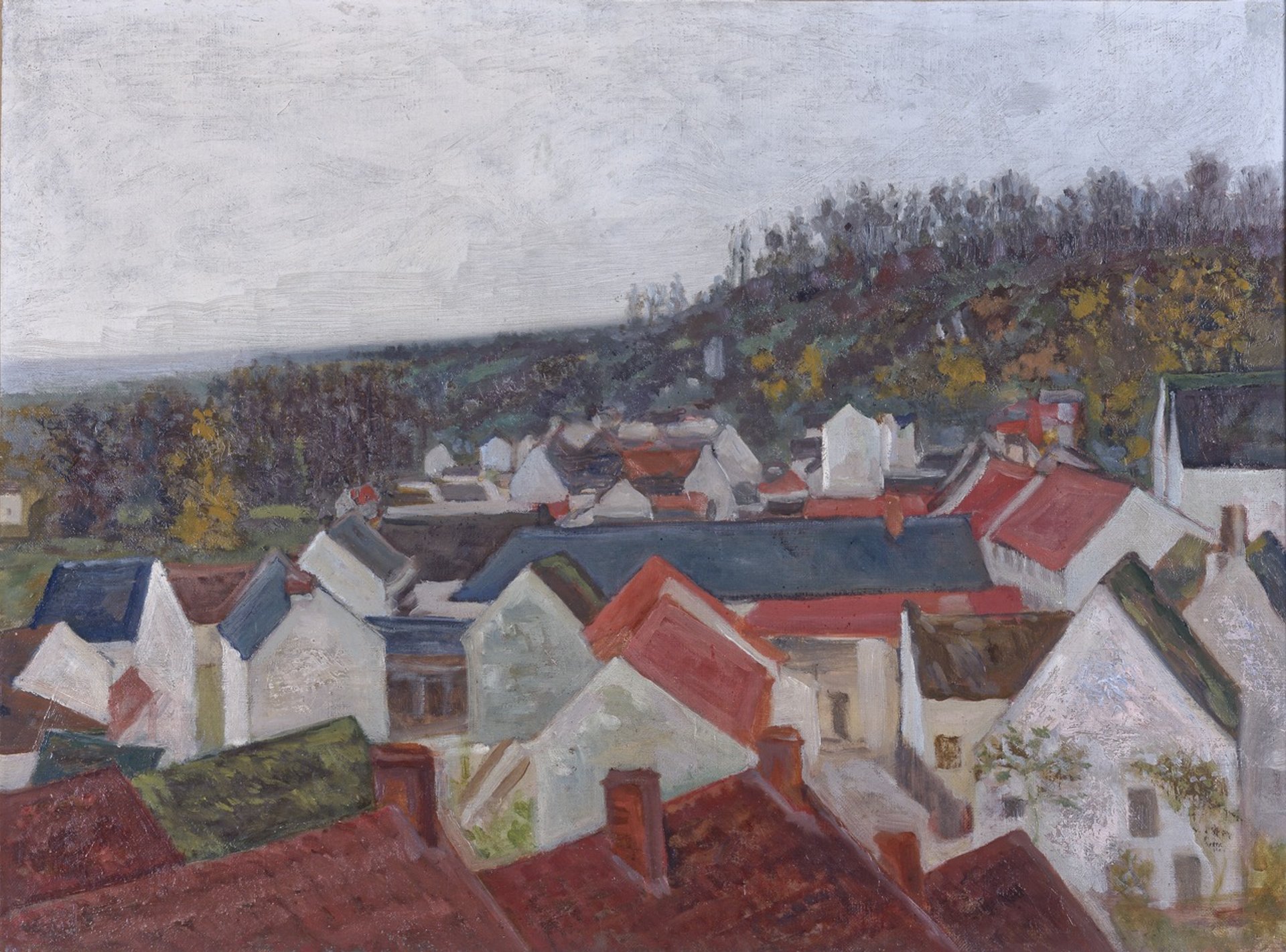
Dr Paul Gachet (Paul van Ryssel), The red Roofs and Hill, Rue Rémy, Auvers (around 1898)
Edmée Dorléans, collection of her father, Yves d’Auvers
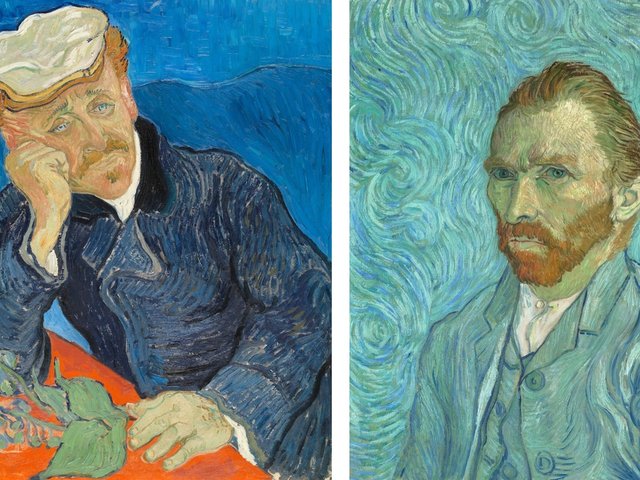
Two pictures by Dr Gachet, who painted under the name Paul van Ryssel, stand out. One is a landscape painted from his garden, which overlooks the roofs of the neighbouring houses on the other side of the road. Van Gogh knew the garden well, having made a number of paintings there, including his Portrait of Dr Gachet (June 1890). The view of the roofs can still be seen today, although the cluster of houses has become increasingly dense.
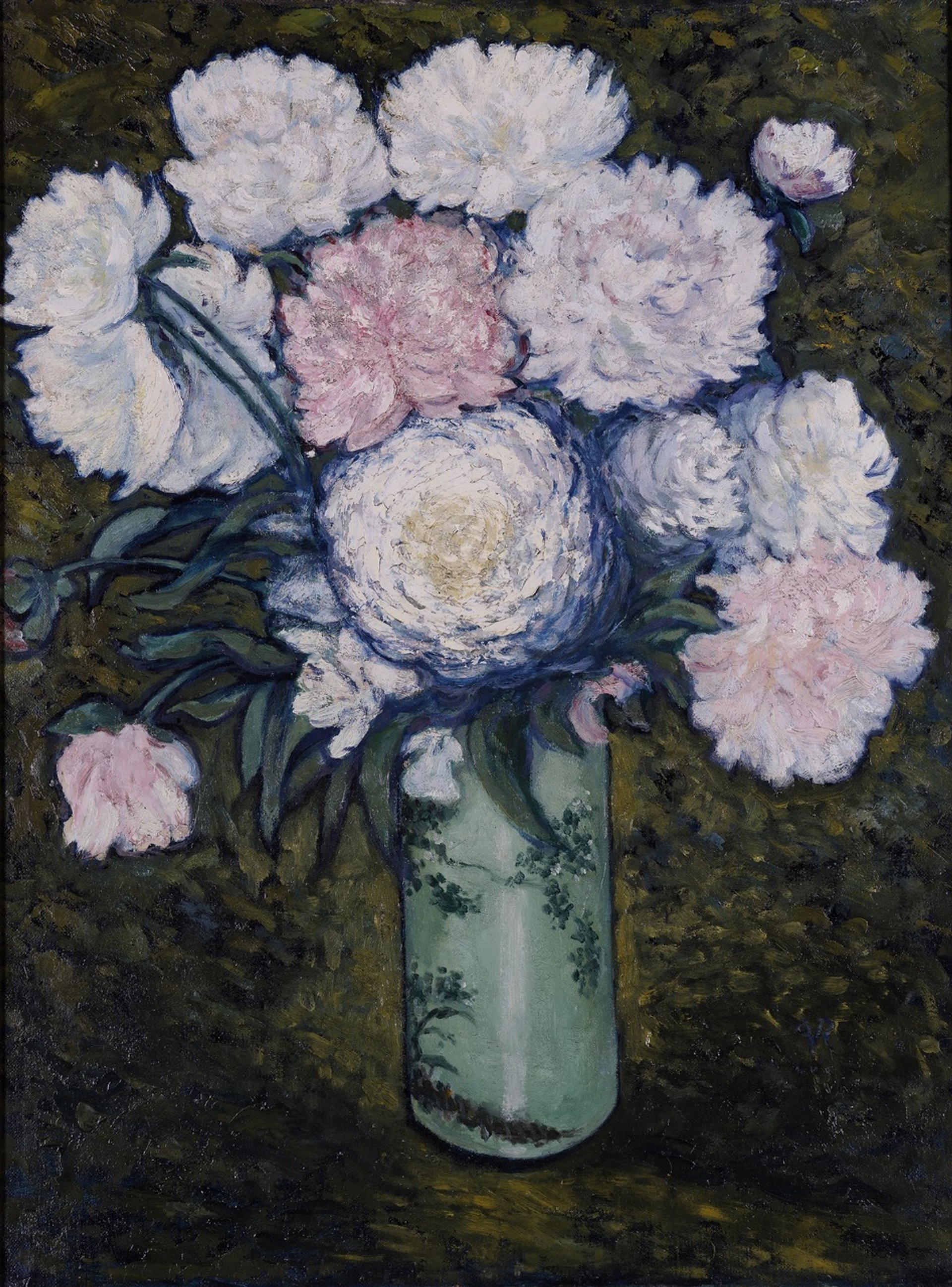
Dr Paul Gachet (Paul van Ryssel), Bouquet of Peonies (1907)
Edmée Dorleans, collection of her father, Yves d’Auvers
Bouquet of Peonies (1907) almost certainly represents flowers picked in Dr Gachet’s garden. It was painted in Van Gogh’s style, with thick impasto paint. The largest flower in the middle is mainly white, with a yellowish centre, presented rather as Van Gogh had so often depicted the sun in his landscapes. The peonies stand in a Japanese vase, which would have been equally admired by Dr Gachet and Van Gogh, who both loved the art of Japan.
Although the current display of work by Dr Gachet and his son is modest in scale, with ten paintings as well as works on paper, visitors also have the opportunity to view the doctor’s house, still with some of its original furnishings.
Following the death of Dr Gachet’s son in 1962, the villa was sold to a private owner. It was later acquired by the local departement, opening to visitors in 2003. Dr Gachet also owned an amazing collection of Van Gogh paintings and drawings, which his son donated to the Louvre in the 1950s. These are now on display at the Musée d’Orsay in Paris.
Beyond the shows
Finally, a few further recommendations for visitors to Auvers on the Van Gogh trail (which can be enjoyed on a day trip from Paris). The Auberge Ravoux, where the artist lodged, has just opened for its annual season (until 22 November), with the highlight being the chance to look into the small room where he lodged - and died.
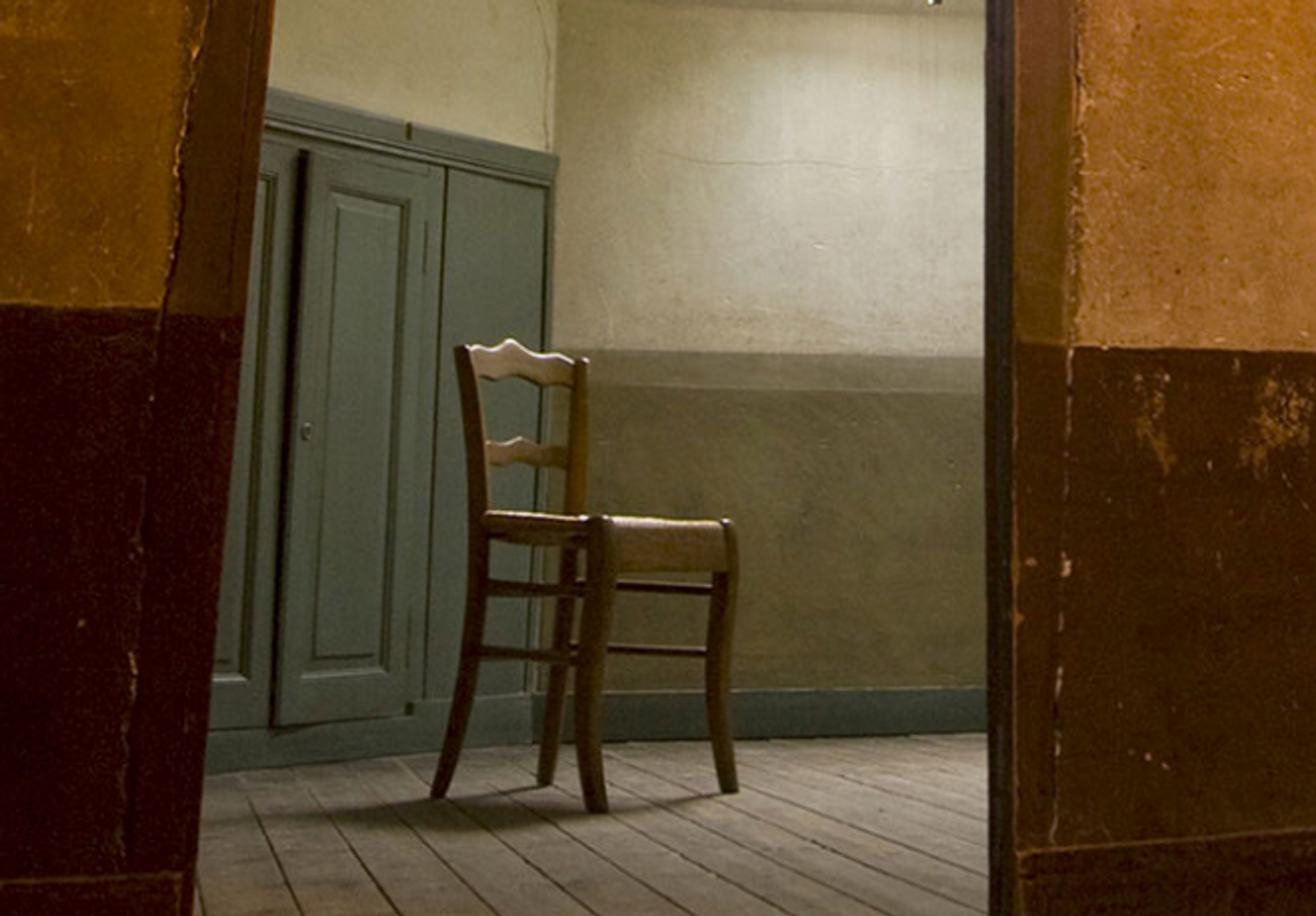
The room where Van Gogh died on 29 July 1890
Auberge Ravoux "Maison de Van Gogh", Auvers
And finally, it is just a short walk from the auberge (inn) to the church that Van Gogh depicted so memorably. Above the church, slightly higher up the hill, is the cemetery where Vincent and Theo lie buried, side by side, beneath a blanket of ivy. Beyond are the wheatfields, a powerful source of inspiration for Van Gogh and the place where he made the fateful decision to end his life. Despite this tragedy, his art lives on.