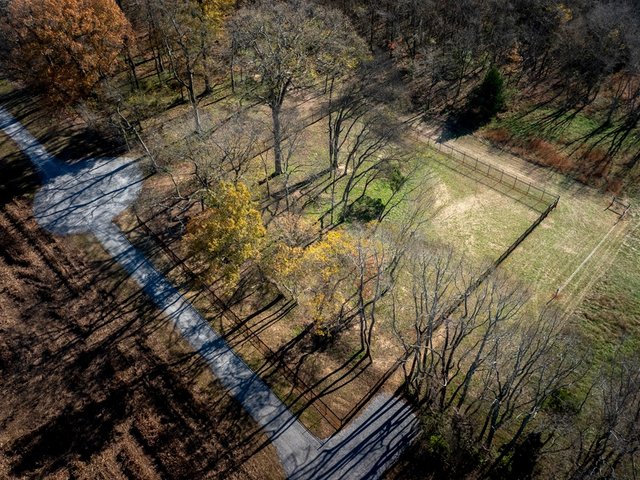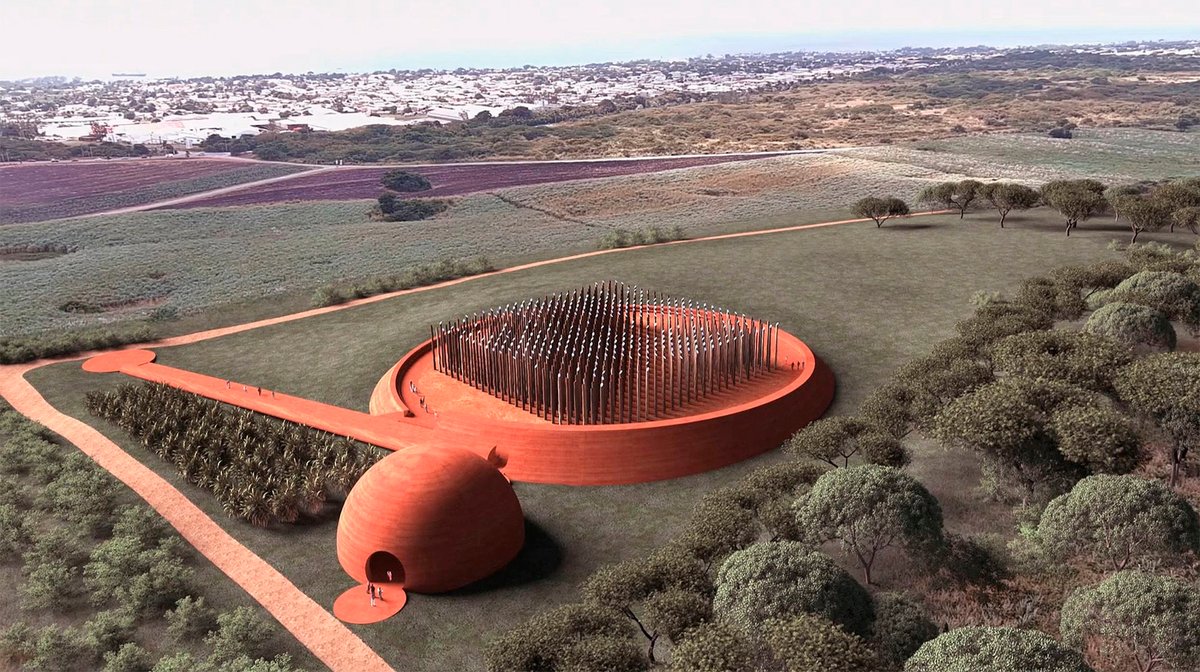
Just outside Barbados’s capital of Bridgetown, on land once classified by plantation owners as “rab land”—stony terrain deemed unsuitable for cultivation—cranes now rise and earthworks are well underway. Construction is advancing on the Barbados Heritage District at the Newton Enslaved Burial Ground, one of the earliest and largest known communal burial grounds of enslaved Africans in the Western Hemisphere. The project will include a new memorial, archive and cultural complex that the Barbadian government has cast as central to how the island preserves, studies and presents this history to the world.
Announced in December 2021 by Prime Minister Mia Amor Mottley—shortly after Barbados formally removed the British monarch as head of state—the Heritage District is part of the Road (Reclaiming Our Atlantic Destiny) Programme, an initiative of the culture ministry under the Prime Minister’s Office. The district encompasses the Newton Enslaved Burial Ground Memorial, the National Performing Arts Centre (NPAC), a national museum, a purpose-built new home for the Barbados Archives and the Global Genealogical Research Institute, and a Spirituality Centre for reflection and community healing.
More than four years after its announcement, the project remains under construction. The NPAC’s first phase (a temporary pavilion) opened in August 2025, and early work on the memorial landscape is under way.
The district was initially scheduled for completion in 2024. Road’s programme manager, Chereda Grannum, tells The Art Newspaper that the project has been delayed as the scope of archival digitisation expanded and technical capacity deepened, alongside global supply-chain disruptions and a fire at the Barbados Archives Department in June 2024. Since the project’s inception, she says, emphasis had been placed on establishing research standards, conservation systems and governance frameworks “intended to endure beyond any single construction phase”. A revised overall completion date has yet to be announced.
Newton’s significance lies not only in the scale of the burial ground but in the fact that it preserves evidence of funerary practices. Archaeological investigation identified the remains of at least 570 individuals interred at the site, while later geophysical surveys indicate that burials likely extend beyond the currently demarcated boundaries. The site provides a framework for commemorating and interpreting the histories of enslaved Africans buried at Newton within Barbados’s wider history of enslavement, forced migration, survival, liberation and descendant communities.
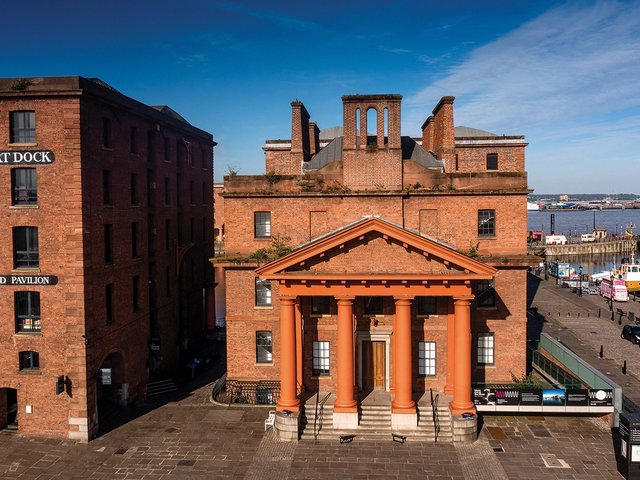
The masterplan for the Heritage District was developed by Adjaye Associates. The London-based office, founded by the architect David Adjaye, is known for award-winning buildings like the National Museum of African American History and Culture in Washington, DC. However, Adjaye faced allegations of sexual misconduct in 2023 (which he has denied), resulting in the cancellation of several of the firm’s projects.
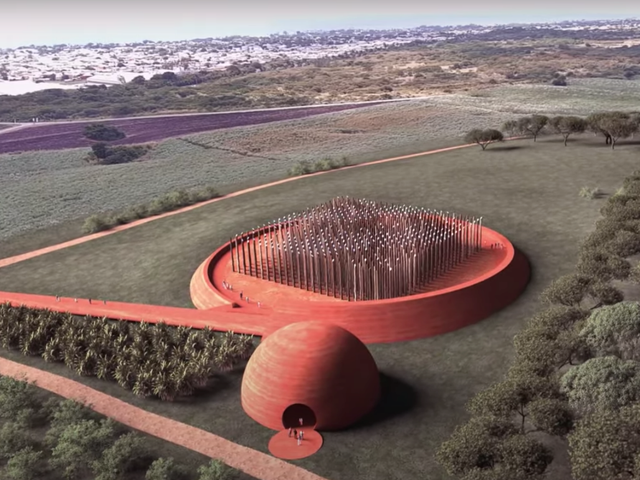
A representative for Adjaye Associates tells The Art Newspaper that the firm designed the Heritage District with the memorial envisioned as its symbolic centre. Rather than a conventional monument, the memorial unfolds as a landscape intervention structured through movement across the terrain. The project is distinct in the studio’s portfolio for its precision of place, locating the memorial not at a distance but within the landscape where enslavement was lived and enforced. Construction methods have been calibrated to avoid disturbing the burial ground.
“The idea of re-establishing the relationship between West Africa and Barbados underpins this project,” Adjaye says. “The wooden stakes of the memorial are created from teak sourced in Ghana and are a symbolic act of return of the African body in the landscape.”
Brittle paper and fading ink
While the memorial addresses land and ancestral presence, the second pillar of the Road Programme concerns what officials describe as the “documentary architecture of enslavement”. Barbados holds what is considered the largest repository of British transatlantic slave records outside the UK—tens of millions of pages of plantation inventories, land registers, baptismal records, court proceedings and census documents spanning centuries.
Digitisation and conservation are currently under way, employing more than 100 Barbadian photographers, preservation experts and metadata developers. In a digitisation lab, the Road Programme’s assistant preventative conservator Philesha Barrow works carefully with fragile historical records. Before joining the programme, she was a full-time makeup artist; today, her steady hand and attention to detail are applied to brittle paper and fading ink. “Reading these records opened my eyes,” she says. “The resilience they showed in building Barbados into what it is today is something I never fully appreciated until I started working with these materials.”

Philesha Barrow, the Road Programme’s assistant preventative conservator, works with fragile records ROAD Digitisation Project Team
For John Mulligan, the Road Programme’s director of digital operations, preservation requires interpretive care as much as it does technical rigour. “Many of these documents were the legal instruments by which they performed that dehumanisation,” he says. “We have to work twice as hard to recover the repressed stories of the people who appear in these pages in order to ensure they are remembered with dignity.”
In 2022, the University of the West Indies (UWI) joined the SlaveVoyages consortium, linking Barbados’s archival holdings to the leading digital research project on the transatlantic trafficking of enslaved Africans. Through Road, UWI is helping integrate the island’s history into an international research infrastructure. Following the announcement of the partnership, the American historian Henry Louis Gates Jr. described the potential impact of the expanded archival corpus as “seismic”.
Taken together, the Heritage District and the digitisation project represent an effort to bring Barbados’s memorial landscape and archival records into a single frame—positioning the island at the centre of this history, its future study and interpretation, and an emerging heritage economy.
This consolidation has not been without friction. In January 2025, members of the Barbados Museum and Historical Society called for a halt to construction, citing concerns about consultation, archaeological findings and respect for the burial ground. An online petition urged the government to pause the works. Initial reports of grave disturbance were later corrected, with officials confirming that the burial ground itself had not been damaged. Developers then introduced additional consultation and a temporary pause for ceremonial observances.
A demand for transparency
Tensions revealed not only procedural concerns but the ritual logic surrounding the burial ground—a shared understanding that the site carries obligations as well as history. Long before the Heritage District was announced, the Newton burial ground was already the subject of sustained engagement by researchers, spiritual practitioners and community advocates who worked to document, protect and honour it. The current iteration of state-led redevelopment operates at a different scale, oriented towards international visibility and institutional consolidation. The project’s ongoing legitimacy may depend on how those wider ambitions coexist with the quieter custodianship that preceded them.
In February 2025, Barbados formalised a $75m (BB$150m) loan agreement with the Development Bank of Latin America and the Caribbean, including funding for cultural infrastructure. But financing such projects through external borrowing situates cultural policy within the broader asymmetries of global finance. Here, cultural infrastructure operates as more than soft power; it is an assertion of narrative control following Barbados’s transition to a republic.
As the Barbados Heritage District advances through its initial phase, its overall significance will depend less on construction timelines than on governance, archaeological stewardship, financial transparency and public participation. At Newton, Barbados is constructing a memorial and research infrastructure that could reshape how small states in the Global South finance, govern and author their own histories.