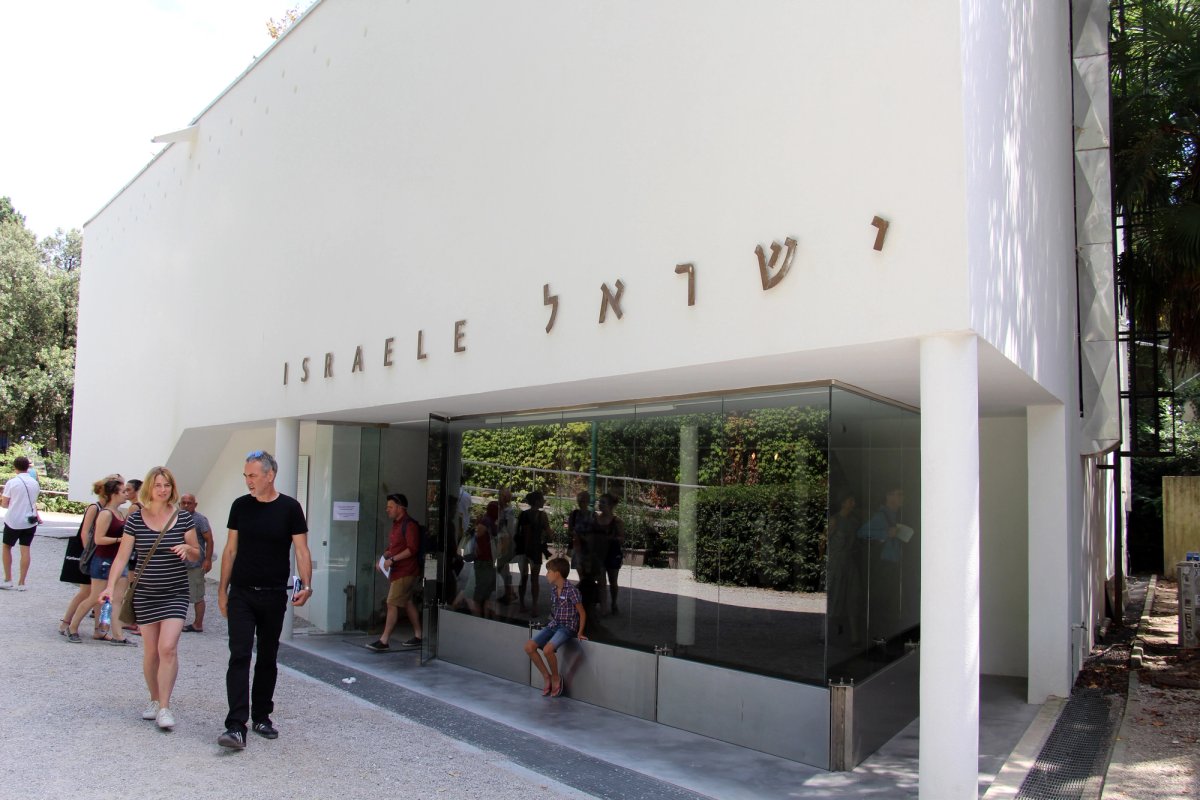
Israel’s foreign ministry has accused the Venice Biennale's jury of politicising this year’s exhibition after jurors said they would not consider for prizes countries whose leaders face International Criminal Court charges for crimes against humanity. The Biennale jury each year selects the winners for a series of awards and special mentions, including a Golden Lion for the best national participation.
Posting on X on Sunday evening, the Israeli foreign ministry said the jury had decided to "boycott" Belu-Simion Fainaru, the Romanian-born Israeli sculptor who will represent the country at the Biennale, calling it "a contamination of the art world". The note added: "The political jury has transformed the Biennale from an open artistic space of free, boundless ideas into a spectacle of false, anti-Israeli political indoctrination.”
Controversy has swirled over Israel’s return to the contemporary art event, opening 9 May, for the first time since the start of the Gaza war in 2023. The Art Not Genocide Alliance (ANGA) circulated a letter last month accusing Israel of "genocide" and calling for the country's exclusion. It was signed by almost 200 international artists, curators and cultural workers associated with Biennale projects.
The Biennale's five-member international jury announced on Thursday that it would not award prizes to countries "whose leaders are currently charged with crimes against humanity by the International Criminal Court". The jury added it wished to "express our commitment to the defence of human rights".
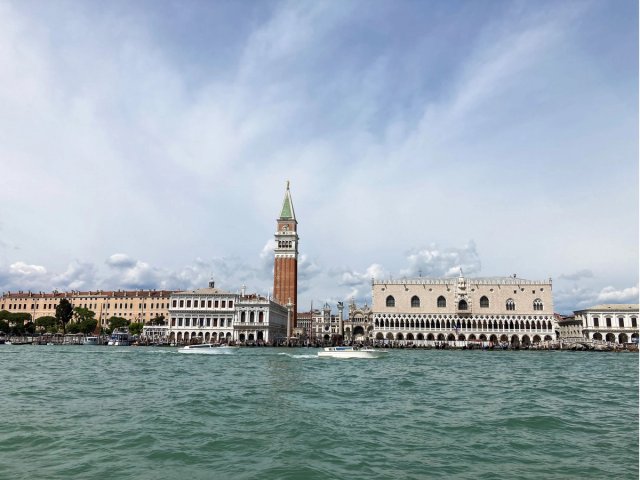
While the statement did not name any countries directly, it was broadly understood to apply to Israel and Russia, which is also returning to the Biennale for the first time since its full scale invasion of Ukraine in 2022. The ICC issued arrest warrants to Vladimir Putin, the Russian president, and Benjamin Netanyahu, the Israeli prime minister, for alleged war crimes and crimes against humanity in Ukraine and Gaza respectively in 2023 and 2024.
Since Hamas’s attack on 7 October 2023, which killed more than 1,200 Israelis and in which more than 250 people were taken hostage, more than 72,500 Palestinians are estimated to have been killed in Gaza in total, according to the Palestinian Ministry of Health. In February, the Ukrainian president Volodymyr Zelensky reported that “officially” at least 55,000 Ukrainian soldiers had been killed since February 2022, but that many more were missing in action.
In a statement seen by The Art Newspaper, the Biennale distanced itself from the jury's announcement, saying that the jury “acts autonomously and in total freedom of opinion in the exercise of its functions”. The Russian embassy in Rome did not immediately reply to The Art Newspaper’s request for comment about the jurors' decision.
Pietrangelo Buttafuoco, the Biennale's president, has repeatedly defended Russia's participation, causing a rift between the organisation and Italy's culture ministry. “La Biennale di Venezia rejects any form of exclusion or censorship of culture and art,” the Biennale said in a statement on 4 March.
The Italian news site Open reported on 26 April that the Russia pavilion would remain open only from 5 to 8 May, when it will be accessible only by journalists and authorised personnel. Citing emails reportedly exchanged between Buttafuoco and Anastasia Karneeva, the Russia pavilion's commissioner, the publication described the arrangement as an attempt by the pavilion's organisers to stay within a tight budget amid international sanctions imposed on Russia.
From 9 May, when the Biennale opens to the public, the pavilion will remain closed, with video recordings of the art and music performances presented inside during the pre-opening to be projected onto its walls, the publication reported.
The Biennale and the organisers of the Russian pavilion were contacted by The Art Newspaper for comment.
Last week, the spokesperson Thomas Regnier confirmed that the EU had withdrawn approximately €2m earmarked for the organisation over three years, providing 30 days for the organisation to defend its decision to include Russia. The EU had previously received a letter signed by at least 34 members of the European Parliament demanding that the money be withheld.
Kaja Kallas, the EU’s high representative for foreign affairs, told reporters last week that Russia's participation was "morally wrong", adding that “while Russia bombs museums, destroys churches and seeks to erase Ukrainian culture, it should not be allowed to exhibit its own”.
Giorgia Meloni, Italy’s prime minister, told reporters ahead of a bilateral meeting with the Ukrainian prime minister Vlodimir Zelensky earlier this month that the Biennale would have to “assess the risks it faces” in funding losses. Maria Zakharova, the Russian foreign ministry spokesperson, countered last week that removing the money represented “relapses into anti-culture”.
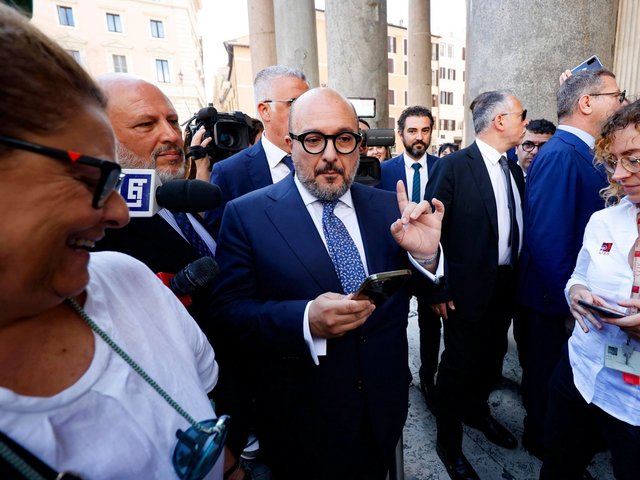
In a note circulated on Friday, Italy’s culture ministry announced that Alessandro Giuli, the culture minister, would not attend this year’s Biennale for the pre-opening or official inauguration. The ministry did not specify why.