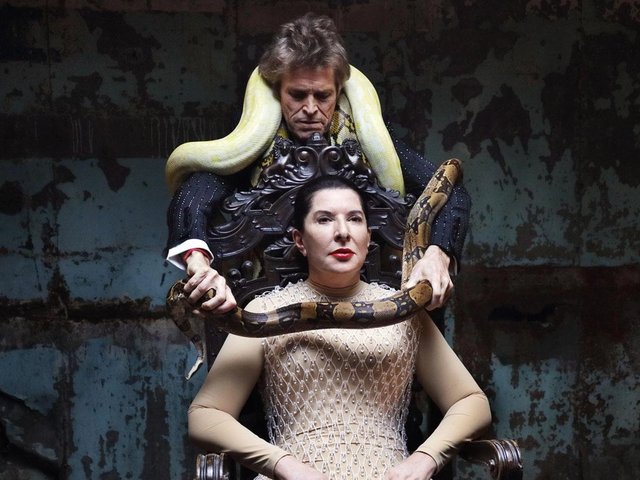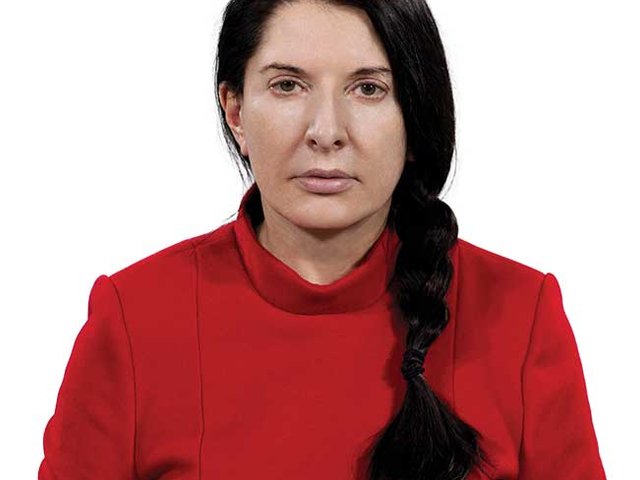
In 1997 Marina Abramović was the first woman to win the Biennale’s Golden Lion Best Artist award for Balkan Baroque, a gruelling performance work where she sat in a dark basement scrubbing bloody cow bones for six hours a day during the opening week in response to violence in the Balkans, past and present. Now the woman who calls herself “the grandmother of performance art” is making history again. This time, Abramović is the first living female artist to have a solo show at the Gallerie dell’Accademia where—in another first—her work will be installed in the galleries housing the museum’s permanent collection as well as in its temporary exhibition spaces.
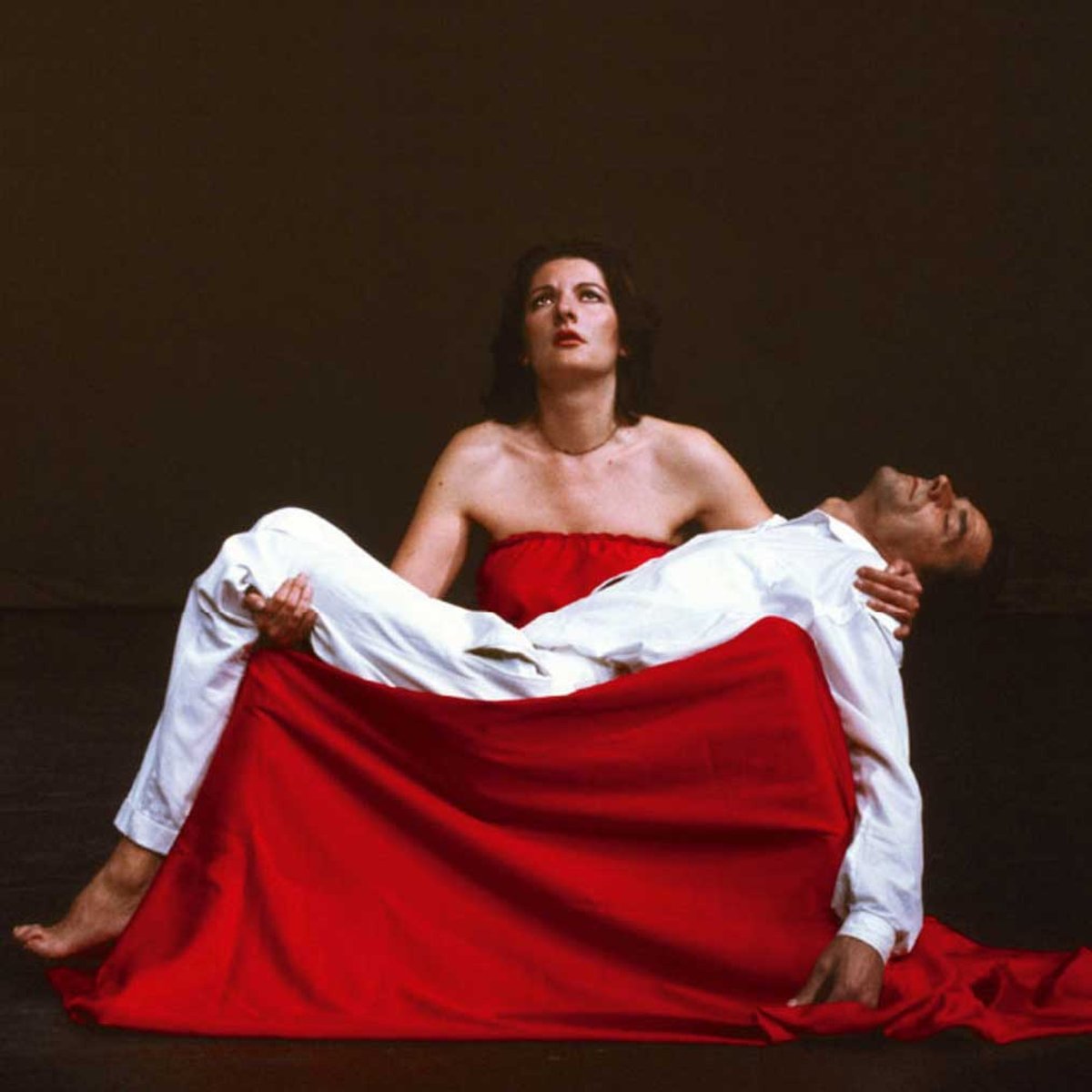
“I feel like a bulldozer, some kind of communist warrior who says, okay, I want this space!” she says. “It’s important to clear this testosterone and let some woman spirit in!” However, Abramović declares herself “very humble” before one of her most dramatic interventions into the Accademia’s historic collection. This involves the juxtaposition of her 1983 photograph Pietá (with Ulay)—which depicts the artist cradling the prone body of her then partner Ulay (Frank Uwe Laysiepen)—with Titian’s Pietá (1575-76), his final masterpiece, which remained unfinished at his death. “Being next to this great work is not easy,” she admits. “I hope the public will not find me arrogant and full of ego, for I always believe that ego is an obstacle to creation.”
New momentum
The title of the Accademia exhibition is Transforming Energy, which Abramović feels expresses a crucial strain in her work that she has been developing over several decades. “It is something that I started a long time ago, just after I walked the Great Wall of China, to make transitory objects that the public can use,” she says. Recently, this desire to actively involve her audience has been gathering new momentum. For her show at the Modern Art Museum in Shanghai in 2024-25, Abramović created an entire exhibition of interactive works. “It was nothing to do with me anymore. It was for the public to use the work and to get energy from the materials, the minerals, I was using”, she explains. “It’s really important that the public is not just a silent witness but an actual participator.”
Many of these interactive “transitory objects” have now been installed in Venice, including stone beds and structures embedded with crystals, which visitors are invited to physically engage with. Abramović states that the “three body positions that I’m always interested in—lying, sitting and standing—are all included here for this energy transmission”.
Another work invites visitors to sit before three panels coloured red, blue and yellow, and look at each colour for an hour apiece, while, nearby, a work that Abramović says is dedicated to John Cage consists of a row of metronomes that each take 14 seconds to make a single movement. “You give me your time, I give you experience,” she says.
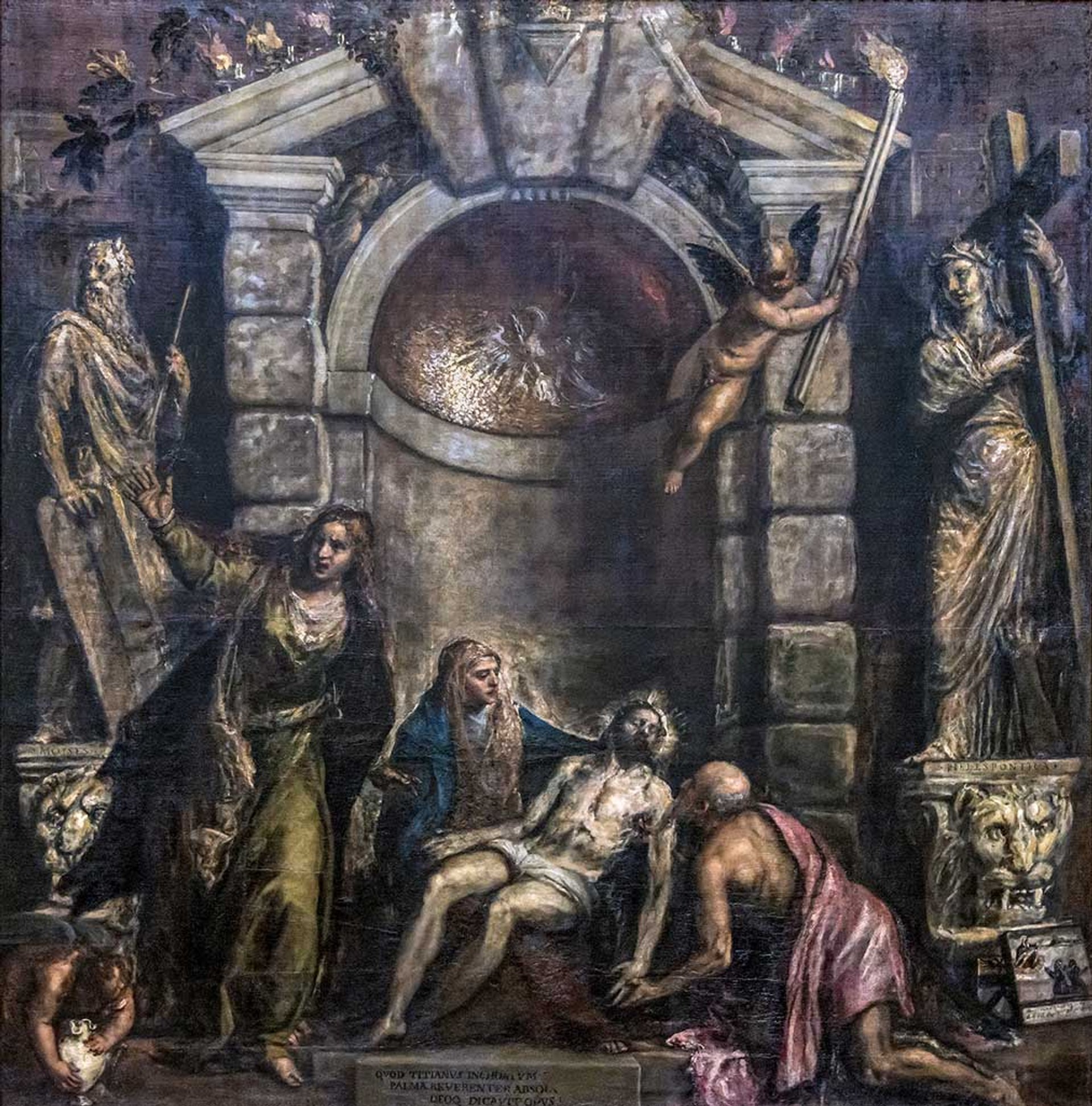
Titian’s Pietá (1575-76), which was left unfinished Photo: Didier Descouens
No telephones are permitted inside the Accademia exhibition, headphones are offered to block out all ambient sound and it is Abramović’s wish that visitors spend at least three hours experiencing her work. She is optimistic that many will make this temporal investment, especially younger visitors, declaring that “the public is absolutely fed up of just looking; they want to be engaged, they want to experience in a much more direct way than ever before, and especially young people. My work is very much focused on a young generation of spectators. Transforming Energy is incredibly important for me; it is my legacy.”
• Marina Abramovic: Transforming Energy, Gallerie dell’Accademia, 6 May-19 October