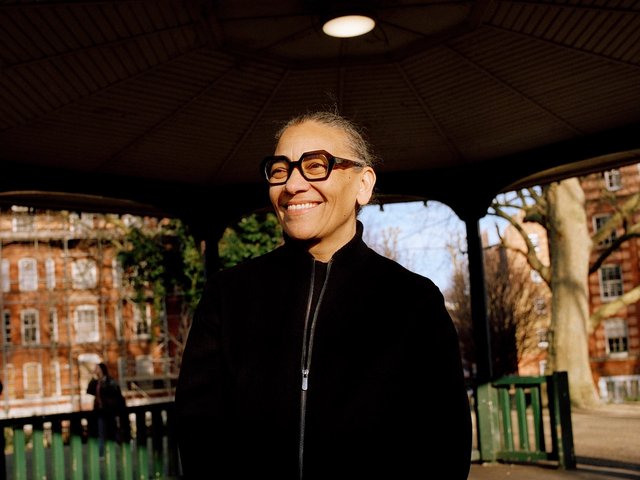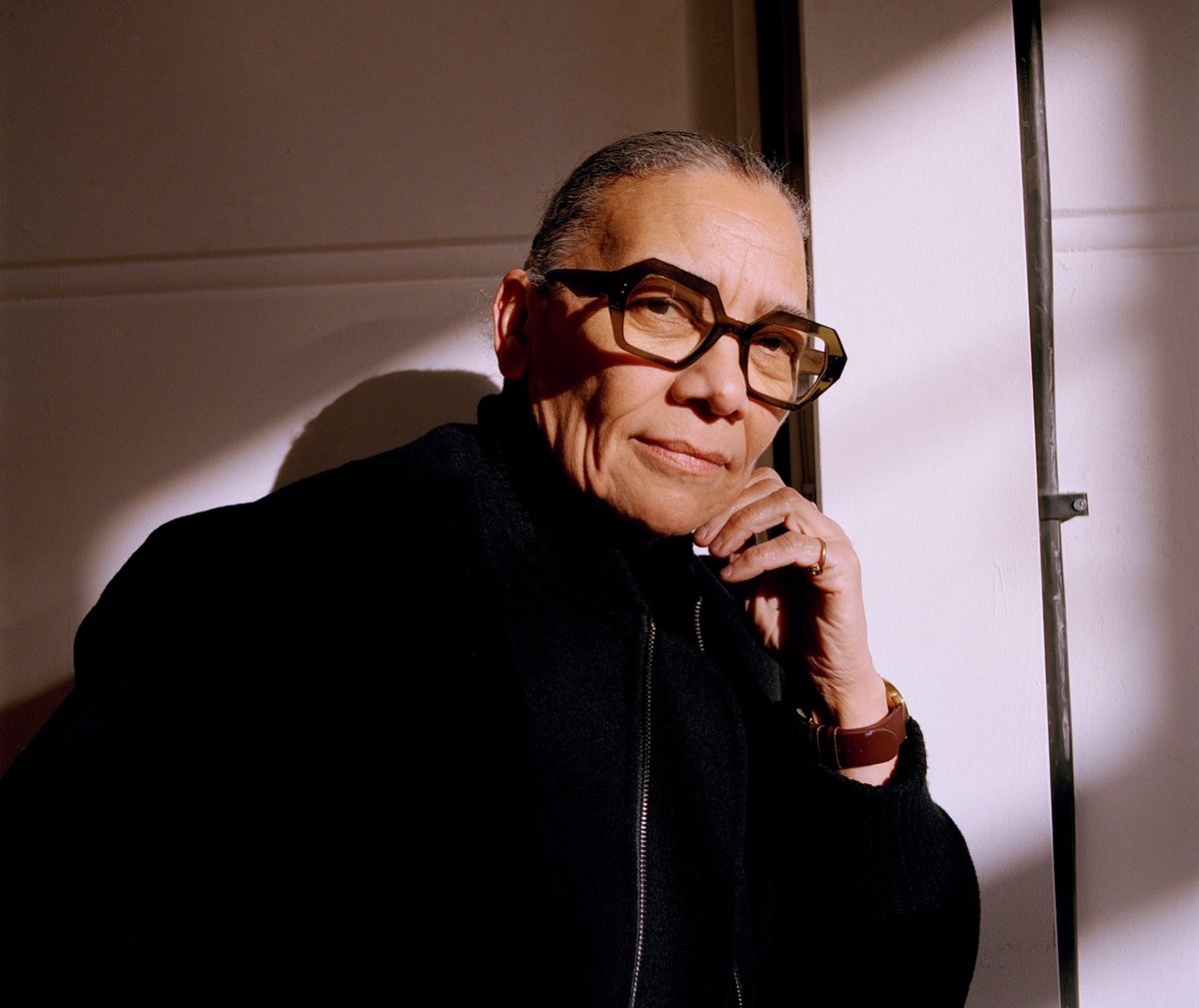
Lubaina Himid has spent more than three decades making work and curating shows devoted to uncovering marginalised histories, figures and cultural narratives. Born in Zanzibar in 1954, Himid came to live in England as a baby, and in the 1980s was one of the pioneers of the Black Arts Movement in Britain, while also developing her own distinctive paintings, prints and large-scale cutout figures arranged in intricate installations. In 2014 she was included in the 10th Gwangju Biennale and in 2017 she won the Turner Prize. She has exhibited extensively throughout the UK and internationally, including at Mudam Luxembourg, Kettle’s Yard in Cambridge and UCCA in Beijing.
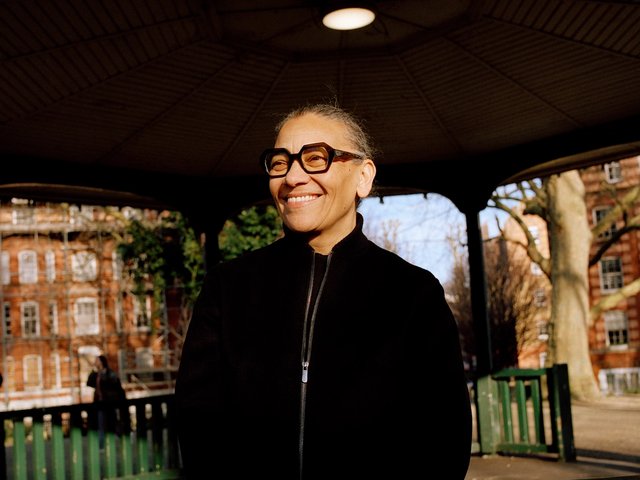
How do you feel about representing Great Britain at the Venice Biennale? Has occupying a national pavilion influenced the work on show?
Trying to take on the mantle of representing Britain feels massive. I’ve tried to approach it like a footballer would: to think of it as another game and not the World Cup, and just make the best show I can make. I’m trying to make the space even more British than it is, to create a little country that feels the same way as it does for me living here. It’s more a reflection of Britain, rather than Britishness. The everydayness of Britain is strangely pleasant, a place where everything is reasonable, calm and equal. But even though I’ve lived here for 71 years, whether I’m in the north of England or in London, there’s a sense of unease: tiny, real things that make me know that, although I’m in the right place, I’m also in the wrong place. That’s what I’m trying to recreate in the pavilion.
Your paintings often show figures engaged in forms of conversation or exchange where it is never quite clear what is taking place. Do these ambiguous encounters feature in Venice?
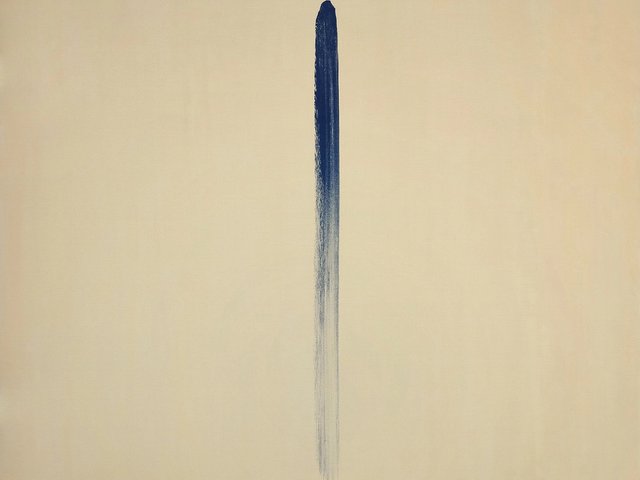
I’m still trying to paint that gap between a question and an answer. To make paintings in such a way that visitors realise they’re bringing a great deal of their own lives into the space with them. I want a whole cacophony of experience in that room, triggered by the paintings and the people in them, and also by Magda [Stawarska]’s soundscape, which adds to the uncertain atmosphere, similar to a film soundtrack.
You have described yourself as “an East African brought up by English women” and it seems a sense of otherness was with you right from the beginning, both personally and later professionally.
I often wonder what it would have been like never to have left East Africa. Who would I be? So this is an opportunity to talk about what home is, what home could be, and to try to figure out what it must be like if you have to leave the place that you thought you’d spend the rest of your life in for a place that seems welcoming, but clearly isn’t. How do you deal with the anxiety and the trauma of leaving a place against your will and arriving in a place that has all the hallmarks of safety and calm, but has an underlying loathing of the Other that has been around since Britain went to other places and people from those places came to Britain? What does it mean to be somewhere that you can’t leave, when you’ve come from somewhere that you had to leave?
In the past you have made paintings about Venice and its problematic histories: does location play a part in these works?
My shows often respond to where they are situated, and I’m hoping this is subtle in some ways, and not so subtle in others. I trained as a theatre designer and for me it’s been more like setting up an opera than an exhibition. It’s about drifting from scenario to scenario: you can perambulate around any which way you like and understand the plot differently whichever way around you go. Also, it’s you who are performing. You’ve already performed your way all the way to the Giardini, passing little squares, people leaning out of windows and fantastic buildings that look like an opera set. And then you drift in and out of these pavilions, sucking up the experience of being a player. It’s a mix: in the pavilion you’re absolutely aware it’s Venice, but you’re also hopefully aware that this is a little tiny blob of Britain in Venice that doesn’t feel like Britain actually is, but like Britain thinks it is.
What is the thinking behind the title?
I wanted to make a title that implied impossibility. Predicting History: Testing Translation sounds very neat and resolved, but actually it’s completely impossible. The title is doing the same as the paintings—they’re all trying to work out something that seems at this moment in time almost impossible to do. I always want my work to remind people of things that they already know but that they’ve maybe forgotten, that they can feel some kind of energy and agency and realise that they can play a part in shifting and changing things. I think the time has come when we need not to wait for somebody to tell us we belong in a place: after nearly 71 years of thinking about it, I feel perhaps the solution is simply to decide for ourselves.
• Giardini