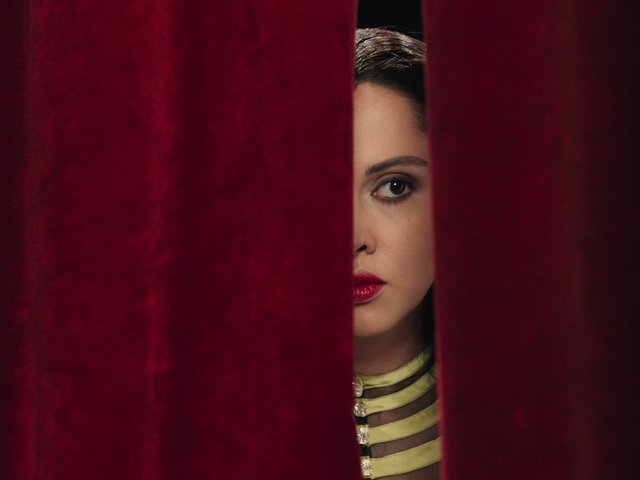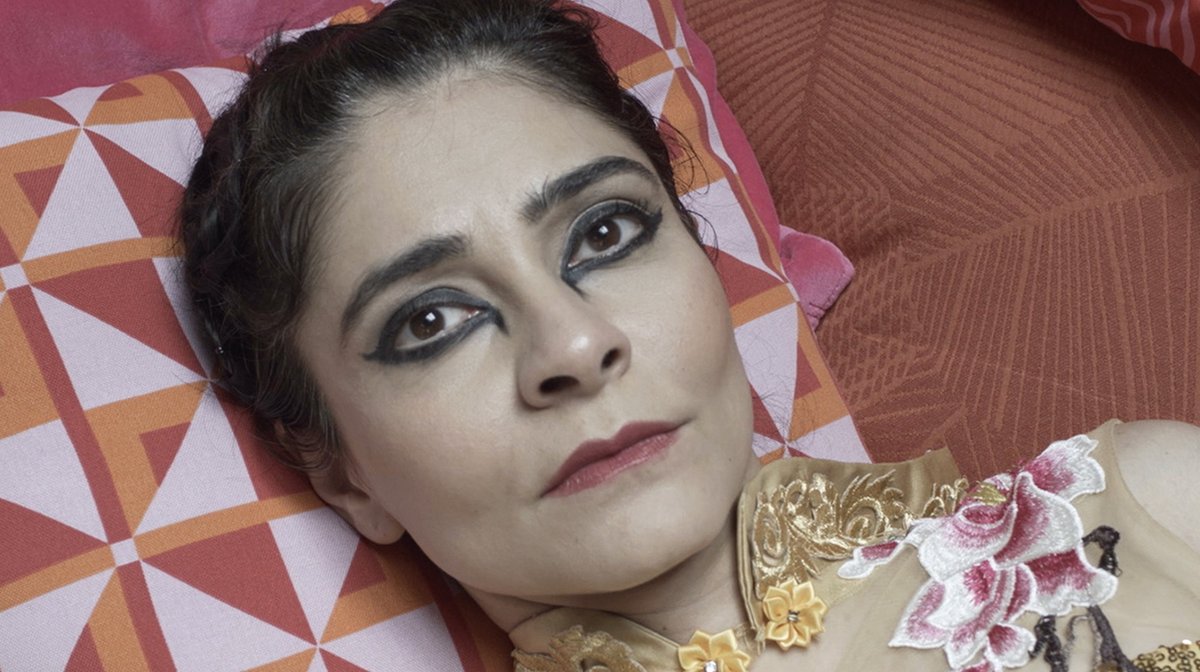
Shirin Neshat returns to Venice with a new body of work that extends her longstanding exploration of exile, fractured identity and power. Presented at the 16th-century Palazzo Marin alongside the Biennale, Do U Dare! is a film trilogy set across three distinct social landscapes in New York. At their centre is a female protagonist whose solitary public existence is portrayed in tones of restrained observation, rendered in black and white. She then steps inside—literally and metaphorically—and through the chrysalis of an interior space is transformed, her world turning to colour and her sense of isolation giving way to a superpowered ability to resist or to move people to tears.
“My work has always been about paradoxes and dualities,” says the Brooklyn-based artist, “women who are very submissive and quiet, but who can also be extremely rebellious and outspoken and defiant.” The transitions in the film mark a passage not simply between environments but between states of being, unfolding through what Neshat describes as “magic realism—going from the inner to the outer world of this character, passive in public yet very aggressive in front of the camera”.
YouTube Shooter
Do U Dare! is directly inspired by the story of Nasim Aghdam, a fellow Iranian American better known as ‘the YouTube Shooter’, though Neshat is careful to resist any straightforward biographical reading. The 38-year-old was an apparent recluse who lived with her grandmother in southern California, but who had a double life as a social media star and vegan activist. Aghdam developed a grudge against YouTube, which she accused of censorship and depriving her of an income from her videos, which racked up hundreds of thousands of views. Then, on 3 April 2018, she got into YouTube’s headquarters near San Francisco and opened fire, wounding three people before fatally turning her Smith & Wesson upon herself.
It was a major news story in the US and her social media accounts were soon scrutinised for clues, being variously described as bizarre or strangely akin to video art. “I was immediately interested in this woman who lived in two different worlds,” says Neshat. “She was this incredibly beautiful, erotic, intelligent, outspoken and really imaginative and artistic person. Yet she was so vulnerable. She was most likely suffering from mental illness. She was a total loner. I was fascinated by this idea of living in your imagination and art being a kind of escape.
“My art has been my saviour. In many ways, she replicated my own struggles—being exiled and feeling isolated both by Iranian and American cultures, but then finding this third place where you feel free and you are finally able to express yourself. So, I think I identified with her more than anything.”
Resistance and imagination
The resulting work, Neshat stresses, is interpretive rather than literal, though she says she would like to make a documentary about Aghdam in the future. Instead, the trilogy dwells on the unstable boundary between self and performance, particularly in the context of digital culture. The protagonist appears withdrawn and marginal in public, yet becomes powerful in front of the camera, seeming to live her best self within a mediated space of resistance and imagination.
“This woman was able to protest only when she was not really herself,” Neshat says. “She was penalised by her own government, and then she was also a victim of society in America. Meanwhile, she was this incredibly vulnerable woman who just wanted to live and be free but was unable to find a way, and her art became the only place, and finally that was taken away from her, and then dismantled.”
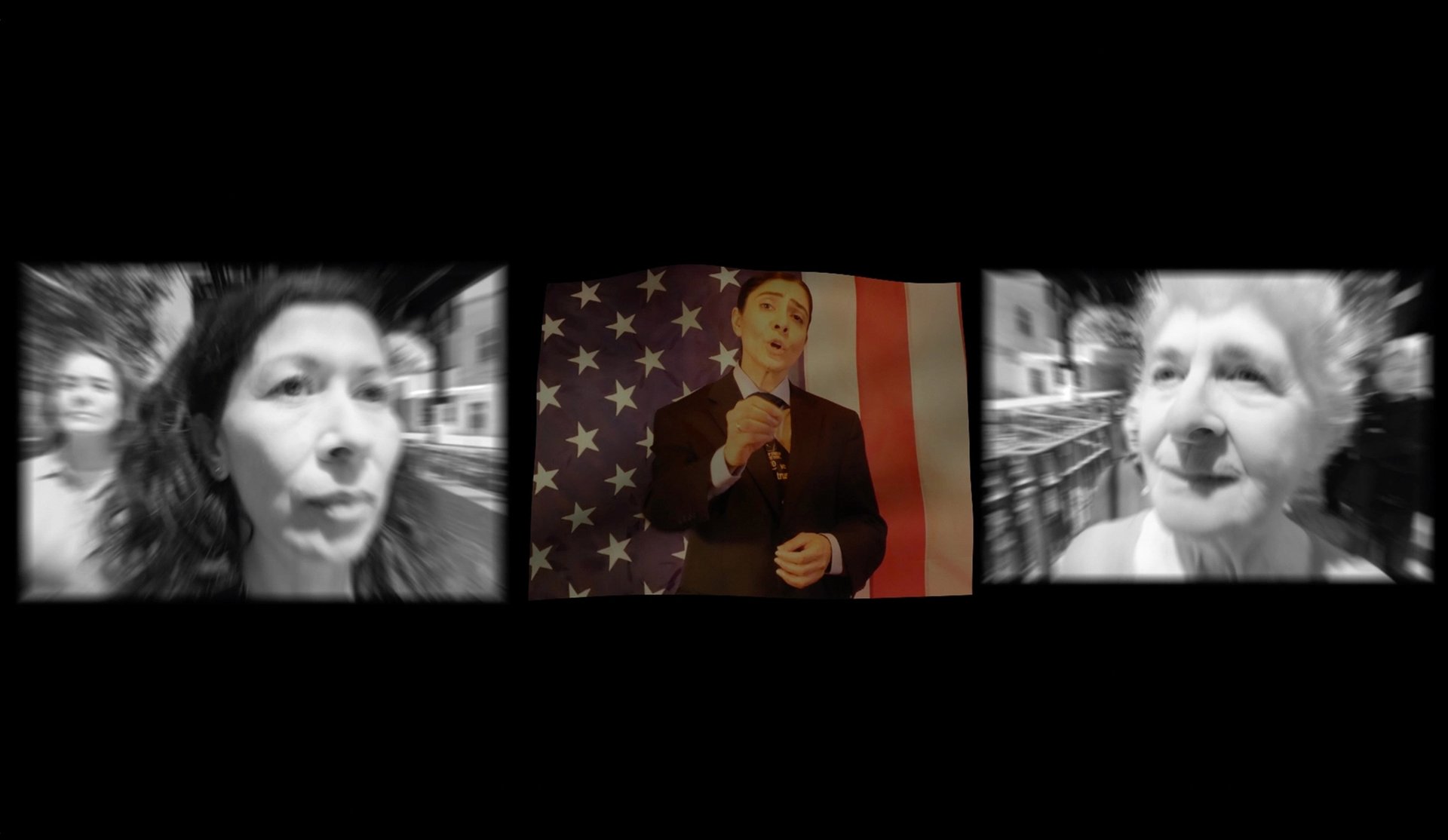
Stills from Neshat’s film trilogy Do U Dare!
Courtesy of the artist, Gladstone and Lia Rumma Gallery, Milan/Naples
Each film will be shown in a different room in the Palazzo Marin, the scenes from New York contrasting with the ornate 18th-century frescos of the villa in the heart of Venice. It was across the island from here, in the Arsenale, that Neshat’s two-screen film installation, Turbulent, announced her arrival as a major international artist, winning the Golden Lion at the 1999 Biennale. A decade later, she got her second major break when her feature film, Women Without Men, won the Silver Lion (Best Director) at the Venice Film Festival.
Neshat’s show is organised by Banca Ifis and the Associazione Genesi, set up in 2020 to stage exhibitions along themes related to human rights, and presented by Gladstone Gallery and Lia Rumma Gallery. “My work is never, ever a direct protest,” says Neshat, “but there’s always a political motivation in terms of the issues that it surrenders. I have clearly been a victim of the Iranian government, the Islamic Republic, living in exile, banned, separated from family, and so was Nasim. But for the past many years, my lens has turned toward America, and I think that in her case also, she realised that there’s this incredible parallel between an authoritarian [element in] American culture and the Iranian government.”
• Shirin Neshat: Do U Dare!, Palazzo Marin, 8 May-6 September