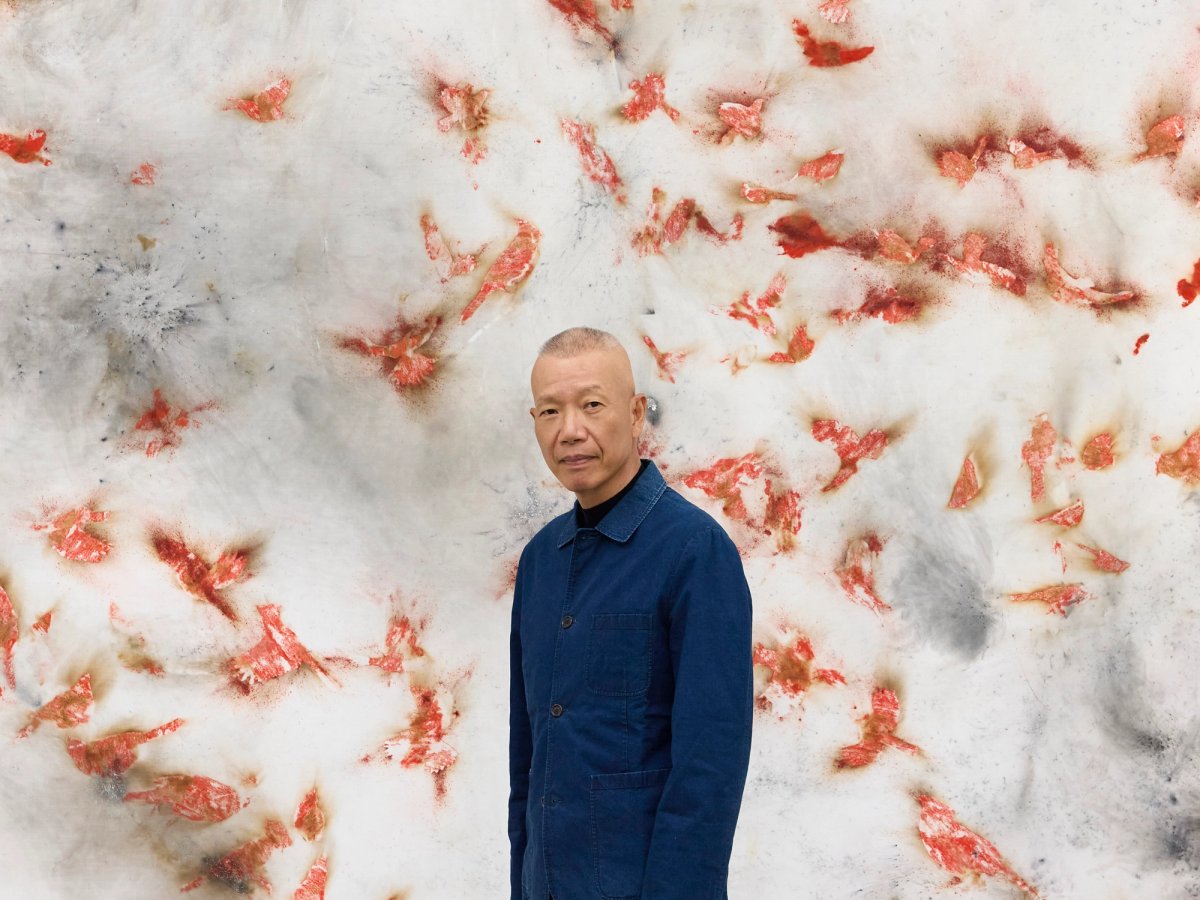
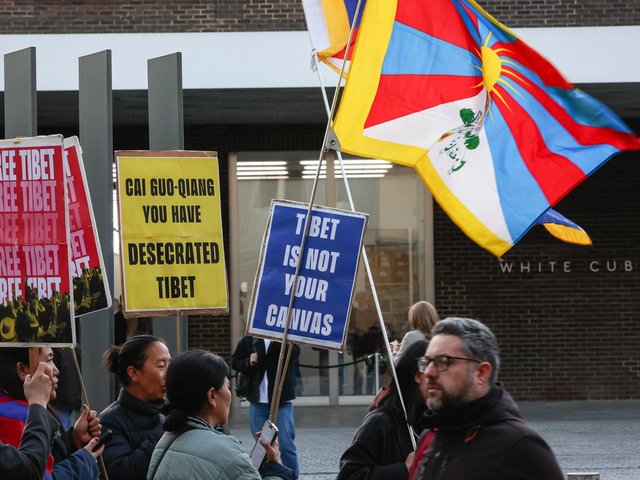
White Cube now represents Cai Guo-Qiang, making the British powerhouse the first gallery to represent the artist. The Chinese-born, New York-based painter is widely recognised for his gunpowder paintings. He had a solo show at the gallery’s Bermondsey space last autumn, Gunpowder and Abstraction 2015-2025, which was his first presentation in London since his large-scale project at Tate Modern in 2003.
Cai’s new arrangement with White Cube coincides with the gallery’s solo presentation of the artist’s ongoing gunpowder painting series with birds, which he started in 2021, at Tefaf New York (14-19 May). “Over the past three decades, Cai has consistently redefined what art can be,” Capucine Perrot, the gallery’s director of artist and museum liaisons, tells The Art Newspaper. She adds that Cai has been on the gallery’s radar since its team visited his studio in Beijing two decades ago.
For Cai, the decision to team up with White Cube felt like a “natural progression” and came from a desire to show his work in a commercial gallery. “My friends often reminded me that I should let these paintings be seen in a gallery setting,” he says.
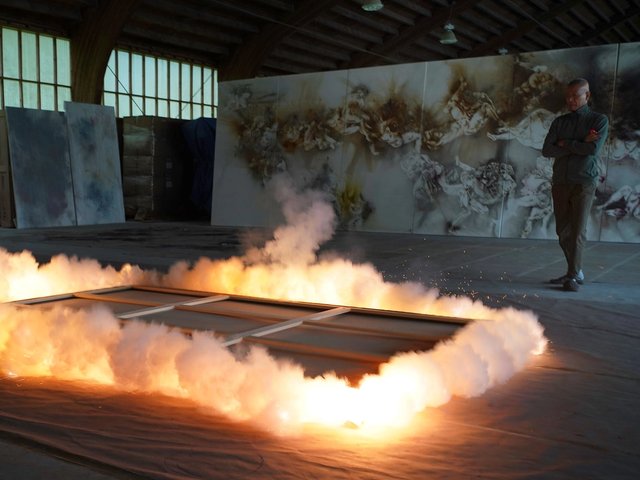
Cai first experimented with gunpowder in 1984 at his Quanzhou studio. While living in Japan, he expanded his relationship with the material to outdoor explosion performances, which included the controlled firework blast on London’s Millennium Bridge for his Tate commission and special displays for the opening and closing ceremonies of the 2008 Summer Olympics in Beijing.
For its Tefaf presentation, White Cube will show a selection of Cai’s splashy avian paintings, which are heavy on azure tones, as well as studies for paintings he showed at the Gallerie degli Uffizi in 2018 and others created for a 2020 project at the Palace Museum in Beijing. Cai says his interest in blue, after three decades of painting primarily in charred black, came from a search for “a spiritual colour”. But, he says, the material’s rapid transformation in tone presents formal and logistical challenges. The subject of birds, meanwhile, was inspired by the current social landscape dominated by “chaos, contradiction and conflict”; the works’ imagery of flocks “carries with it a certain unease and turbulence of our time”, Cai says.