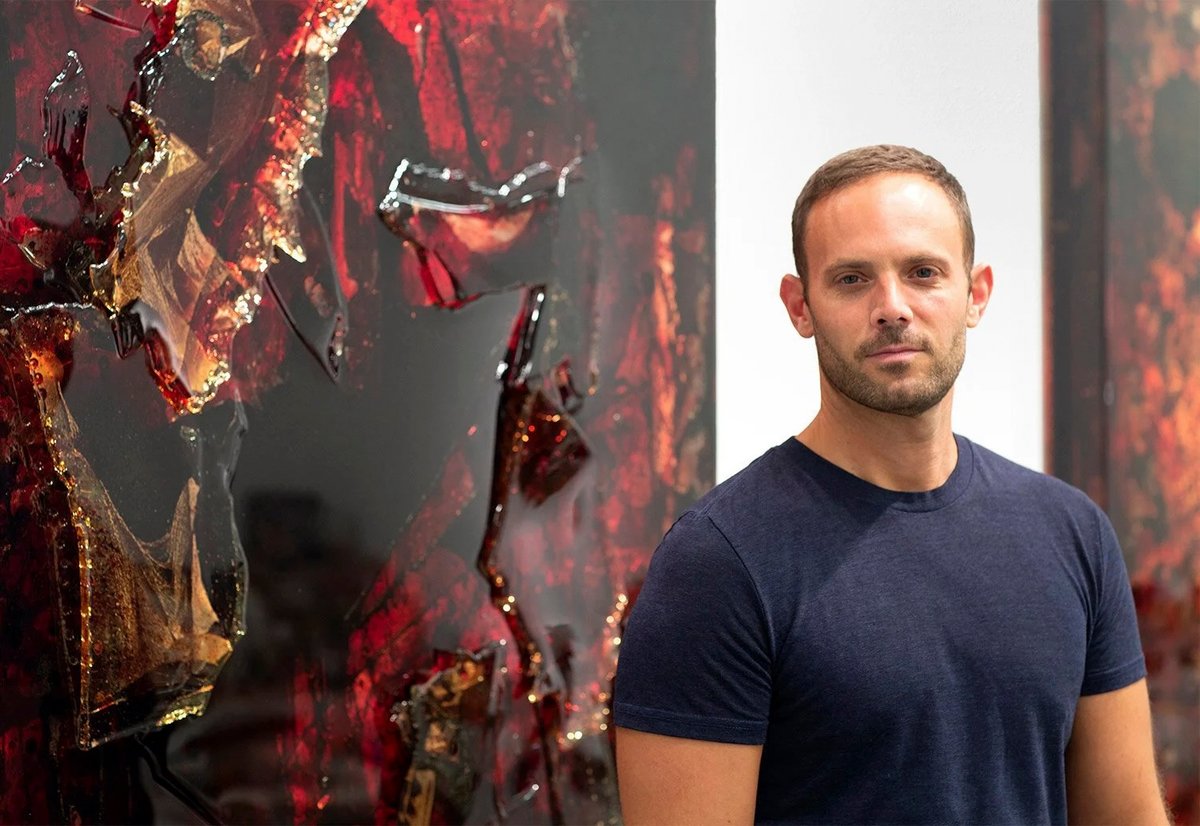
Although Jordan Eagles has been creating works using donated blood and medical waste since the 1990s, his interests counteract the shock-baiting machismo one might expect from that description. Eagles has long centred blood’s life-giving properties, spiritual dimension and symbolism of US health policies that discriminate against LGBTQ+ people.
His practice flows in a new direction in Bases Loaded, a solo exhibition at Brooklyn’s Pioneer Works. There, Eagles examines both his personal history and the polarisation of American culture through the prism of his lifelong fandom of the New York Mets baseball team.
Three bodies of work emerged from his exploration: riffs on large-scale reproductions of New York Post covers about the team; cast-resin sculptures in the shape of home plate loaded with blood, family artefacts and clinical scraps; and T-shirts given to blood donors at the Mets ballpark that Eagles cropped, splashed with blood from HIV-positive gay men and arranged by colour into orange and grey factions. The results infuse stadium-sized themes with a new intimacy.
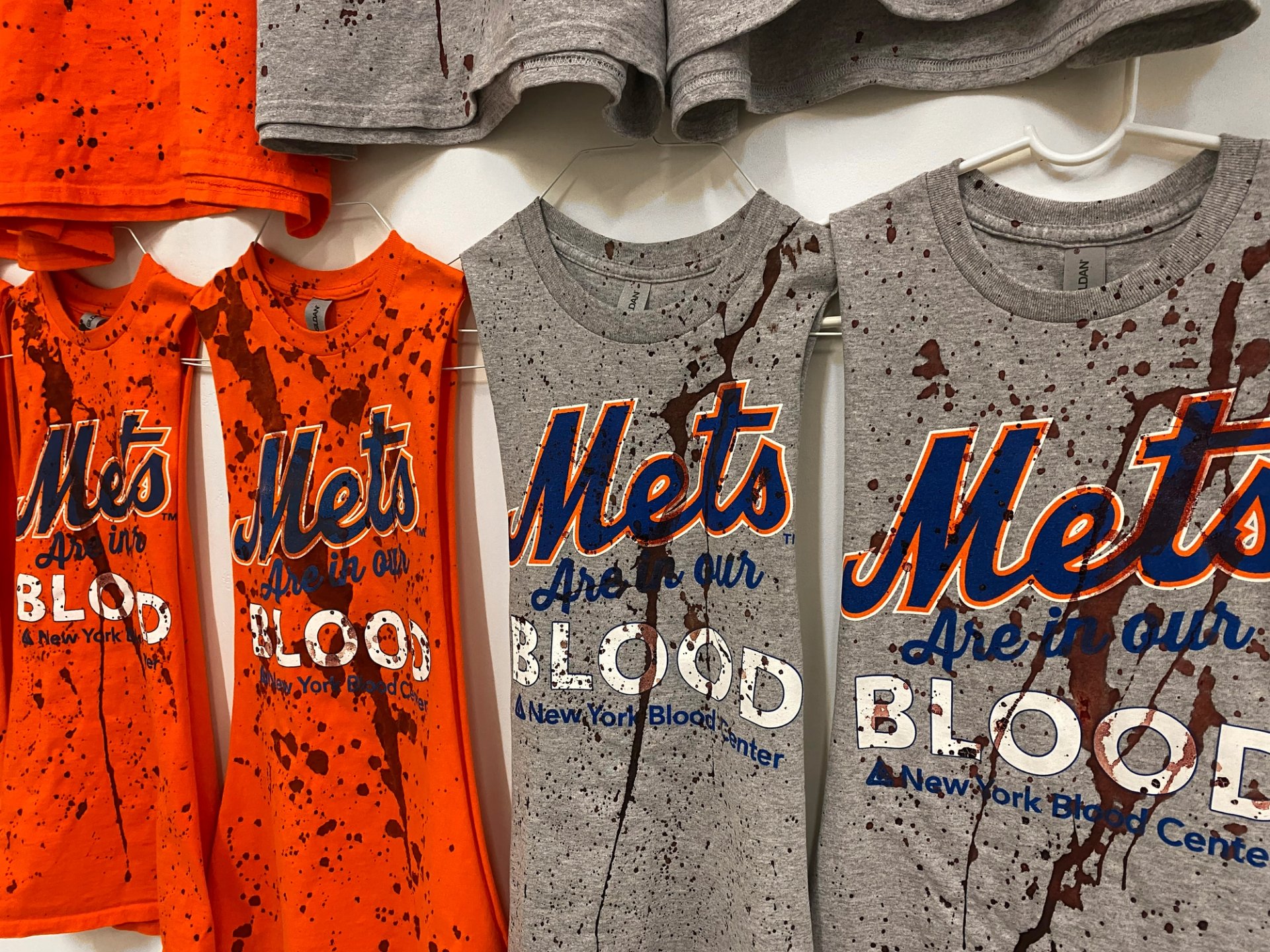
T-shirts given to blood donors were the impetus for Eagles’s latest show Courtesy Jordan Eagles Studio
The Art Newspaper: What was the starting point for this show?
Jordan Eagles: I was biking in summer 2023, and I saw someone in the opposite bike lane wearing a shirt that said: “The Mets are in our blood.” I was like: “Oh my God, what is that?” So I turned my bike around, chased this person down and asked where he got the shirt. He was like: “They were giving them out at Citi Field when I gave blood.”
I went on eBay that night and bought a shirt, innocently thinking I would cut it up into a studio workshirt. But I ultimately threw it in my closet and forgot about it until opening day of the 2024 season. The Mets got rained out, so their first game ended up being on Good Friday, when Jesus was crucified. Previous projects I’ve done revolved around Salvator Mundi and Jesus as the world’s greatest blood donor. I realised this was meant to be an artwork. I got chills, ran to the studio and marked that first shirt with blood.
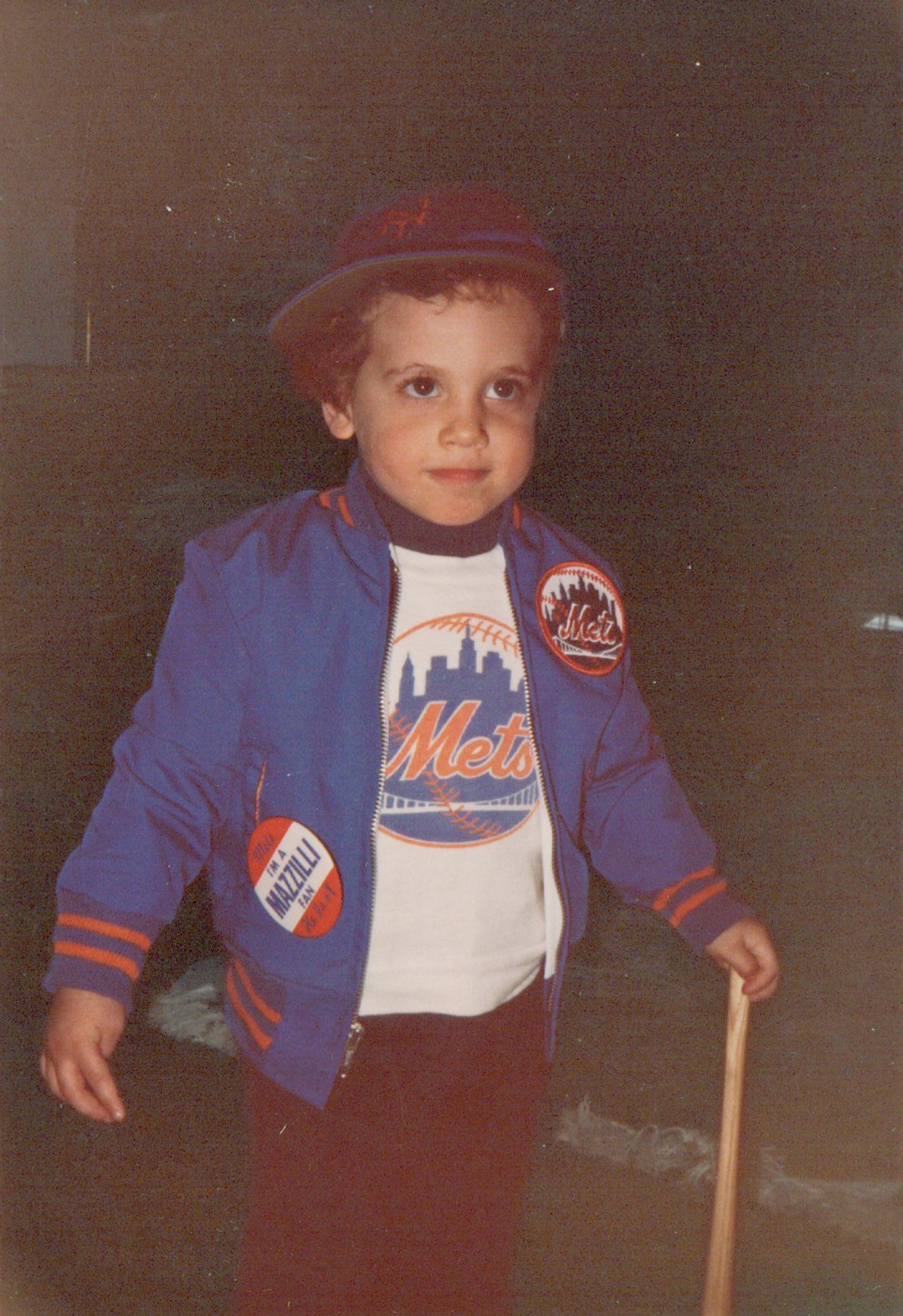
An image of a young Eagles highlights how he and his father bonded over their passion for the Mets Courtesy Jordan Eagles Studio
What is the significance of the blood on these shirts coming from HIV-positive gay men?
I was so mesmerised by this shirt initially that it didn’t occur to me that I couldn’t have earned it because of biased blood-donation policy. I’m on Prep [pre-exposure prophylaxis], so I can’t donate blood without a three-month deferral. How could I feel so connected to the Mets, but I’m not even allowed to participate in this community? I should never have even considered wearing this shirt.
The US’s blood-donation policies have been a long-running theme in your work. What is different this time?
I’m moving from that jumping-off point into larger themes that we’re experiencing as a country, about belonging, identity and the rhetoric related to them. The two versions of this shirt struck me as a metaphor for what it means to be part of a team—especially in America, where politics is treated like sport. And then I thought about rhetoric like “immigrants are ruining the blood of the nation”. Blood can either be a connective tissue or something used for division.
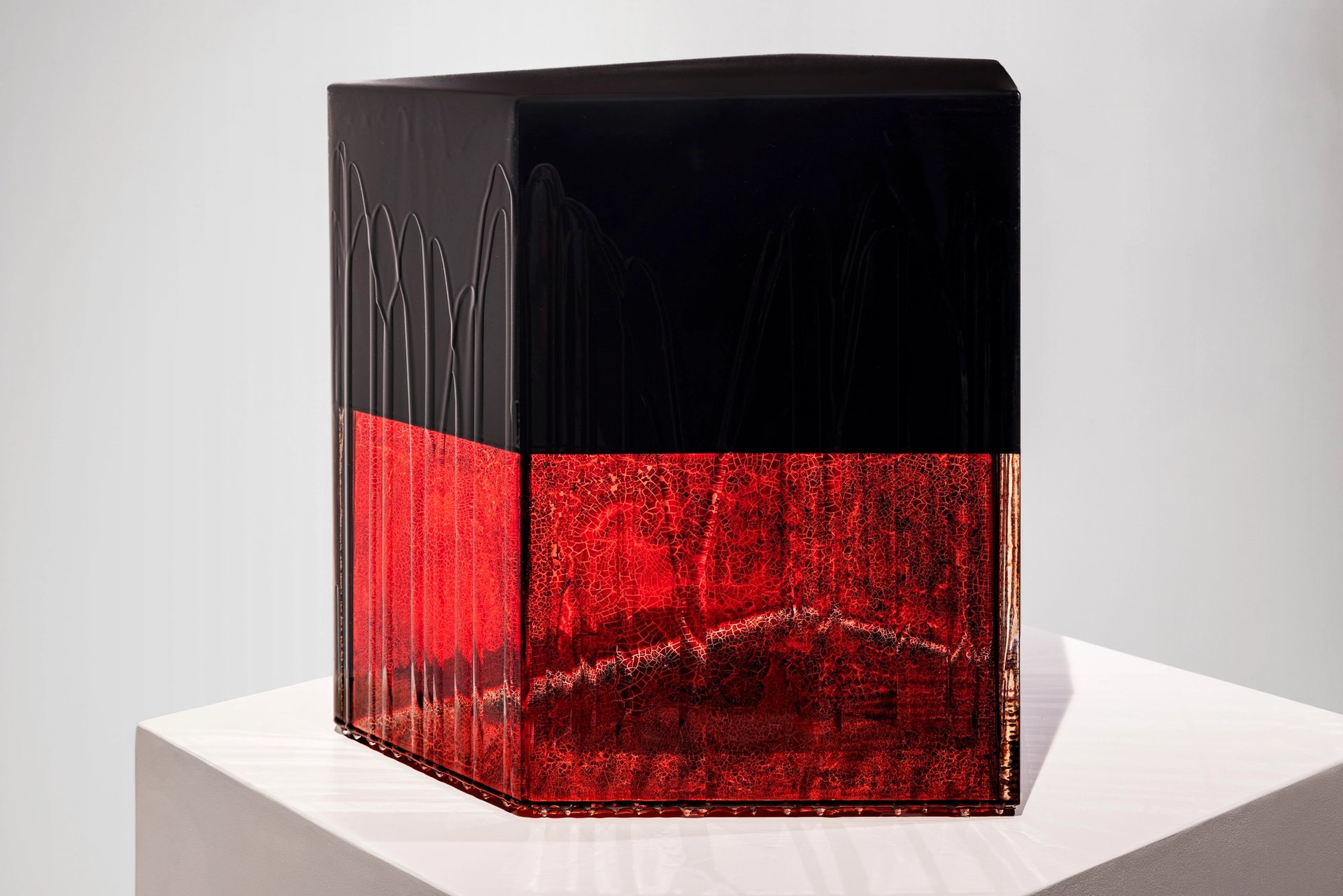
A cast-resin sculpture of home plate is filled with blood Courtesy Jordan Eagles Studio
One work in this show involves a reprint of a front-page story about Mike Piazza, the Mets star who held a press conference in 2002 to quash rumours about his sexuality. How does that fit in?
I found this New York Post cover with him and the headline “I’m not gay”. It doesn’t sound like Piazza was homophobic in any way based on my research. What struck me is how the headline makes it seem that being gay is the worst thing in the world. It’s so sensationalised that someone would have to go through the trouble to reaffirm their heterosexuality. So I marked the “not” in blood.
Your sculpture The Goat (2026) submerges several family photos in blood inside a cast of home plate. Can you unpack it a bit?
A few years ago my mother told me that, throughout my father’s various medical situations, she’d been saving leftover tubes of his blood so that I could make an artwork with them. When I was looking for this old photo of me with a Mets player named Lee Mazzilli, I found all these beautiful childhood photographs of me and my father where I’m wearing little Mets outfits and he’s holding or hugging me. It immediately hit me that this was the artwork to make with his blood.
I had my blood drawn and merged it with his in this sculpture. I scanned all the photos, printed them on transparency and layered them inside so the view becomes a bit dreamy. All these themes layer on top of each other: “the Mets are in our blood”, blood-donation eligibility policy, home plate glowing red like a blood bag, my family ties being literally in my blood.
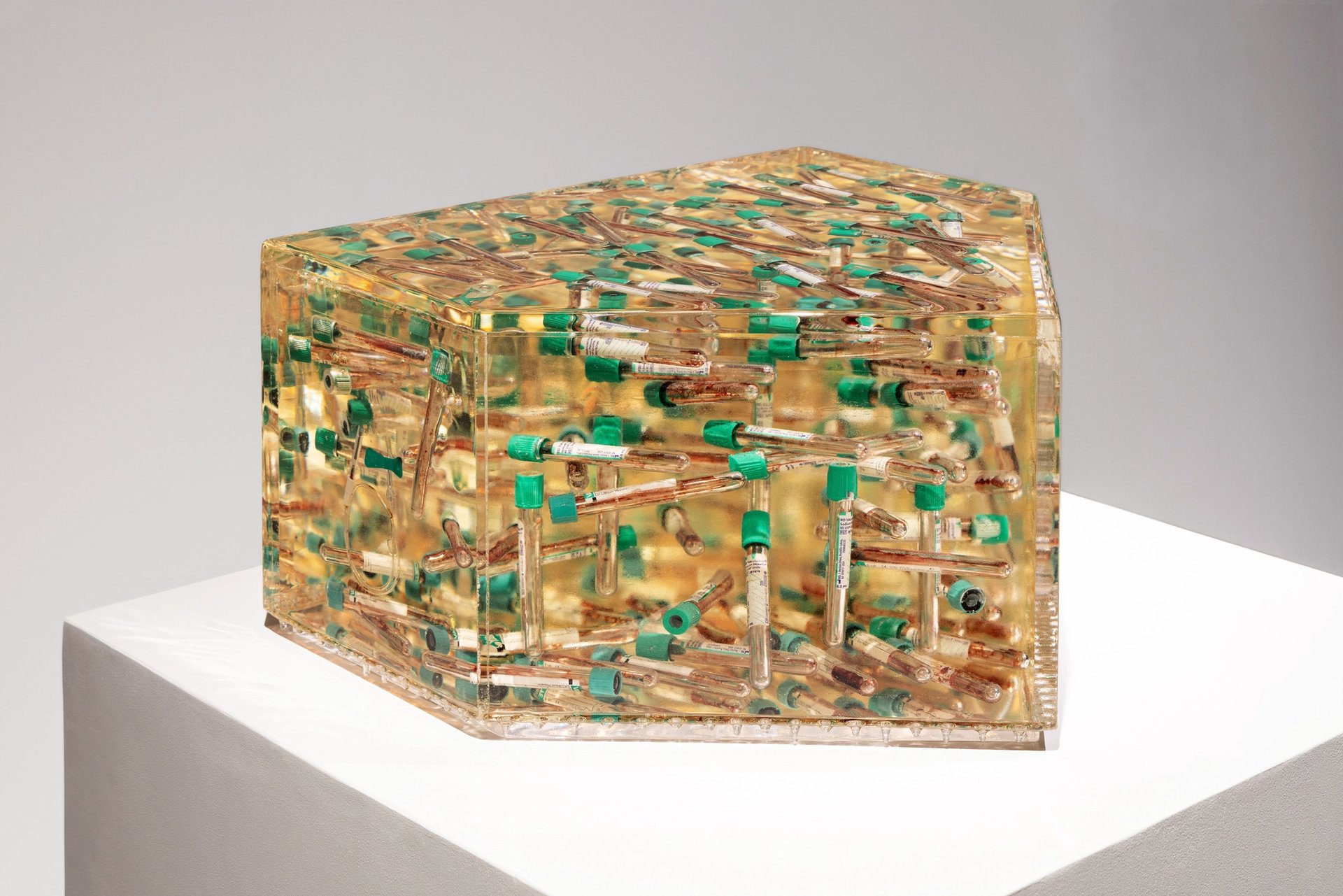
Eagles embedded numerous phials of blood in one work Courtesy Jordan Eagles Studio
Compared to your earlier work, does it feel more vulnerable to put your own life front and centre like this?
It definitely hits differently. I’m moving towards what feels like the most genuine expression of what I’m trying to communicate. But the project didn’t start because it was going to be art. It started because I couldn’t even be part of a team that I thought I was a part of.
• Jordan Eagles: Bases Loaded, Pioneer Works, Brooklyn, until 9 August