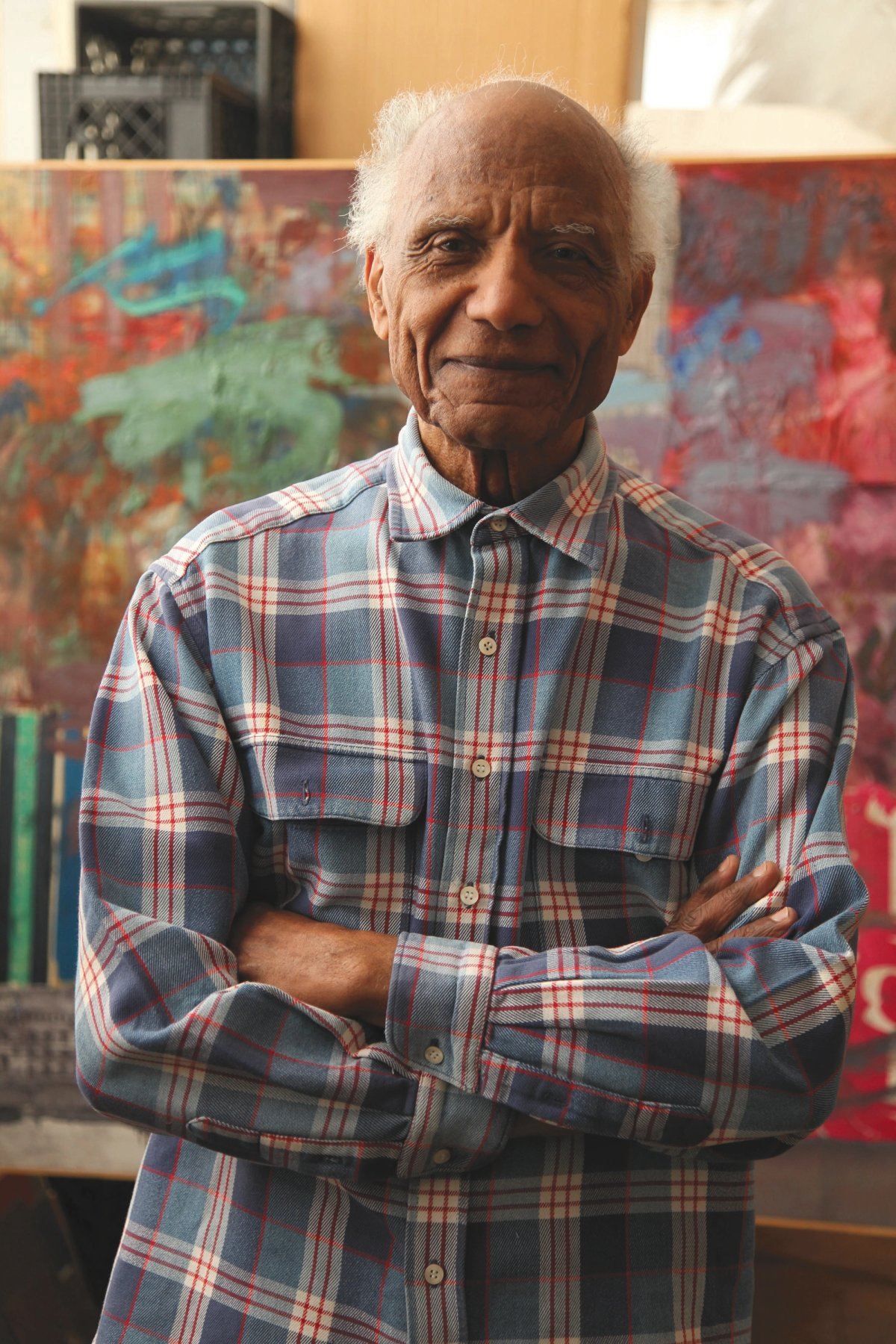
Mohammad Omer Khalil is lauded by artist communities around the world for his dedication to collaboration and pedagogy. But the 90-year-old Sudanese artist and master printmaker remains little known in the US, where he has lived and worked since 1967. Born in Khartoum, Khalil studied painting and subsequently taught at the city’s School of Fine and Applied Arts, before learning fresco in Florence and moving to New York. There, he found community at the EFA Robert Blackburn Printmaking Workshop (EFA RBPMW), which inaugurated his foray into printmaking and shaped the trajectory of his career.
In addition to teaching at Pratt Institute, the New School, Columbia University and New York University, Khalil started his own printmaking studio in 1970, producing editions with artists such as Emma Amos, Romare Bearden, Norman Lewis, Louise Nevelson and Mavis Pusey. In 1978, Robert Blackburn invited Khalil to participate in the inaugural edition of the Asilah Cultural Moussem, an annual festival and artist residency on the Moroccan coast. Khalil has since returned to Asilah and the Moussem each year, basking in the North African light as he walks the narrow streets of the town’s ancient ruins.
Sometimes I want it clear, sometimes I want it fuzzy—so that it goes with the work and doesn’t overpower
A series of etchings capturing the light and colour of Asilah gives his current multi-city exhibition its name. Common Ground brings together six decades of Khalil’s prints and paintings, alongside ephemera from his travels, oral histories and books, music and movies that have informed his work. The exhibition spans five institutions: the Blackburn Study Center at EFA RBPMW in Manhattan; Maqām Studio and Jay Seven Inc in Brooklyn; Twelve Gates Arts in Philadelphia; and the Arab American National Museum in Dearborn, Michigan. Related programming in New York takes place at the Africa Center, Anthology Film Archives, Pratt Institute and the Queens Museum.
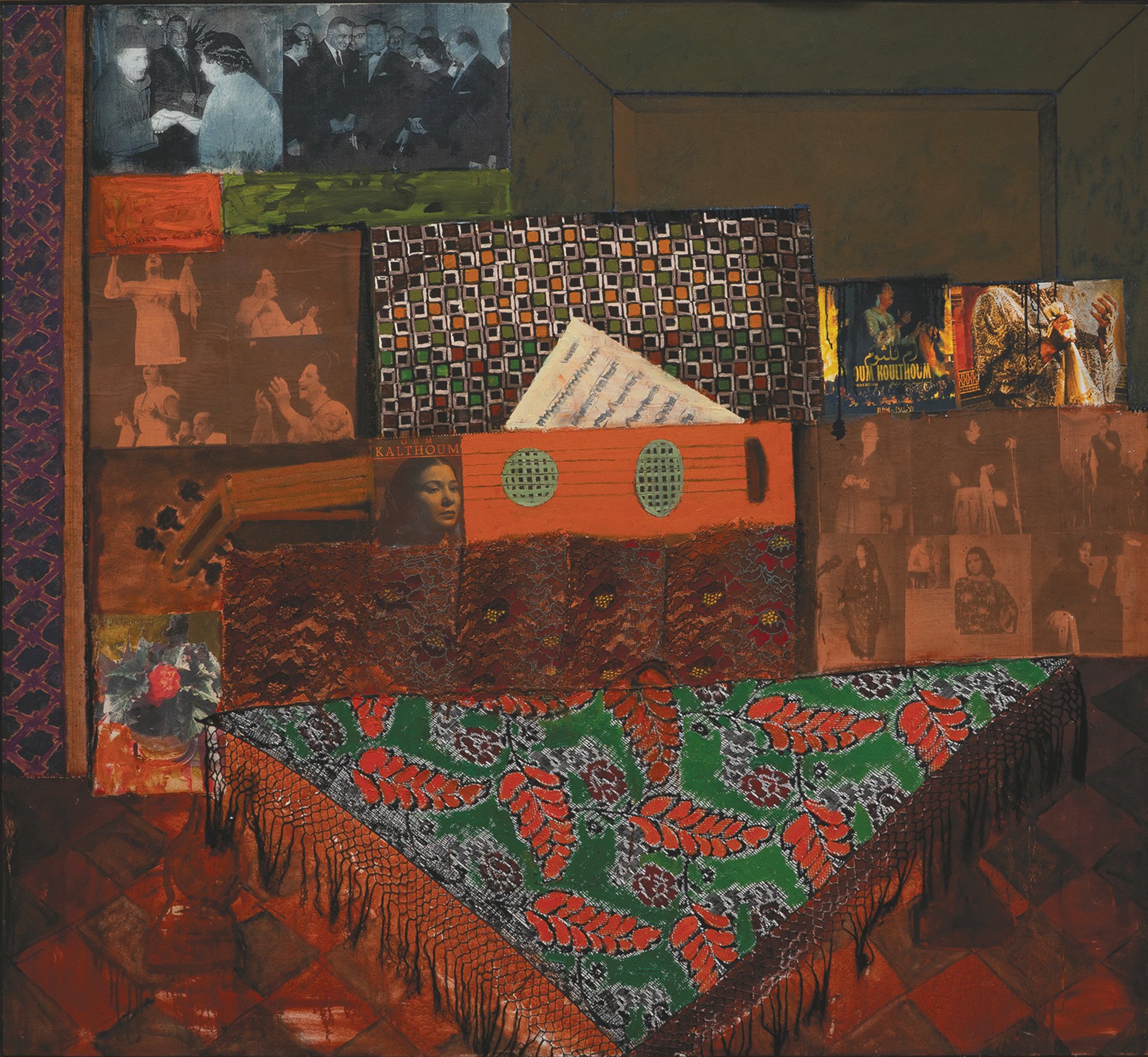
Found materials, including photographs and packing materials, feature heavily in Khalil’s work, such as Homage to Umm Kalthoum (2013); by smudging or thowing acid on images he can shift the focus, he says Photo by Samoel González; courtesy of Mohammad Omer Khalil
The Art Newspaper: What prompted you to begin including found photographs, packing materials, stamps and Arabic and English lettering in your work?
Mohammad Omer Khalil: I’ve tried different styles and ways of making a print since the 1970s. In the 80s, I first used a photograph of Robert Kennedy because he was shot. I found a small, rejected plate from this guy that used to make photographs for stamps. This guy lost his space, because the rent became impossible for him to operate, and he told me whatever I wanted from the plates that were rejected I could take. So I have all these stamp plates in my studio that I use.
How do you incorporate the stamps and photos into your otherwise abstract work?
Sometimes I want it clear, sometimes I want it fuzzy—so that it goes with the work and doesn’t overpower. Mechanicality is very bad, because then you have a photograph that is so powerful that people look at the photograph rather than the work. I would smudge it a little bit or throw acid over it, destroy it a little so there’s some ambiguity in the look.
I never feel like a stranger. Those who know me, love me—that’s enough
What drew you to split your time between Asilah and New York?
I was invited to Asilah in 1978 for the inaugural edition of Asilah Cultural Moussem. It was the most exciting time that we spent in Asilah. I call it paradise, because people were nice, everything was beautiful, working incredibly well. Gradually, things started moving away from that paradise, because money is a very bad thing for people to have if they don’t know how to use it.
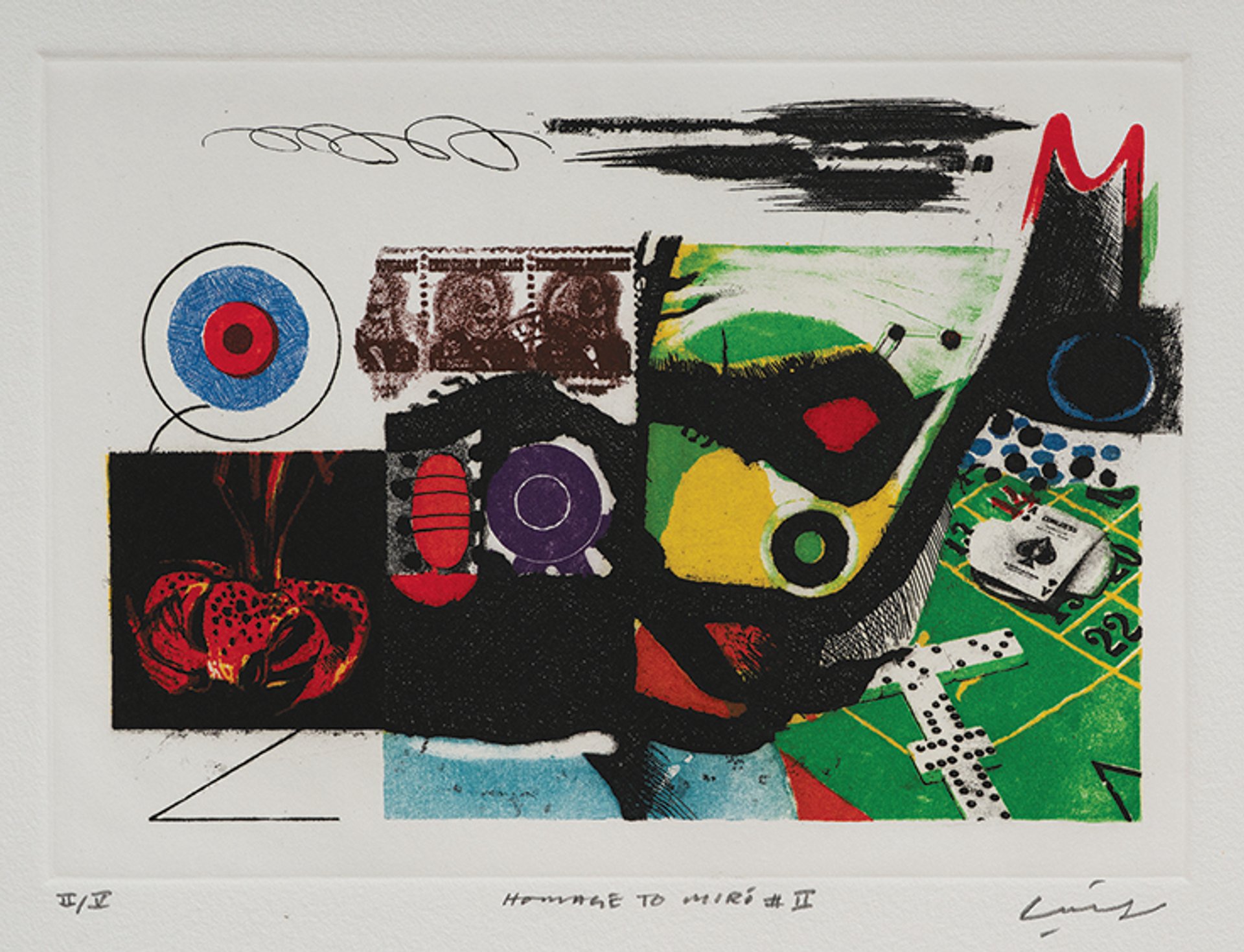
Homage to Miro II (around 1985–95) incorporates the stamps that are a frequent motif in Khalil’s work Photo by Samoel González; Courtesy of Mohammad Omer Khalil
How has Asilah changed since then?
Around Asilah, there used to be only one road and the rest was farms. Now the farms have disappeared, and Asilah has spread out and become a town. People now come to buy two or three homes, and the medina has lost its character. That’s the sad part. You used to walk the streets and smell the couscous, the bread, the tagine. And now you smell garbage.
To commemorate my experience in Asilah, I made about 23 prints. But the title was a problem. I was thinking for days. Then I thought, why not Common Ground? And that was it. Common ground for me is everywhere I step. I never feel like a stranger. Those who know me, love me—that’s enough.
• Mohammad Omer Khalil: Common Ground, until 31 May, Blackburn Study Center at EFA Robert Blackburn Printmaking Workshop, New York