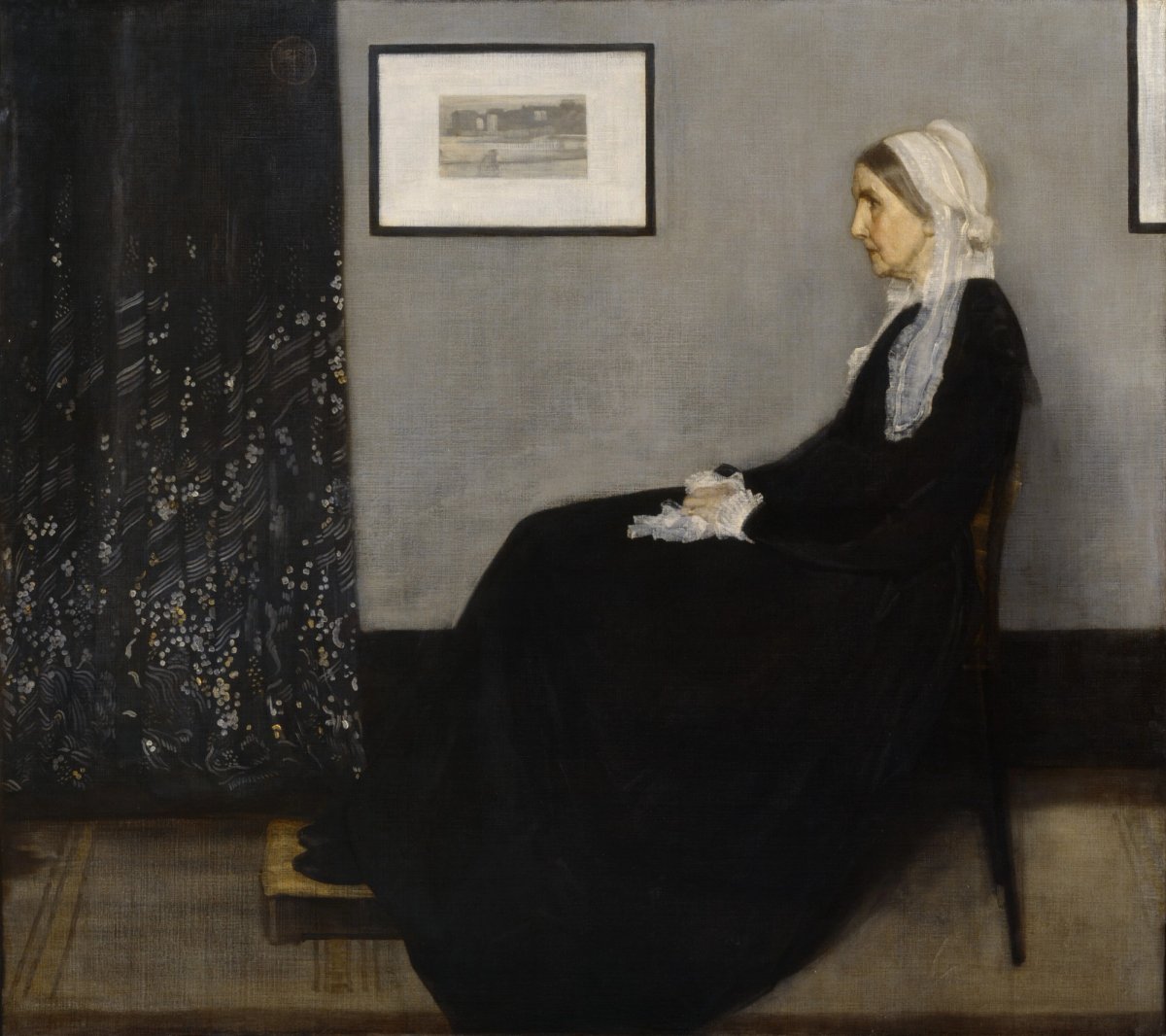

James McNeill Whistler’s portrait of his mother, now his best-known painting, will be a highlight of Tate Britain’s exhibition on the artist. In December 1889 Vincent van Gogh wrote to his sister Wil that this striking picture of old age reminded him of their own mother: “When I think of Mother she too appears like that to me.”
Tate’s show, entitled James McNeill Whistler, opens on 21 May and runs to 27 September. It then goes on to the Van Gogh Museum in Amsterdam (16 October-10 January 2027), with the added subtitle Dandy and Disrupter.
In 1871, after a model failed to turn up, the American-born artist painted his 67-year-old mother Anna, who was living with him in Chelsea in London. Whistler entitled the resulting picture Arrangement in Grey and Black no. 1, although it is now usually referred to as simply Portrait of the Painter's Mother.
The painting belongs to the Musée d’Orsay in Paris, which is lending it to the London and Amsterdam exhibitions. It is still in its original frame, designed by Whistler himself, so those who only know the portrait from reproductions will have the chance to see it as the artist intended.
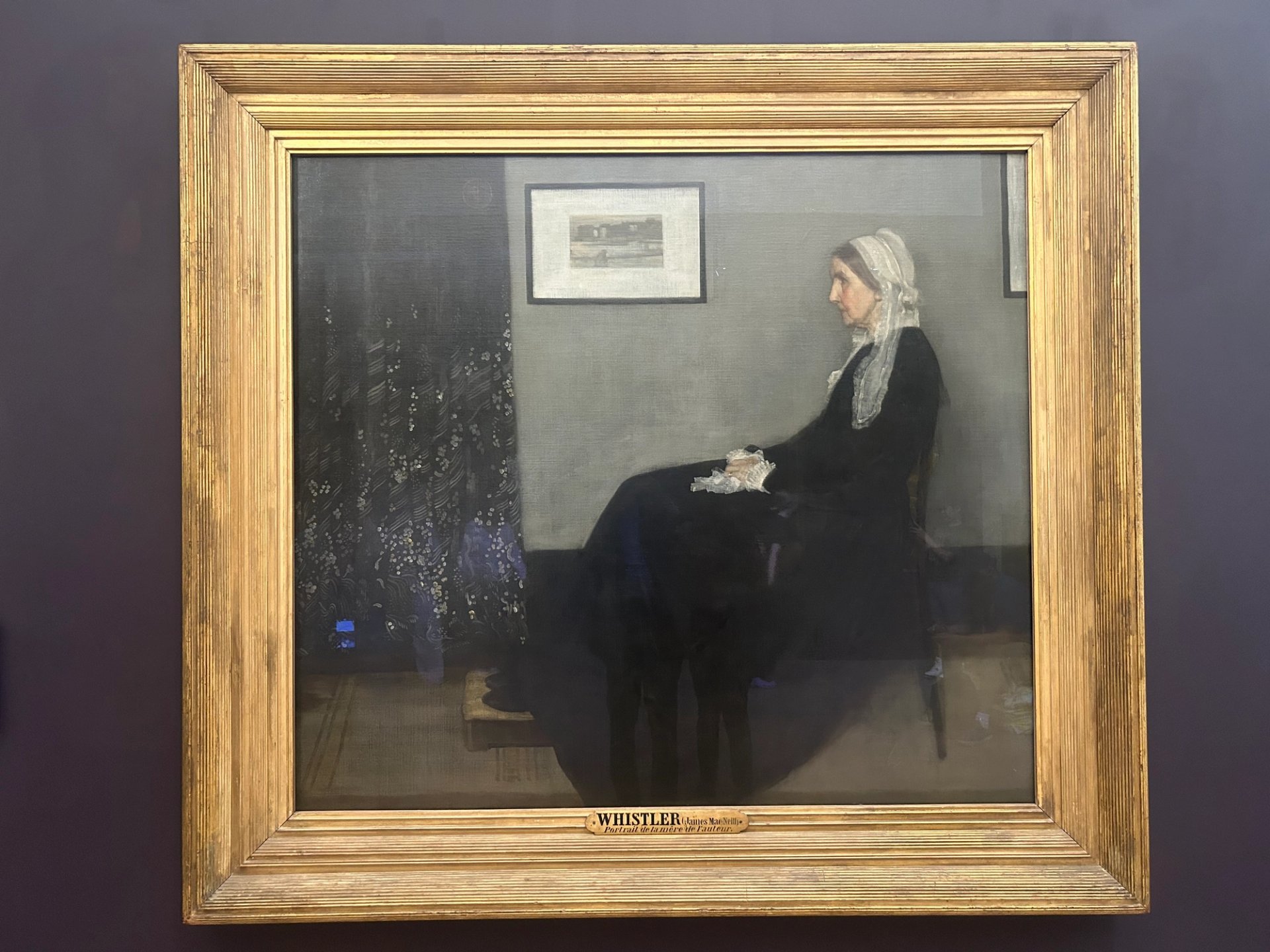
Whistler’s Arrangement in Grey and Black no. 1, Portrait of the Painter's Mother in its 1891 frame designed by the artist
The Art Newspaper (photograph)
Portrait of the Painter's Mother has now come to represent an image of motherhood and the dignity of age. In their 2018 biography of Anna Whistler, authors Daniel Sutherland and Georgia Toutziari describe it as “the first modern portrait, to be both treated as an icon and abused by the iconoclasts”.
It is uncertain whether Van Gogh knew the original painting, although it had been briefly displayed in London while he worked there as a trainee art dealer at a branch of the Goupil gallery. Whistler’s show had opened at London’s Flemish Gallery on 7 June 1874, and Van Gogh was in town until 25 June, when he went home to the Netherlands. It is likely that he saw the exhibition, but questionable whether he would have remembered the picture 15 years later.
However, Portrait of the Painter's Mother had been published as a print on five occasions by 1889, and he likely would have seen at least one of them. As the picture is largely in tones of grey, a printed black-and-white image would have given a reasonable idea of the stark composition.
Missing story
Curiously, the Tate and Van Gogh Museum exhibition catalogues do not mention the fascinating links between Whistler and the Goupil gallery (by then renamed Boussod & Valadon) where Vincent’s brother Theo worked in Paris.
In November 1887, Boussod & Valadon’s London branch released a set of six earlier Whistler lithographs, including Nocturne: The River at Battersea. Theo, who was the manager of their Paris gallery, probably received a set. Vincent, who had long been an admirer of Whistler, was then sharing an apartment in Paris with Theo, so it is likely that he saw the 1887 lithographs.
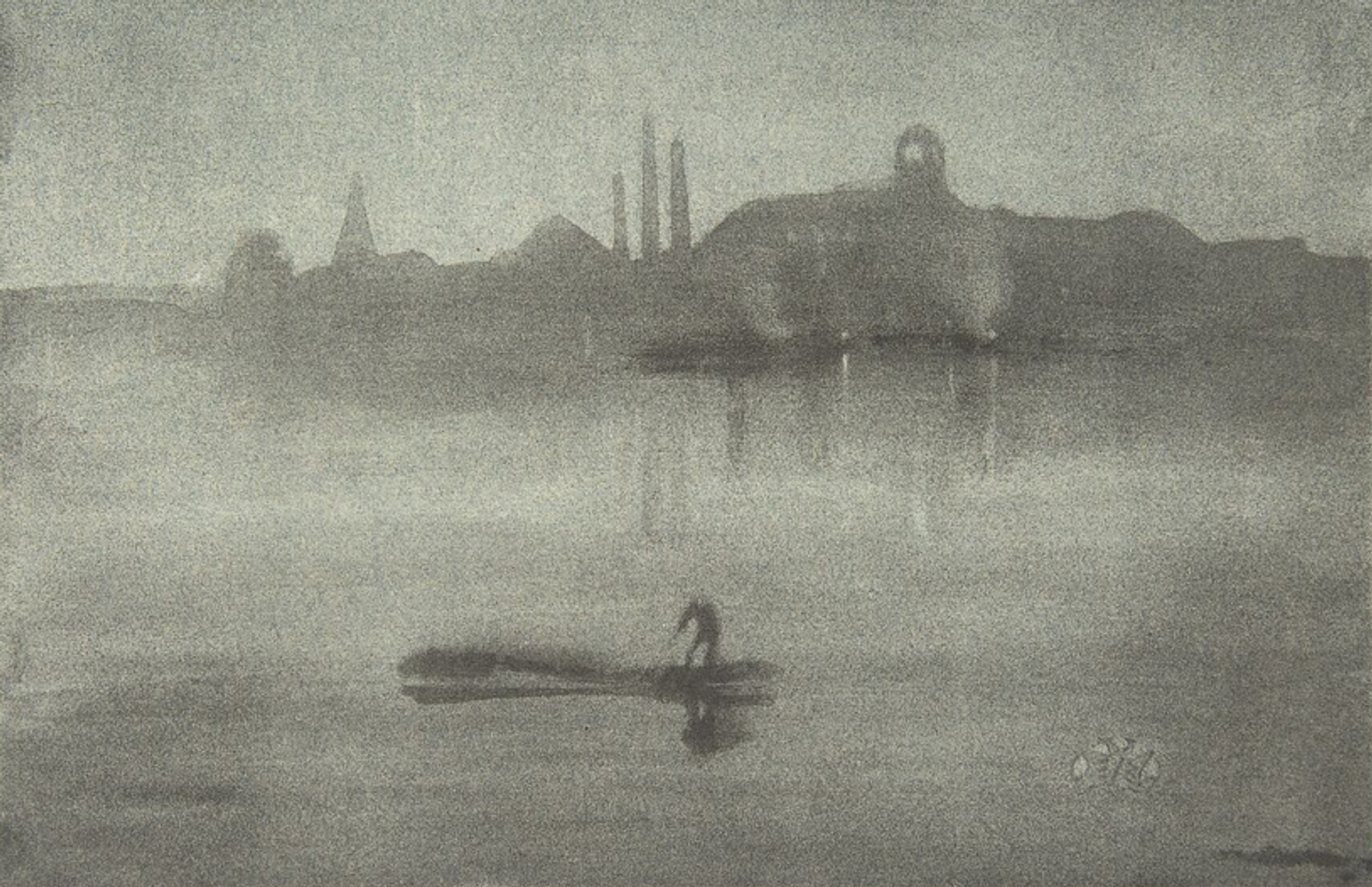
Whistler’s print Nocturne: The River at Battersea (1878, second state 1887), released by Boussod & Valadon
Metropolitan Museum of Art, New York
There would be further links between Whistler and Boussod & Valadon. In August 1891, their Paris gallery had two paintings on display: probably Nocturne in Blue and Gold: Southampton Water (1872) and Nocturne in Blue and Gold: St Mark’s Venice (1880). Both pictures will be in Tate’s exhibition, on loan from the Art Institute Chicago and the National Museum Cardiff, respectively.
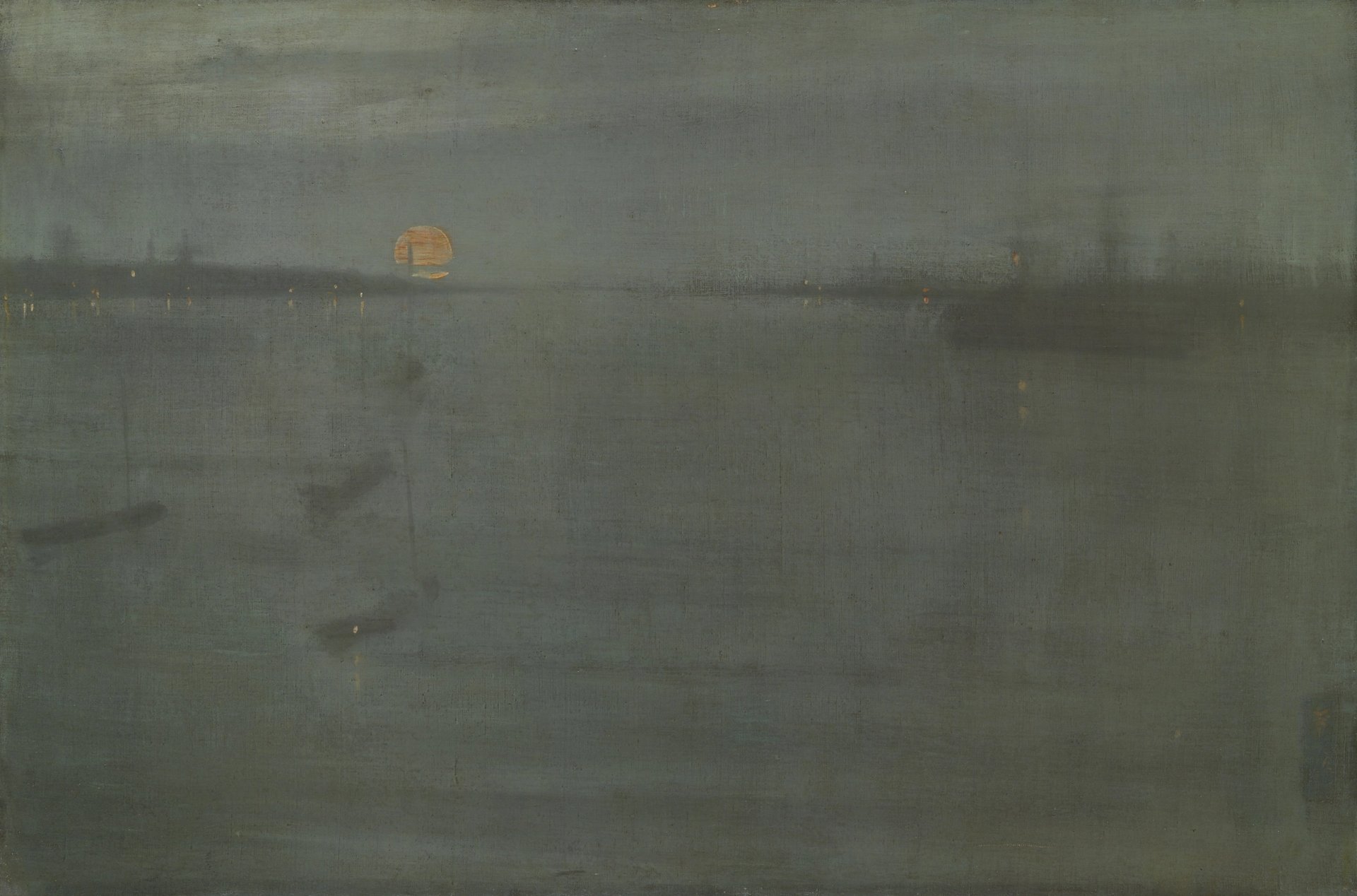
Whistler’s Nocturne in Blue and Gold: Southampton Water (1880)
Art Institute of Chicago (Stickney Fund)
Portrait of the Painter's Mother was then shown in Boussod & Valadon’s Paris gallery in November 1891. A few weeks later the painting was acquired by the Musée du Luxembourg in Paris, and eventually passed to the Musée d’Orsay.
Vincent died in July 1890 and Theo in January 1891. Portrait of the Painter's Mother therefore only went on show after Theo’s death, but it is possible that he may have helped lay the foundations for the display.
The Van Gogh mother
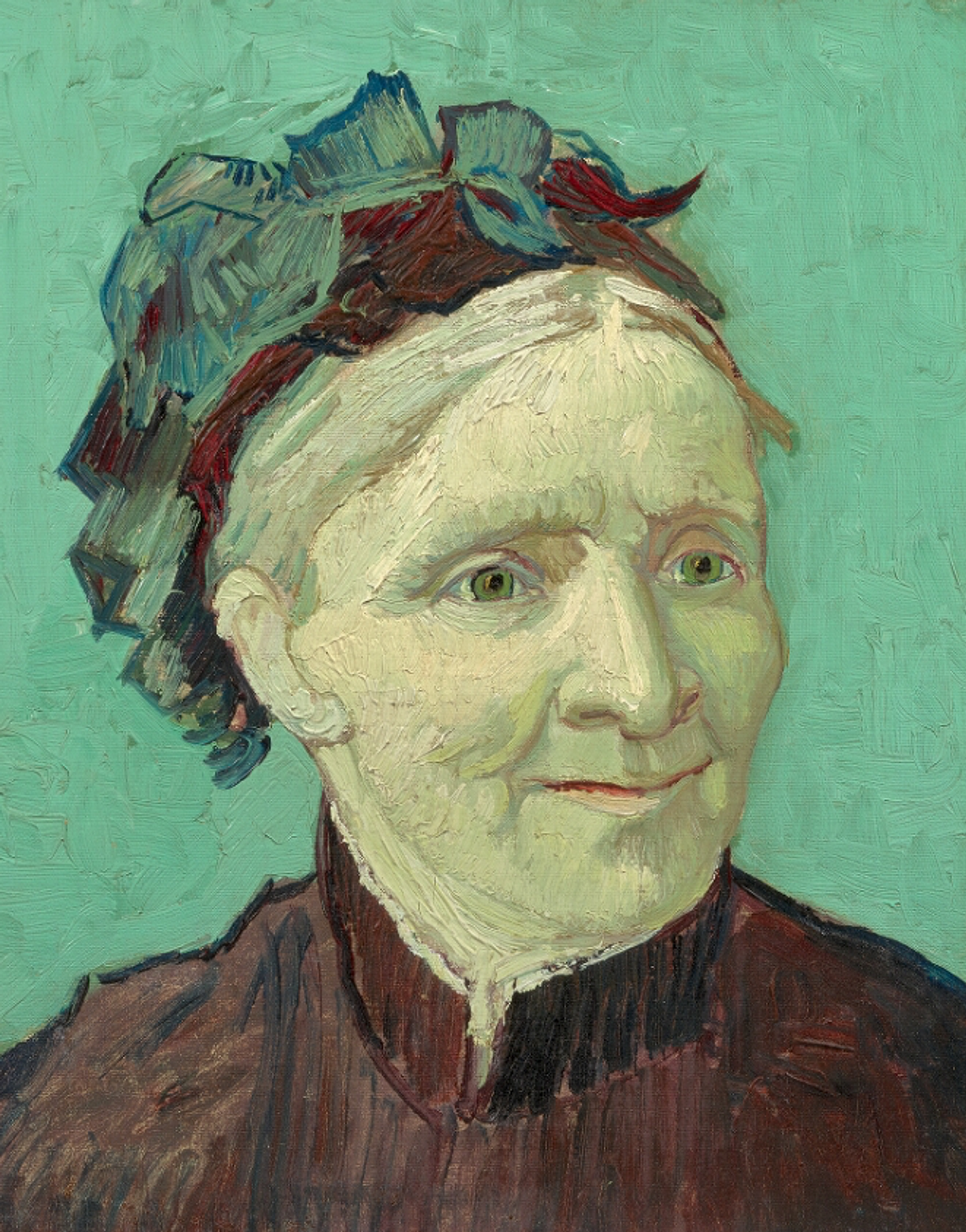
Van Gogh’s Portrait of the Artist’s Mother (October 1888)
Norton Simon Museum, Los Angeles © Norton Simon Art Foundation
In October 1888, Van Gogh painted a portrait of his own mother who was also named Anna. Although Vincent had a fraught relationship with his father, he got along with his mother, although they were not close. He was living in Arles when he painted the only portrait of his mother, having last seen her three years earlier, and worked from a photograph.
Van Gogh gave Anna a lively expression, and made her appear younger than her 69 years (in the photograph he used, she appears considerably older). Van Gogh’s Anna was actually two years older than Whistler’s Anna, although one would hardly think so from the two painted portraits.
What is particularly striking in the Van Gogh painting is the powerful colouring, particularly the green background. Indeed, the Whistler and Van Gogh portraits could hardly be more different, in both colour palette and composition.
There is one further link between the two artists: Whistler’s numerous painted riverside “nocturnes” may have played a role in inspiring Van Gogh to embark on Starry Night over the Rhône (September 1888). Once again, the two avant-garde artists tackled similar motifs in such very different ways.
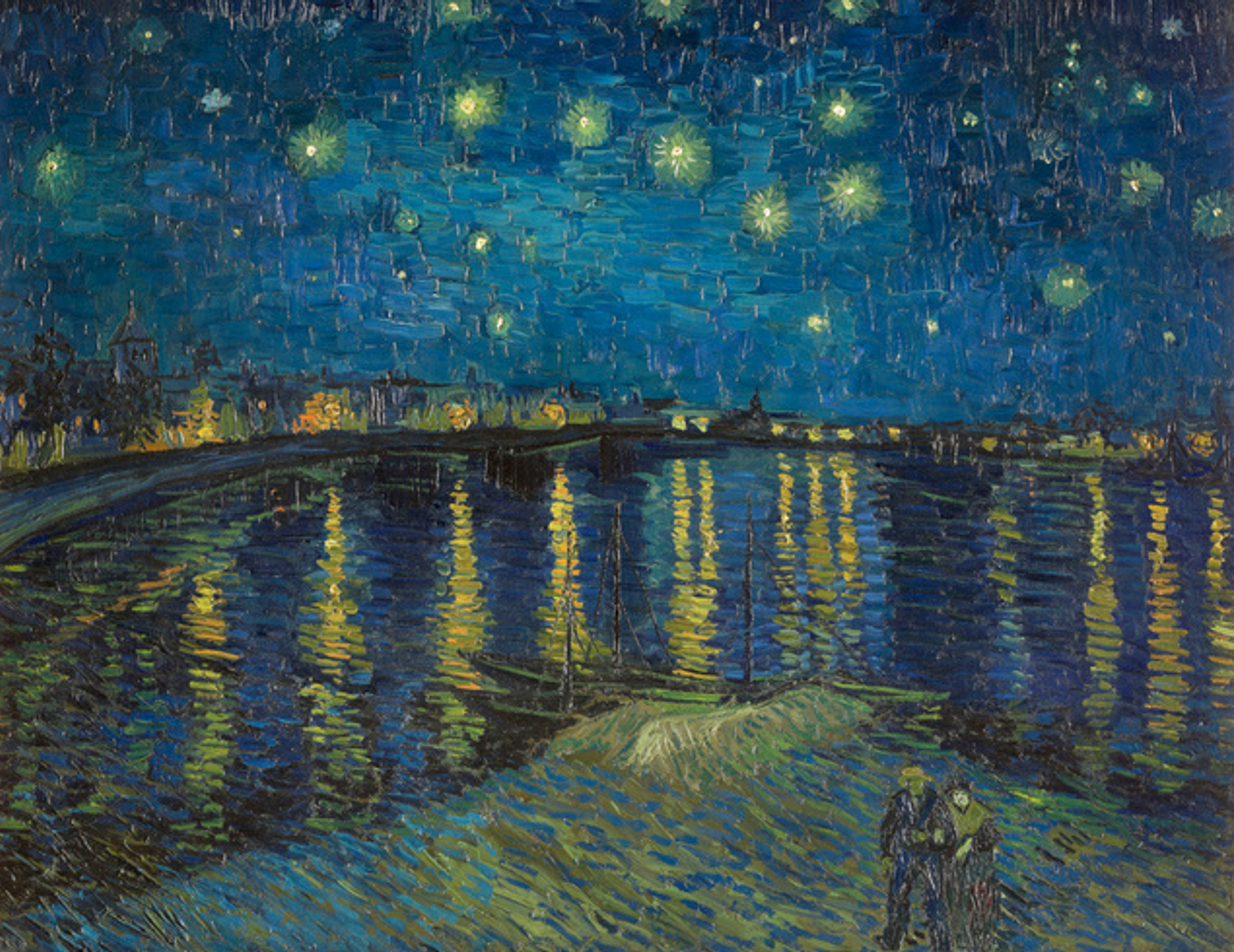
Van Gogh’s Starry Night over the Rhône (September 1888)
Musée d’Orsay, Paris