Minimum wage in the state of Pennsylvania is $7.25 an hour. This means that to visit the Carnegie Museum of Art as a non-member, a Pittsburgh local may have to spend the equivalent of more than 3 hours of work. Though this does not discount the spirit of collaboration within the 59th Carnegie International, titled If the word we, it is an important bit of context for the questions underlying the exhibition. The ethos of this edition is all about community, with curators Ryan Inouye, Danielle A. Jackson and Liz Park framing it through collaboration with “thought partners” like the Egyptian writer Haytham el-Wardany—from whom the title of the show is borrowed.
“One of the dimensions is ‘we’ as a space of listening,” Park said in her introductory remarks at the International’s opening. “Not seeing, not speaking, just listening. We all participate in the creation of meaning when we engage with the exhibition together.”
If the word we is a more expansive and ambitious iteration of the International in comparison to 2022’s Is it morning for you yet? which, while deeply thought-provoking, veered into inaccessible headiness at times. Is it morning for you yet? explored the sources of division. If the word we explores the sources of connection.
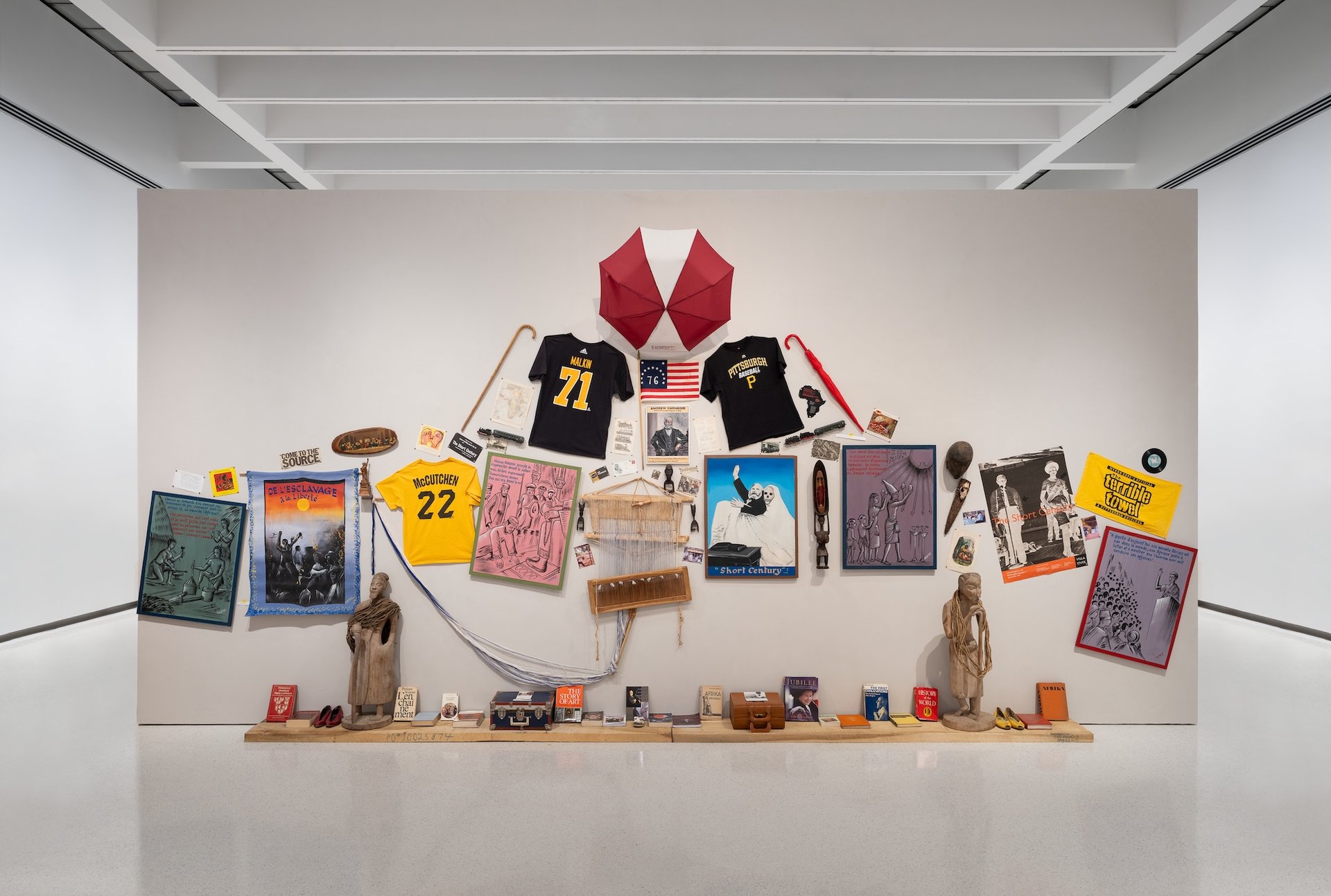
Installation view of Georges Adéagbo’s Le Socialisme Africain (2001–04, version 2026) Photo: Zachary Riggleman / © Carnegie Museum of Art, Pittsburgh
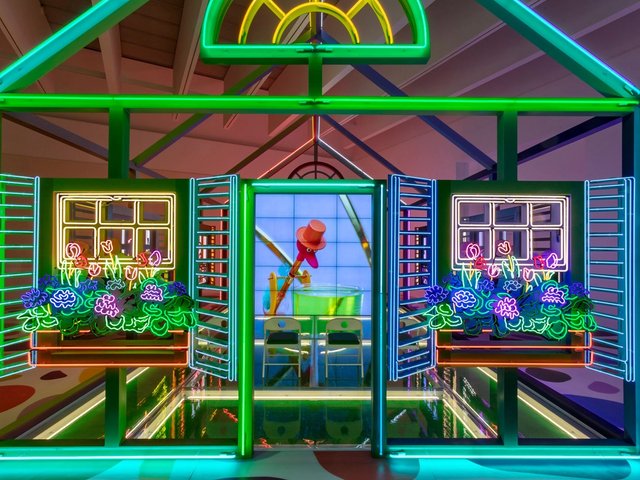
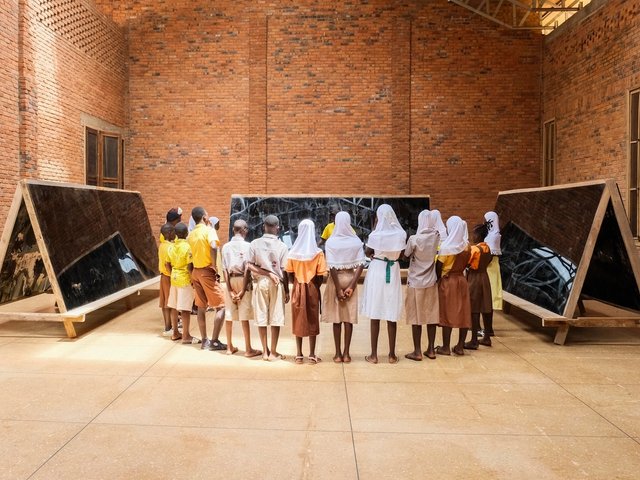
This year’s International is highly tactile and creates more intimate spaces in room-size installations that make the museum's vast spaces feel cozier. Shala Miller’s Flight allows visitors to lay down on a sloped bean bag and watch video above them in a dark room (echoing the immersive character of certain Pipilotti Rist installations). Jasleen Kaur’s Supra creates a carpeted room where light through false windows mimics daylight. If the word we conjures spaces that invite viewers to stay awhile. And it can feel like walking through a dreamlike maze.
For a room featuring assemblages of objects titled Le Socialisme Africain, the Benin-born artist Georges Adéagbo went to thrift stores in Pittsburgh and picked up things like a kitschy “family rules” sign, a painting of African politicians, an April Fools’ Day edition of a local university newspaper and a “terrible towel”—a bright-yellow cloth that fans of the city's NFL franchise, the Steelers, wave during American football games.
There is something ridiculously self-referential about seeing pieces of campy Pittsburgh sports merchandise on display in the museum, but that dissonance gets at the core of If the word we. Museums cannot always simultaneously be bastions of the highest culture and accessible community spaces. They can do both, but not always equally. Community and collaboration require a trade-off. Art needs to both uplift viewers and challenge them intellectually. It needs to meet them where they are without insulting their intelligence. Le Socialisme Africain speaks to that tension.
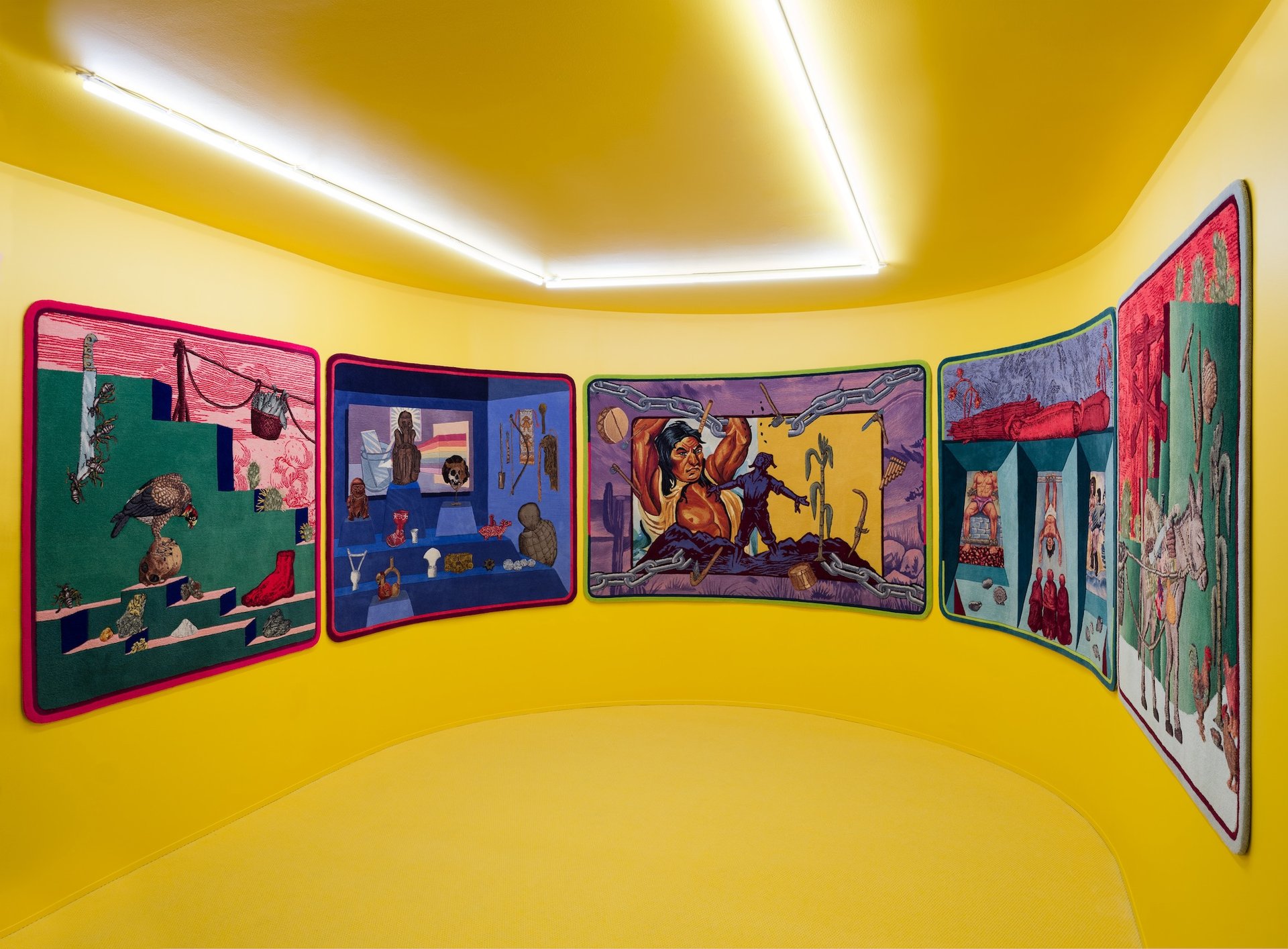
Installation view of works by Claudia Martínez Garay and Arturo Kameya at the Mattress Factory Photo: Zachary Riggleman / © Carnegie Museum of Art and Mattress Factory, Pittsburgh
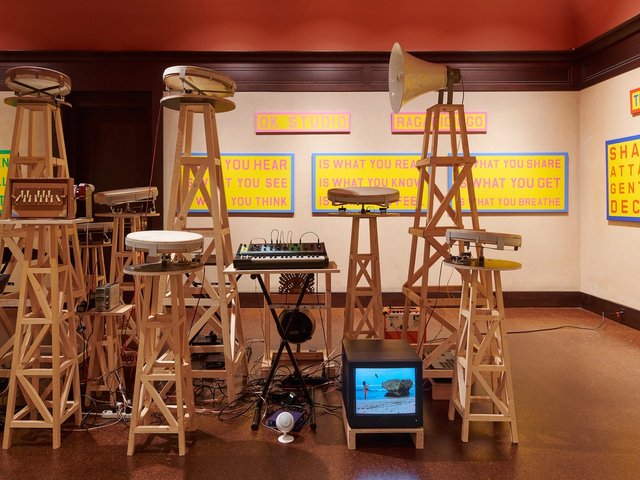
RJ Messineo’s colourful abstractions and Reina Sugihara’s foreboding canvases offer some two-dimensional, painterly breathing room. There is less shocking or haunting work in this iteration than in 2022. It would benefit the exhibition to push a little harder at times and present viewers with something as visceral as I Gusti Ayu Kadek Murniasih’s grotesquely surreal depictions of the body from the prior edition. Rather than be confronted, maybe museum visitors in 2026 want to be enveloped by immersive art spaces that mask a world that feels overwhelming.
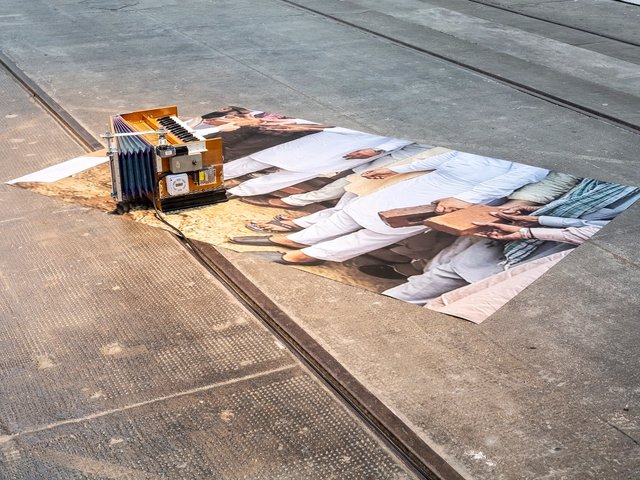
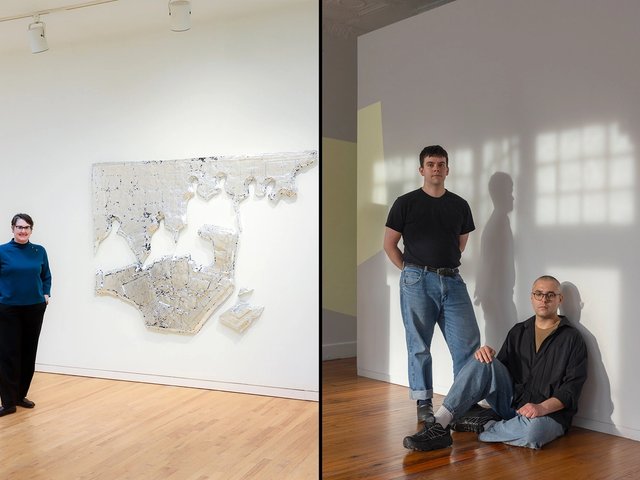
If the word we expands beyond the museum with offsite programming at the Mattress Factory, Children’s Museum of Pittsburgh, Kamin Science Center and Thelma Lovette YMCA. The most striking of the offsite exhibitions is of works by Arturo Kameya and Claudia Martínez Garay at the Mattress Factory, where the two artists have taken up a whole annex. Jackson, the sole exhibition curator not on staff at the Carnegie, was at the helm of including Kameya and Garay. “I specifically wanted to work with the Mattress Factory, because it’s not a collecting institution,” she says. The result is a true merger of the two artists’ practices, where Garay’s two-dimensional work lives inside Kameya’s installations.
At its best, the Carnegie International expands viewers’ minds and decentres the US and Europe in the world of contemporary art, a curatorial outlook that resonates with Koyo Kouoh's central exhibition at the Venice Biennale. If the word we asks tough questions of its viewers, particularly those from the art world and the professional museum sphere. There is also a moment of self-effacing humour in the exhibition with the comic artist Walter Scott’s giant diorama reading: "REALITY HAS LESS TO DO WITH ME THAN I THOUGHT."
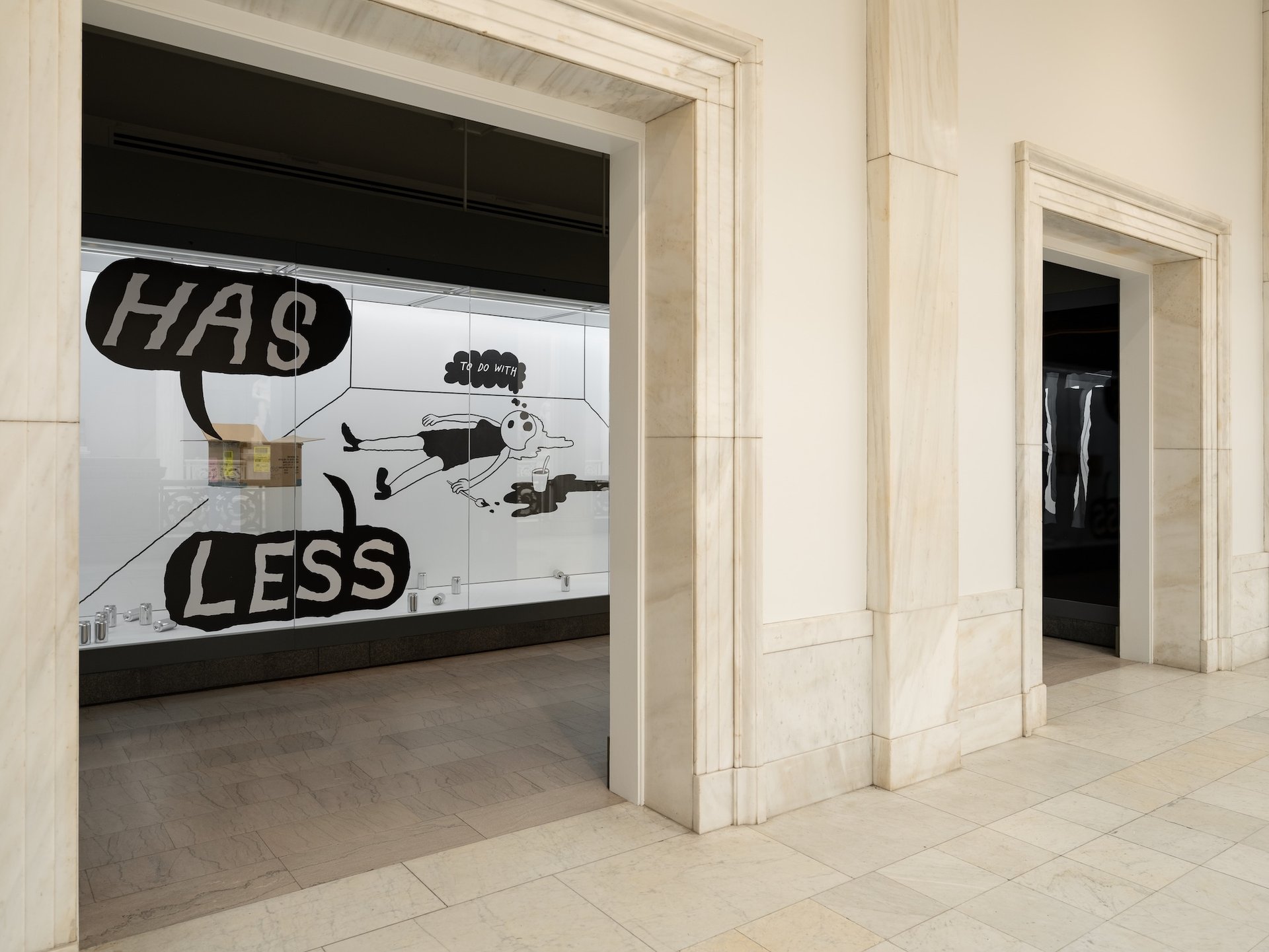
Installation view of Walter Scott’s REALITY HAS LESS TO DO WITH ME THAN I THOUGHT (2026) Photo: Zachary Riggleman / Carnegie Museum of Art, Pittsburgh
That line might hold the key to the whole International this year. It asks whether artmaking, a fundamentally solitary pursuit, can really be the foundation for a community. A museum is never going to be a street art festival or an artist-run organisation. But how can museums be better places not just for guests but for the people who serve coffee at their cafés, clean their floors and watch over their galleries?
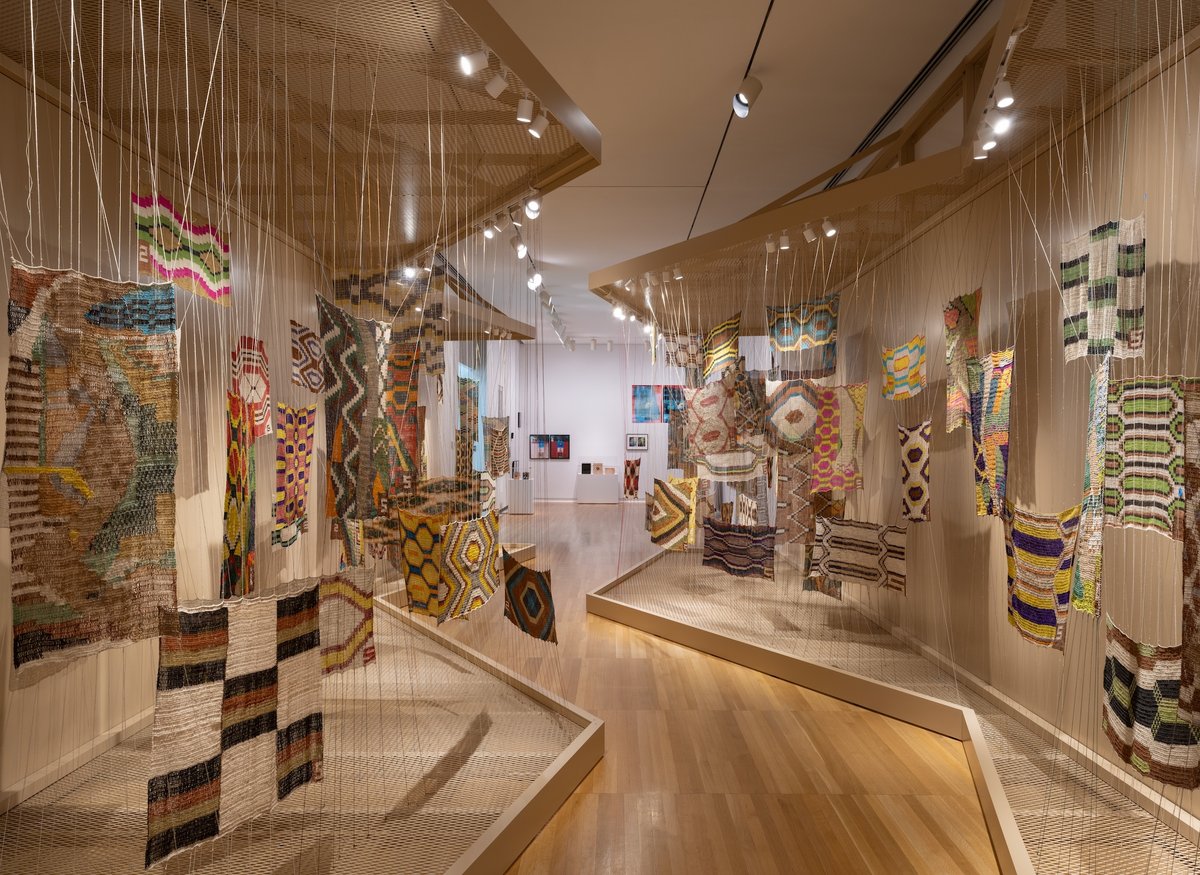
Silät—a collective of 100 women weavers in Salta, Argentina, led by Claudia Alarcôn—is the purest expression of If the word we’s themes. There is something genuinely moving about looking at the weaving and understanding that this is collaboration. Not logos on a wall or seats at board meetings, but rather working together with your hands to create something imperfect.
- If the word we, 59th Carnegie International, Carnegie Museum of Art, Pittsburgh, until 3 January 2027