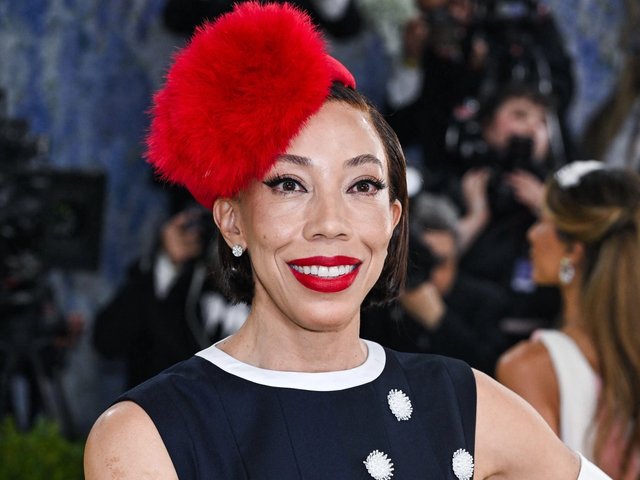
The British artist Anouska Samms has hit back at the Metropolitan Museum of Art in New York after it said a copyright dispute over a dress on show in its Met Gala opening exhibition should be resolved between her and her one-time fashion collaborator, Yoav Hadari.
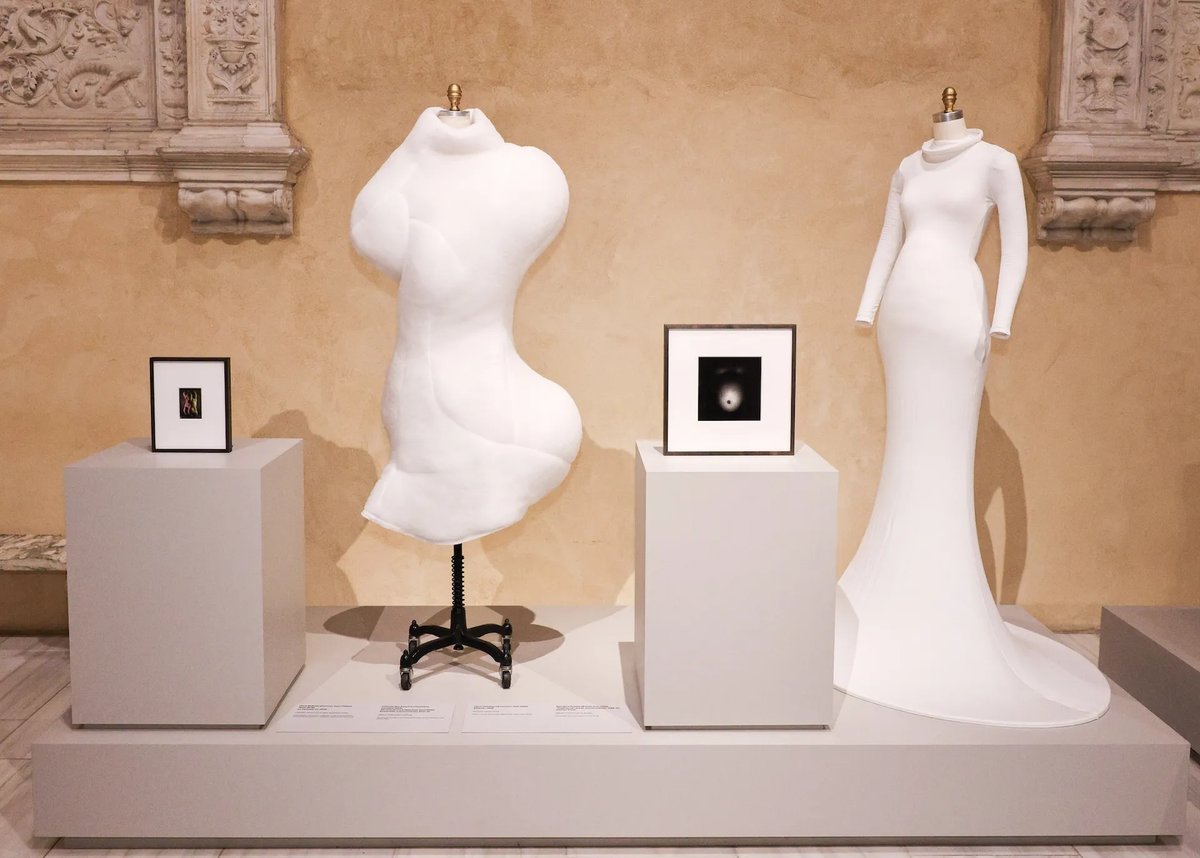
Samms says she and Hadari, who is based in New York, collaborated on a garment titled Hair Dress when they were both residents at the Sarabande Foundation in London, set up by the late fashion designer Alexander McQueen. Last year, the Met expressed interest in buying the dress, which has human hair woven through it, and including it in its Costume Art exhibition, which opened on 10 May, just after the Met Gala annual fundraiser. Those plans were shelved in December.
In a social media post, Samms says she was first alerted to the Met’s inclusion of a dress that she describes as “something like a copy of my work” when the Sarabande Foundation tagged her in a social media post congratulating her on the show. But, Samms says, she has not been credited or paid for her work, unlike Hadari.
Hadari acknowledges that Samms holds the IP rights over the “specific textile” used in Hair Dress. But, he adds, “those rights do not extend to the design, name, concept, construction, or creative direction of the Nervina Hair Dress”, which is now on show at the Met and which he says are entirely his. Furthermore, Hadari says, “the final form” of the original Hair Dress resulted from his “own draping, hand stitching, and application of the textile onto a base dress that he cut, sewed, and designed independently”.
After she took her dispute to the Met, Samms says she was told she and Hadari would have to resolve their differences before the museum take any action. The Met declined to comment “out of respect for the artists and their ongoing dispute”.
Having taken legal advice in the UK, Samms says: “The Met will be committing its own acts of copyright and moral rights infringement if looked at through the lens of English copyright law.” She is now taking advice from US lawyers with a view to taking legal action based on American law.
Samms adds: “From a copyright perspective, it is absolutely clear that I was a joint author and therefore co-owner of the original artistic design. Taking all that information in, the Met is not taking a neutral position at all because currently only one of us, my collaborator, is credited in the exhibition, in the catalogue, on the museum website and internal object records.”
The artist notes that a museum “has a responsibility to carry out something called due diligence”. She adds: “A museum is expected to take provenance really seriously, so this means documenting the history of an object’s ownership, its custody and locations, but most significantly for my case, tracing an acquisition’s journey of creation and that means crediting people where credit is due.”
The situation is “all the more peculiar”, Samms says, as the Met and the Costume Institute’s curator in charge, Andrew Bolton, knew about her existence, knew that Hadari had agreed that the intellectual property of the Hair Dress fabric belonged to her and had agreed that they would give her credit for the first dress that was potentially going to be acquired by the museum.
Samms says the Met is now “refusing to own their role” or “hold themselves accountable”, because to “do the right thing means accepting that Andrew Bolton OBE and his team did the wrong thing”.