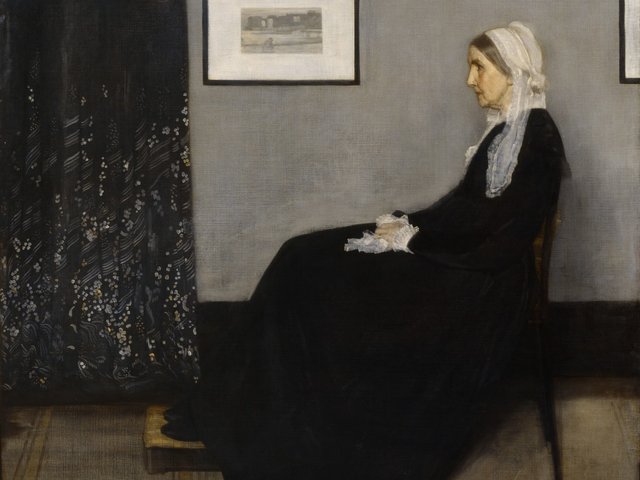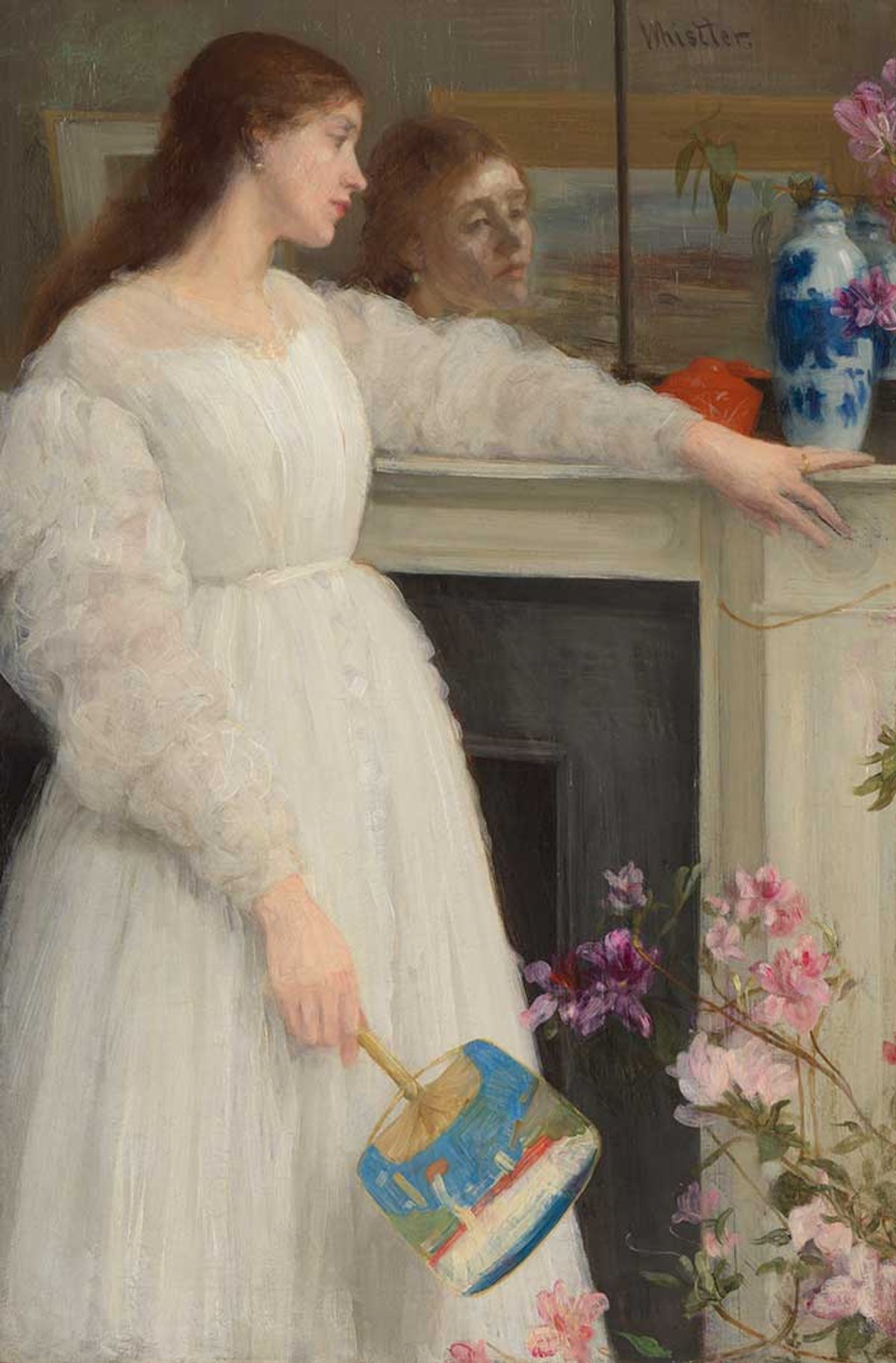
“Some artists get put in a place that you can’t get them out of,” says Carol Jacobi, the curator of a new exhibition of James McNeill Whistler (1834-1903) at Tate Britain in London. “You can’t mention one without the other: with Whistler, it’s that court case.” Jacobi is talking about the artist famously suing the critic John Ruskin in 1877 after the latter called him “a coxcomb… flinging a pot of paint in the public’s face”.
Being an artist of such dazzling variousness, Jacobi says, it is deeply unfair that Whistler is so firmly welded in the public imagination to such a contentious single moment—if nothing else, because Whistler had a habit of squabbles, rows and contretemps throughout his career. “One of the most important aspects of the show is that he worked so hard his whole life. He was unbelievably productive. He had these beliefs about art and what an artist should be, and he put everything into that,” Jacobi says. “His fights were always about art and his demand that his ideas should be respected. And if he felt they weren’t respected, that’s when things got, you know, controversial.”
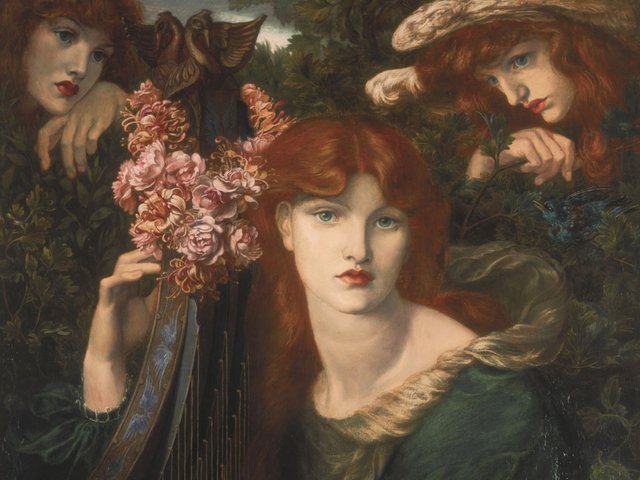
As history records, Whistler won the day against Ruskin. But the case, with token damages of just a farthing, contributed significantly to his subsequent bankruptcy. The combative Whistler also fell out with the French artist Gustave Courbet over Joanna Hiffernan (the model for several of Whistler’s paintings, such as Symphony in White, No. 2: The Little White Girl, 1864), as well as with his wealthy patron Frederick Leyland over his elaborate designs for the so-called Peacock Room in the latter’s Kensington mansion.
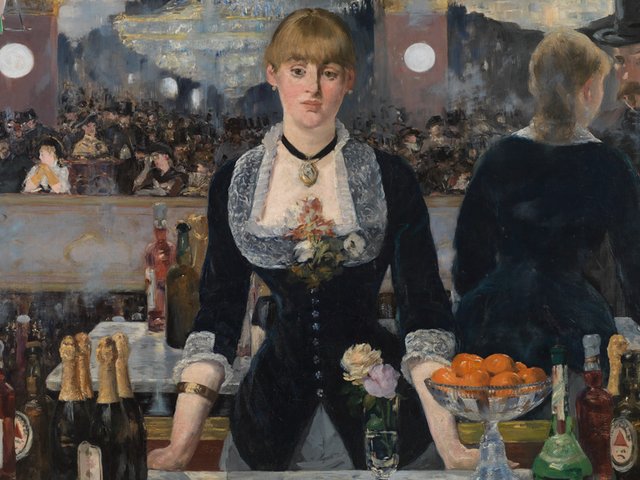
Whistler’s mercurial temperament was perhaps perfectly suited to his continuous evolution as an artist, one that Jacobi is at pains to point out. “He was part of that generation that explored what it means to paint everyday life, the world around you,” she says. “He’s an exact contemporary of Degas and exhibited alongside Manet at the Salon des Refusés in the 1860s; they really admired each other. Fifteen years later, they had their Impressionist exhibitions and they invited him to join them, but by then he had decided that capturing an impression of the world is not enough and an artist should be doing something extra—finding a sort of a more fundamental beauty.”
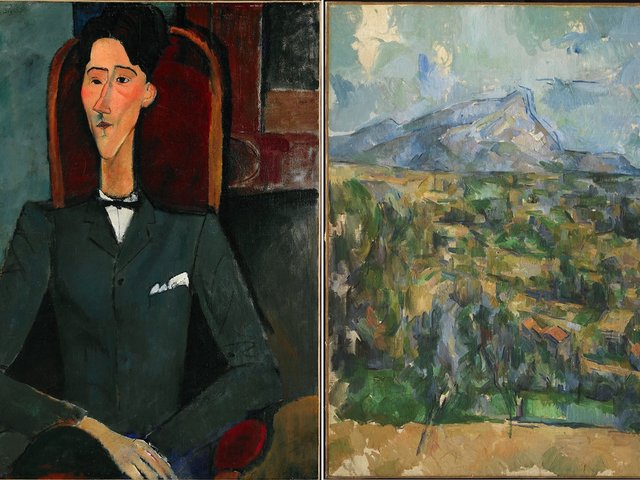
This is what is behind the Tate’s assertion that Whistler “foretold the future of Modern art”. Jacobi says: “He famously said that nature is very rarely right. What is beautiful is an arrangement of colour, of line, of form. And, of course, we know that as abstraction. As he went on he seemed to be leaving behind the details of the world and that is, I think, a very early form of post-Impressionism. And it’s no coincidence that his work looks so much more at home with people like Seurat or Gauguin, and that he was such a huge inspiration for Van Gogh.”
Loans and logistics
Part of the issue, Jacobi says, behind Whistler’s uncertain place in the pantheon is the difficulty of displaying all his work in the same place; conditions of various bequests make loans of some of his most high-profile paintings impossible. This show, she says, is only the fourth full survey since his death in 1903, and the UK’s first since the Tate’s Whistler show in 1994.
Jacobi says she is particularly excited at being able to show most of Whistler’s celebrated “nocturnes” together—although Nocturne in Black and Gold: The Falling Rocket (1875), which kicked off the legal action against Ruskin, is sadly not among them—as well as showing Whistler’s sketchbooks for the first time.
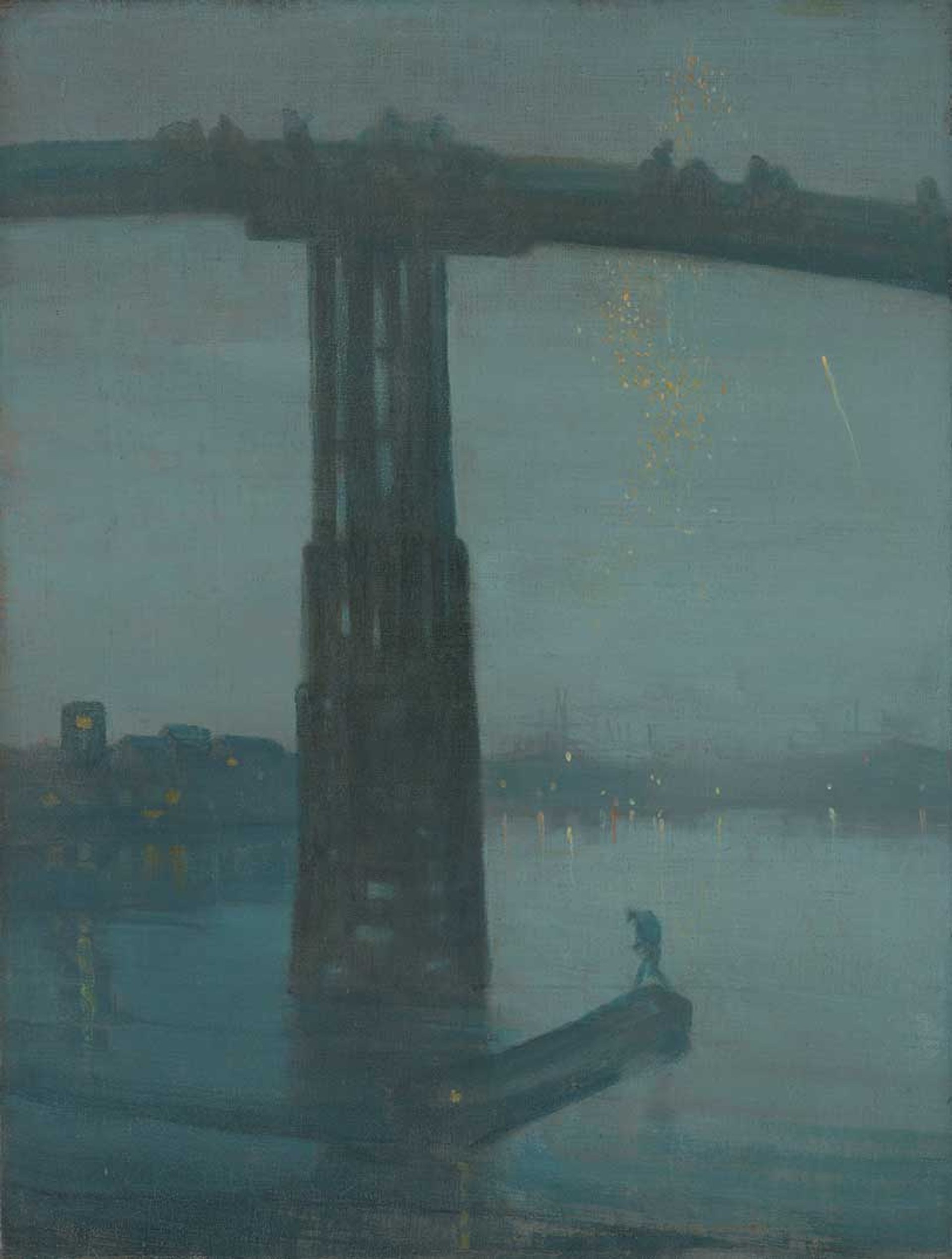
Whister's Nocturne: Blue and Gold—Old Battersea Bridge (around 1872-75) © Tate
The sketchbooks (complete with digital page-turning replicas) will be key in demonstrating another of the show’s aims: what Jacobi calls the “incredible skill and magic and variety in the way he’s putting paint on canvas and the wonderful effects that he’s getting”, deriving from a research project that preceded the exhibition. Jacobi is also very enthusiastic about Whistler’s portrait, Head of a Peasant Woman (1855-58), from his early “French-realism” period, which the research has established is his first known portrait from life.
This most aesthetically oriented of painters may appear out of step with the currently politically charged climate of the art world, but Jacobi is adamant that Whistler is more relevant than ever. “It is the wonderful relationship that he explored between everyday experience and beauty, and his proposition that beauty is something necessary and important—something that we need.”
• James McNeill Whistler, Tate Britain, London, 21 May-27 September