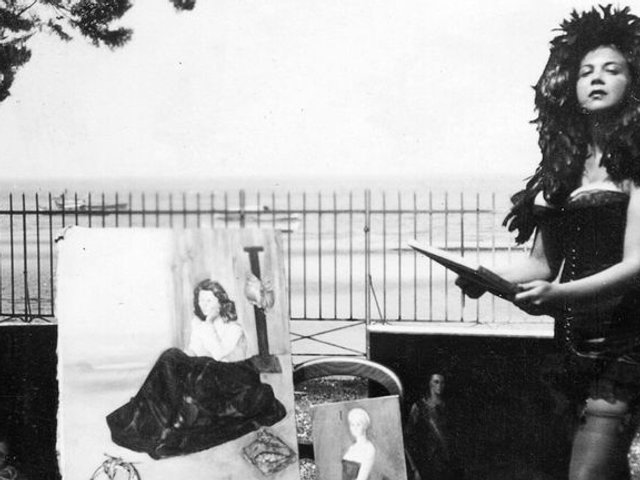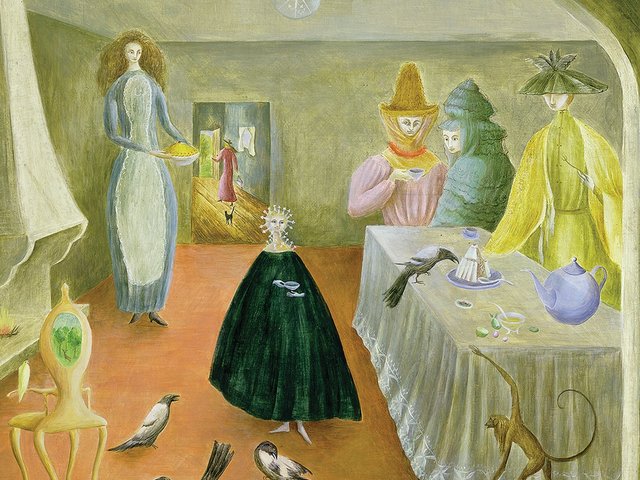
Exhibitions can transform lives. In her new book, Dorothea Tanning: A Surrealist World, Alyce Mahon discusses the seismic effect of an exhibition at the Museum of Modern Art (MoMA) in New York in 1936 on the 26-year-old Tanning, who was newly residing in Manhattan.
This was Fantastic Art, Dada, Surrealism, one of the legendary exhibitions put together by Alfred Barr, MoMA’s first director. It featured around 700 objects including everything from 15th-century art to folk art and the acetate “cels” for Disney’s The Three Little Wolves cartoon. Marvellous installation shots show the walls tightly packed with these diverse flights of the imagination. Tanning writes in her memoir, Birthday (1986), about its explosive impact, “rocking me on my run-over heels ... Here is the limitless expanse of POSSIBILITY.”
In my recent conversation with Mahon on The Week in Art podcast, she reflects on the “gendered image of this narrative” conjured by Tanning. “I picture somebody who’s in her 20s, in her heels. I kept thinking about this: someone who was working as a waitress and who is blown out of it.” Mahon points out that the possibility may have seemed so great not just because she saw Surrealist art but “because, in 1936, she got to see women artists”.
Surrealist obsession
From that moment, Tanning became so obsessed with Surrealism that in July 1939 she boarded a boat to Paris to attempt to meet its linchpins, a forlorn quest with Europe on the brink of war. Eventually, émigré Surrealists came to her New York, with spectacular results, as Mahon’s book details.
Although few artists would describe the cause and effect of such an experience as Tanning does, I am regularly reminded in my conversations with artists about exhibitions’ capacity for revelation at similarly crucial moments. In a recent episode of the A brush with… podcast, Lorna Simpson, whose current show at the Pinault Collection—Punta della Dogana in Venice coincides with the Venice Biennale, describes an epiphany at the Francisco de Zurbarán exhibition at the Metropolitan Museum of Art in New York at the end of 1987—the last survey of a comparable size to the one that opened at the National Gallery in London this month. “The scale of those images and their imposing message really stuck with me,” Simpson says. “It was shocking for me to experience that, but not from a religious [perspective], just the body and the presentation of the body.” She sees its effect on her “early photography of the singular figures that are lifesize and towering … or they’re larger than life”.
‘The Other Story’
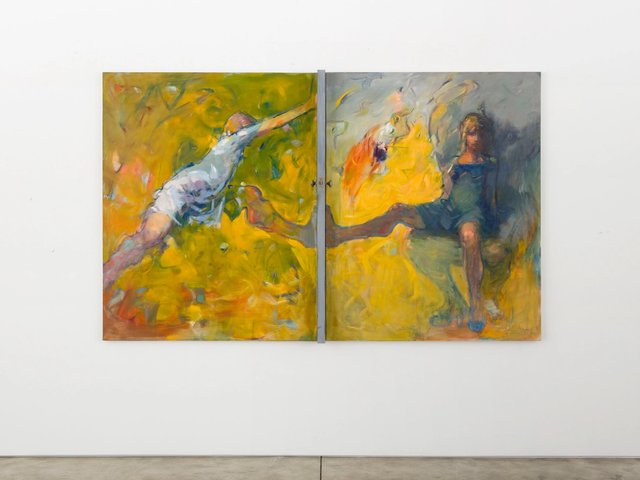
Meanwhile, for Hurvin Anderson, whose mid-career survey is now at London’s Tate Britain, two exhibitions in the early 1990s were of huge significance, for different reasons. He saw The Other Story, the artist Rasheed Araeen’s exhibition of Asian, African and Caribbean artists in post-war Britain, among whose central concerns was “the question of cultural identity, of how these artists see their place in British art”. It began at London’s Hayward Gallery in 1989 before travelling to Wolverhampton, where Anderson saw it, and then Manchester. The Other Story’s broad significance has only grown in recent years as the art world has begun to catch up in representing non-white artists. But at that time, it was of enormous personal importance to Anderson.
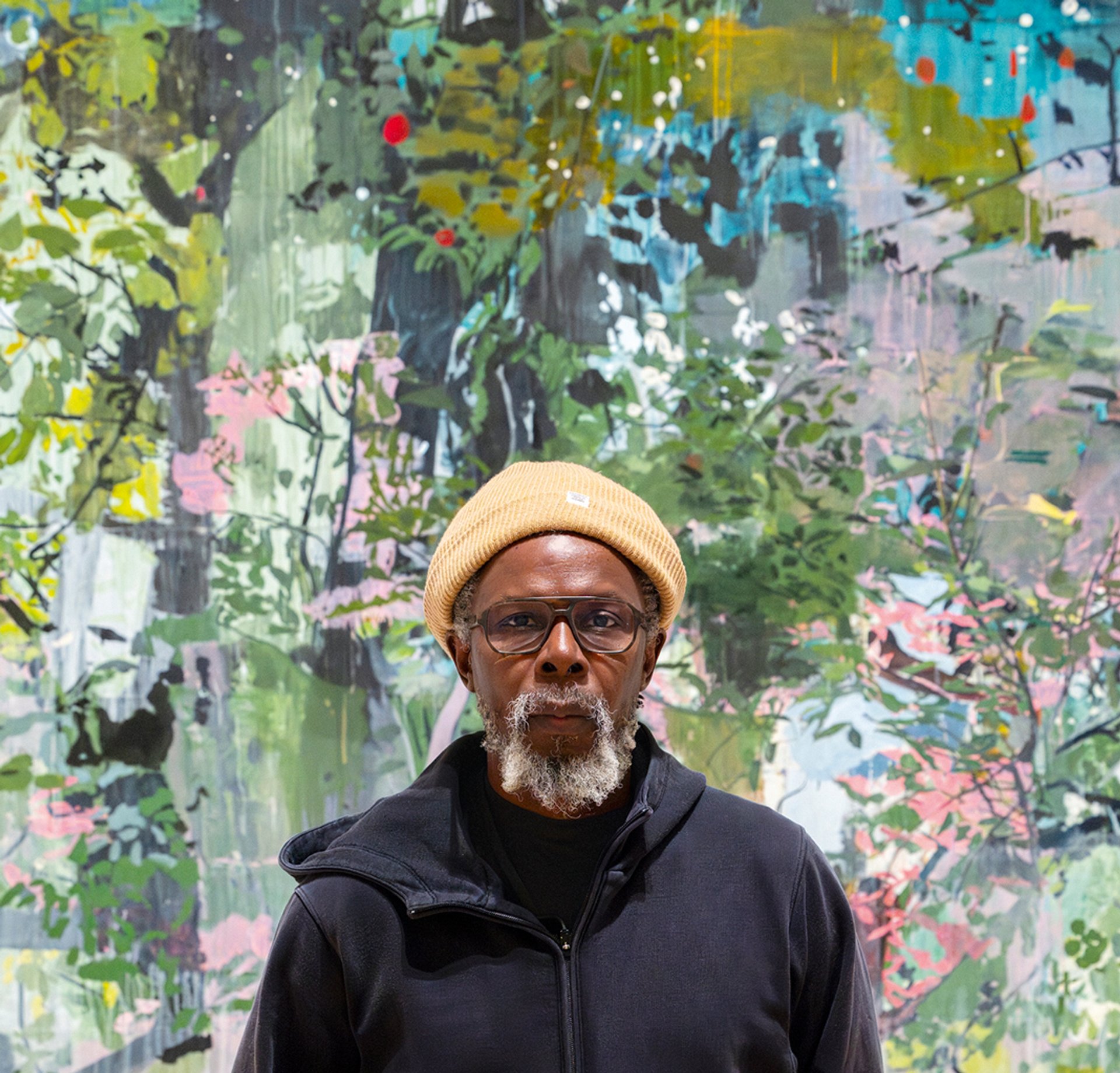
A mid-career survey of Hurvin Anderson is now at London’s Tate Britain
Photo © Tate
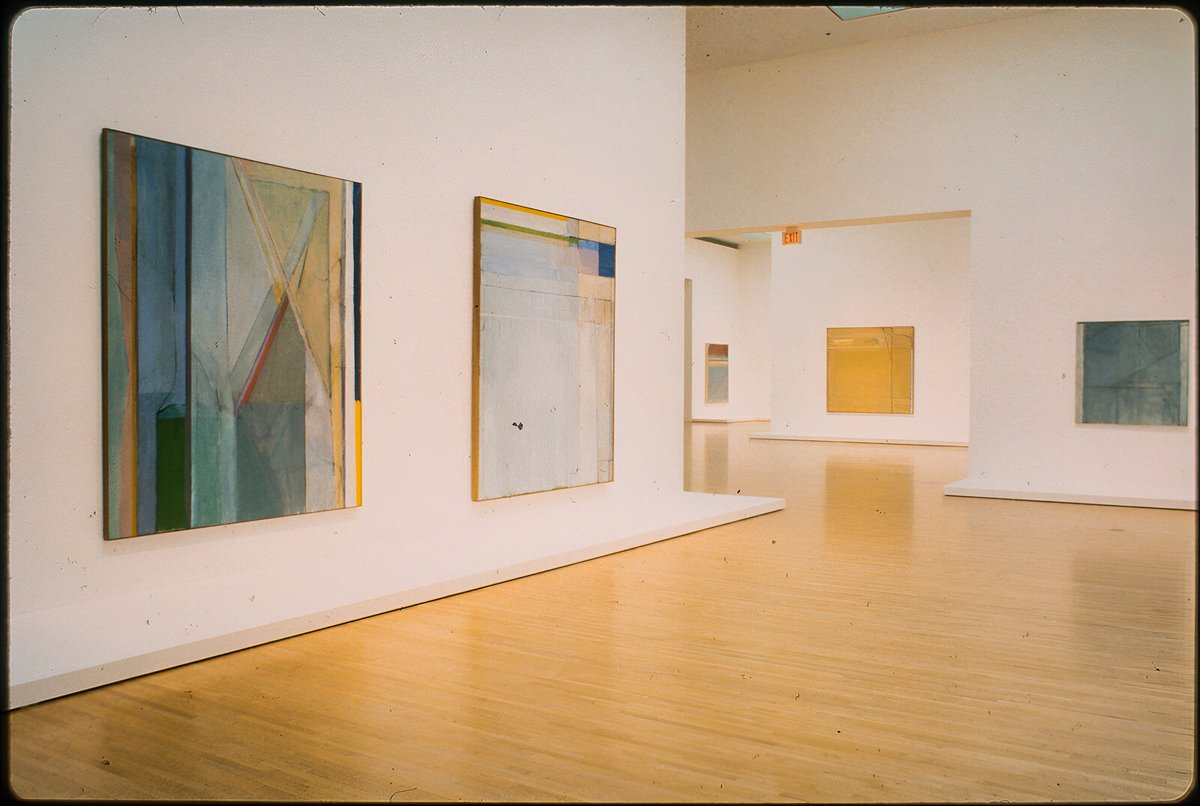
In 1991, he saw an exhibition whose influence was more formal: Richard Diebenkorn at London’s Whitechapel Gallery. As the Whitechapel’s then director, Catherine Lampert, wrote in a recent monograph on Anderson, the “lasting impression” made by that exhibition derived in part because Diebenkorn, whose painting was suffused with the light of California, “disregarded the figuration/abstraction polarisation”—a rich element in the poetry one finds in Anderson’s canvases. I saw the Diebenkorn exhibition as an art student and was profoundly marked by it, never having previously seen a single painting by him (even now, not one is in a British museum collection). It is one of those exhibitions that was seen by relatively few people compared to many museum shows, but was adored by a significant proportion of its modest audience—among them, very many artists.
In an age when exhibition revenue is increasingly fundamental to museums’ survival, organisations still need to be bold in mounting not only predictable hits but also exhibitions that are less spectacularly transformative, like The Other Story and the Diebenkorn survey. While Anderson’s magnificent exhibition might not draw the footfall of Tate Britain’s recent Turner and Constable show, I suspect that it too will provide its own version of the “limitless expanse of possibility” that so shook Tanning’s world.