For US museums that have reduced or eliminated entry fees, the expectation has often been that doing so will lead to an increase in visitors who will spend money on different things at the institution, such as merchandise, food, memberships or other special programmes, making up for lost admission revenue. The reality does not always measure up to this expectation.
Gary Vikan, the former director of Baltimore’s Walters Art Museum, says the institution’s decision to eliminate admissions in 2006 led to an increase in attendance “by 45%, and minority participation went up by a factor of three”, but still that greater influx of traffic did not pay for itself. People came for free but did not spend more while there.
Baltimore’s other leading art institution, the Baltimore Museum of Art (BMA), eliminated admissions at the same time as the Walters, and the long-term results have not been positive overall for either museum. After the first year or so of increased attendance when entry became free, the number of visitors declined at both institutions, by 18.6% at the Walters and 12.7% percent at the BMA, according to a 2021 survey.
“What we have seen, across the country, is that institutions that have eliminated admissions have generally not seen an increase in visitation in any meaningful way,” says Daniel Weiss, the former president and chief executive at the Metropolitan Museum of Art and now the director and chief executive at the Philadelphia Museum of Art. He adds that competing financial and ethical imperatives are at play. “Museums have an ethical obligation to be accessible, but they also have an ethical obligation to be financially solvent.”
Free admission, financial strain
Doing away with admission fees does not help the actual visitors and only hurts the institution, according to John Silvia, an economist and founder of the North Carolina-based business consulting firm Dynamic Economic Strategy. He adds: “It is not financially wise.” Gerald Friedman, a professor of economics at the University of Massachusetts at Amherst, asked whether or not “people walk in for free who would have paid otherwise? I doubt it.”
The pandemic is another factor in this. It caused a great deal of harm to museums and other cultural institutions that rely on people showing up or paying annual memberships. At the height of Covid, frequent museum visitors got out of the habit and many institutions have been slow to regain their 2019 attendance numbers, let alone draw in the audiences that had been reluctant to go to museums all along.

Attendees of an education programme at the Baltimore Museum of Art Photo: Mitro Hood
The problem of making a public institution more accessible to the public goes beyond the price of getting in and includes what is on view in the museum itself. The principal collections at the Walters are of ancient objects from the Americas, Europe, the Middle East and Asia, as well as medieval and pre-20th century European art, which appeal to somewhat specialised tastes and unsurprisingly might not be an obvious draw in Baltimore, a city that has lost a third of its population since 1950 and currently is almost 63% African American. The BMA has recognised that its audience has changed and made some controversial moves under its previous director Christopher Bedford (now at the helm of SFMoMA), such as selling off works by canonical white artists like Franz Kline, Robert Rauschenberg and Andy Warhol in order to raise funds to purchase works by under-represented, non-white and African American artists.
There is no one answer for all museums, since many are in cities that tourists flock to (New York, Los Angeles, Chicago, Boston and Washington, DC, for instance), while others primarily serve local and regional residents. The percentage of overall revenues that institutions raise from admissions can vary enormously, from just 2% at the Walters when it still charged entry fees, to 29% at the Isabella Stewart Gardner Museum in Boston. Based on tax filings for the fiscal year that ended in June 2024, SFMoMA had total revenues of $65.1m that year, with admission fees accounting for $8m (around 12.3%). In 2024, the Speed Museum reported annual revenues of $17.1m, of which just $261,991 (or 1.5%) came from admissions.
In places where tourism is a major driver of the economy, visitors pay the cost of travel, hotels, restaurants and various forms of entertainment, such as theatre and live music, which all can be very high. Those who have spent thousands of dollars to visit Manhattan are not likely to avoid the Museum of Modern Art because it charges a $30 entry fee for adults. In less tourism-focused cities, museum visitors may be more price-sensitive. Many major Midwestern art museums, such as those in Cleveland, Toledo, Kansas City, St Louis, Minneapolis and Cincinnati, are free.
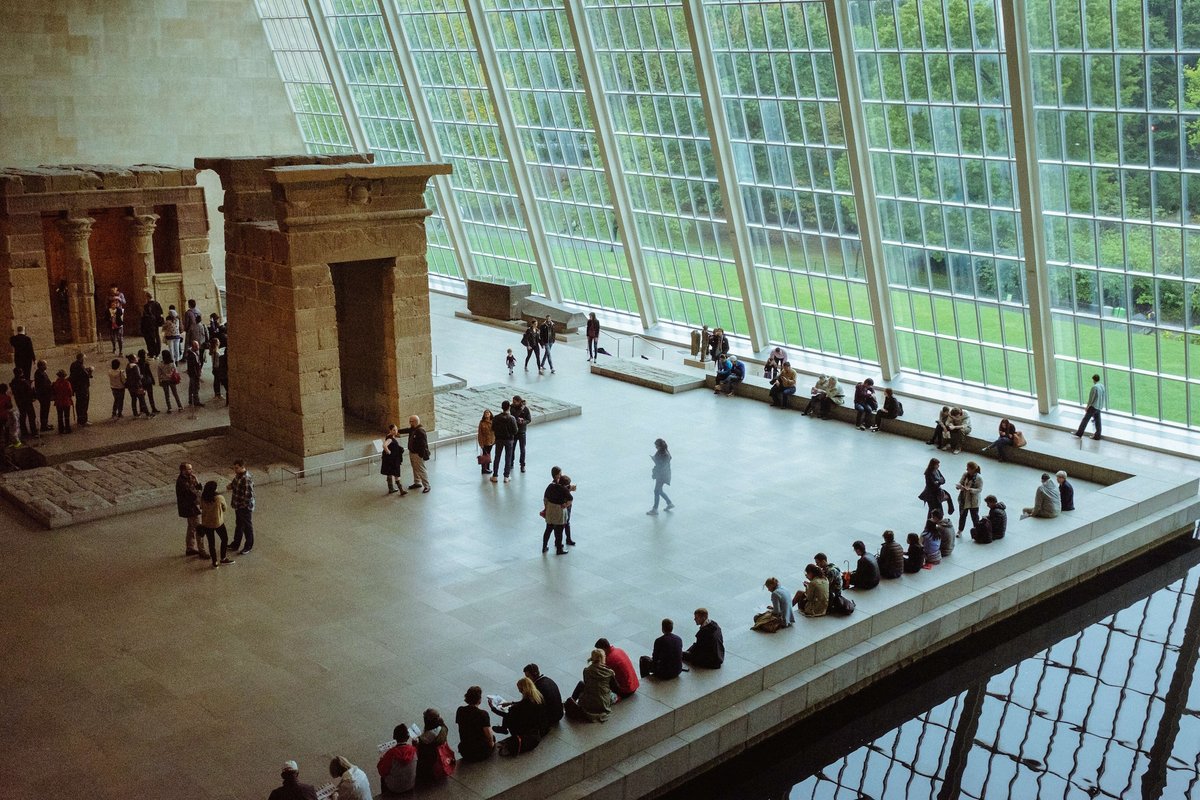
The Metropolitan Museum of Art in New York found that in spite of ever-increasing numbers of visitors, income from entry fees was actually trending downward since, when given the option of paying what they wish, a growing share of visitors paid quite little. As a result, admissions revenues at the Met were lower in real dollars in 2016 than they had been in 2004. The museum opted to make its pay-what-you-wish admissions policy only applicable to New York State residents and students with valid identification from New York, New Jersey or Connecticut—adult visitors otherwise currently pay $30.
Balancing earnings with access
Even museums with steep entry fees implicitly recognise this can pose a problem, as many offer free days or afternoons or discounts to first responders, active military, seniors, locals, the disabled, people receiving subsidies, students, caregivers and others. Still, for some museum leaders, free admission is a cause worth pursuing.
“Museums are charities and mistaking them for businesses that can ‘earn’ their way to solvency is mistaken,” says Maxwell Anderson, the former director of the Whitney Museum of American Art, the Indianapolis Museum of Art and the Dallas Museum of Art (DMA). “Contributed income and endowments are how museums are supported, not ticket sales. Imposing high admission fees only reduces the museum’s relevance to its local audience.”
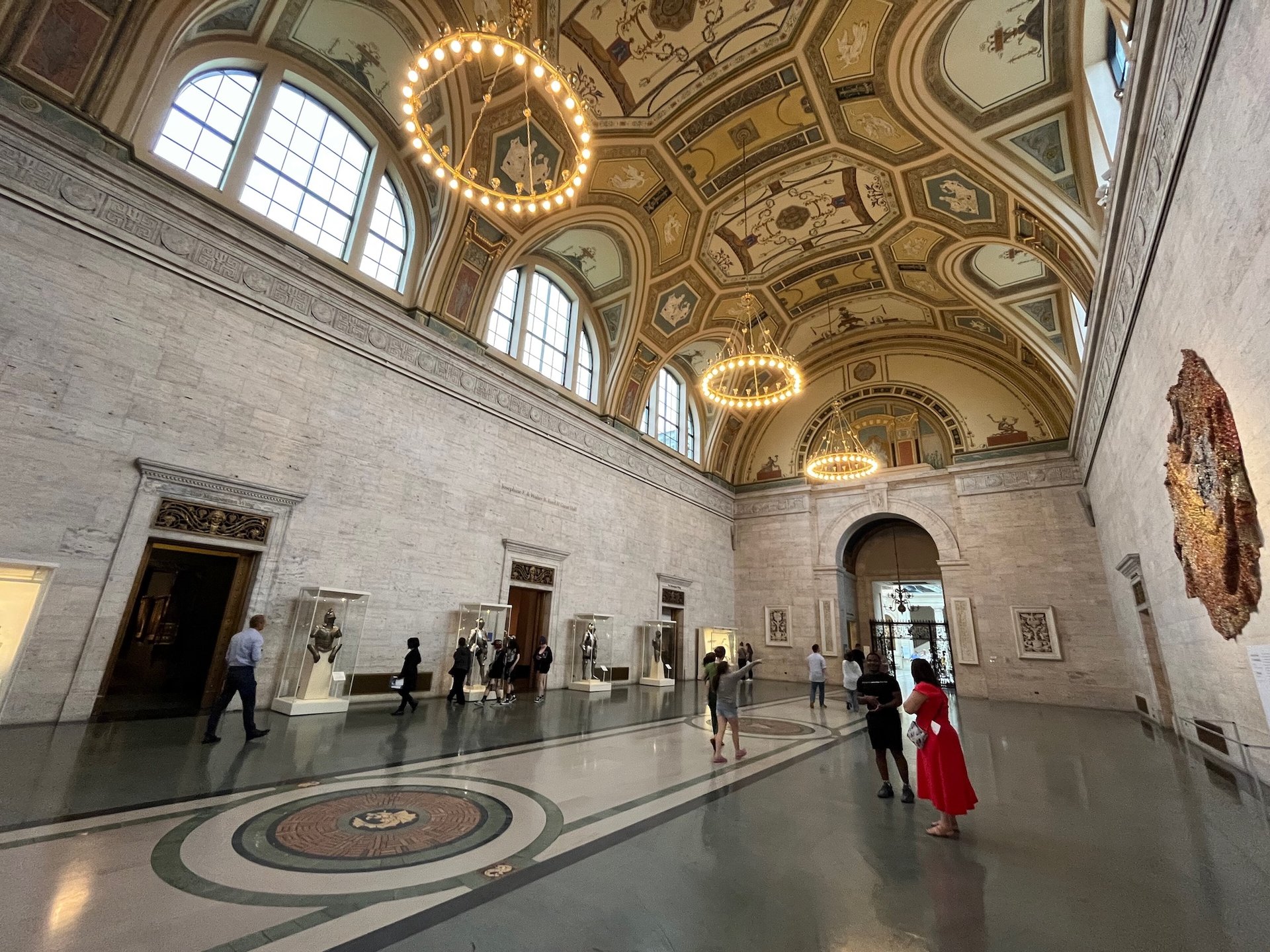
The Detroit Institute of Arts eliminated admission fees for residents of three surrounding counties in 2012, in exchange for the museum receiving a percentage of their property tax levy Photo by Antony-22, via Wikimedia Commons
In some instances, the most effective way to do away with most attendance fees while balancing the books is to find a donor to make up the lost revenue. That is what took place at the DMA in 2013 (which charges admission to special exhibitions) and the Los Angeles Museum of Contemporary Art in 2019. In 2012, the Detroit Institute of Arts (DIA) eliminated its admissions for residents of three surrounding counties (Wayne, Oakland and Macomb) in exchange for the museum receiving a percentage of their property tax levy.
As part of the DIA’s elimination of its admissions fees, the museum made notable changes in its displays and programming. A department of African American art was created, and a reinstallation of art placed a greater emphasis on contemporary art. According to Timothy Chester, the former director of the Grand Rapids Public Museum and currently a museum consultant, “the DIA added a variety of interpretive signage and interactive tools to help make installations more relevant to diverse audiences. Critics accused the institution of ‘dumbing down’ the museum, but such criticism quickly faded.”
Until the Met decided to do away with it, Weiss says, its pay-what-you-wish policy effectively reminded people of a social contract between the museum and its public, that “we all have an obligation to support this institution, which all of us own and all of us benefit from”.