How do you wrap up 19 years of boundary-pushing programming in an email, let alone an Instagram carousel? This was the unenviable task faced by Mara McCarthy, the founder of the Box, when she announced the downtown Los Angeles gallery’s closure on 24 April.
Although non-Angelenos might have lost McCarthy’s announcement amid the year’s good news-bad news shuffle, the Box’s legacy deserves a closer look. On the one hand, the gallery consistently spotlit the under-recognised post-war and contemporary art scene; on the other, it also played a vital role in mapping LA’s present-day gallery terrain.
The Box opened in 2007, joining an enclave of dealers in LA’s Chinatown neighbourhood. For McCarthy, who had returned from New York at a professional crossroads, the gallery solved two problems—one of which was also vexing her father, the celebrated LA-based artist Paul McCarthy. The latter’s curation of a show at San Francisco’s CCA Wattis Institute for Contemporary Arts had just awakened him to how many significant artists of his era “were not being shown, or only being shown in Europe,” Mara tells The Art Newspaper.
The Box centred these overlooked artists early on. They included the performance pioneers Barbara T. Smith and Simone Forti, the moving-image pathbreaker Stan Vanderbeek and the political-art firebrand Wally Hedrick. Several informed LA’s artistic legacy; none was particularly marketable. Yet the younger McCarthy also decided the Box had to be a commercial gallery. She understood that private and institutional collectors are incentivised to champion their holdings, by funding monographs, supporting exhibitions and more. Redefining the canon is easier with motivated buyers on board.
For Mara, however, attitude and community guided the programme. She “wanted to find a slightly punk version” of the galleries she had visited in New York— a version “more grounded in humanity”, she says.
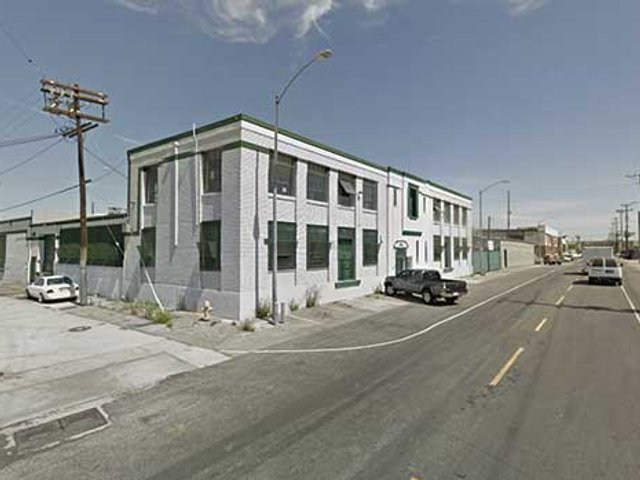
Although LA’s downtown Arts District is now taken as a given, the Box was among the first galleries to move there, to 805 Traction Avenue, in 2012. At that time, McCarthy says, the neighbourhood’s main cultural attractions were the Museum of Contemporary Art’s Geffen Contemporary annexe; the Southern California Institute of Architecture (SCI-Arc); the artisanal sausage restaurant Wurstküche; and “one shitty coffee shop”. It would be another four years before Hauser & Wirth’s sprawling complex on East Third Street opened a few blocks away.
Still, the lineage to LA’s avant-garde past was literally in sight. Across the street from the new Box was a building that once housed Al’s Bar, a landmark venue for punk bands and performance art where her father and other artists in the gallery’s programme performed.
The Box tapped into this history by opening its new space with a show of the Los Angeles Free Music Society, an avant-garde sound and performance collective founded in 1973. It was an emblem of what made the gallery distinctive and what made it precarious.
The slow fold
The Box achieved its ambitions in several LA art professionals’ eyes. Mia Locks, the co-founder and executive director of Museums Moving Forward says it “had a unique and meaningful position in the LA gallery landscape”, partly from being “a curatorial project meets artist-run space as much as it was a commercial gallery”. Curator Andrea Gyorody praises the way the space “consistently obliterated the limits of good taste and propriety in ways that were risky, raw, grungy and excessive”.
Yet the Box was always funded partly by sales and partly by McCarthy Studios. As her father’s work has started “to not sell as much”, Mara says, other recent difficulties have compounded—from collectors’ turn away from experimental work during the pandemic to the Eaton Fire, which destroyed Mara and her parents’ homes, as well as her brother’s home and studios, in Altadena in 2025.
The Box’s last hurrah will be a one-night-only fashion show on 6 June, featuring work by gallery artist Johanna Went in collaboration with the artist-author Asher Hartman. Went is known for what the younger McCarthy calls “bad-ass, crazy punk performances: screaming onstage, a lot of costumes, very feminist, very gore-heavy”.
“I think it’ll be a little bit of a ruckus,” McCarthy says. “Johanna said, ‘I feel like it should end with a little bit of a brawl.’” For a gallery so dedicated to jarring work, it would be a fitting conclusion.