Although the stories of Caribbean pirates like Blackbeard and Henry Every have captivated people for centuries, their shipwrecks off the coast of the Bahamas remained largely unexplored—until now. The first-ever underwater archaeological expedition in Nassau Harbour recently discovered six shipwrecks, including three linked to the “golden age of piracy” in the late 1600s and early 1700s. Pirate-linked artefacts—clay tobacco pipes, iron cannons, lead musket balls and a swivel gun—were found among the sunken ships.
Nassau, located on New Providence Island, was once the capital of a “pirate republic” of more than 1,000 people at its height in the early 18th century. Nassau’s secluded location near major shipping routes made it an ideal hideout. In 1718, Woodes Rogers, New Providence’s British governor, documented 40 vessels sunk and burned in the area—a common tactic to destroy evidence of pirates’ crimes. Many ships perished there later because of bad weather and currents. A database created by the international archaeology project New Providence Pirates Expedition and the private maritime archaeology company Allen Exploration includes more than 504 ships that were lost between 1651 and the First World War.
Since the 1960s, much of Nassau Harbour’s submerged heritage has been destroyed by dredging to make room for cruise ships. Diving there is restricted because of heavy maritime traffic. The New Providence Pirates Expedition, organised by the London-based not-for-profit organisation Wreckwatch in partnership with the Bahamas’ Antiquities, Monuments and Museum Corporation, received the first official permit to investigate whether traces of piracy remained in the harbour.
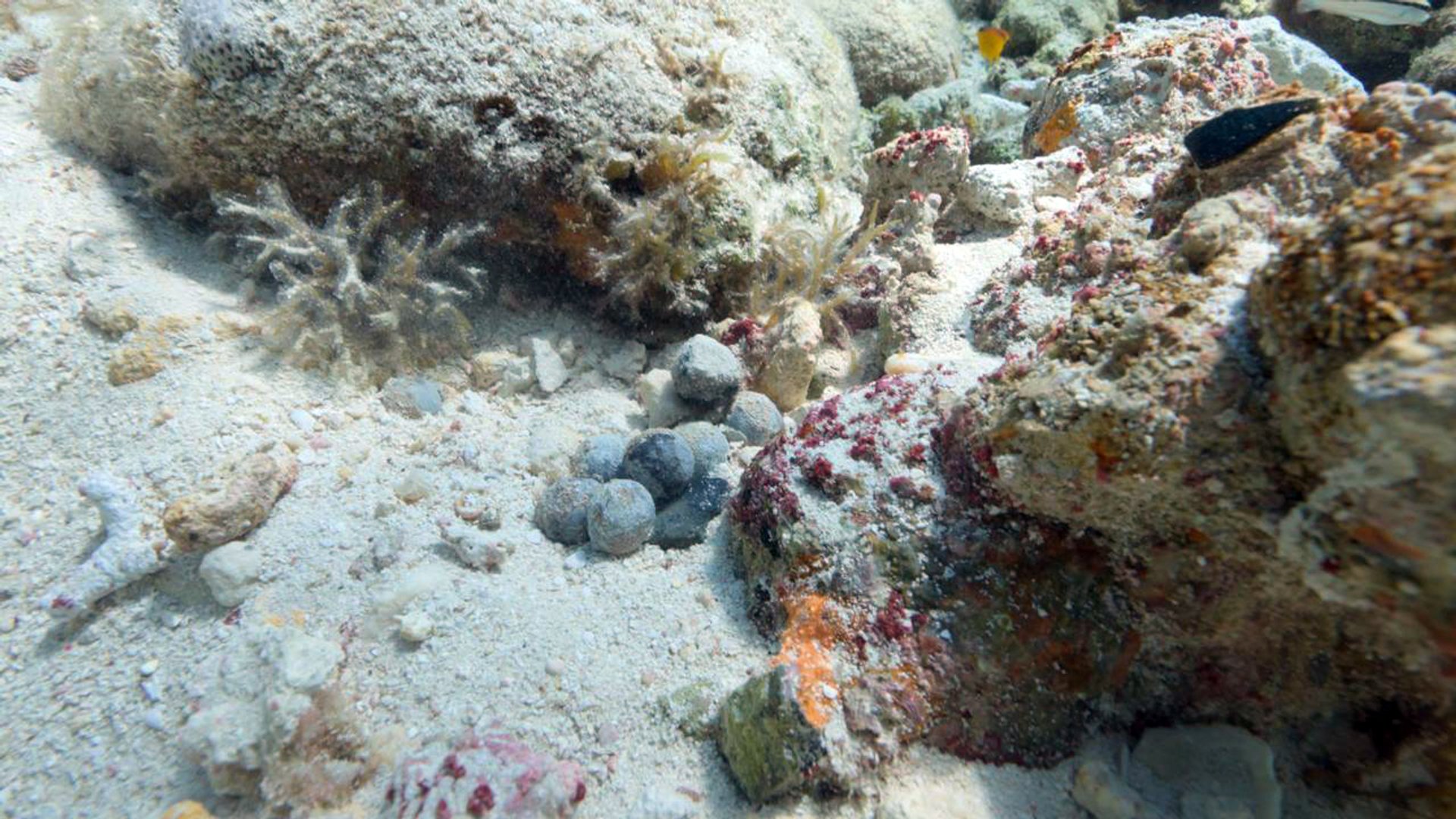
Musket balls found near the shipwrecks © Wreckwatch TV
The project involved two years of research and relied on both satellite imagery and local knowledge. “No baseline study existed. The chances of going home with nothing were high,” Sean Kingsley, a marine archaeologist and the project’s co-director, tells The Art Newspaper. (Kingsley is also the founder of Wreckwatch.) “Water traffic, dangerous rip tides, sharks and large sections of the ancient harbour floor having been destroyed made planning complex.”
An expedition in autumn 2025 found the shipwrecks, three of which date to the pirate era and its aftermath. One of these has a charred wooden hull, consistent with the common practice of pirates burning their ships.
Kingsley thinks the hull may even be a remain from Every’s infamous ship the Fancy, which the pirate used to attack the treasure-filled Grand Mughal fleet in the Arabian Sea in 1695. The ship was likely stripped and abandoned in Nassau Harbour. “The hull is an early wreck, built in the age-of-piracy style and of a size comparable to the Fancy,” Kingsley says. But its identification remains uncertain. “Pirates kept no records, and many ships sank there,” adds Kingsley, noting that further analysis could reveal more information.
Another unexpected discovery was made in a heavily dredged area, where hull planks, rigging, bricks from a ship’s galley and 143 clay pipes were found. The pipes—adorned with unicorns, horses, crowns and England’s royal crest—likely belonged to a ship traveling from London to Nassau in the 1740s. “The tobacco pipes forge a direct link between a favourite pastime of mariners and pirates,” Kingsley says. “Pirates and privateers were patriotic, and most refused to attack their fellow Englishmen sailing under the home flag.”
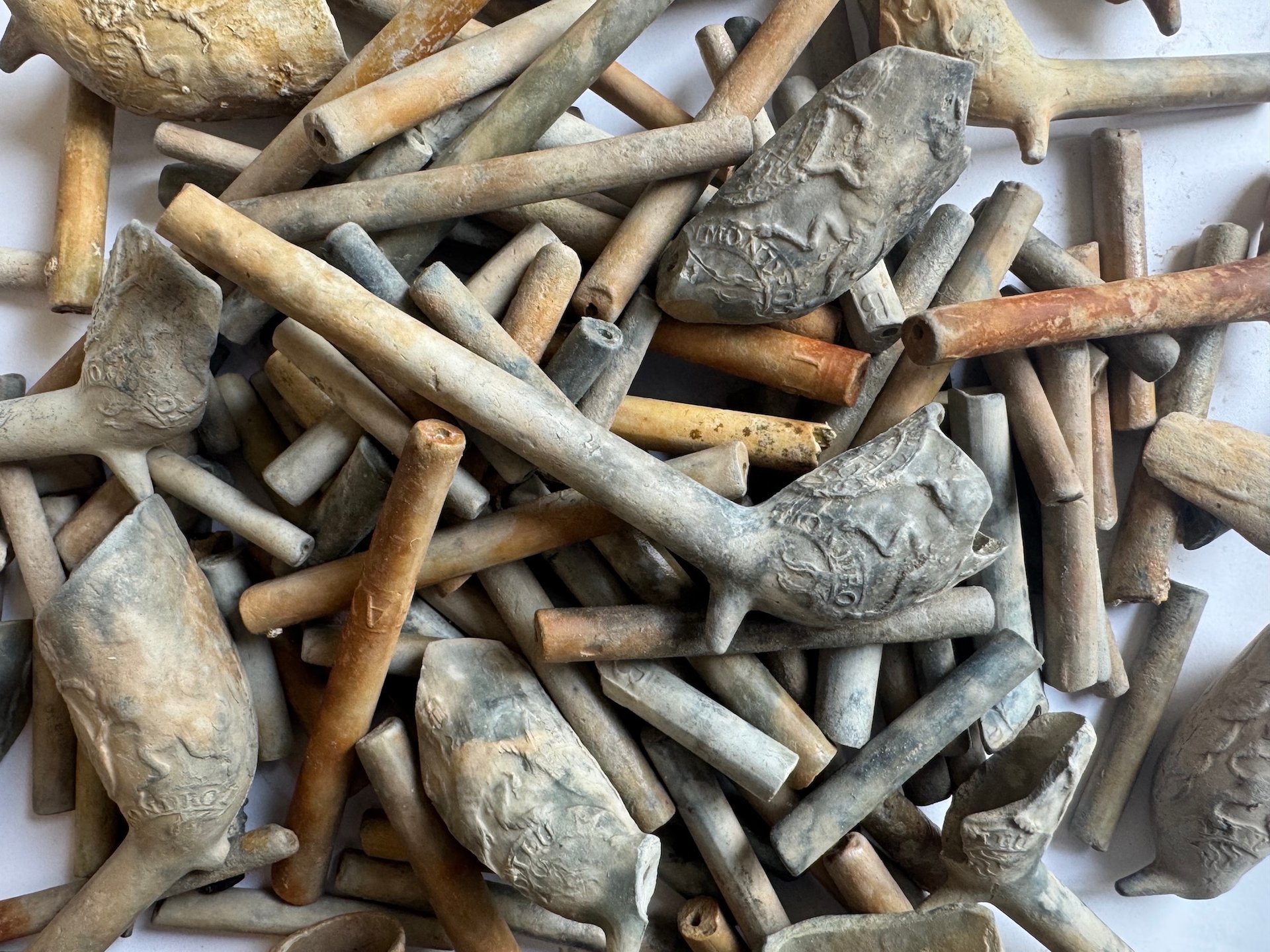
Tobacco pipes, decorated with the royal crest of the king of England, recovered from a 1740s shipwreck Photo: Sean Kingsley, © Wreckwatch TV
The New Providence Pirates Expedition seeks to reverse decades of looting in the Bahamas, which was largely allowed until 1999. “From the 1960s to the early 1980s, the Bahamas saw rampant treasure-hunting,” Kingsley says. “We aimed to reverse that, acting as custodians supporting the Bahamas, and to show through discoveries how pirate ships were built, and how pirates lived.”
The expedition focused on documenting the site, although the pipes, bricks, wood and other artefacts were surfaced for further study. “The recovered materials belong to the Bahamas and, once conservation is completed, they will be part of the country’s heritage,” says Michael Pateman, the project’s other co-director and the director of the Bahamas Maritime Museum.
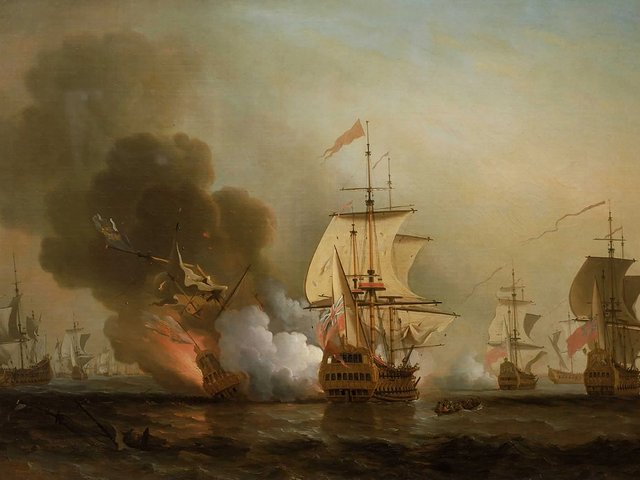
The museum—founded in 2022 by the underwater explorer Carl Allen of Allen Exploration—features the remains from the Spanish galleon Nuestra Señora de las Maravillas, lost off the northern Bahamas in 1656. Pateman notes that the region struggles to preserve submerged heritage due to its vast archipelago and limited resources.
The New Providence Pirates Expedition, featured in the documentary series Wreckwatch TV and in Wreckwatch Magazine, aims to raise awareness. “I hope these discoveries help people understand that the real value of a shipwreck is not the gold, silver or gems,” Pateman says. “It is in the stories it tells about the Bahamas and the way it can support cultural tourism when managed properly.”
More discoveries are sure to follow. “We would like to return and record the wrecks in greater detail and seek small finds,” Kingsley says. “There’s plenty of lifetimes' work here.”