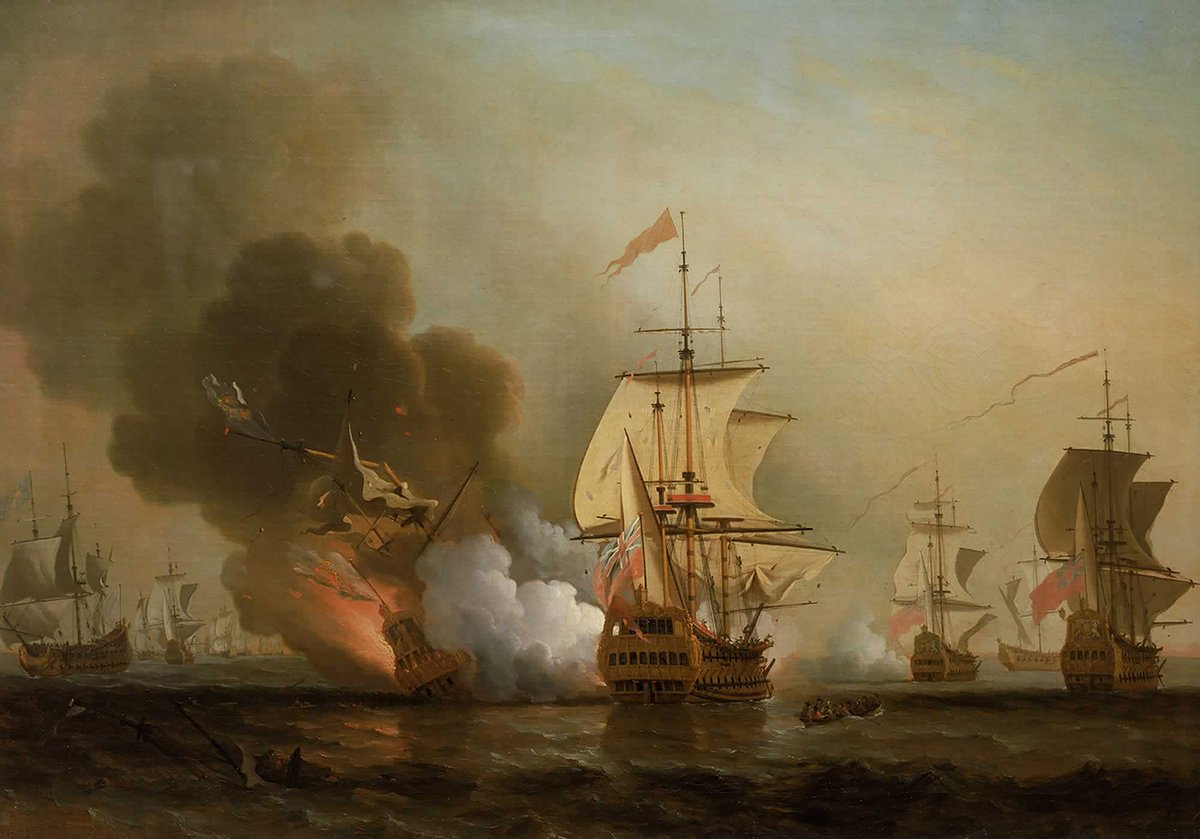
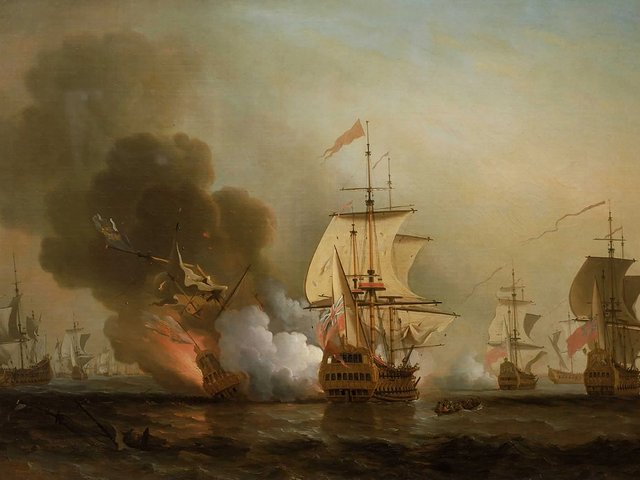
Which holds more value: the story of a shipwreck or the treasures it carried? For years, controversy has surrounded the San José, a Spanish galleon loaded with gold, silver and emeralds that sank off Colombia's coast in 1708. It was destroyed by the British during the War of the Spanish Succession, and almost 600 people onboard lost their lives. The ship’s lucrative cargo, meant to fund the war, sank more than 600m to the seabed.
Ever since Colombia announced the galleon’s discovery in 2015, the San José has become one of the world’s most disputed shipwrecks. Controversy recently resurfaced after the oversight group Veeduría Nacional para el Control Social del Patrimonio Cultural Sumergido de Colombia (VNPCS) issued an open letter to Colombia’s attorney general, complaining of a lack of transparency and alleging looting and unauthorised interventions in 2016 and 2022. The letter also claims that the site’s co-ordinates, considered a state secret, have been disclosed.
VNPCS has advocated for the San José since 2017. Initially, its legal actions sought to halt Colombia's exploration alliance with Maritime Archaeology Consultants (MAC), the Swiss treasure-hunting firm that helped locate the ship in 2015.
“Our claims were not resolved in court," Francisco Muñoz Atuesta, the director of VNPCS, tells The Art Newspaper. "However, they led to the galleon’s designation as a cultural interest site in 2020, banning private involvement.” MAC is now seeking compensation.
In 2024, the San José was designated a protected archaeological area, placing it under the jurisdiction of the Colombian Institute of Anthropology and History (ICANH). But while many celebrated this enhanced protection, Muñoz says previous problems were disregarded: “Accusations of looting and unauthorised interventions were raised in January 2021 via legal channels, but authorities ignored them.”
These claims are partly based on a 2020 analysis by Rodrigo Pacheco Ruiz, a deep-sea maritime archaeology expert and fellow at the University of Southampton in the UK. In the study, Pacheco compared partial imagery of the San José from 2015 and 2016.
“Given the scarce information, it is hard to pinpoint the exact causes of sediment differences between the 2015 and 2016 images,” he tells The Art Newspaper. “They could result from human or natural causes, but there are selective areas with sediment removal.”
Treasure hunt
Over the years, many people and entities have laid claim to the San José and its valuable cargo. The most notorious dispute involves the US-based salvage company Sea Search Armada, which claims to have located the galleon in the early 1980s and is seeking $10bn, which it claims represents half the cargo’s value. The conflict even reached the Hague’s Permanent Court of Arbitration.
“There is no certainty regarding the legal process status, as it is currently listed as pending,” says Juan Guillermo Martín Rincón, a Colombian archaeologist and director of the Center for Historical, Anthropological and Cultural Research in Panama. He is also part of a university network that has questioned the Colombian government’s plan to raise the shipwreck since 2018.
Martín says that the steep legal costs are concerning: “The project has brought immense financial cost to the Colombian people. The cargo can no longer be shared, yet a payout of this magnitude could affect the country.”
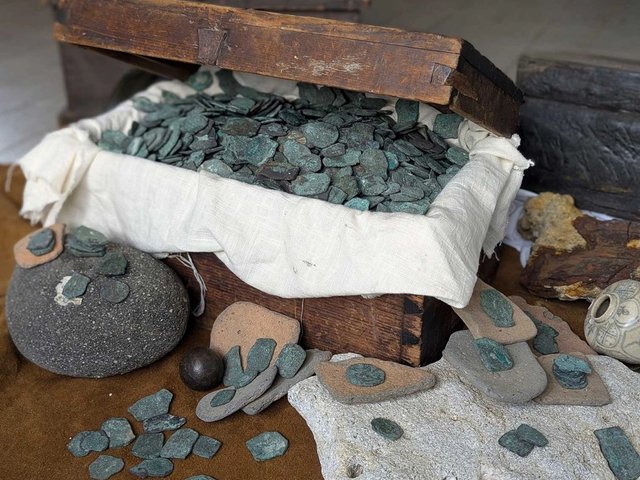
Plans for the San José also face scrutiny. Although the galleon’s full excavation was halted, the retrieval conducted by underwater robotics of a cannon, a porcelain cup and three coins in November 2025 drew backlash. “No scientific reasons were given for this extraction, and the equipment used was far from optimal,” Martín says.
“What destroys deep-sea archaeological contexts that are not at risk, like this one, is human intervention,” says Pacheco, noting that a project of this magnitude requires international scientific cooperation, which is currently absent.
Muñoz fears that the 2025 retrieval altered the site. “We demanded that no changes be made to the context before it was registered, as it was a crime scene,” he says. “Sadly, now it is too late.” Muñoz also believes the dismissal of imagery predating 2022 points to previous intrusions.
The San José research team views the issue differently. “The retrieved objects help determine the site’s conservation and degradation through physicochemical studies,” says Ricardo Borrero, a team member who previously opposed the galleon’s full excavation in a published paper. ICANH did not respond to requests for comment; the institute has repeatedly denied allegations of looting.
A fragment of rope found in the surfaced cannon has also sparked debate. In the open letter, Muñoz describes it as “most likely modern”, while Borrero argues that it is historical. “Other fragments of rope have been found in shipwrecks, including a 12th-century Viking vessel,” Borrero says. He underscores the excellent conservation of the ship’s wooden parts due to prevailing conditions but stresses that “the seabed is changing and dynamic”.
Experts question the continued exploration of the ship, with Martín and Pacheco bemoaning the lack of a long-term, science-based strategy. Critics in Colombia also cite fears of retaliation but remain committed to their cause.
Legal resolutions and the project’s next steps remain to be seen. Everyone The Art Newspaper spoke to agrees on one thing: the story of the San José is what makes it valuable, not the treasure it carried.
“The galleon’s heritage is universal, and it still has much to tell us,” Muñoz says.