Digital Editions
Newsletters
Subscribe
Digital Editions
Newsletters
Art market
Museums & heritage
Exhibitions
Books
Podcasts
Columns
Art of Luxury
Adventures with Van Gogh
Venice Biennale
Art market
Museums & heritage
Exhibitions
Books
Podcasts
Columns
Art of Luxury
Adventures with Van Gogh
Venice Biennale
Museums & Heritage
news

In museum first, MFA Boston pairs prized vessels by Paul Revere and enslaved artist David Drake

As part of a revamp of its galleries devoted to early American art, the museum is installing a clay jar by an enslaved artist alongside a bowl made by a hero of the US Revolutionary War

Jori Finkel
15 June 2026
Share
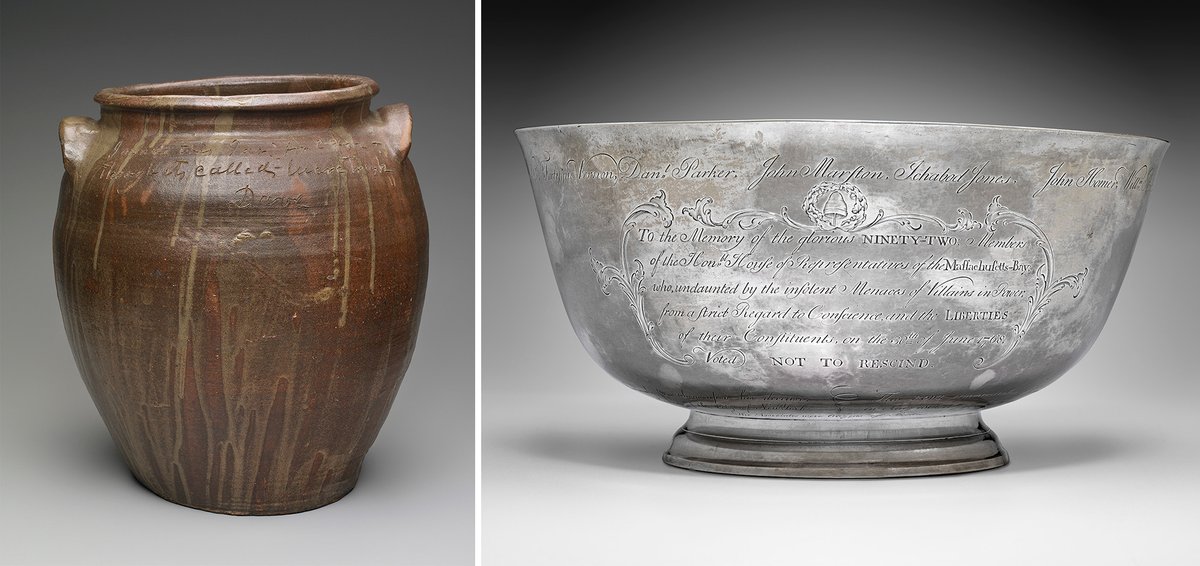
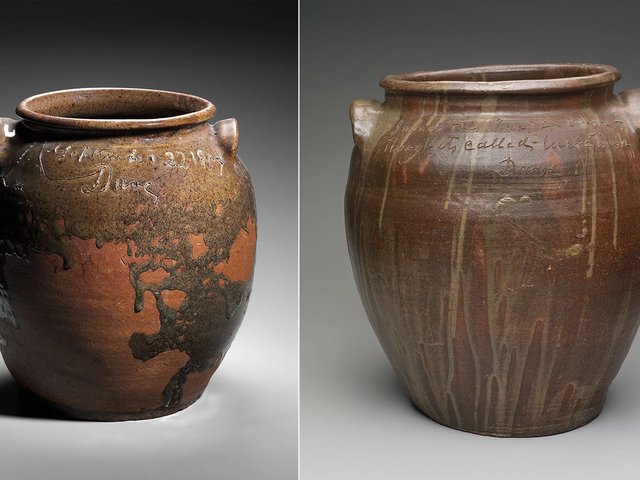
Left: David Drake (or Dave the Potter), Storage jar, 1857. Right: Paul Revere Jr, Sons of Liberty Bowl, 1768. Drake: John H. and Ernestine A. Payne Fund, Otis Norcross Fund, funds donated by the Curators Circle: Black Arts and Artists, Elizabeth M. and John F. Paramino Fund in memory of John F. Paramino, Boston Sculptor, Harriet Otis Cruft Fund, and Seth K. Sweetser Fund, from the descendants of David Drake. Photograph © Museum of Fine Arts, Boston. Revere: Museum purchase with funds donated by contribution and the Francis Bartlett Donation of 1912. Photograph © Museum of Fine Arts, Boston

Left: David Drake (or Dave the Potter), Storage jar, 1857. Right: Paul Revere Jr, Sons of Liberty Bowl, 1768. Drake: John H. and Ernestine A. Payne Fund, Otis Norcross Fund, funds donated by the Curators Circle: Black Arts and Artists, Elizabeth M. and John F. Paramino Fund in memory of John F. Paramino, Boston Sculptor, Harriet Otis Cruft Fund, and Seth K. Sweetser Fund, from the descendants of David Drake. Photograph © Museum of Fine Arts, Boston. Revere: Museum purchase with funds donated by contribution and the Francis Bartlett Donation of 1912. Photograph © Museum of Fine Arts, Boston

The enslaved 19th-century artist David Drake is finally getting a seat at the table of US history—or one of his most celebrated poem jars is.

After years of being relegated to the folk and self-taught art gallery at the Museum of Fine Arts (MFA) Boston, one of Drake’s important jars from 1857 is moving to the main galleries dedicated to the foundations of America.

Starting 20 June, in time for the celebrations marking 250 years since the country’s founding, the Drake jar is being shown prominently in the section’s first gallery, next to the “Sons of Liberty” silver bowl that Paul Revere made and inscribed in 1768 on the cusp of the Revolutionary War. One of the museum’s prized possessions, the Revere bowl has been compared in importance to the Liberty Bell in Philadelphia.

This pairing is part of the museum’s larger reinstallation of its 18th-century American art galleries, its first since 2010, overseen by the museum’s chief of curatorial affairs Ethan Lasser, who is also a Drake scholar. An overarching goal, he says, is to focus less on British rule and “stories of independence” and more on cultural exchange and “stories of interdependence—the way cultures depend on each other, are in conversation or in conflict”.
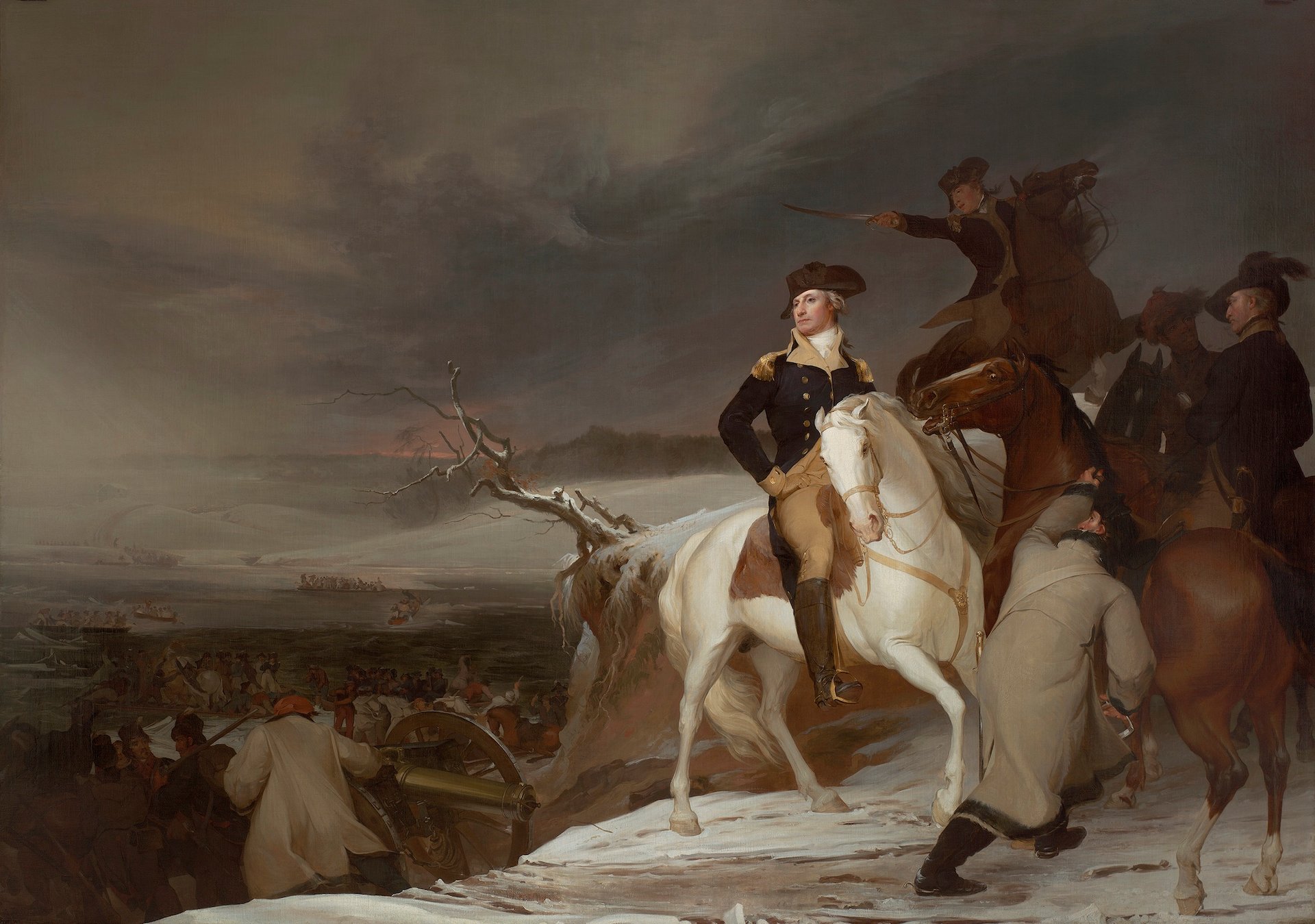
Thomas Sully, The Passage of the Delaware, 1819 Gift of the Owners of the old Boston Museum. Photograph © Museum of Fine Arts, Boston

In this spirit, he includes some objects that were made after the 18th century but look back at foundational questions of liberty. Thomas Sully’s 1819 The Passage of the Delaware, a dramatic portrait of George Washington on horseback, appears near a stainless steel bust of Washington from 2024 by Alan Michelson, a Mohawk member of Six Nations of the Grand River. Its title is Hanödaga: yas (Town Destroyer), as Washington was known among Native Americans, and the reflective surface lets visitors see their own faces in his.

The vessels by Revere and Drake speak to each other even more directly, and audibly. Both objects carry inscriptions by their makers, and recordings of these texts will automatically play when visitors approach the objects.
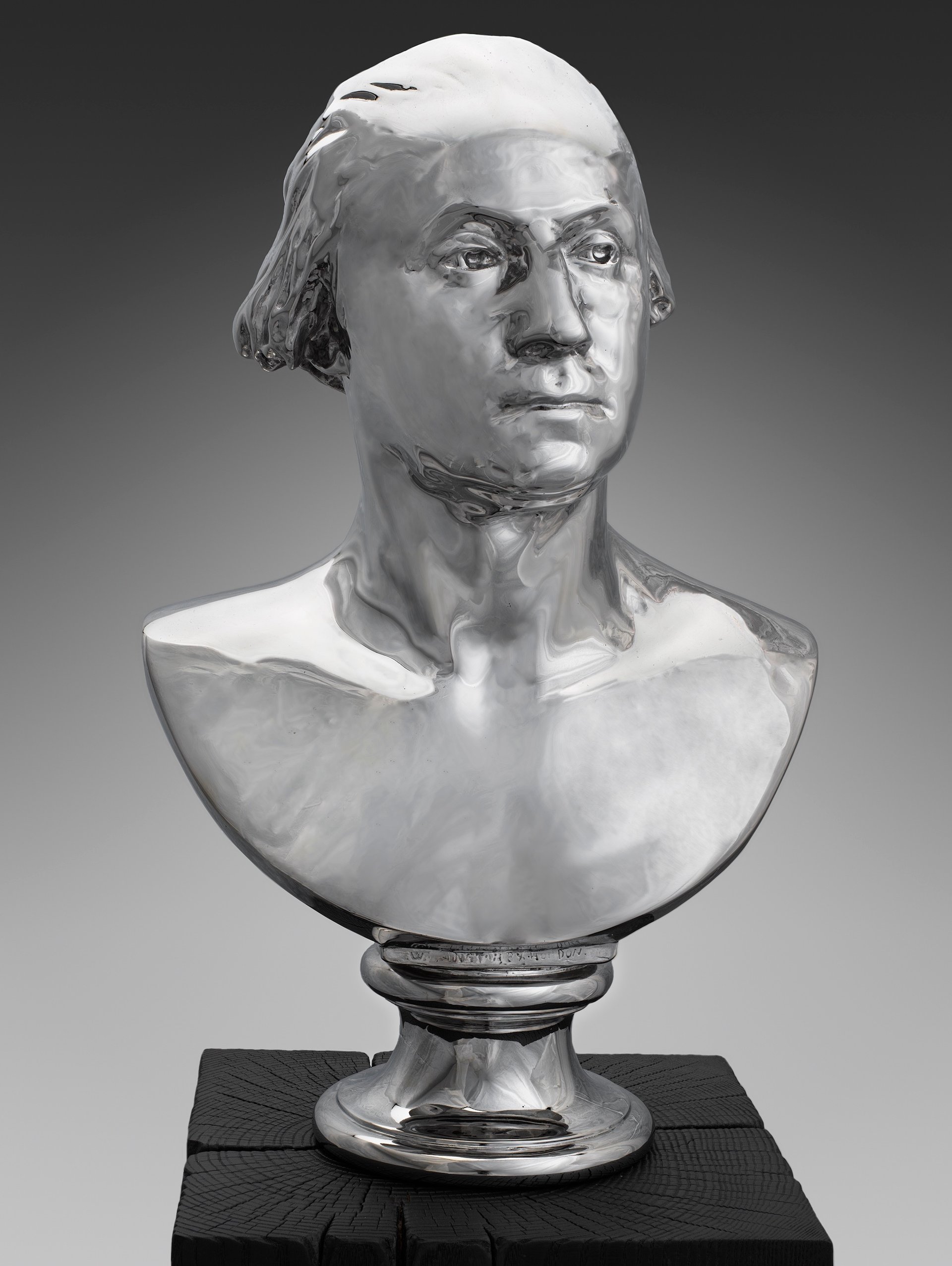
Alan Michelson, Hanödaga:yas (Town Destroyer): Reflect, 2024 Helen and Alice Colburn Fund. Artwork: © Alan Michelson. Photograph: © Museum of Fine Arts, Boston

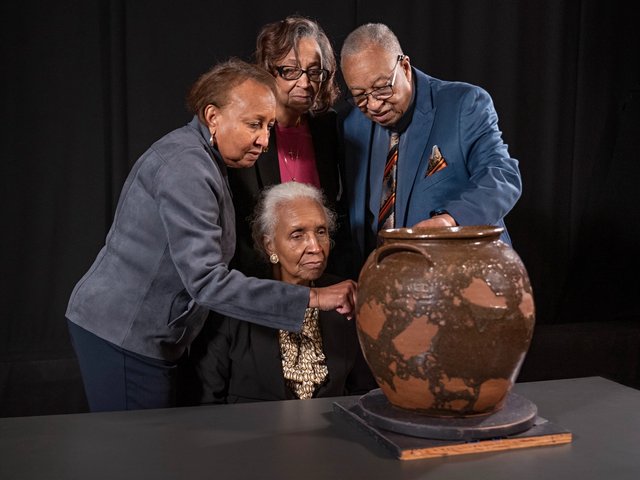
Even though literacy among enslaved people was punishable by fine or worse, Drake inscribed dozens of his pots with clever rhyming couplets, referring to everything from the jar’s size to the Bible. This one, which was restituted to Drake’s heirs and re-acquired by the museum last autumn, reads: “I made this Jar for Cash- /though its called lucre trash.” He would also sign his name Dave on the pot, hence his nickname “Dave the Potter”.
Leaders

Comment | Dave the Potter finally becomes a complete artist

George Fatheree

The Revere bowl has a longer engraving celebrating the 92 Massachusetts legislators who stood up to British taxation and the “insolent Menaces of Villains in Powers”. It could be considered an early example of protest art, making a compelling “no kings” statement, says Lasser. But when paired with the Drake jay, its blind spot is glaring.

“These men are arguing, they’re advocating, they’re protesting for liberty, but what they don’t see, or maybe they do see, is how many people they’re leaving out of that conversation, including people like Dave,” says Lasser.

He adds: “We love the idea of these two vessels with words on them talking to each other, about liberty, about freedom, about what it means to be American.”
Subscribe to our daily newsletter

Museums & HeritageExhibitionsMuseum of Fine Arts, BostonDavid Drake
Share
Subscribe to The Art Newspaper’s digital newsletter for your daily digest of essential news, views and analysis from the international art world delivered directly to your inbox.
Newsletter subscribe
Information
About
Contact
Cookie policy
Data protection
Privacy policy
Frequently Asked Questions
Subscription T&Cs
Terms and conditions
Advertise
Sister Papers
Sponsorship policy
Follow us
Instagram
Bluesky
LinkedIn
Facebook
TikTok
YouTube
© The Art Newspaper

Related content

Exhibitionspreview
26 March 2026

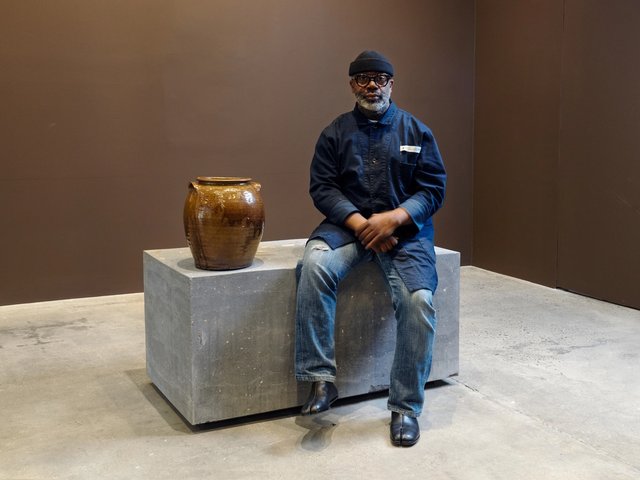
Theaster Gates gifts David Drake pot from his collection to enslaved ceramicist’s descendants

The ceramic vessel is on view in a new exhibition at Gagosian in New York, alongside another returned to Drake’s descendants last year by the MFA Boston

Gabriella Angeleti
Museums & Heritagenews
29 October 2025

In historic move, MFA Boston returns works by 19th-century enslaved artist David Drake to his heirs

The terms of the restitution of the two ceramic pots have been cast in the mould of Nazi war-loot agreements

Jori Finkel
Building projectsnews
20 December 2022

Long-awaited International African American Museum delays January opening

The museum says humidity and temperature control issues must be addressed before it can open to the public

Gabriella Angeleti
Restitutionnews
25 April 2024

MFA Boston returns Ancient Egyptian child’s coffin to Swedish museum it disappeared from decades ago

The clay coffin, which the MFA Boston acquired in 1985 with apparently false documentation, has been missing from the Gustavianum, Uppsala University Museum since at least 1970

Benjamin Sutton