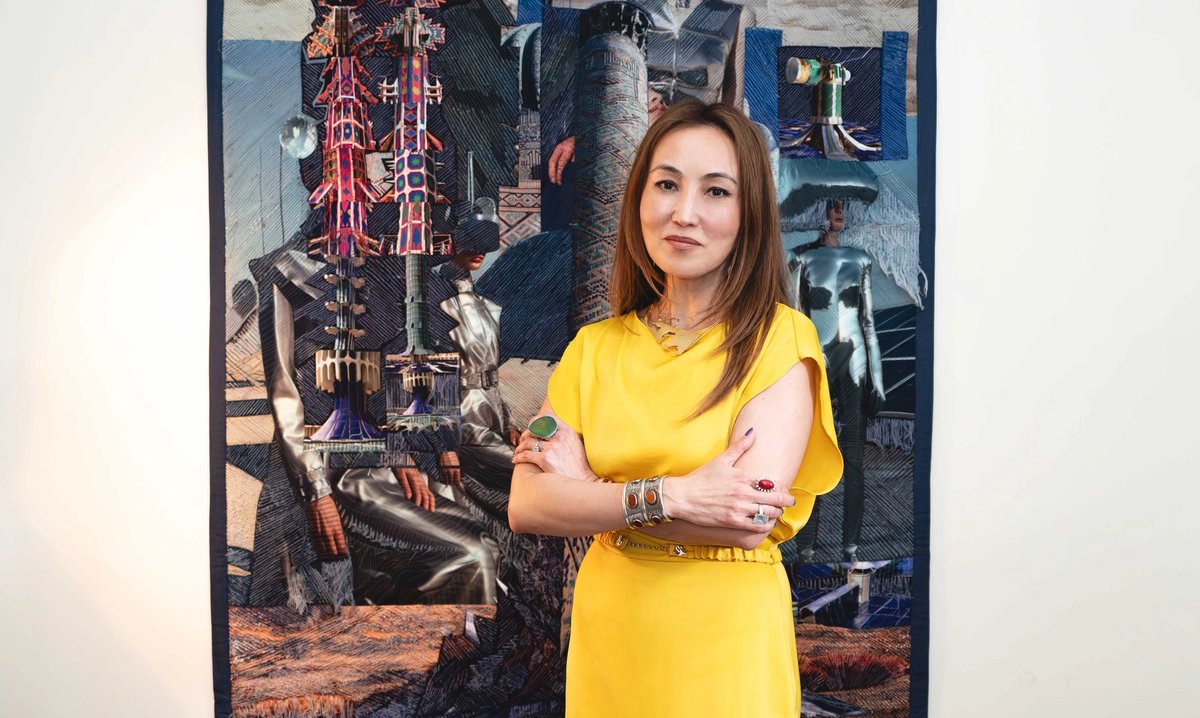
Born in Almaty, Kazakhstan, Dina Kemal Marchant has lived in London for nearly 30 years. The youngest of six children, she is the only one to live outside the country, and even now the heritage of her Central Asian background still exerts a strong pull. She returns there at least four or five times a year. “The soil of Kazakhstan is deep in my heart,” she says.
While she initially worked in the finance industry, in 2017 she started studying art history before founding Stories of Art, a company that offers one-year art history courses. She is also a patron and cultural adviser, with a focus on advancing Central Asian contemporary art. She is a supporter of the Kazakhstan Pavilion at the 61st Venice Biennale, as well as artist residencies at London’s Delfina Foundation.
The Art Newspaper: What was the first work you ever bought?
Dina Kemal Marchant: It was a rare pair of 17th-century Japanese six-leaf gold screens, Tales of Genji. I acquired them 28 years ago when I had just moved to London and started my first job at management consultants PricewaterhouseCoopers. What makes them particularly rare is that the two screens have remained together for more than four centuries. They still hang on the main staircase of my home in Chelsea and, remarkably, continue to work beautifully alongside my contemporary art collection.
I am particularly drawn to artists whose work engages with broader political, ecological or historical themes
What was the last work you bought?
I recently purchased a cyber textile by the leading Central Asian female artist Almagul Menlibayeva, The Map of Nomadizing Reimagining (2023). This is one of her most seminal works, created after four decades of artistic practice. The map traces 12 major multi-channel video installations filmed across Central Asia and Iran. It reflects on a region that in the ninth and tenth centuries was a cradle of civilisation and a centre of scientific, intellectual and cultural exchange.
How quickly do you decide to buy a work of art?
I rarely make quick decisions. Purchasing a work usually involves extensive research and conversations with the artist. Understanding the ideas behind the work, the intellectual challenges it poses and the story it tells is essential to me. I am particularly drawn to artists whose work engages with broader political, ecological and historical themes.
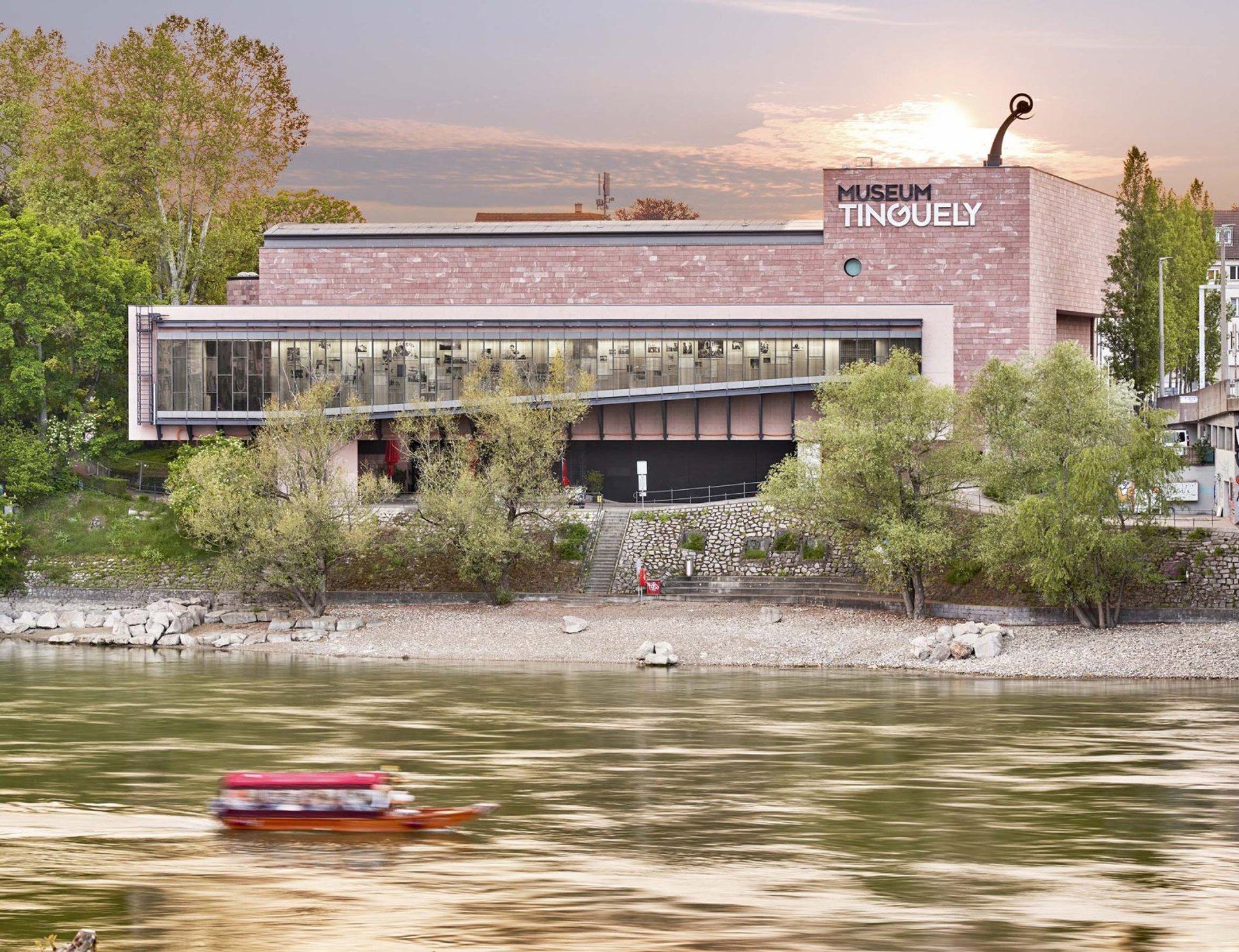
Museum Tinguely is a favourite spot for Marchant, who also likes to swim in the Rhine Courtesy This is Basel/Basel.com
What do you regret not buying when you had the chance?
One artist I regret not buying is Adrian Ghenie. The highly charged subject matter and intense colours spoke to me immediately. I first encountered his paintings at Haunch of Venison gallery [which closed in 2013] when they were priced at a low end of five-digit numbers.
If you could have any work from any museum, what would it be?
My favourite conceptual artwork is Boîte-en-valise by Marcel Duchamp, a “portable museum” containing miniature reproductions of his most important works. I admire how it challenges traditional ideas of originality and display, turning the artist’s entire career into a compact, thought-provoking object.
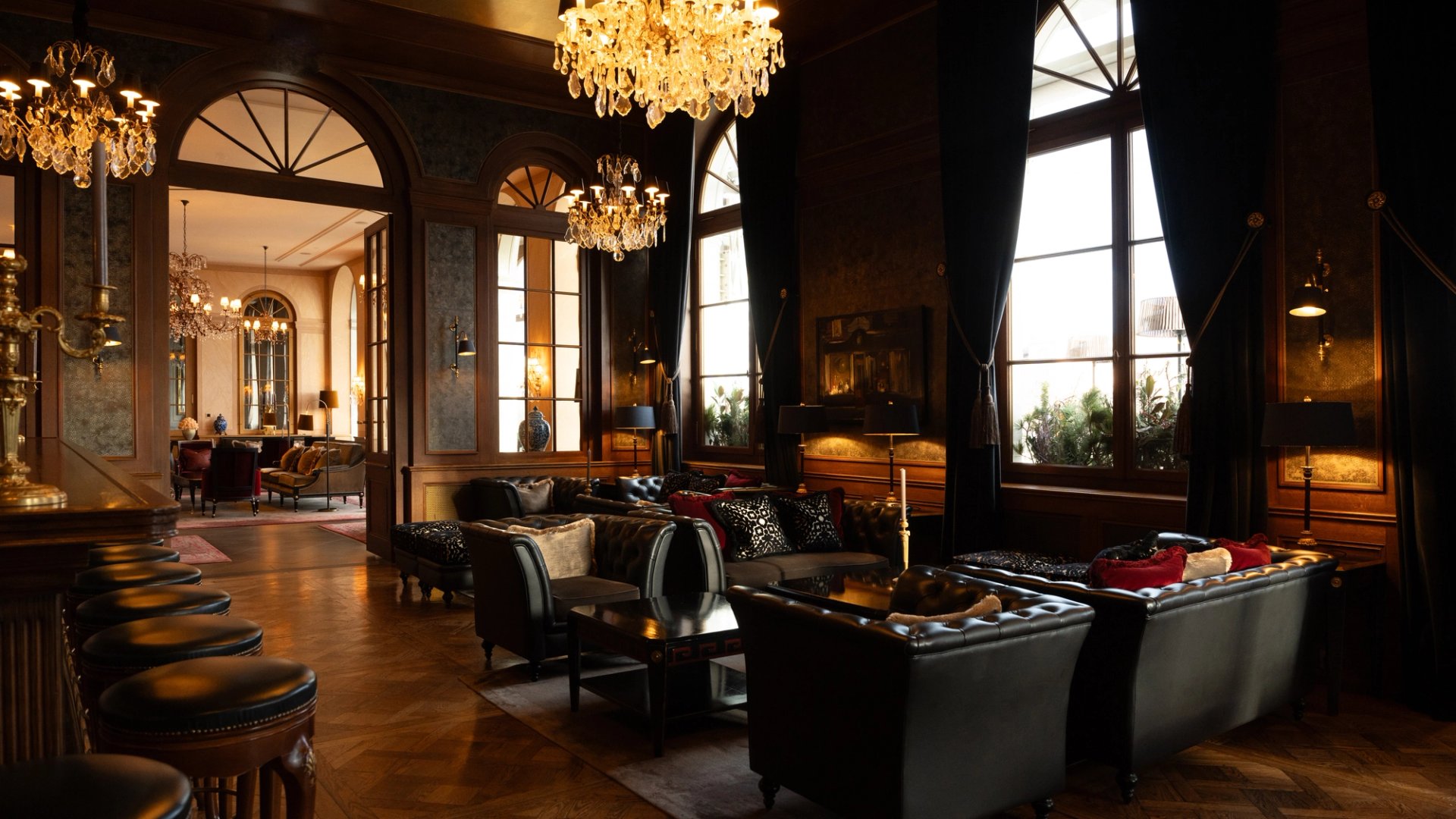
The bar at Les Trois Rois hotel on the Rhine is a popular haunt for visitors to Art Basel, including Marchant Courtesy Les Trois Rois
Where do you like to eat and drink in Basel?
A great meeting place for drinks or coffee is Les Trois Rois hotel. For dinner I like Volkshaus Basel. Designed by Herzog & de Meuron, it offers a modern interpretation of Swiss hospitality. And then Namamen in the Messeplatz is a quick fix for warm Asian food when you are on the go to yet another party.
Do you have any parties lined up?
Yes, I am a real party animal! For a start I have been invited by Delfina, White Cube plus many others.
What’s your least favourite thing about art fairs?
What I never liked is that as you enter major art fairs, the big galleries always have the prime location at the entrance. I like the recent change, for example at Frieze, that mingles different-sized galleries. I also like the single-artist approach, which you don’t always see: it gives the artists space, and a platform to talk.
Where do you go in Basel to get away from it all?
The Tinguely Museum. Right behind the building there is a path down to the river. You put your clothes in the special “Basel style” wet bag and get carried away along the Rhine.