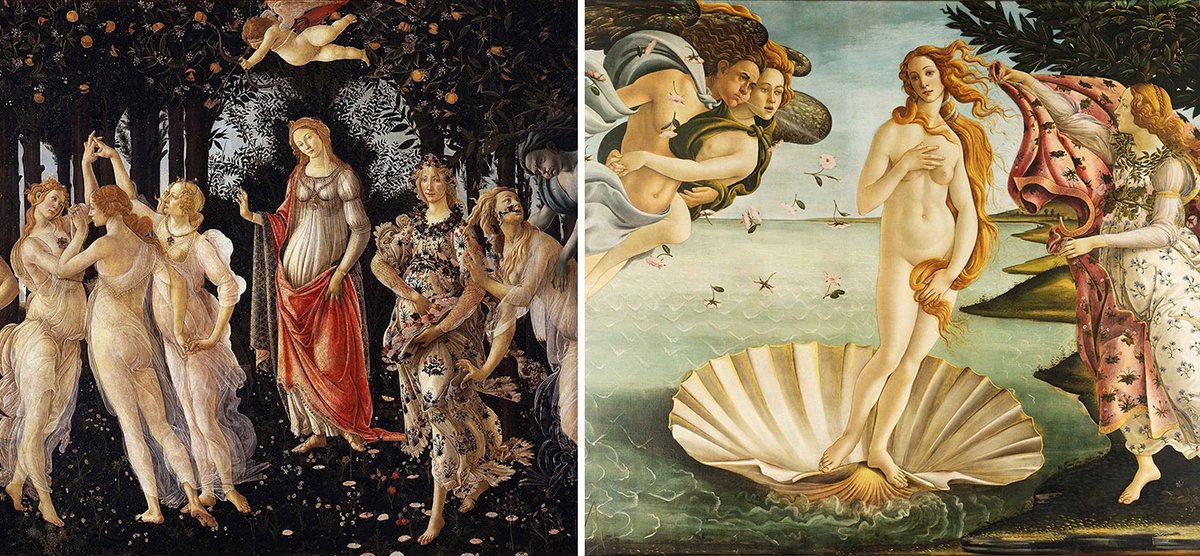
The Uffizi Galleries in Florence have hung their two most famous paintings—Sandro Botticelli’s Primavera (around 1480) and The Birth of Venus (around 1485)—opposite one another for the first time.
The reorganisation forms part of a major refurbishment of the museum’s Botticelli Rooms unveiled on Wednesday. The revamp includes new digital screens displaying explanatory videos and notes, a rehang displayed to place works in dialogue, upgraded lighting, and walls repainted in “Renaissance grey” to enhance the chromatic subtleties of Botticelli’s paintings.
“Today marks another important milestone,” said Simone Verde, the director of the Uffizi, in a statement circulated by the museum. Verde added that the project aimed to “reunite” the vast heritage of Florence’s Medici patrons “so that the Galleries… may continue to be what they have always been: the most beautiful museum in the world.”
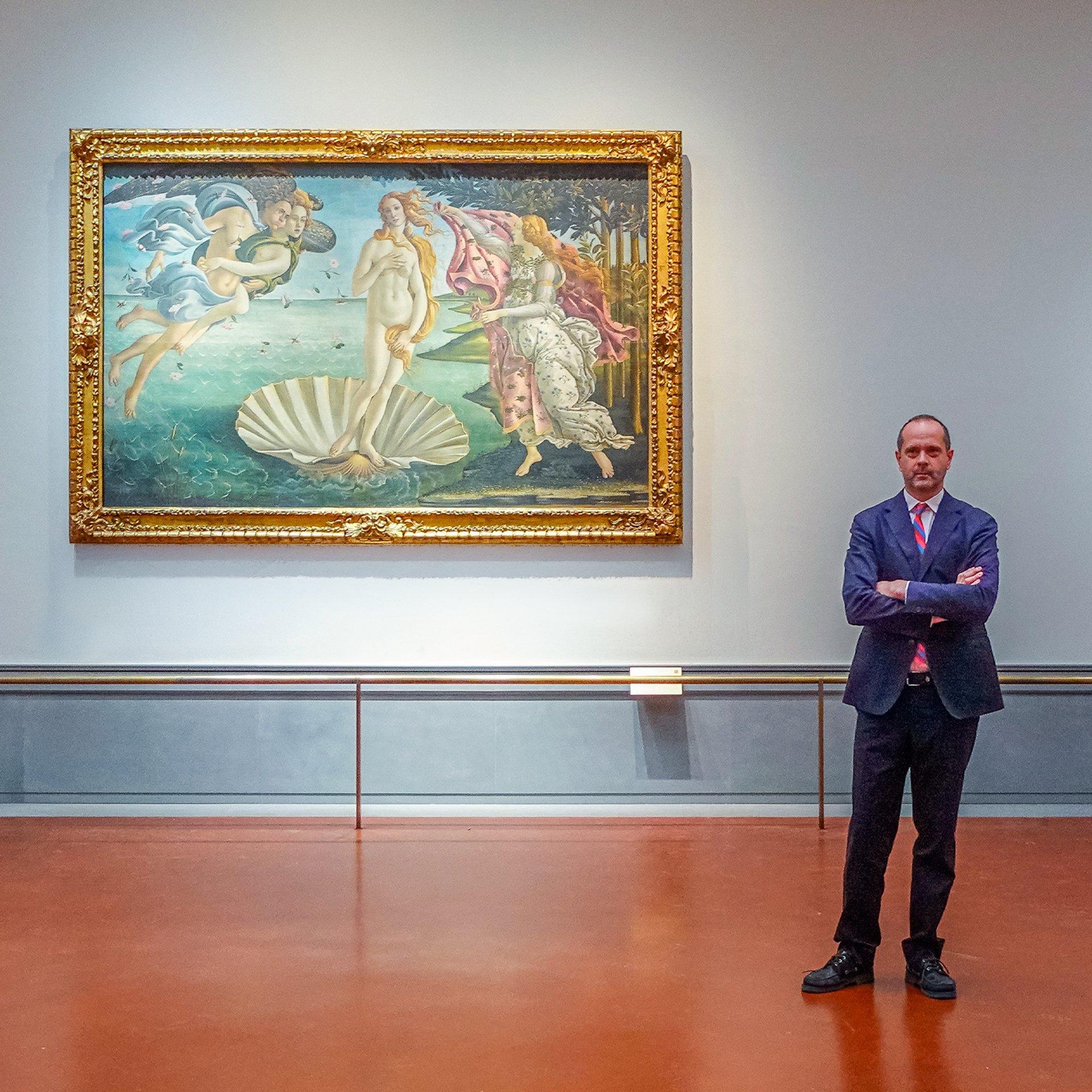
Simone Verde with Botticelli's Birth of Venus © Press office of the Uffizi Galleries
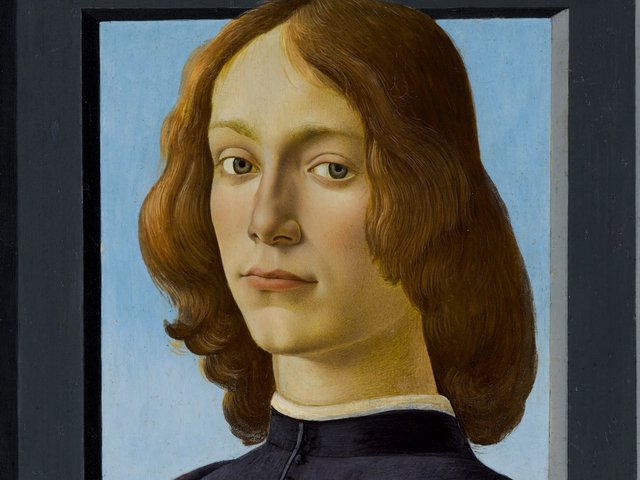
The Uffizi’s two adjoining Botticelli rooms, which were formerly painted cream and are connected by an opening in the dividing wall, contain 16 works by Botticelli, an Uffizi source told The Art Newspaper. They include Portrait of a man with a medal of Cosimo the Elder and Stories of Judith (both 1445-1510), which have been placed in new recessed display cases within the passageway linking the rooms.
The protective glass screens previously installed over Botticelli’s Primavera and The Birth of Venus have been replaced with new airtight, state-of-the-art display cases which allow for a clearer view of the works. “I got goosebumps looking at the works because the effect is incredible,” the source said. “The works are close but there is elegance and a sense of space that wasn’t there before.”
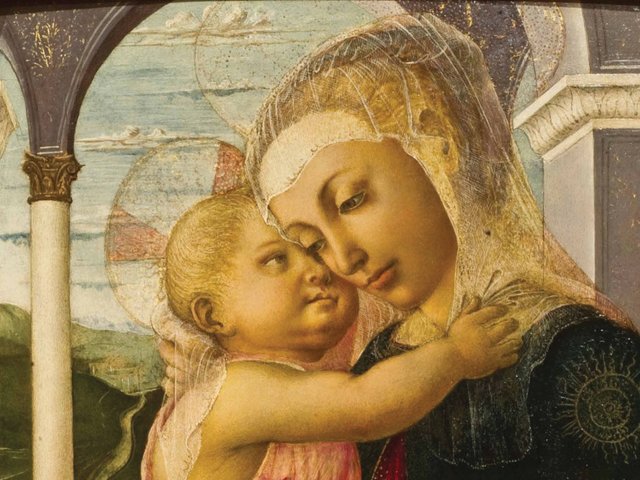
The Birth of Venus is now flanked by Botticelli’s circular paintings Madonna of the Magnificat (around 1483) and Madonna of the Pomegranate (around 1487), in a way that suggests how Venus was believed by some to be a prefiguration of the figure of the Virgin Mary. Meanwhile, the Primavera is shown alongside the tempera on wood painting Madonna of the Rose Garden and Madonna and Child in Glory of Cherubim (both around 1470).
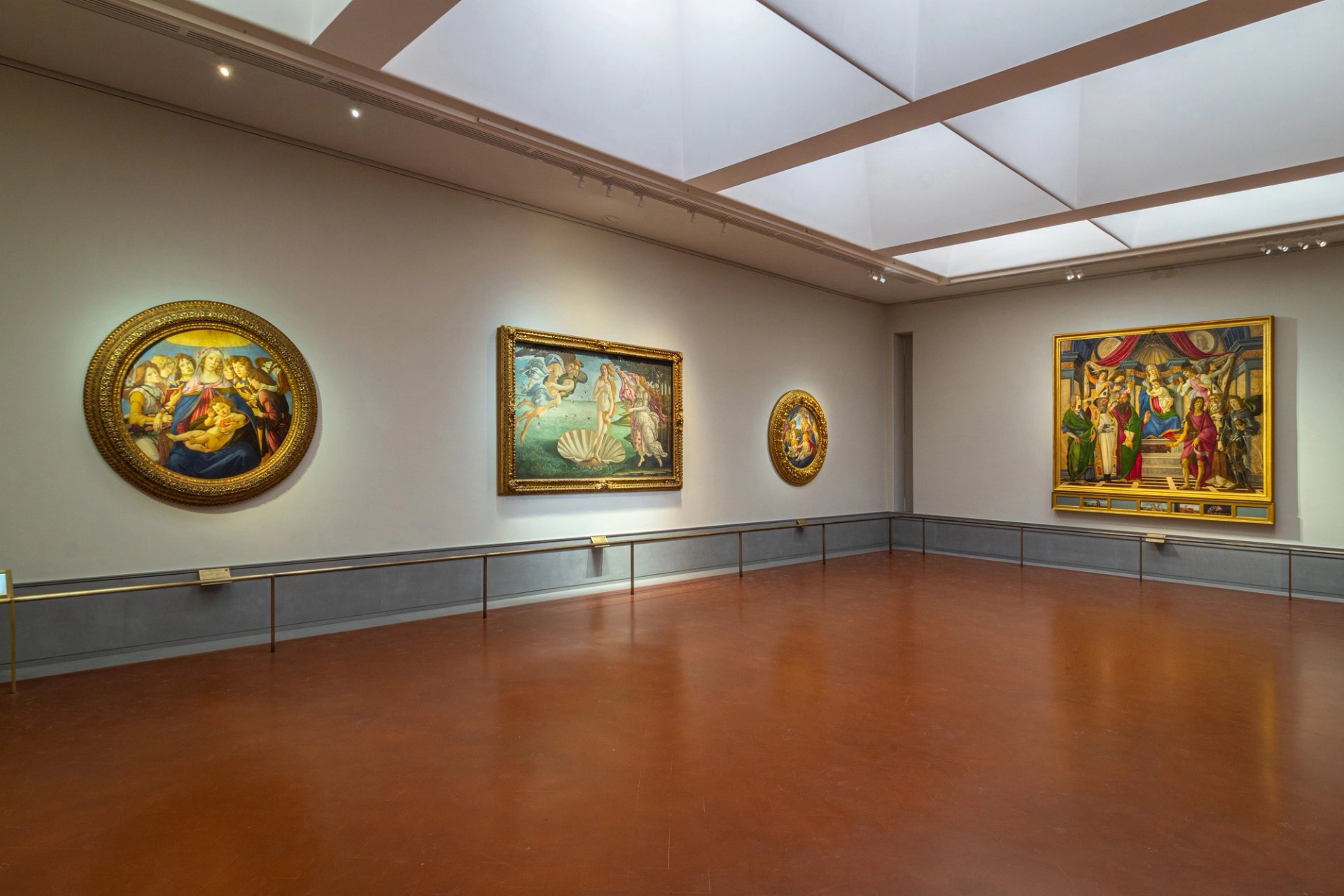
Botticelli's Madonna of the Magnificat (around 1483) and Madonna of the Pomegranate (around 1487) flank The Birth of Venus © Press office of the Uffizi Galleries
A detached Botticelli fresco depicting the Annunciation, originally created for Florence’s church of San Martino, is also now displayed against the newly grey walls. “A study was carried out into the colour scheme in order to recreate a look consistent with Renaissance interiors, their colours, and pietra serena stone,” the source said.
The refurbishment of the Botticelli rooms forms part of a broader reorganisation of the Uffizi’s collections since 2023. The initiative has already resulted in the reopening of several renovated spaces, including the Niobe Room, which reopened in 2024 and houses two large paintings by Peter Paul Rubens.
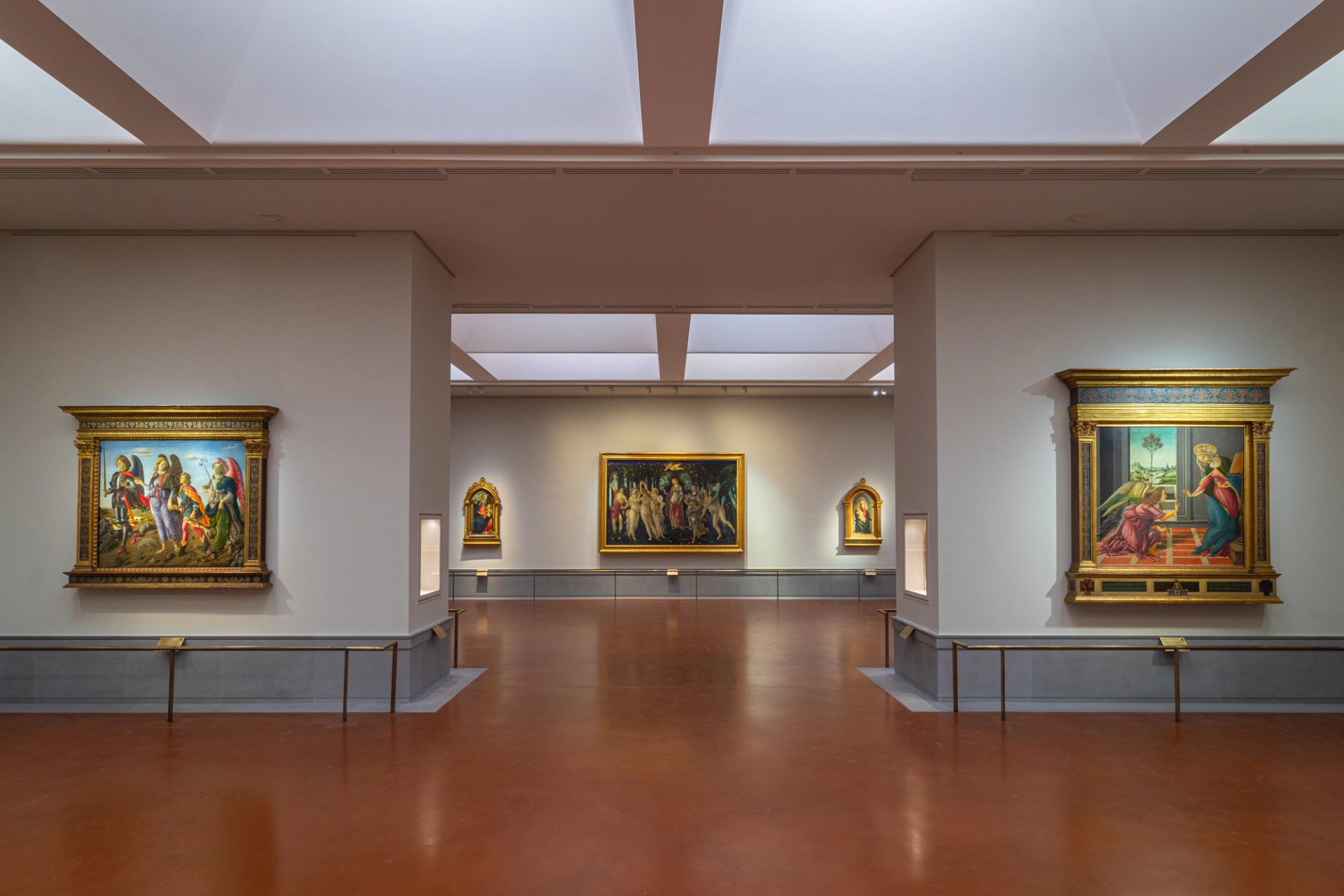
Primavera in the refurbished Botticelli rooms © Press office of the Uffizi Galleries
A museum spokesperson contacted by The art Newspaper declined to disclose the cost of the Botticelli rooms project or how it was financed.