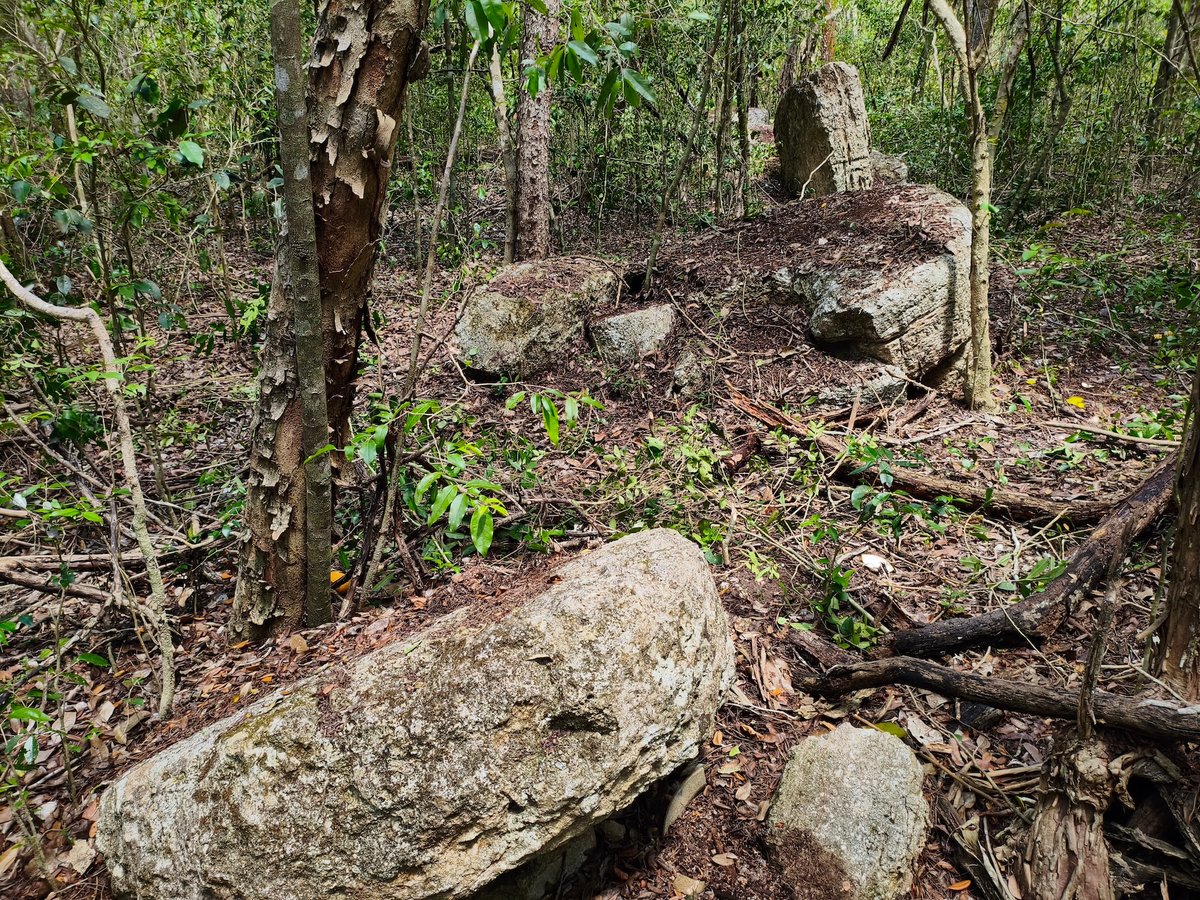
Minanbé (“there is no road” in Yucatec Maya) is the name of a newly discovered, intact ancient Maya city in the depths of the Calakmul Biosphere Reserve in the Mexican state of Campeche.
The 15-hectare site includes a pyramid temple and 14 stone monuments. It was identified by an international team led by the archaeologist Ivan Šprajc of the Research Center of the Slovenian Academy of Sciences and Arts, with authorisation from Mexico’s National Institute of Anthropology and History (INAH). The discovery follows three decades of research, during which Šprajc identified more than 80 Maya sites across the largely unexplored Central Maya Lowlands of the Yucatán Peninsula.
The 723,185-hectare Calakmul Reserve is Latin America's second-largest remnant forest after the Amazon. The reserve and the ancient Maya city of Calakmul are jointly inscribed on the Unesco World Heritage list. The area is rich in Maya heritage. More than 500 archaeological sites of varying sizes have been identified there. “The continuity of the vestiges in the region is such that it is frequently impossible to determine where one ancient community ends and another begins,” Šprajc tells The Art Newspaper.

Lidar image of Minanbé Courtesy the Research Center of the Slovenian Academy of Sciences and Arts
Since 1996, Šprajc has led numerous INAH-approved research projects, including more than ten field seasons of archaeological reconnaissance in protected natural areas during the dry season, from March to June. Among his discoveries are the nearby Maya sites of Chactún (in 2013) and Ocomtún (2023). Like other sites in the region, Minanbé was identified through light-detection and ranging (Lidar) surveys.
“Lidar is a powerful scanning method,” Šprajc says. “It allows us to see through vegetation, identifying features that stand out from the natural terrain.”
Access proved challenging. Illegal logging has opened paths through parts of the reserve. But none exist here, hence the city's name. “To reach the site, we had to clear a trail with machetes and chainsaws before walking another 6km through the jungle,” Šprajc says.
An untouched city
Experts date Minanbé to the Late Classic period (AD600-AD900). At that time, the region is believed to have been home to around 10 million people. The site comprises plazas, palaces, religious buildings and terraces; its lack of looting—the first site Šprajc’s team has found intact in three years—offers a rare opportunity to study regional interactions.
“Minanbé has the potential to expand our understanding of its development, its relationships with surrounding regions and the political geography of this part of the Maya Lowlands,” Šprajc says.
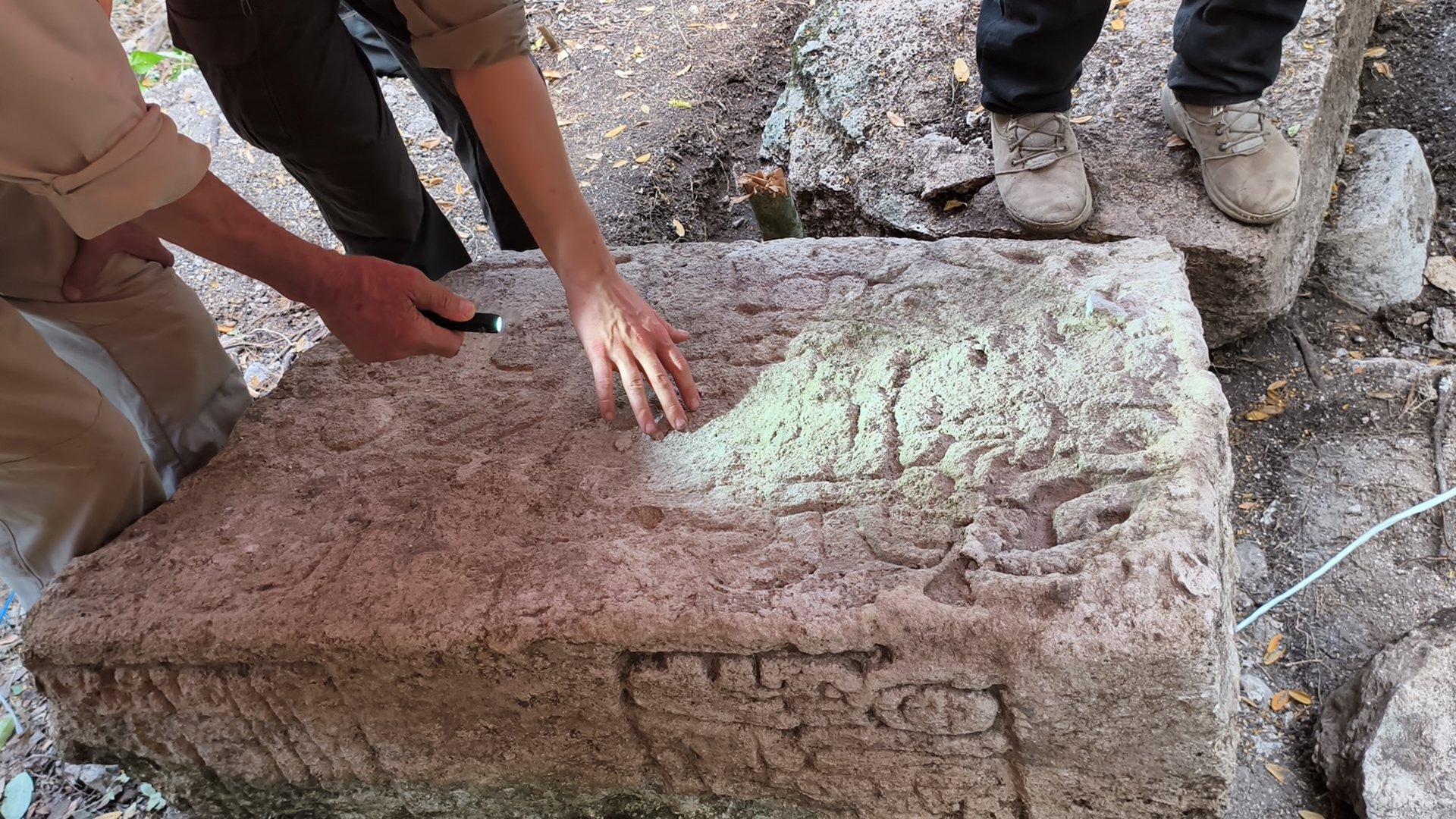
A stela uncovered in Minanbé Courtesy the Research Center of the Slovenian Academy of Sciences and Arts
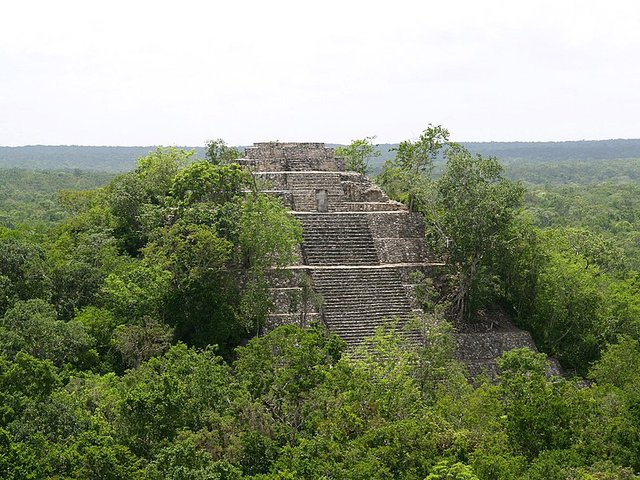
The city's tallest structure is a 13m-tall pyramid temple built in the Río Bec architectural style, characterised by finely cut masonry and mouldings. Three stelae were found at its base. One of these depicts a figure decapitating another with an axe or knife and bears the date 5 Ajaw (AD849). “This suggests that at least some of the monuments were erected shortly before Maya sites were abandoned in the 10th century AD,” the project's epigraphist, Octavio Esparza Olguín, said in a statement, noting that deciphering is ongoing.
Archaeologists documented 14 stone monuments, including stelae and altars, along a causeway linking the city's centre and northeast. Some show evidence of intentional alterations, including a fractured altar depicting a ruler wearing a headdress and jewellery. “This could indicate the incursion of groups coming from north of the Peninsula during a later period, who altered the city's political symbolism,” notes a recent press release.
Research—funded by the Slovenian Research and Innovation Agency (ARIS), with additional support from the Ken and Julie Jones Charitable Foundation, the Milwaukee Audubon Society and private sponsors—continues but could prove to be challenging. “More in-depth excavations are highly desirable,” Šprajc says. “But they would face logistical challenges, including building an access road, which would require the reserve’s authorisation.” For now, the 71-year-old archaeologist has no plans for another project—but never say never.